How to Grow Taro at Home: Giant Roots in 7 Simple Steps
Grow taro (Colocasia esculenta) at home with this 7-step guide. Covers corm selection, water management, container growing, and harvest timing for maximum yield.
Taro is one of the oldest cultivated crops on Earth, yet most home growers fail for the same two reasons: not enough water during active growth and too much nitrogen pushing leaves at the expense of corms. Get water and nitrogen right, and Colocasia esculenta will reward you with both a dramatic ornamental display and a productive harvest.
Why taro deserves a place in your garden
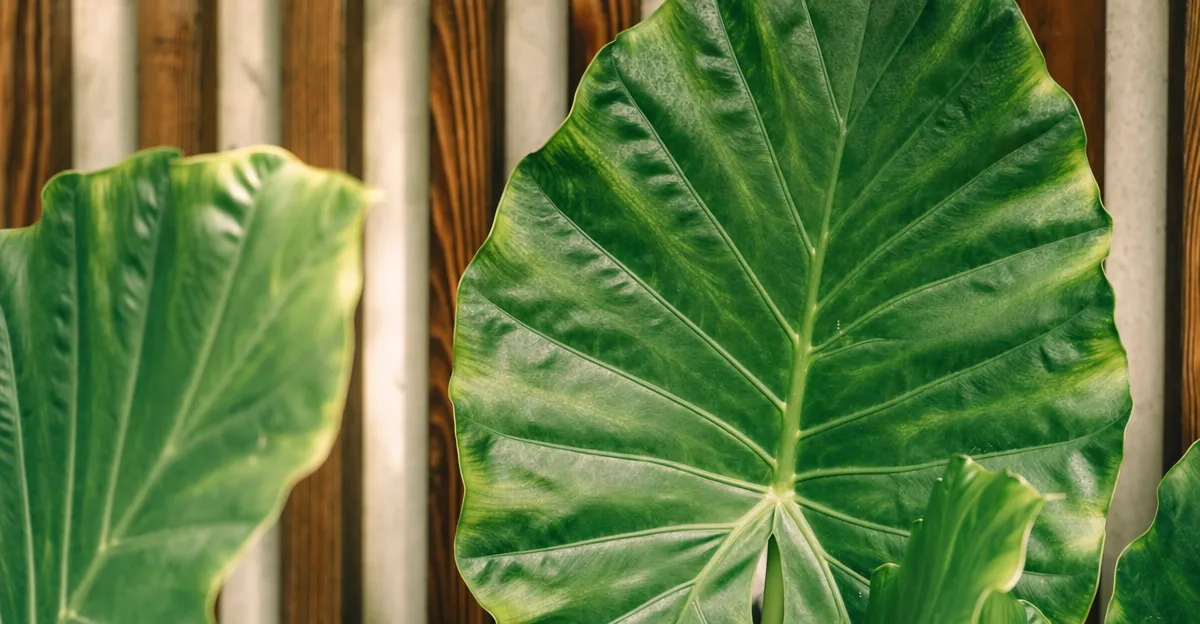
Taro (Colocasia esculenta) is a tropical perennial grown primarily for its starchy, edible corm — the underground storage organ that feeds hundreds of millions of people across the Pacific Islands, Southeast Asia, Africa, and the Caribbean. In cooler climates, it doubles as a striking ornamental known as "elephant ears" for its large, heart-shaped leaves that can reach up to one meter in length.
Beyond its visual impact, taro has a nutritional edge: its starch granules are among the smallest found in any food plant, making them exceptionally easy to digest. This is why taro-based poi has been used as an infant food and a recovery food across Polynesian cultures for centuries.
For home growers, taro offers a rare combination — a productive food crop that also works as a bold architectural accent in beds, borders, containers, and water gardens.
1) Climate and site selection
Taro is a plant of the moist tropics and subtropics, thriving where daytime temperatures stay between 21 and 27 °C (70–80 °F). It tolerates a wider range of 10–35 °C but growth slows significantly below 20 °C, and the plant is injured below 10 °C.
Hardiness: USDA zones 8a–11b for in-ground perennial growth. In zones 7 and below, grow taro as an annual or lift the corms after the first frost and store them indoors at 13–15 °C (55–60 °F) in a cool, dry place.
Light: Full sun to part shade. In hot climates, afternoon dappled shade prevents leaf scorch. In cooler climates, give taro the warmest, most sun-exposed position you have.
Wind protection: The large leaves are prone to tearing in strong wind. Plant near a wall, fence, or taller crop if your site is exposed.
2) Soil preparation and planting
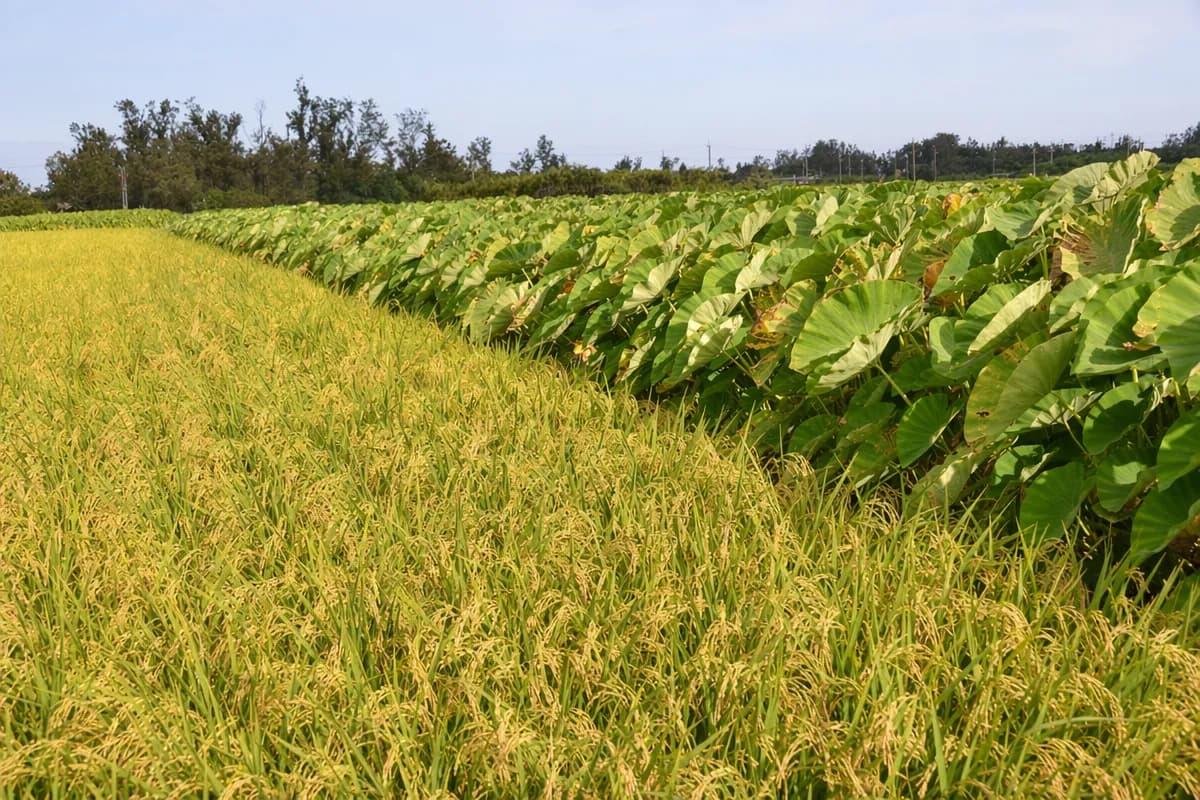
Taro grows best in deep, fertile, loamy soil with a slightly acidic pH of 5.5–6.5. Good drainage is important for upland (dryland) varieties, while wetland varieties tolerate — and even prefer — standing water up to 15 cm (6 inches) deep.
Before planting:
- Work generous amounts of compost or well-rotted manure into the top 30 cm of soil. Taro is a heavy feeder and responds strongly to organic matter.
- If your soil is heavy clay, raise beds 15–20 cm above grade and mix in coarse organic matter to improve drainage for upland types.
- A soil test is worthwhile: taro performs poorly in alkaline soils and benefits from knowing baseline phosphorus and potassium levels.
Planting material: Taro is propagated vegetatively using small corms, cormels (daughter corms), or suckers (shoots from the base). Use healthy, disease-free planting material. Larger corms establish faster and typically produce higher yields.
Planting depth and spacing: Plant corms 8–15 cm deep with the growing point facing upward. Research on planting distance published in the International Journal of Agronomy found that spacing affects both corm shape and total yield, with medium density producing the best balance between per-plant performance and yield per area. For home gardens, 60–90 cm between plants and 90–120 cm between rows works well. Allow more space in rich soils where plants will grow larger.
Timing: Plant after all risk of frost has passed and soil temperature has reached at least 18 °C (65 °F). In tropical regions, plant at the onset of the rainy season. Taro needs 7–12 months of frost-free growing time to reach full maturity, depending on variety and conditions.
3) Water management is the single biggest lever
Taro evolved in wet tropical environments and requires consistent, abundant moisture throughout its growing season. This is the single most common point of failure for home growers in temperate climates.
Upland (dryland) taro: Keep soil consistently moist — never let it dry out between waterings. During hot weather, daily watering may be necessary. Mulching with 5–10 cm of organic material (straw, leaves, or wood chips) dramatically reduces evaporation and improves soil biology. Research in Agronomy found that row-surface straw mulching significantly increased taro yields while improving soil organic carbon and enzyme activity.
Wetland (paddy) taro: Maintain 5–15 cm of standing water above the soil line throughout the growing season. A container without drainage holes, a bog garden, or a pond margin all work.
Irrigation research: A study in the International Journal of Agronomy investigating watering regimes and planting density in Kenya found that consistent irrigation throughout the growth cycle was the dominant factor in maximizing corm yield and weight. Irregular watering during the critical corm-filling stage (months 4–8) reduced yields significantly.
Note: Reduce watering gradually as leaves begin to yellow and die back toward harvest. During dormancy or storage, keep corms nearly dry to prevent rot.
4) Fertilization: the nitrogen balancing act
Taro is a heavy feeder, but nitrogen management requires more nuance than most growers realize. The natural instinct — more fertilizer equals bigger plants — works against corm production.
A 2026 study published in Frontiers in Plant Science by Steel, Antille, and Gleadow investigated nitrogen use efficiency across five concentrations (2.5, 5, 10, 15, and 20 mM N) over a 10-month growing period. Their key findings:
- Corm biomass peaked at moderate nitrogen levels (5–10 mM N). This was the sweet spot for storage organ development.
- Higher nitrogen (15 mM N) produced the most total plant biomass but redirected growth toward leaves and suckers at the expense of corms.
- Sucker production increased proportionally with nitrogen, which is useful if your goal is propagation material rather than food.
This is a common pattern in storage crops: excessive nitrogen promotes lush vegetative growth while suppressing the signal to fill underground storage organs.
Practical fertilization schedule:
- At planting: Incorporate a balanced fertilizer (such as 10-20-20 or similar, at roughly 150 g per square meter) into the planting bed. The higher phosphorus and potassium support root establishment and corm initiation.
- During vegetative growth (months 1–4): Side-dress with a nitrogen-containing fertilizer every 4–6 weeks. Organic options like fish emulsion, compost tea, or blood meal work well.
- During corm filling (months 5–8+): Reduce nitrogen inputs and shift toward potassium-rich feeds. This tells the plant to partition energy into corm filling rather than leaf production.
- Micronutrients: The Steel et al. study found that calcium showed contrasting patterns in corms versus leaves, which is relevant because calcium oxalate crystals (raphides) are a food safety concern in taro. Adequate but not excessive calcium, combined with thorough cooking, addresses this.
5) Common pests and diseases
Taro is generally less pest-prone than many vegetable crops, but a few problems require attention:
Taro leaf blight (Phytophthora colocasiae): This is the most serious disease worldwide. It causes water-soaked lesions on leaves that expand rapidly in humid conditions, and can devastate entire plantings. A review in Agriculture (MDPI) documented it as a significant threat to food security in taro-growing regions. Management strategies include:
- Use disease-free planting material — this is the most important prevention step
- Increase plant spacing to improve air circulation
- Remove and destroy infected leaves promptly
- Avoid overhead irrigation, which spreads spores
- Where available, choose resistant cultivars bred through regional programs
Taro beetle (Papuana spp.): Larvae bore into corms, creating tunnels that promote secondary rot. Crop rotation and removing plant debris after harvest reduce populations.
Aphids and spider mites: These sap-feeding insects can weaken plants, especially in dry conditions. Strong water sprays dislodge light infestations. Encourage natural predators (ladybirds, lacewings) rather than reaching for chemical controls.
Soft rot: Caused by bacteria entering damaged tissue. Avoid injuring corms during cultivation, and ensure good drainage for upland types.
Weed competition: Keep taro weed-free during the first three months after planting, when competition most affects establishment. After canopy closure, the large leaves shade out most weeds naturally.
6) Growing taro in containers
Taro adapts well to container culture, making it accessible to growers without garden space or in climates too cold for year-round outdoor growth.
Container size: Use a pot at least 40 cm (16 inches) in diameter and 30 cm deep. A 20-liter (5-gallon) bucket works well. For wetland-style growing, containers without drainage holes are ideal — taro is one of the few food crops that thrives with its roots sitting in water.
Growing medium: Rich, moisture-retentive potting mix amended with compost. Avoid fast-draining cactus mixes.
Watering: Keep the soil consistently saturated. For a bog-style setup, maintain 5–8 cm of standing water above the soil surface. Refill regularly in hot weather.
Indoor growing: Taro can grow indoors in a bright, humid location. It needs at least 6 hours of bright indirect light — a south-facing window or supplemental grow lights work. Humidity is the bigger challenge indoors: group plants together, use a pebble tray, or run a humidifier to maintain 60–80% relative humidity.
Overwintering: In cold climates, bring containers indoors before the first frost. Reduce watering and allow the plant to go semi-dormant in a cool (13–15 °C) location. Alternatively, cut back foliage, lift the corms, and store them dry in peat moss or vermiculite until spring.
7) Harvesting and storage
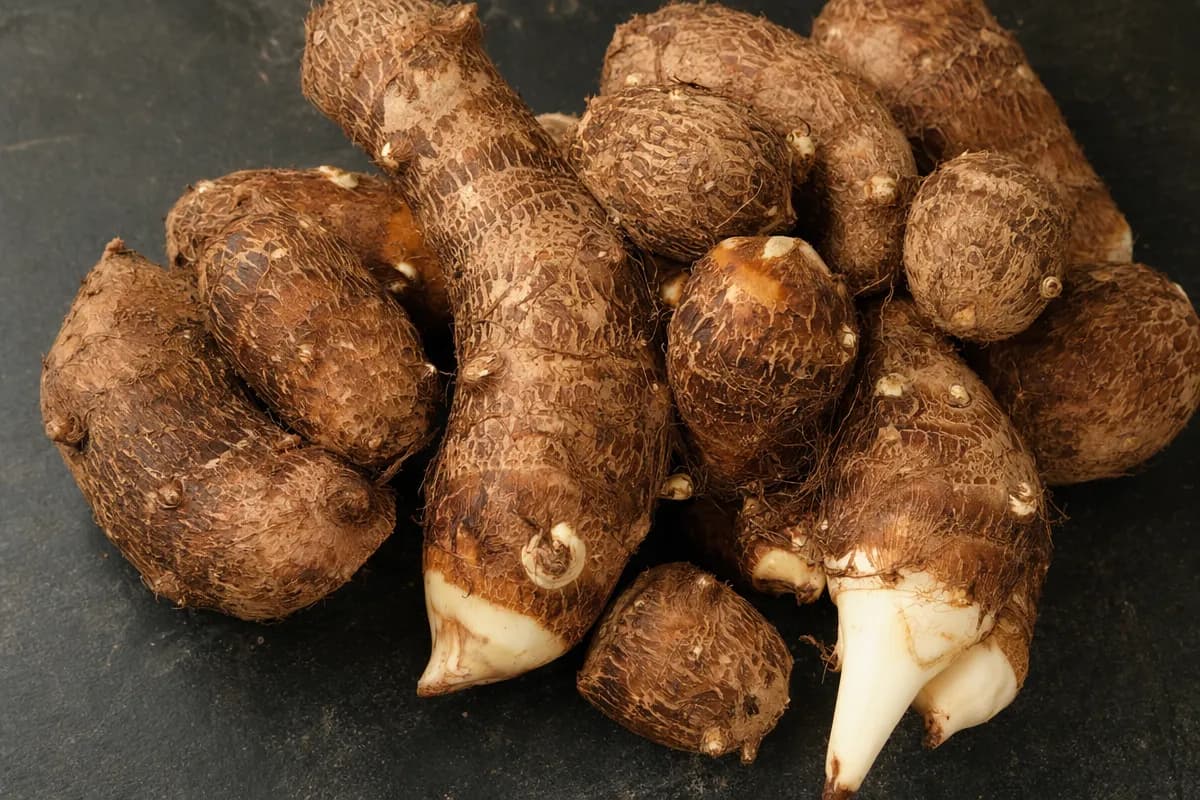
Taro corms are ready to harvest when the foliage begins to yellow and die back naturally, typically 7–12 months after planting depending on variety, climate, and growing conditions.
Harvest method:
- For upland taro, loosen soil around the plant with a fork and lift the entire clump. Be careful not to damage corms, as wounds invite bacterial soft rot.
- For wetland taro, drain the bed or container first, then lift.
- Save small cormels and healthy suckers for replanting the next cycle.
Curing and storage: Allow harvested corms to dry in a shaded, well-ventilated area for 2–3 days. Store at 12–15 °C (55–60 °F) with moderate humidity. Properly cured corms can store for several weeks.
Important — always cook taro thoroughly. Raw taro contains calcium oxalate needle-like crystals (raphides) that cause intense irritation of the mouth and throat. Prolonged cooking is essential: research published in Foods (MDPI) found that 30 minutes of steaming reduced crystal numbers by only about 20%, while two hours of steaming reduced crystal length by approximately 80% and crystal numbers by around 70%. Boiling is more effective at leaching soluble oxalates into cooking water — discard the water after boiling. For maximum safety, boil or steam corms for at least 45–60 minutes, and consider peeling and soaking in water before cooking.
Note: Sources differ on the degree to which cooking eliminates calcium oxalate. Thermal processing significantly reduces the size and sharpness of oxalate crystals, making them far less irritating, but does not fully eliminate them chemically. People with kidney conditions or oxalate sensitivity should consult a healthcare provider before consuming taro regularly.
Once properly cooked, taro is mild, slightly nutty, and highly versatile — used in everything from Hawaiian poi to Caribbean callaloo to Southeast Asian desserts.
8) Varieties worth considering
Taro cultivars vary widely in corm size, leaf color, growth habit, and whether they prefer wetland or upland conditions:
- Bun Long: Popular upland variety with elongated corms. Good for drier garden conditions.
- Lehua Maoli: Traditional Hawaiian wetland variety used for poi production. Requires standing water.
- Black Magic (C. esculenta 'Black Magic'): Deep purple-black foliage. Primarily ornamental but corms are edible. Striking in containers and mixed borders.
- Illustris (C. esculenta 'Illustris'): Dark leaves with bright green veining. Dual-purpose ornamental and edible.
For food production, choose varieties bred for your growing method (upland vs. wetland) and your climate. For ornamental use, the colored-leaf cultivars offer dramatic garden impact while still producing usable corms as a bonus.
Practical setup for first-year growers
If this is your first time growing taro:
- Start with 3–5 healthy corms from a reputable supplier or farmer's market.
- Choose upland culture unless you have a pond, bog garden, or are committed to maintaining standing water all season.
- Prepare a rich, composted bed in your warmest garden position — or use a large container.
- Plant after your last frost date, 10–12 cm deep, spaced 60–90 cm apart.
- Mulch heavily and water consistently — do not let soil dry out during active growth.
- Feed moderately. Start balanced, shift to low-nitrogen/high-potassium after month 4.
- Watch for leaf blight in humid weather and remove affected leaves immediately.
- Harvest when leaves yellow (7–12 months). Save small corms for next season.
- Keep records: track planting date, first emergence, leaf count, any pest issues, and final corm weight. Your second season will be significantly better with this data.
Final takeaway
Taro rewards growers who understand its two non-negotiable requirements: consistent water and moderate nitrogen. The academic literature increasingly confirms what Pacific Island farmers have known for millennia — this is a crop that responds to attentive water management and organic soil building far more than to heavy fertilizer inputs. Whether you grow it for food, for ornament, or for both, Colocasia esculenta brings a uniquely tropical presence to any garden setting.