Propaga Lavanda desde Esquejes: 3 Métodos, hasta un 97% de Éxito
Aprende a propagar lavanda desde esquejes con tasas de éxito respaldadas por la investigación de hasta el 97%. Cubre esquejes de madera blanda, semidura y dura, hormonas de enraizamiento (AIB), mejores sustratos, propagación en agua, calendario por estación y los errores más comunes que matan los esquejes antes de que enraícen.
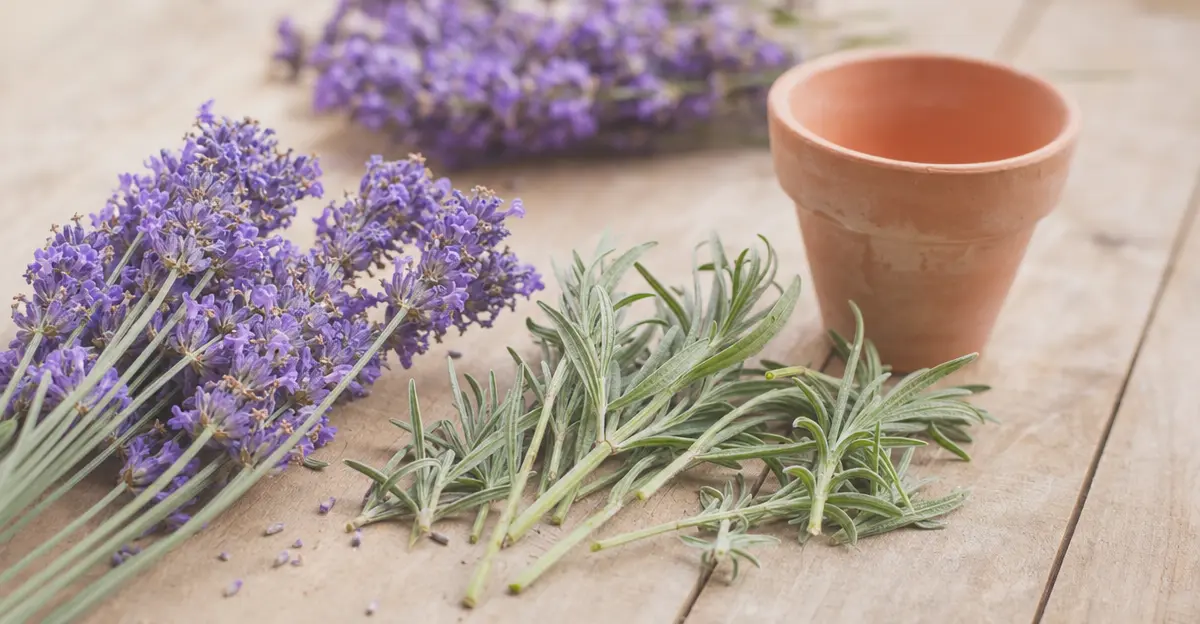
Punto clave: Propagar lavanda mediante esquejes de tallo es más rápido, más fiable y produce plantas genéticamente idénticas en comparación con el cultivo desde semilla. La investigación muestra tasas de éxito del 88--97% según el tipo de esqueje, el uso de hormona y el sustrato — los esquejes apicales de L. dentata alcanzaron el 97,9% incluso sin hormona, y el AIB a 2.000 ppm elevó el enraizamiento por encima del 96% en un ensayo independiente. Esta guía cubre los tres métodos de esquejado — madera blanda, madera semidura y madera dura — con calendario específico, instrucciones paso a paso y las técnicas respaldadas por la ciencia que marcan la diferencia entre un 13% y un 93% de éxito.
¿Por qué propagar lavanda desde esquejes?
Hay cuatro buenas razones para coger las tijeras de podar en lugar de un sobre de semillas.
Consistencia genética. Los esquejes producen clones — copias exactas de la planta madre. Si tienes una lavanda con una fragancia, un color de flor o una resistencia al frío excepcionales, los esquejes garantizan que esas características se transmitan. Las semillas introducen variación genética, lo que implica resultados impredecibles.
Velocidad. Un esqueje de lavanda enraíza en 3--6 semanas y puede florecer en un mes tras el trasplante en condiciones favorables. Las semillas tardan 14--28 días solo en germinar, y luego necesitan entre 100 y 200 días para alcanzar el tamaño de trasplante. Eso supone un ahorro de 3 a 7 meses.
Fiabilidad. Las tasas de germinación de la lavanda a partir de semilla son notoriamente bajas e inconsistentes. Los esquejes tratados con hormona de enraizamiento alcanzan un éxito del 88--97% en estudios controlados. Las semillas sin tratar a menudo no superan el 50%.
Coste. Una sola planta de lavanda adulta puede proporcionar decenas de esquejes cada temporada. Si estás ampliando un arriate, iniciando un seto o compartiendo con vecinos, la propagación por esquejes es esencialmente gratuita tras la primera planta. Para quienes ya cultivan lavanda, nuestra guía completa de cultivo de lavanda cubre todo, desde la selección de variedades hasta la cosecha.
Los tres tipos de esqueje
No todos los esquejes de lavanda son iguales. El tipo que tomes depende de la época del año y del grado de madurez del tallo.
Esquejes de madera blanda (finales de primavera -- principios de verano)
Los esquejes de madera blanda proceden del crecimiento más reciente — tallos verdes y flexibles que se parten limpiamente al doblarlos. Tómalos en mayo o junio, antes de que la planta empiece a florecer.
Ventajas: Enraízan más rápido (2--4 semanas hasta la aparición inicial de raíces). La alta actividad metabólica favorece una rápida división celular en la herida del corte.
Inconvenientes: Son los más vulnerables al marchitamiento. El tejido blando pierde agua con rapidez, por lo que necesitas mayor humedad y una atención más esmerada durante la primera semana.
Ideales para: Cultivadores con sistema de nebulización, cúpula de humedad o que puedan revisar los esquejes a diario.
Esquejes de madera semidura (mediados -- finales de verano)
Este es el estándar comercial y el tipo al que se dedica la mayor parte de la investigación académica. Los esquejes de madera semidura provienen del crecimiento de la temporada en curso que se ha madurado parcialmente — tallos leñosos en la base pero todavía verdes y ligeramente flexibles cerca del ápice. Tómalos de julio a septiembre, idealmente justo después del primer flush de floración.
Ventajas: El mejor equilibrio entre velocidad de enraizamiento y supervivencia. El tejido más firme resiste mejor el marchitamiento que la madera blanda, al tiempo que conserva suficiente crecimiento activo para una rápida formación de raíces. La investigación sobre esquejes apicales de L. dentata registró un 97,9% de enraizamiento con 13,2 raíces por esqueje.
Inconvenientes: Enraízan algo más lento que la madera blanda (3--6 semanas). El momento importa — si se toman demasiado tarde, la madera está demasiado dura; demasiado pronto y se comportan como madera blanda.
Ideales para: La mayoría de los cultivadores domésticos. Este es el método al que recurrir por defecto si no estás seguro.
Esquejes de madera dura (finales de otoño -- invierno)
Los esquejes de madera dura utilizan tallos completamente lignificados y rígidos del crecimiento de la temporada anterior. Tómalos de octubre a febrero, durante la dormancia.
Ventajas: Pueden tomarse durante la poda de mantenimiento invernal, cuando ya estás cortando la planta. Sin riesgo de marchitamiento — el tejido es demasiado leñoso para perder agua con rapidez.
Inconvenientes: La tasa de éxito más baja de los tres tipos. El metabolismo en dormancia de la lavanda implica una formación lenta del callo y un inicio tardío del enraizamiento. El enraizamiento tarda meses en lugar de semanas, y el calor desde abajo (21--24 °C) es imprescindible. Ningún estudio revisado por pares informa de porcentajes de enraizamiento específicos para esquejes de lavanda de madera dura, lo que refleja la poca frecuencia con que se recomienda este método.
Ideales para: Propagadores experimentados dispuestos a esperar. Puede ser útil si se pierde por completo la ventana del verano.
Paso a paso: toma y enraizamiento de esquejes de lavanda
Este protocolo está optimizado para esquejes de madera semidura (el método más fiable), pero se aplica a los tres tipos con pequeños ajustes de calendario.
Qué necesitas
- Una planta madre sana y libre de enfermedades (de al menos 2 años de edad)
- Tijeras de podar limpias y afiladas o una cuchilla de afeitar
- Hormona de enraizamiento — AIB a 1.000--2.000 ppm (se prefiere el gel al polvo)
- Sustrato de enraizamiento: turba + perlita (1:1), turba + arena (2:1) o fibra de coco
- Macetas pequeñas o bandejas alveoladas con orificios de drenaje
- Una cúpula de humedad, bolsa de plástico transparente o sistema de nebulización
- Opcional: alfombrilla de calor para calor desde abajo
Paso 1: Seleccionar y cortar
Elige brotes laterales sin florecer del dosel exterior de una planta vigorosa. Evita los tallos débiles, lánguidos o enfermos. Corta secciones de 7--10 cm (3--4 pulgadas) justo por debajo de un nudo foliar — aquí es donde se acumula la mayor concentración de auxina natural y donde emergerán las raíces.
La investigación demuestra que los esquejes apicales (tomados de los extremos del tallo) superan ampliamente a los esquejes basales. En una comparación directa, los esquejes apicales enraizaron al 97,9% con 13,2 raíces por esqueje, mientras que los esquejes basales de las mismas plantas solo lograron un 93,7% de enraizamiento con apenas 2,98 raíces cada uno. Los esquejes de punta de 10 cm son óptimos, aunque 7 cm es suficiente.
Toma los esquejes por la mañana, cuando los tallos están túrgidos por la humedad nocturna. Trabaja con rapidez — los esquejes empiezan a perder agua en el momento en que se separan de la planta.
Paso 2: Preparar el esqueje
Retira las hojas del tercio inferior del tallo. Conserva los dos tercios superiores del follaje. Esto está respaldado por la investigación: un estudio sobre la retención de hojas demostró que mantener 2/3 de las hojas producía estadísticamente mayor longitud de raíz y peso fresco en comparación con retener solo 1/3 o 1/2. Las hojas restantes impulsan la fotosíntesis, que alimenta el desarrollo de las raíces.
Si hay yemas florales, retíralas. Quieres que la energía del esqueje se dirija íntegramente hacia el enraizamiento, no hacia la floración.
Algunos propagadores realizan un raspado superficial vertical (una «herida») en un lado de la base del tallo, exponiendo la capa de cambium. Esto aumenta la superficie de absorción de la hormona de enraizamiento y puede acelerar la formación del callo.
Paso 3: Aplicar la hormona de enraizamiento
Sumerge el extremo desnudo del esqueje en la hormona de enraizamiento AIB (ácido indol-3-butírico). La concentración importa:
| Concentración de AIB | Resultado de enraizamiento | Fuente |
|---|---|---|
| 0 (sin hormona) | ~13% de enraizamiento | Karakas et al. 2024 |
| 1.000 ppm | ~90% de enraizamiento | Varios estudios |
| 2.000 ppm | 88--97% de enraizamiento (óptimo) | Bona et al. 2010 (>96%); Karakas et al. 2024 (88%) |
| 3.000+ ppm | Rendimientos decrecientes, riesgo de fitotoxicidad | Bona et al. 2010 |
El salto de sin tratar a 1.000 ppm es espectacular — una mejora de aproximadamente 7 veces. Pasar de 1.000 a 2.000 ppm ofrece una ganancia menor pero significativa. Por encima de 3.000 ppm, se corre el riesgo de dañar el esqueje.
Gel frente a polvo: La investigación de Lykokanellos et al. (2026) encontró que las formulaciones en gel favorecían el desarrollo de raíces frente al polvo, especialmente en sistemas de propagación aeropónica y por nebulización. El gel también proporciona una cobertura más uniforme y no se elimina tan fácilmente durante el riego.
Para una aplicación de inmersión rápida, sumerge los 2 cm inferiores del esqueje en AIB líquido durante 5--10 segundos y, a continuación, deja secar 30 segundos antes de introducirlo en el sustrato.
Nota sobre el ANA: Algunos estudios informan de que el ANA (ácido naftalenacético) a 500--1.000 ppm superó al AIB en concentraciones equivalentes para los híbridos de lavandín (L. x intermedia). El ANA es menos habitual para los cultivadores domésticos, pero merece la pena considerarlo para la propagación comercial.
Paso 4: Introducir en el sustrato de enraizamiento
Llena macetas o bandejas alveoladas con sustrato de enraizamiento humedecido previamente. Usa un lápiz o un dibble para hacer un orificio — no introduzcas el esqueje directamente en el sustrato, ya que esto puede raspar la hormona de enraizamiento.
Introduce el esqueje a una profundidad de unos 3 cm (justo pasados los nudos foliares desnudos). Aprieta suavemente el sustrato alrededor del tallo.
Qué sustrato usar:
| Sustrato | Rendimiento de enraizamiento | Notas |
|---|---|---|
| Turba + arena (2:1) | Mayor % de enraizamiento, número y longitud de raíces | La mejor opción integral |
| Turba + perlita (1:1) | 93% de enraizamiento con AIB 2.000 ppm | Ligero, drenaje excelente |
| Fibra de coco (coir) | 62--88% según el uso de hormona | Alternativa sostenible, buena aireación |
| Turba pura | El peor rendimiento en múltiples estudios | Retiene demasiada humedad — evitar sola |
El principio fundamental: los esquejes de lavanda necesitan un sustrato que drene libremente. La investigación de Rock et al. (2022) ilustra el compromiso — condiciones de sustrato más húmedas (-1,0 kPa) produjeron una tasa de enraizamiento más alta (53%) pero menor supervivencia, mientras que una tensión de humedad moderada (-2,5 kPa) logró un 47,2% de enraizamiento con mejor supervivencia (83,3%). La conclusión: las condiciones ligeramente más secas mejoran el éxito global al reducir la pudrición y la presión fúngica, aunque ralenticen la formación inicial de raíces.
Paso 5: Crear un ambiente húmedo
Cubre los esquejes con una cúpula de humedad o una bolsa de plástico transparente para mantener una humedad relativa del 80--85% alrededor del follaje. Esto impide que las hojas pierdan agua más rápido de lo que el tallo sin raíces puede absorberla.
- Abre la cúpula durante unos minutos dos veces al día para favorecer el intercambio de aire fresco y prevenir problemas fúngicos.
- Retira inmediatamente cualquier esqueje que muestre signos de pudrición (tallos ennegrecidos, moho algodonoso).
- Si usas un sistema de nebulización, programa intervalos de 5--8 segundos de niebla cada 5--10 minutos durante las dos primeras semanas, reduciéndolos gradualmente después.
Paso 6: Proporcionar calor desde abajo y luz
Coloca los esquejes en un lugar cálido con luz brillante e indirecta. Evita la luz solar directa — los esquejes sin raíces no pueden reponer el agua que pierden por transpiración bajo una luz intensa.
Objetivos de temperatura:
- Temperatura del aire: 18--24 °C (65--75 °F)
- Temperatura del sustrato: 21--24 °C (70--75 °F) — una alfombrilla de calor ayuda enormemente en condiciones más frías
- Las temperaturas nocturnas pueden bajar ligeramente, pero deben mantenerse por encima de los 15 °C
Paso 7: Esperar y supervisar
El enraizamiento requiere paciencia. Este es el calendario habitual:
| Fase | Duración | Qué observar |
|---|---|---|
| Formación del callo | 7--14 días | Tejido blanco e hinchado en la base del corte |
| Aparición inicial de raíces | 14--28 días (madera blanda); 21--42 días (madera semidura) | Raíces finas y blancas visibles por los orificios de drenaje o al levantar suavemente |
| Establecimiento de raíces | 28--42 días | Múltiples raíces ramificadas; el esqueje resiste un tirón suave |
| Listo para trasplantar | 4--6 semanas (madera blanda); 6--8 semanas (madera semidura) | Pan de raíces denso; nuevo crecimiento foliar en el ápice |
Comprueba la humedad cada 2--3 días. El sustrato debe sentirse apenas húmedo, no mojado. Empieza a reducir la ventilación de la cúpula de humedad después de 3 semanas para endurecer los esquejes gradualmente.
La prueba del tirón: Tras 4 semanas, tira suavemente de un esqueje. Si sientes resistencia, las raíces se han formado. Si se desliza con facilidad, dale otra semana o dos.
Comparación de sistemas de propagación
Si propagas a escala, el sistema que uses importa. Lykokanellos et al. (2026) compararon tres sistemas de propagación para esquejes de lavanda y encontraron diferencias significativas:
Los sistemas aeropónicos produjeron entre un 20 y un 30% mayor longitud de raíz y mejor ramificación radicular que los sistemas de niebla o flotación. La exposición constante al aire húmedo y la niebla nutritiva intermitente crean condiciones ideales para el desarrollo de raíces sin riesgo de anegamiento.
Los sistemas de niebla son el método comercial estándar. Producen un enraizamiento adecuado y son más sencillos de instalar que la aeroponía. El principal riesgo es el exceso de riego — una frecuencia de nebulización excesiva provoca pudrición basal.
Los sistemas de flotación (agua profunda) produjeron la mayor elongación de brotes, pero un desarrollo radicular menos impresionante. Son útiles si se desea un crecimiento vegetativo rápido, pero las raíces tienden a ser menos robustas en el momento del trasplante.
Para los cultivadores domésticos, una sencilla cúpula de humedad sobre una bandeja de esquejes en un sustrato bien drenado funciona perfectamente. Los sistemas avanzados merecen la pena cuando se enraízan cientos de esquejes por temporada.
Propagación en agua: ¿funciona?
Sí, pero es el método menos fiable para la lavanda.
Coloca los esquejes en un vaso de agua limpia con solo los 5 cm inferiores del tallo sumergidos — todas las hojas deben permanecer por encima del nivel del agua. Cambia el agua cada 2--3 días para evitar el crecimiento bacteriano. Las raíces suelen aparecer en 2--6 semanas.
El inconveniente: Las raíces que se forman en agua son estructuralmente diferentes de las que se forman en sustratos sólidos. Las raíces acuáticas son más delgadas, más frágiles y a menudo tienen dificultades para adaptarse al trasplantarse al suelo. El estrés de trasplante es habitual, y la tasa de éxito global es menor que con cualquier método en sustrato sólido.
Si propagas en agua, trasplanta en cuanto las raíces alcancen 2--3 cm de longitud. Cuanto más esperes, más difícil será la transición. Ninguna investigación revisada por pares ha validado la propagación en agua específicamente para Lavandula, por lo que el método se basa en principios generales de propagación de plantas herbáceas.
Nuestra recomendación: Usa la propagación en agua solo como experimento o si no dispones de sustrato de enraizamiento. Para obtener resultados fiables, opta por una mezcla de turba-perlita o fibra de coco.
Cuándo tomar esquejes: guía de calendario por estación
| Estación | Tipo de esqueje | Potencial de éxito | Notas |
|---|---|---|---|
| Finales de primavera (may.--jun.) | Madera blanda | Alto (con atención esmerada) | Enraizamiento rápido; mayor riesgo de marchitamiento. Tomar de crecimiento sin florecer. |
| Mediados de verano (jul.--ago.) | Madera semidura | El más alto | El estándar comercial. Tomar tras el primer flush de floración. |
| Finales de verano (ago.--sep.) | Madera semidura | Alto | Última ventana fiable. Los esquejes pueden necesitar invernar en interior. |
| Otoño (oct.--nov.) | Madera dura | Bajo--moderado | Enraizamiento lento; requiere calor desde abajo. Solo propagación en interior. |
| Invierno (dic.--feb.) | Madera dura | Bajo | Metabolismo en dormancia. Solo para propagadores experimentados. |
El mejor momento absoluto para la mayoría de los cultivadores es de julio a agosto — tras la primera cosecha, cuando la planta está produciendo nuevo crecimiento vigoroso y ya se están podando los tallos florales marchitos.
Calendario de Propagación Mes a Mes
Este calendario asume un clima templado del hemisferio norte (zonas USDA 5--8). Ajusta las fechas 2--4 semanas hacia adelante para la zona 4 o más fría; 2--4 semanas hacia atrás para la zona 9 o más cálida.
| Mes | Acción | Detalles |
|---|---|---|
| Marzo | Preparar instalaciones | Limpiar macetas y bandejas, abastecerse de hormona de enraizamiento, preparar sustratos. Pedir alfombrillas de calor si es necesario. Inspeccionar las plantas madre en busca de daños por el invierno. |
| Abril | Inspeccionar plantas madre | Identificar las plantas más sanas y vigorosas como fuente de esquejes. Fertilizar ligeramente las plantas madre para fomentar un crecimiento vegetativo robusto. |
| Mayo | Se abre la primera ventana de madera blanda | Tomar esquejes de madera blanda del nuevo crecimiento sin florecer. Usar AIB 1.000 ppm. Mantener una humedad del 80--85%. Supervisar a diario — la madera blanda se marchita rápido. |
| Junio | Continuar con madera blanda; comienza la transición | El crecimiento de finales de junio empieza a endurecerse. Mejor momento para madera blanda si se perdió mayo. Retirar las yemas florales de las plantas madre de las que se planea esquilar en julio. |
| Julio | Ventana principal de madera semidura | Tomar esquejes de madera semidura tras el primer flush de floración. AIB 2.000 ppm en turba-perlita (1:1). Esta es la ventana de mayor éxito para la mayoría de los cultivares. |
| Agosto | Continúa la madera semidura | Último mes para madera semidura fiable. Los esquejes tomados ahora necesitan invernar en interior en las zonas 6 y más frías. |
| Septiembre | Últimos esquejes; endurecer el lote de julio | Última oportunidad de madera semidura. Comenzar a endurecer los esquejes de julio reduciendo la ventilación de la cúpula de humedad. Los esquejes de julio ya deberían estar enraizados. |
| Octubre | Trasplantar esquejes enraizados (climas suaves) | En las zonas 7+, trasplanta los esquejes enraizados a sus posiciones definitivas. En zonas más frías, pasar a maceta y invernar en un marco frío o invernadero sin calefacción. |
| Noviembre | Esquejes de madera dura (solo para experimentados) | Si se intenta madera dura, tomar esquejes de 10--12 cm de tallos completamente lignificados. AIB 2.000--3.000 ppm. Calor desde abajo imprescindible (21--24 °C de temperatura del sustrato). |
| Diciembre--Febrero | Invernar y planificar | Proteger las plantas jóvenes de las heladas fuertes. Planificar la propagación de la próxima temporada. Los esquejes de madera dura de noviembre siguen formando callo — se requiere paciencia. |
Programación por lotes para proyectos de seto: Si necesitas 50 o más plantas, divide las sesiones de esquejado en dos lotes — uno a principios de julio y otro a finales de julio. Esto protege contra el fracaso de un único lote que agote tu suministro. Con AIB 2.000 ppm y sustrato turba-perlita, cada lote debería rendir un 85--95% de éxito.
Elegir la mejor variedad de lavanda para la propagación
No todas las especies de lavanda enraízan igual de bien. Si eliges una planta madre específicamente para la propagación:
- Híbridos de lavandín (L. x intermedia) — especialmente 'Grosso' y 'Phenomenal' — muestran las tasas de enraizamiento más altas en múltiples estudios. 'Grosso' en particular produjo el mayor porcentaje de enraizamiento independientemente del tratamiento hormonal o del sustrato.
- Lavanda inglesa (L. angustifolia) — éxito de enraizamiento moderado. Cultivares como 'Munstead' e 'Hidcote' son fiables, pero generalmente enraízan a tasas más bajas que los híbridos de lavandín.
- Lavanda dentada (L. dentata) — responde bien al AIB, con esquejes apicales que alcanzan hasta el 97,9% de enraizamiento en condiciones optimizadas.
Para orientación sobre selección de variedades más allá de la propagación, consulta nuestra guía completa de cultivo de lavanda, que cubre todas las principales especies y cultivares.
Matriz de Propagación por Cultivar
La tabla siguiente recopila datos de rendimiento de enraizamiento de ensayos revisados por pares, organizados por especie y cultivar. Úsala para establecer expectativas realistas y elegir el protocolo adecuado para tu variedad.
| Especie / Cultivar | AIB óptimo (ppm) | Mejor sustrato | Tasa de enraizamiento | Raíces por esqueje | Notas clave |
|---|---|---|---|---|---|
| L. x intermedia 'Grosso' | 500--1.000 (se prefiere ANA) | Turba + arena (2:1) | La más alta del ensayo | — | Superó a todos los cultivares independientemente del tratamiento |
| L. x intermedia 'Phenomenal' | 1.000--2.000 | Turba + perlita (1:1) | Alta | — | Fuerte vigor radicular; planta madre resistente al frío |
| L. dentata (apical) | 0--2.000 | Turba + perlita | 97,9% (sin AIB) | 13,2 | La posición apical es más importante que la hormona para esta especie |
| L. dentata (basal) | 2.000 | Turba + perlita | 93,7% | 2,98 | El número de raíces es significativamente menor que en el apical a pesar de un % de enraizamiento similar |
| L. angustifolia | 2.000 | Fibra de coco o turba + perlita | 62--88% | — | Más sensible a la elección del sustrato que a la concentración de hormona |
| L. angustifolia (sin AIB) | 0 | Cualquiera | ~13% | — | La hormona es crítica para esta especie |
Conclusiones clave por especie:
-
Híbridos de lavandín (L. x intermedia): Los más tolerantes. Altas tasas de enraizamiento con diversas combinaciones de hormona y sustrato. Considera el ANA en lugar del AIB — Haque et al. encontraron que el ANA a 500--1.000 ppm superó a concentraciones equivalentes de AIB en el lavandín. Esto es inusual entre las especies de lavanda y merece ser aprovechado si el ANA está disponible.
-
Lavanda dentada (L. dentata): La posición del esqueje importa más que cualquier otra cosa. Los esquejes apicales pueden alcanzar un enraizamiento casi perfecto incluso sin hormona. Si tienes acceso tanto a material apical como basal, prioriza los ápices — la diferencia de 4 veces en el número de raíces (13,2 frente a 2,98) significa un establecimiento más rápido.
-
Lavanda inglesa (L. angustifolia): La más sensible al protocolo. La hormona es imprescindible (13% sin ella frente al 88% con AIB). La elección del sustrato también tiene un gran efecto — evita la turba pura, que sistemáticamente rinde por debajo de lo esperado. Las mezclas de fibra de coco o turba-perlita son las opciones más seguras.
10 errores comunes que matan los esquejes de lavanda
1. Mantener el sustrato demasiado húmedo. Esta es la causa de fracaso más habitual. Las raíces de lavanda se pudren en condiciones encharcadas. La investigación demuestra que un sustrato moderadamente seco produce un mejor desarrollo radicular que el húmedo.
2. Tomar esquejes de tallos en floración. Los tallos en flor dirigen la energía hacia la producción de semillas, no hacia la formación de raíces. Elige siempre brotes vegetativos sin florecer.
3. Usar tallos viejos y completamente leñosos. Los esquejes de madera dura tienen la tasa de éxito más baja. Si el tallo no dobla en absoluto, está demasiado leñoso para un enraizamiento fiable.
4. Momento equivocado. Los esquejes de pleno invierno enraízan mal porque el metabolismo de la planta está prácticamente paralizado. La ventana va desde finales de primavera hasta finales de verano.
5. Esquejes demasiado cortos. Los esquejes de menos de 5 cm carecen de energía almacenada y superficie foliar suficientes para la formación de raíces. Apunta a 7--10 cm.
6. Retirar demasiadas hojas. Es tentador dejar un esqueje casi desnudo, pero la investigación muestra que retener 2/3 de las hojas es óptimo. Esas hojas son la única fuente de energía del esqueje hasta que se forman las raíces.
7. Omitir la hormona de enraizamiento. Sin AIB, las tasas de éxito pueden caer hasta el 13% en comparación con el 93% con el tratamiento hormonal adecuado en el mismo estudio controlado.
8. Usar turba pura como sustrato de enraizamiento. La turba sola retiene demasiada humedad. Mézclala siempre con perlita, arena o usa fibra de coco.
9. Luz solar directa sobre esquejes sin enraizar. Sin raíces, los esquejes no pueden reponer el agua perdida por transpiración. Colócalos a la luz indirecta brillante hasta que se formen las raíces.
10. Sin calor desde abajo en condiciones frías. Una temperatura del sustrato de 21--24 °C es fundamental para la división celular radicular. Si tu zona de propagación está por debajo de los 18 °C, una alfombrilla de calor marca la diferencia entre el éxito y el fracaso.
Trasplante de esquejes enraizados
Una vez que los esquejes superan la prueba del tirón y muestran nuevo crecimiento foliar (generalmente 6--8 semanas después de la inserción), están listos para trasplantar.
-
Endurecer gradualmente. Retira la cúpula de humedad durante períodos progresivamente más largos a lo largo de 5--7 días antes del trasplante. Esto aclimata el esqueje a la humedad ambiente.
-
Pasar a maceta individualmente. Mueve cada esqueje enraizado a una maceta de 7--10 cm rellena con mezcla de sustrato bien drenante (similar al sustrato de enraizamiento, o una mezcla estándar para hierbas con perlita adicional). Riega una vez tras el trasplante y luego deja secar la superficie antes de volver a regar.
-
Mantener a la luz indirecta durante 1--2 semanas tras el trasplante, y luego mover gradualmente a pleno sol.
-
Trasplantar a la posición definitiva tras 2--4 semanas en macetas. La plantación en tierra es mejor hacerla en primavera (después de la última helada) o a principios de otoño (zonas 7+). Espaciar las plantas 30--45 cm para los cultivares compactos, 45--60 cm para los híbridos de lavandín.
La supervivencia tras el trasplante es excelente — un estudio informó de un 96% de supervivencia después del trasplante, con inicio de la floración apenas un mes más tarde en condiciones favorables.
Escalando: propagación para setos de lavanda
Si estás creando un seto o un arriate de lavanda, necesitarás 3--5 plantas por metro lineal. Un seto de 10 metros requiere entre 30 y 50 plantas — fácilmente alcanzable a partir de 2--3 plantas madre maduras en una sola temporada.
Consejos para la propagación por lotes:
- Toma esquejes de múltiples tallos de la misma planta para garantizar la uniformidad genética.
- Usa bandejas alveoladas (de 72 o 128 alvéolos) en lugar de macetas individuales para mayor eficiencia de espacio.
- Una sola alfombrilla de calor puede calentar 2--3 bandejas estándar simultáneamente.
- Con el protocolo óptimo (esquejes de madera semidura, AIB 2.000 ppm, sustrato turba-perlita), espera un 85--95% de éxito, lo que significa que debes tomar un 10--15% más de esquejes de los que necesitas.
Si estás pensando en cultivar tu lavanda propagada en un sistema sin suelo, nuestra guía de lavanda hidropónica cubre la selección del sistema, los nutrientes y el truco de la vernalización para la floración en interior.
Protocolo de Propagación a Escala Comercial
Pasar de la propagación doméstica a la producción comercial (500 o más esquejes por lote) requiere procesos sistemáticos. Esta sección cubre los requisitos de instalación, la economía por lote y la programación de la producción.
Requisitos de instalación
| Componente | Especificación mínima | Especificación óptima |
|---|---|---|
| Zona de propagación | 2 m² de bancal por cada 200 esquejes | Invernadero con control climático |
| Sistema de nebulización | Nebulización cenital controlada por temporizador | Nebulización automatizada con sensor de humedad foliar |
| Calefacción | Alfombrillas de calor bajo las bandejas | Calefacción de bancal por agua caliente (21--24 °C) |
| Preparación del sustrato | Mezcla manual | Mezcladora por lotes con proporciones consistentes |
| Aplicación de hormona | Estaciones de inmersión rápida | Dispensación de AIB líquido medido (2.000 ppm) |
Economía por lote
Para una producción de 1.000 esquejes usando el protocolo óptimo (madera semidura, AIB 2.000 ppm, turba-perlita 1:1):
- Sustrato de enraizamiento: ~15--20 € por cada 1.000 esquejes (mezcla turba-perlita en bandejas de 72 alvéolos)
- Hormona de enraizamiento: ~5--8 € por cada 1.000 esquejes (concentrado de AIB de calidad comercial)
- Bandejas e insertos: ~25--30 € por cada 1.000 (reutilizables durante 3--5 temporadas con saneamiento)
- Mano de obra: 3--4 horas para cortar, deshojar, sumergir e insertar a un ritmo experimentado
- Rendimiento esperado: 850--950 esquejes enraizados por cada 1.000 insertados
- Coste por esqueje enraizado: 0,05--0,08 € (excluida mano de obra y gastos generales)
Programación de la producción
Un calendario de propagación comercial típicamente funciona con dos ciclos de producción principales:
Ciclo 1 (julio): Ciclo de producción principal. Las plantas madre han sido podadas tras la primera floración, produciendo abundante material de madera semidura. Objetivo: 60--70% de la producción anual de esquejes.
Ciclo 2 (agosto): Ciclo secundario utilizando el rebrote de la poda de julio y plantas madre adicionales. Objetivo: 30--40% de la producción anual. Los esquejes de este ciclo pueden necesitar iluminación suplementaria durante el enraizamiento otoñal.
Selección del sistema de propagación a escala
Para operaciones que enraízan 1.000 o más esquejes por lote, el sistema de propagación impacta significativamente en la mano de obra y las tasas de éxito:
- Propagación por nebulización (estándar): Fiable y bien documentada. Automatizar los intervalos de nebulización — 5--8 segundos cada 8 minutos durante las dos primeras semanas, reduciéndolo a cada 15 minutos tras el encallado inicial. Un tratamiento fungicida en el momento de la inserción reduce las pérdidas por pudrición basal.
- Propagación aeropónica: Mayor coste de equipamiento, pero produce sistemas radiculares superiores — entre un 20 y un 30% mayor longitud de raíz y mejor ramificación respecto a la nebulización. El establecimiento tras el trasplante es más rápido. Considérala para cultivares de alto valor donde la economía por esqueje justifique la infraestructura.
- Sistemas de flotación: Los menos laboriosos, pero producen los sistemas radiculares más débiles. Aceptables para los vigorosos híbridos de lavandín que compensan con un rápido crecimiento post-trasplante, pero evítalos para las variedades de L. angustifolia de enraizamiento más lento.
Puntos de control de calidad
| Semana | Verificación | Acción si no se alcanza el objetivo |
|---|---|---|
| 1 | Inspección de mortalidad | Retirar esquejes podridos; reducir la frecuencia de nebulización si la pérdida supera el 5% |
| 2 | Formación del callo | Verificar que ≥80% muestra callo en la base; si es menor, comprobar la temperatura del sustrato (debe ser de 21--24 °C) |
| 4 | Aparición de raíces | Prueba del tirón en una muestra de 20 esquejes; si <70% muestra resistencia, ampliar 2 semanas antes del trasplante |
| 6 | Densidad radicular | Levantar 10 esquejes y evaluar el pan de raíces; Grado A (denso, ramificado) proceder al trasplante, Grado B (escaso) retener 2 semanas más |
Preguntas frecuentes
¿Puedo propagar lavanda en agua?
Sí, pero es el método menos fiable. Los esquejes enraizados en agua desarrollan raíces estructuralmente más débiles y a menudo sufren estrés de trasplante al pasarlos a tierra. Usa una mezcla de perlita-turba para obtener resultados consistentes.
¿Cuánto tardan en enraizar los esquejes de lavanda?
Esquejes de madera blanda: 2--4 semanas. Madera semidura: 3--6 semanas. Madera dura: 2--3 meses. Las condiciones ambientales (temperatura, humedad) afectan significativamente al calendario.
¿Necesito hormona de enraizamiento para la lavanda?
Técnicamente no — la lavanda puede enraizar sin ella. Pero la investigación muestra que el AIB a 1.000--2.000 ppm aumenta el enraizamiento de ~13% a ~93%. Es una pequeña inversión para una mejora espectacular en la tasa de éxito.
¿Cuál es la mejor época del año para tomar esquejes de lavanda?
De julio a agosto, tras el primer flush de floración. Esto proporciona material de madera semidura con las tasas de éxito más altas y suficiente temporada de crecimiento para que los esquejes se establezcan antes del invierno.
¿Qué especie de lavanda es más fácil de propagar por esquejes?
Los híbridos de lavandín (L. x intermedia), especialmente 'Grosso', muestran las tasas de enraizamiento más altas en los estudios. La lavanda inglesa (L. angustifolia) es moderada. Todas las especies se benefician significativamente de la hormona de enraizamiento.
¿Puedo tomar esquejes de lavanda comprada en un vivero?
Sí, siempre que la planta esté sana y bien establecida. Déjala crecer en tu jardín durante al menos una temporada completa de cultivo primero, para que desarrolle tallos vigorosos adecuados para el esquejado.