Їстівні Частини Крилатих Бобів: Їжте Все, Аж до Бульби з 20% Білка
Крилаті боби — одна з небагатьох культур, де їстівна майже вся рослина: недозрілі стручки, зрілі насінини, бульбоподібне коріння, молоде листя й навіть квіти. Цей посібник проходить крізь кожну частину, що вона дає з погляду поживності, чому бульба з ~20% білка така незвична, як насіння порівнюється із соєю та чому те, заради чого ви їх вирощуєте, має визначати сорт, який ви садите. Ґрунтується на рецензованих дослідженнях та інституційних довідниках рослинних ресурсів.
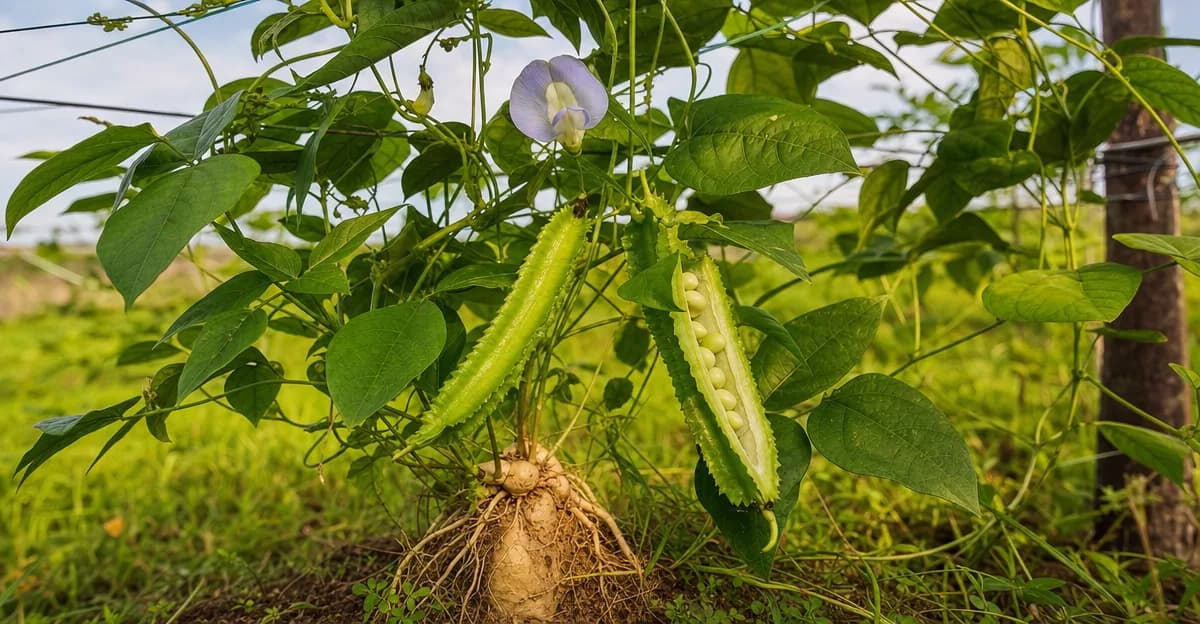
Більшість культур дають вам одне, що можна з'їсти. Ви вирощуєте помідори заради плодів, картоплю заради бульб, шпинат заради листя — а решта рослини йде в компост. Крилаті боби (Psophocarpus tetragonolobus) майже цілком порушують це правило. Рецензовані польові дослідження цієї тропічної бобової культури заявляють це прямо: «усі частини рослини, включно зі стручками, насінням, листям, квітами й бульбами, їстівні та багаті на білок і поживні речовини». Це п'ять окремих їстівних органів однієї рослини — саме тому її називають «супермаркетом на стеблі».
Ця їстівність усієї рослини — причина, чому крилаті боби знову й знову виринають як кандидат на культуру для тропіків, і водночас це причина, чому рішення про те, заради чого їх вирощувати, важить більше, ніж майже для будь-якого іншого овоча. Цей посібник послідовно проходить крізь кожну їстівну частину: стручки, які насправді їсть більшість людей, соєподібне насіння, незвичайну багату на білок бульбу та листя й квіти, що доповнюють рослину. Дорогою він вказує на одне непорушне правило, з яким приходить сира рослина, і чому сорт, який ви обираєте, має випливати з частини, яку ви бажаєте.
Одна рослина, п'ять їстівних частин
Перш ніж іти частина за частиною, варто бути точними щодо цього твердження, бо «можна з'їсти все» — це така фраза, яку легко перебільшити. Тут вона добре обґрунтована. Незалежні огляди описують крилаті боби як рослину, «що характеризується своїм бульбоподібним корінням і своїм крилатим стручком… багатою на білки, олії, вітаміни й вуглеводи», а класична монографія Національної академії наук, яка вивела цю культуру на міжнародну карту, побудувала весь свій аргумент навколо високобілкової цінності стручків, насіння, листя й бульб разом. Регіональні довідники рослинних ресурсів як із Південно-Східної Азії, так і з тропічної Африки перелічують той самий набір їстівних частин.
Отже, формулювання «їжте все» реальне. Різниться те, наскільки кожна частина насправді використовується, що вона дає й де її їдять. Ці відмінності — уся суть.
Стручки: частина, яку насправді їсть майже кожен
За всього захвату щодо бульб і насіння, недозрілий стручок — це те, заради чого крилаті боби на практиці вирощують, щоб їсти. По всьому їхньому ареалу молодий чотирикрилий стручок — зібраний ніжним, до того як насіння дозріває й стручок стає волокнистим, — є домінантним овочевим продуктом, що готується майже як зелена квасоля. Рекомендації служб поширення знань розглядають хрусткий недозрілий стручок як основний урожай і причину, чому домашній садівник узагалі посадив би цю культуру.
Стручок — також фірмовий знак рослини: розрізаний упоперек, він показує чотири зубчасті, стрічкоподібні «крила», що біжать по всій його довжині, звідки й походить назва. З погляду поживності стручок — це зелений овоч, а не концентрат білка — серйозний білок живе в насінні й бульбі, — але це просте, надійне, щоденне застосування, і для більшості садівників саме воно й буде метою.
Насіння: аналог сої, з одним чесним застереженням
Дайте стручкам дозріти, і насіння всередині стає головною поживною історією крилатих бобів. Огляд у Plant Foods for Human Nutrition робить висновок, що ця культура «аналогічна сої за врожайністю та поживною якістю, доводячи цінність альтернативи сої в тропічних регіонах», а пряме лабораторне порівняння білка крилатих бобів, сої та звичайної квасолі підтверджує, що насіння можна вважати справжнім джерелом білка соєвого класу. Широко цитований діапазон білка насіння, приблизно 30–37%, перекривається з нижнім краєм соєвих ~36–42%.
Ось де важить чесність, бо цю паралель легко перепродати. Щодо олії насіння не цілком дорівнює сої. Прямий аналіз оцінює олію насіння крилатих бобів приблизно у 14,4% сухої ваги — з переважанням олеїнової (~36–39%) і лінолевої (~39–42%) кислот, солідний ненасичений профіль, — але ця частка олії лежить нижче типової сої, яка загалом іде вище. Тож точне формулювання таке: білок насіння зіставний із соєю, олія насіння дещо нижча. Насіння крилатих бобів — сильна тропічна білково-олійна бобова культура; це не універсальний клон сої по кожній осі.
Бульба: частина, що робить цю рослину незвичайною
Якщо стручки — це щоденне застосування, а насіння — соєва історія, то бульба — справжня дивина, і частина, про існування якої більшість садівників не знає. Крилаті боби утворюють крохмалисте бульбоподібне коріння, і, на відміну майже від будь-якої іншої коренеплідної культури, це коріння насичене білком.
Цифри вражають. У дворічному польовому досліді в Таїланді бульби найкращих зразків показали 20,92% і 21,04% білка на основі сухої ваги, поряд зі значущою клітковиною, енергією та мінералами. Щоб побачити, чому це видатно, порівняйте це з корінням і бульбами, які люди зазвичай їдять: маніок, ямс, батат і картопля — це основні вуглеводні культури, чиє запасне коріння за тим самим виміром сухої ваги зазвичай несе лише кілька відсотків білка. На тлі цієї основи бульба, що сягає 20% білка, є винятковою — серед найвищих із будь-якої коренеплідної чи бульбоплідної культури, і саме тому крилаті боби описують як високобілкову культуру по кожному органу, а не лише за насінням.
Але є тверде обмеження, яке слід чітко озвучити, бо ті самі дослідження, що виміряли білок, також окреслюють межу: споживання бульби не є світовою звичкою. Як зазначає польове дослідження, «лише люди М'янми й Індонезії використовують бульби крилатих бобів як харчові матеріали». Регіональні довідники фіксують споживання бульб ширше в частинах Південно-Східної Азії, Тихоокеанського регіону й Африки, але навіть там це другорядне, місцеве застосування поруч зі стручком. Іншими словами, багата на білок бульба реальна й виміряна — це просто «прихована» частина рослини, яку їдять у кількох місцях, а не звичайна їжа, яку ви знайдете в більшості кухонь. Що якраз і робить її цікавою для садівника, який вирішує вирощувати заради неї.
Поживність і кухонний посібник по кожній частині
Привабливість крилатих бобів у тому, що кожен їстівний орган відіграє різну роль. Ця таблиця зводить частини разом, щоб ви могли з одного погляду побачити, для чого кожна з них — поживно й на кухні — і наскільки впевнені лежачі в основі докази.
| Частина | Що вона дає | Типове застосування | Сила доказів |
|---|---|---|---|
| Недозрілий стручок | Зелений овоч; хрустка, малогуста поживність | Щоденний урожай — готується як зелена квасоля | Усталено (поле + служба поширення знань) |
| Зріле насіння | Білок ~30–37% (соєвий клас); олія ~14,4%, багата на олеїнову/лінолеву, але нижче сої | Сушений зернобобовий продукт, джерело білка, віджимається на олію | Усталено, із застереженням щодо паритету олії |
| Бульба (корінь) | Білок ~20–21% — винятково для коренеплоду — плюс клітковина, енергія, мінерали | Варений крохмалистий корінь; регіональний, не мейнстрим | Виміряно (одне сильне польове дослідження); регіональність явна |
| Молоде листя/пагони | Поживність зеленолистого; вітаміни й мінерали | Готується як шпинат | Рекомендації (довідники + огляди) |
| Квіти | Другорядний овоч; блідо-блакитні, м'які | Використовуються як овоч чи їстівна прикраса | Рекомендації (довідники) |
Дві речі, які треба зчитати з таблиці. По-перше, білок цієї рослини зосереджений у насінні й бульбі — стручок і листя є овочами, а не білковою їжею. По-друге, рівень упевненості падає, коли ви рухаєтеся вниз списком: дані по стручку й насінню спираються на кілька рецензованих джерел, білок бульби — на одне сильне виміряне польове дослідження, підтверджене якісно, а застосування листя й квітів — переважно на інституційні довідники рослинних ресурсів, а не контрольовані дослідження складу. Вирощуйте й готуйте відповідно — і ставтеся до цифр по листю й квітах як до розумної рекомендації, а не лабораторної певності.
Листя й квіти: другорядні овочі
Ще дві частини доповнюють рослину. Молоде листя й пагони їдять як варену листкову зелень, у тому самому регістрі, що й шпинат, і огляди, що каталогізують поживну щільність цієї культури, включають листя в цю оцінку. Квіти — блідо-блакитні й характерні — використовуються як другорядний овоч і їстівна прикраса, цінуються стільки ж за колір, скільки за суть.
Жодна з них сама собою не є причиною вирощувати рослину, а дані про склад за ними тонші, ніж для стручка, насіння чи бульби. Але вони справді їстівні, вони подовжують збір урожаю й підкріплюють основну перевагу рослини: дуже мало з неї йде намарно.
Одне правило, з яким приходить сира рослина: готуйте все
Є одне застереження, що стосується всієї рослини, і воно достатньо важливе, щоб озвучити його окремо. Як багато бобових, крилаті боби несуть антипоживні фактори у своїй сирій тканині — інгібітори трипсину й споріднені сполуки, — і огляди відзначають їх як реальне обмеження щодо використання цієї культури. Її багата фітохімія, корисна в деяких аспектах, є частиною тієї самої картини.
Практичний наслідок простий: готуйте частини, які їсте. Належне приготування й обробка — це те, що робить насіння, бульби, стручки, листя й квіти безпечними й засвоюваними, і це стандартний спосіб, у який рослину готують усюди, де її їдять. Це не екзотична небезпека — це та сама причина, чому ви не їсте сиру квасолю, — але це не необов'язково, і жодну частину крилатих бобів не призначено їсти сирою у великій кількості.
Вирощувати заради стручків чи бульб? Посібник із вибору сорту за метою
Оскільки крилаті боби їстівні згори донизу, найкорисніше питання планування — не «як мені їх виростити», а «заради чого я їх вирощую». Частини тягнуть у різні боки, і польові дослідження, що виміряли врожайність і стручків, і бульб, обрамлюють цю культуру явно як двоцільову — рослину, чиї зразки різняться в тому, чи винагороджують вони вас більше на стручку, чи на корені.
Використовуйте свою мету, щоб скерувати рішення:
- Вирощування заради стручків (більшість людей). Це стандартний вибір і легка перемога. Вам потрібне ніжне, стабільне виробництво стручків, і ви збиратимете молодими й часто. Щоденне овочеве застосування добре задокументоване й поблажливе. Якщо ви просто хочете незвичайну, продуктивну виткну квасолю, вирощуйте заради стручків, а все інше сприймайте як бонус.
- Вирощування заради насіння (білок і олія). Дайте частині стручків дозріти й підсохнути. Ви тепер вирощуєте зернобобовий продукт соєвого класу — сильний за білком, пристойний за олією, з чесним застереженням, що частка олії відстає від сої. Варто, якщо метою є тропічна білкова бобова культура.
- Вирощування заради бульб (спеціалізований хід). Це навмисний, нечастий вибір. ~20% білка бульби реальні й виміряні, але споживання бульб регіональне, і зразки різняться в тому, скільки вони інвестують під землею проти стручків. Той самий польовий дослід, що зафіксував 20–21% білка бульби, також зафіксував найкращих бульбо-урожайних — доказ того, що якщо корінь є вашою метою, вибір сорту робить справжню роботу. Вирощуйте заради бульб як навмисний експеримент, добувайте насіння з цією метою на думці й очікуйте, що готуватимете частину, яку більшість ваших сусідів ніколи не куштувала.
Єдиний найкорисніший висновок: спершу вирішіть частину, тоді оберіть зразок під неї. Крилаті боби, вирощені без мети, усе одно вас нагодують — але крилаті боби, вирощені заради чогось, винагороджують цей вибір.
Як це вписується у вирощування рослини
Знати, які частини їсти, — лише половина справи; інша половина — змусити тропічну, чутливу до довжини дня виткну бобову рослину насправді їх виробити. Щодо сівби, шпалерування, кліматичних потреб і термінів збору врожаю протягом усього сезону поєднайте це з повним посібником із крилатих бобів. Тема переноситься з цієї статті: крилаті боби винагороджують садівника, який садить із метою. Вирішіть, чи ви прагнете стручків, насіння, чи тієї незвичайної багатої на білок бульби, оберіть сорт під це, готуйте те, що зібрали, — і ви отримаєте більше корисної їжі з однієї рослини, ніж майже з будь-чого іншого, що можете виростити.