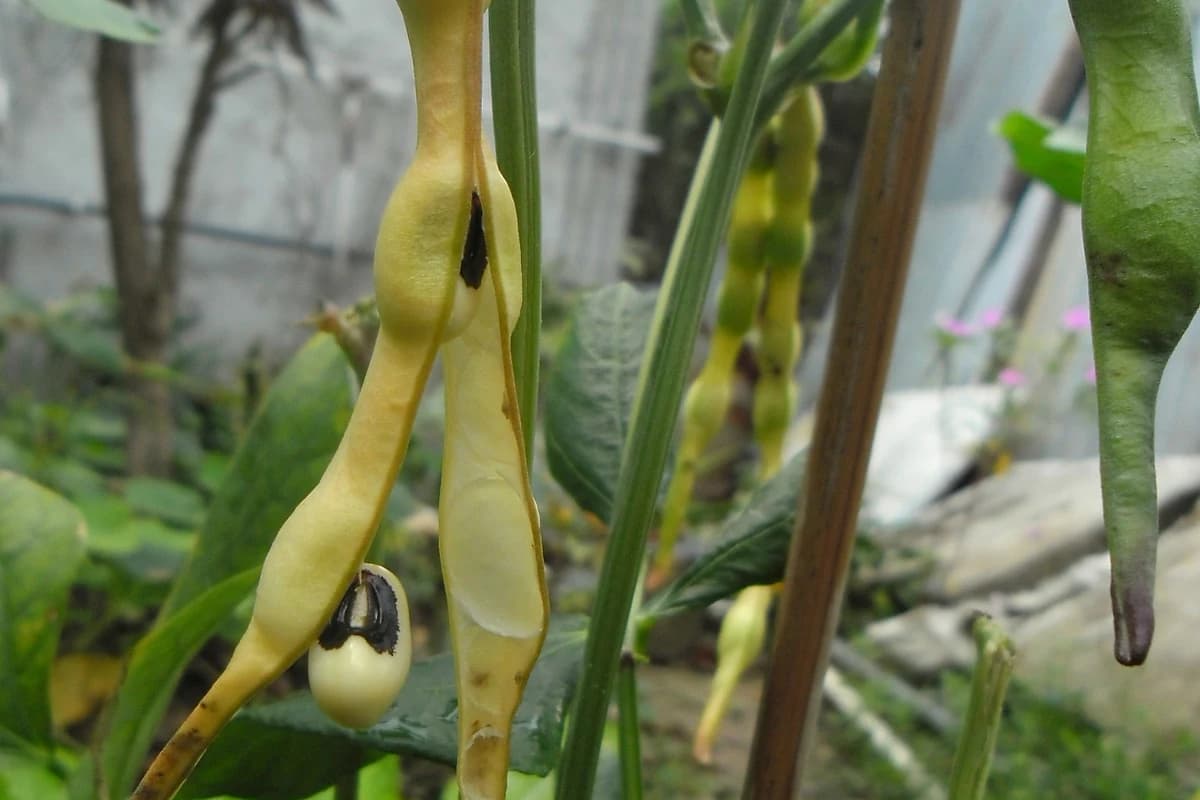
About This Plant
Black-eyed pea is a cowpea type grown for dry seed, fresh shell peas, tender pods, forage, cover cropping, and soil-building nitrogen fixation. It is a heat-loving annual legume that performs best in warm, well-drained soil with modest starter fertility, low excess nitrogen, and careful water supply during flowering and pod fill.
How to Grow Black-Eyed Pea
Learn how to grow Black-Eyed Pea from seed to harvest in 90 days. Intermediate difficulty. Complete nutrient guide, pH/EC requirements, and growing conditions for hydroponics, soil & greenhouse.
Sources cited: 8.
Nutrient Requirements by Growth Stage
Treat black-eyed pea as a nodulating legume, not a high-nitrogen leafy crop. Mississippi State says N is generally not required and excess N promotes lush vegetative growth and delayed maturity; Oklahoma recommends only 20-50 lb/acre preplant N on moderate-to-low fertility soils and discourages sidedress N…
Sign in to view nutrient requirements
A free account unlocks NPK targets for all four growth stages, micronutrient levels, a per-stage nutrient calculator, and the full nutrition guide. Signing up takes one click. Truleaf is a free, non-profit project, and every new account helps it grow. No spam, ever.
Growing Environments
Outdoor production is the evidence-backed default, especially in warm semi-arid or southern garden systems. Greenhouse production is possible for season extension if heat, drainage, and disease pressure are managed, and container production is reasonable for small harvests of bush cultivars…
Temperature
Black-eyed pea is a warm-season cowpea. Plant only after soil warms: Colorado guidance allows planting at 60 F, while Oklahoma and Mississippi guidance prefer 70 F or warmer for reliable emergence. KALRO reports broad growth tolerance from about 20-35 C, but cautions that flowering performs best below about 30 C and frost or cool nights below 13 C are damaging. Use 28 C as the practical optimum and treat 35 C as upper tolerance, not a flowering target.
Humidity
Moderate humidity and dry foliage are safer than humid, wet canopies. Colorado and KALRO both emphasize dry or semi-arid adaptation, while KALRO warns that excessive rainfall during flowering raises disease risk and causes flower drop…
Light
Use full sun outdoors and strong greenhouse light. Cowpea is grown as an open-field summer crop in extension guides and can tolerate moderate shade, but USDA NRCS notes shade should not be heavy in orchard or agroforestry uses…
Airflow
Airflow guidance is disease-management guidance rather than a cowpea-specific speed trial. Clemson recommends well-drained sites, avoiding overhead irrigation, and removing bean debris to reduce anthracnose, root rots, rust, and other diseases…
Sign in to view environmental requirements
A free account unlocks exact temperature, humidity, light and airflow targets, including germination and growth ranges, DLI, photoperiod and PPFD, plus the full environment guide. Signing up takes one click. Truleaf is a free, non-profit project, and every new account helps it grow. No spam, ever.
Hydroponic System Compatibility
Drip fertigation in containers or soil is the strongest controlled-water fit because it keeps foliage dry and supports flowering moisture demand. Ebb-flow can work in draining media for expert growers, and aerated DWC is biologically possible because USDA-ARS grew cowpea in recirculating nutrient solution; however,…
Growing Media
Use warm, well-drained soil as the primary medium. Mississippi State reports best performance on well-drained sandy loams or sandy soils at pH 5.5-6.5, and KALRO likewise favors well-drained soils with pH about 5.6-6.5 while warning against waterlogging…
Container Specs
Containers are suitable for garden-scale bush black-eyed peas, but they should be treated as low-volume dry-seed production. Use at least 30 cm depth and width with drainage holes; larger boxes or fabric pots improve water buffering during flowering and pod fill…
Training & Support
Support depends on growth habit. Blackeye types used for field production are often bush or semi-bush and do not require trellising; Colorado notes California Blackeye cultivars are harvested with conventional equipment, and KALRO lists erect, semi-erect, spreading, and prostrate cowpea varieties…
Sign in to view system compatibility
A free account unlocks why each of the six systems fits or fails, plus growing media, container sizes, training methods, companion plants, and the full systems guide. Signing up takes one click. Truleaf is a free, non-profit project, and every new account helps it grow. No spam, ever.
Propagation
Propagate from seed by direct sowing. Colorado reports emergence in 3-5 days after planting under warm conditions and recommends 3/4 to 1 inch depth, up to 1.5 inches in sandy soil…
Harvesting
Harvest timing depends on product. Fresh-market green shell peas may be ready 16-17 days after bloom or around 60-90 days after planting, while Colorado blackeye varieties usually flower 40-45 days after emergence and finish dry harvest in about 90-95 days…
Planting Calendar
For a temperate northern-hemisphere baseline, direct sow from late May through June once soil is warm; Oklahoma allows central Oklahoma planting from mid-May to July 15, and Colorado warns planting after June 20 can push harvest too late for following winter cereals. Expect flowering near 40-50 days after emergence in…
Common Issues
The old issue list was too short. Cowpea and southern pea sources consistently flag aphids, thrips, pod borers, curculio or weevils, root-knot nematodes, root rots, Fusarium wilt, Cercospora leaf spot, rust, powdery mildew, bacterial blights, and cowpea mosaic viruses…
Get the full science-backed guide
By signing up, you help keep Truleaf free and support the growth of our nonprofit project. Your account unlocks full details for every plant issue—including symptoms, causes, step-by-step solutions, and prevention—plus the month-by-month planting calendar, the complete guide, and all research sources. It only takes one click. No spam, ever.