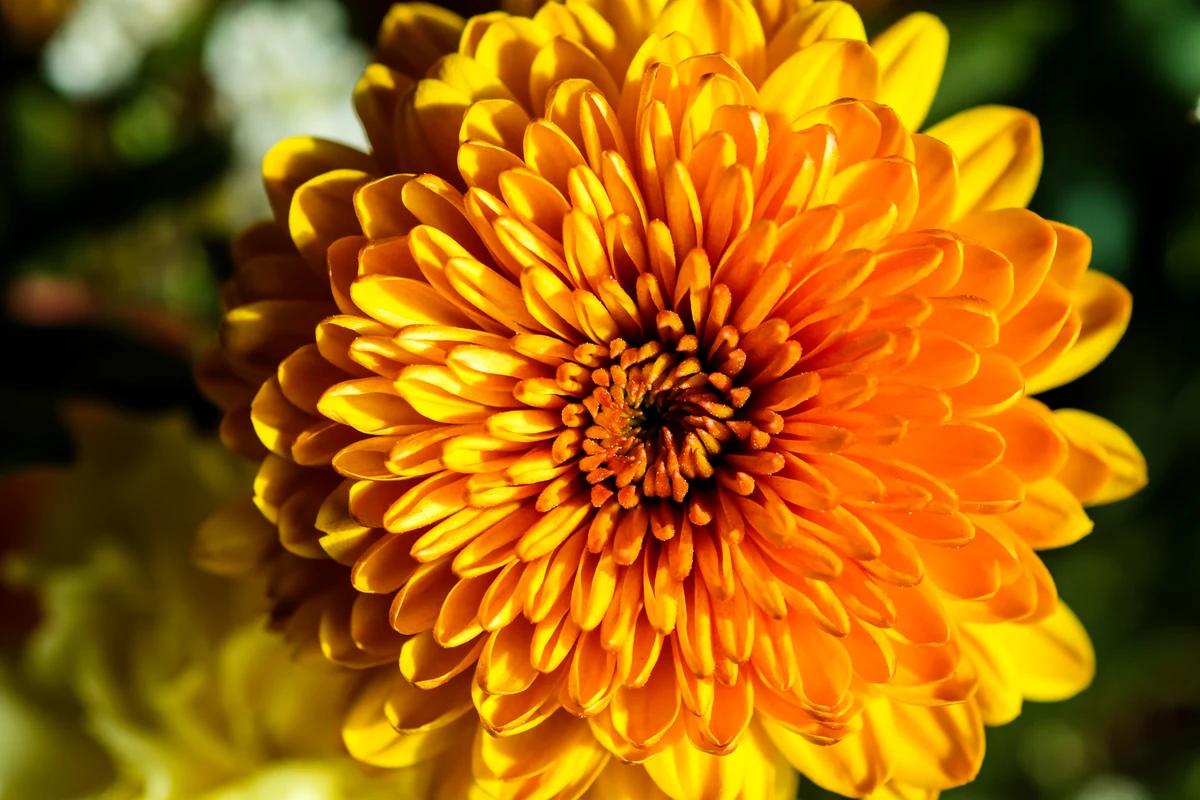
About This Plant
Dahlia is a tender tuberous ornamental grown for large summer-to-fall blooms, cut flowers, containers, and pollinator-friendly open-centered cultivars. It performs best in full sun, fertile well-drained media, steady moisture after active growth starts, moderate low-nitrogen fertility, and strong support for tall flower stems.
How to Grow Dahlia
Learn how to grow Dahlia from seed to harvest in 90 days. Intermediate difficulty. Planting, care, feeding and the right growing conditions.
Sources cited: 12.
Nutrient Requirements by Growth Stage
Dahlia fertility should be moderate and soil-test or EC-guided. Peer-reviewed and technical sources support about 100-200 ppm N for soilless/container production, with Dahlia growth responding well to 100-300 mg/L N but declining at 400 mg/L N…
Sign in to view nutrient requirements
A free account unlocks NPK targets for all four growth stages, micronutrient levels, a per-stage nutrient calculator, and the full nutrition guide. Signing up takes one click. Truleaf is a free, non-profit project, and every new account helps it grow. No spam, ever.
Growing Environments
Dahlia is best treated as an outdoor, greenhouse, high-tunnel, or container flowering crop, not a compact indoor edible crop. Cornell verifies high-tunnel production and OSU verifies both in-ground and container culture…
Temperature
Dahlia grows best in cool-sunny to mild-warm conditions. The current 18-24C growth band is retained, with 21C as the controlled-environment target, because greenhouse and high-tunnel sources place quality growth in that range and Cornell warns performance declines when tunnel temperatures push much above 27C or 80F. Seed germination is only relevant for seed-grown bedding dahlias; a 20-22C propagation target is used as a conservative seed-starting range, while tuber crops should be planted after frost into warm soil.
Humidity
No complete source gives a precise dahlia relative-humidity optimum, so humidity is managed for disease control. A 50-70% range with a 60% target is retained because it supports growth without intentionally creating the wet, stagnant canopy that favors Botrytis, powdery mildew, and storage rots…
Light
Dahlia is a high-light flowering crop for full sun or bright greenhouse production. Use at least 6 hours of direct sun outdoors, and in controlled rooms target about 16 mol/m2/day DLI, roughly 320 umol/m2/s over a 14-hour photoperiod, because higher DLI shortens flowering time and improves plant quality in greenhouse…
Airflow
Airflow is a disease-management requirement rather than a yield optimum. Use gentle continuous circulation around 0.3-0.8 m/s, ventilate high tunnels well, and avoid dense wet foliage because Cornell, OSU, UC IPM, and UMass all link dahlia quality problems to poor drying, wet flowers, or crowded canopies…
Sign in to view environmental requirements
A free account unlocks exact temperature, humidity, light and airflow targets, including germination and growth ranges, DLI, photoperiod and PPFD, plus the full environment guide. Signing up takes one click. Truleaf is a free, non-profit project, and every new account helps it grow. No spam, ever.
Hydroponic System Compatibility
The previous aeroponics flag was not supported by Dahlia × hybrida evidence and is now set false. Supported systems are soil beds, containers, soilless substrate, and drip or recirculating fertigation where roots remain in aerated media…
Growing Media
Use loose, fertile, well-drained soil for field beds or a coarse soilless substrate for containers and protected production. Dahlia tubers rot in cold wet media, so drainage is more important than constant saturation during establishment…
Container Specs
Containers are appropriate, especially for compact cultivars, but they need drainage, enough root volume, and more frequent fertility checks than in-ground beds. OSU recommends roughly 12-18 inch deep and wide containers, so the structured minimum is 30 cm by 30 cm with at least about 19 L volume…
Training & Support
Support is required for most tall dahlias. OSU recommends tying stems to 4-5 ft stakes or using T-post and twine systems, while Kansas State notes cages or staking prevent stalk breakage…
Sign in to view system compatibility
A free account unlocks why each of the six systems fits or fails, plus growing media, container sizes, training methods, companion plants, and the full systems guide. Signing up takes one click. Truleaf is a free, non-profit project, and every new account helps it grow. No spam, ever.
Propagation
Named dahlias should be propagated by tuber division or rooted cuttings because seed-grown plants are genetically variable and may not match the parent cultivar. Tubers are planted after frost when soil is warm, usually 4-6 inches deep with the eye upward, while cuttings are used for clonal production and seed is…
Harvesting
For cut flowers, harvest when blooms are open or nearly open because dahlia buds do not reliably open after cutting. Cut stems in the cool part of the day, place them immediately in clean warm water or a hydrating solution, and avoid packing wet blooms because Botrytis can develop on damp petals…
Planting Calendar
A temperate dahlia calendar starts indoors in late winter or spring for seed, cuttings, or pre-sprouted tubers, then moves outdoors only after frost danger has passed and the soil has warmed. Pinch established plants in early summer to improve branching, tie tall stems repeatedly, cut flowers from midsummer until…
Common Issues
The issue list was expanded from nutrient and fungal entries into the main dahlia risk set: Botrytis blight, powdery mildew, dahlia mosaic virus, aphids and thrips, spider mites, wilt diseases, crown gall/root rot, and iron chlorosis. UC IPM verifies Botrytis, powdery mildew, crown gall, wilt diseases, nematodes,…
Get the full science-backed guide
By signing up, you help keep Truleaf free and support the growth of our nonprofit project. Your account unlocks full details for every plant issue—including symptoms, causes, step-by-step solutions, and prevention—plus the month-by-month planting calendar, the complete guide, and all research sources. It only takes one click. No spam, ever.