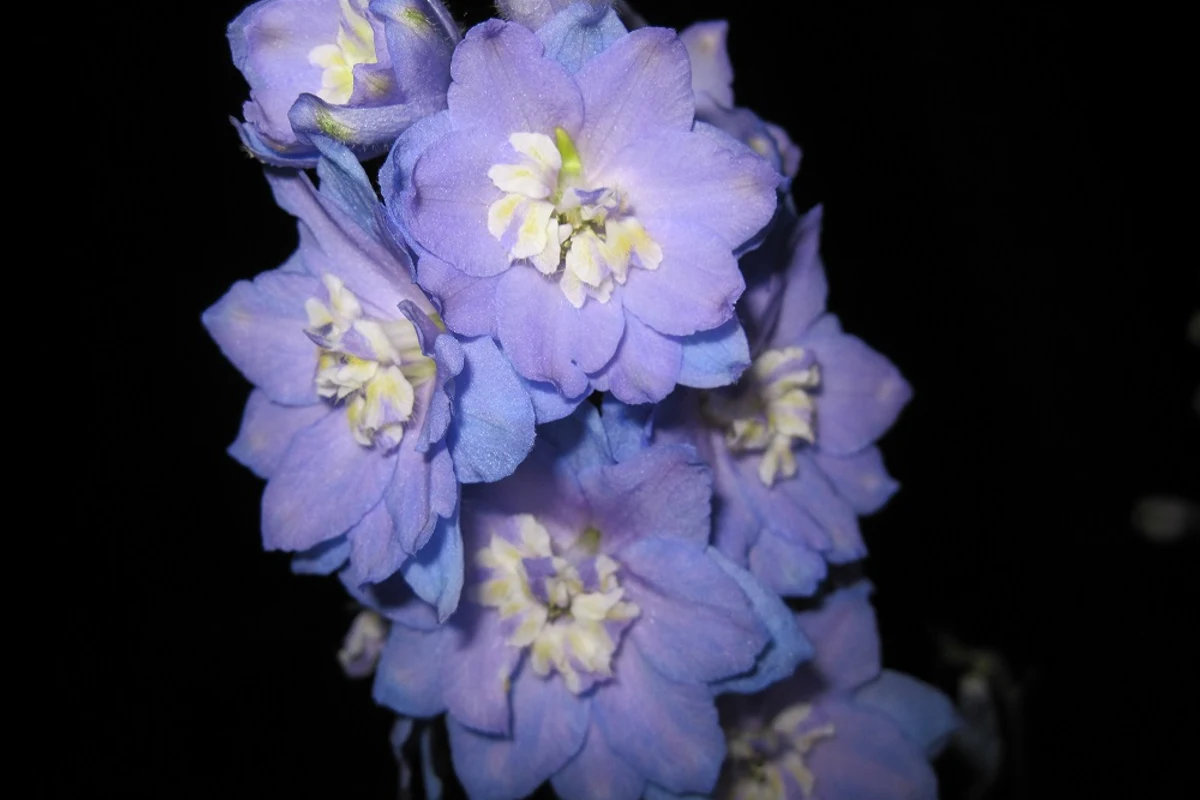
About This Plant
Delphinium is a cool-season ornamental and cut-flower crop grown for tall blue, white, pink, or lavender racemes. Commercial production centers on Delphinium elatum, Delphinium x belladonna, and Delphinium grandiflorum types, which need well-drained fertile media, cool temperatures, high light, careful disease prevention, and physical support for straight stems.
How to Grow Delphinium
Learn how to grow Delphinium from seed to harvest in 140 days. Advanced difficulty. Planting, care, feeding and the right growing conditions.
Sources cited: 12.
Nutrient Requirements by Growth Stage
Use moderate fertility and avoid high salts. USU verifies the seedling plug feed as 21-5-20 at 100 ppm N, which converts to about 100 ppm N, 10 ppm elemental P, and 79 ppm elemental K…
Sign in to view nutrient requirements
A free account unlocks NPK targets for all four growth stages, micronutrient levels, a per-stage nutrient calculator, and the full nutrition guide. Signing up takes one click. Truleaf is a free, non-profit project, and every new account helps it grow. No spam, ever.
Growing Environments
Delphinium is supported outdoors, in high tunnels, under cool glass, in greenhouses, and in containers when drainage and support are adequate. USU trials show high tunnels can advance harvest and increase marketable yield compared with field production, while AHDB reports glass, tunnel, and field systems in Europe and…
Temperature
Keep Delphinium cool. Seed germination is best around 18-22 C in plug production, while peer-reviewed seed work supports cool germination near 15-20 C rather than warm conditions. Finish crops around 15-25 C, with many greenhouse guides favoring about 18-21 C days and 13-18 C nights; AHDB notes that temperatures above 21 C reduce yield and flower size and above 24 C can cause spindly growth or premature flowering.
Humidity
No Delphinium-specific extension or peer-reviewed source located gives a reliable numeric relative-humidity optimum for mature growth, so the numeric 50-70% target should be treated as operational guidance rather than a verified crop requirement. What is well supported is disease avoidance: keep foliage dry, avoid…
Light
Grow Delphinium in full sun or high light, with afternoon shade only in hot climates. NC State lists full sun to partial shade, while AHDB emphasizes high light for quality and notes that long days are not essential but can hasten flowering when light intensity is adequate…
Airflow
Air movement is a core disease-control practice for Delphinium rather than a yield target with a fixed m/s value. Extension disease guides recommend spacing plants, keeping leaves dry with fans and vents in greenhouses, avoiding overhead irrigation, and removing debris because black leaf spot spreads with splashing…
Sign in to view environmental requirements
A free account unlocks exact temperature, humidity, light and airflow targets, including germination and growth ranges, DLI, photoperiod and PPFD, plus the full environment guide. Signing up takes one click. Truleaf is a free, non-profit project, and every new account helps it grow. No spam, ever.
Hydroponic System Compatibility
Blanket rejection of all hydroponic systems is not supported, because soilless substrate fertigation and drip-irrigated protected production are documented. The reliable recommendation is media-based production: field beds, raised beds, high tunnels, greenhouse media, or containers with drip or careful hand irrigation…
Growing Media
Use fertile, well-drained loamy soil or a high-quality peat/perlite plug mix. USU recommends loamy, well-drained soil with soil testing before amendments and peat/perlite seed-starting media for plugs…
Container Specs
Container growing is supported for Delphinium, especially shorter D. grandiflorum and compact hybrids, but extension sources do not provide a precise species-level pot size…
Training & Support
Support is required for tall Delphinium. USU recommends horizontal trellis/netting to promote straight marketable stems, particularly in windy sites, and installing it before or immediately after planting…
Sign in to view system compatibility
A free account unlocks why each of the six systems fits or fails, plus growing media, container sizes, training methods, companion plants, and the full systems guide. Signing up takes one click. Truleaf is a free, non-profit project, and every new account helps it grow. No spam, ever.
Propagation
Seed is the primary propagation method for commercial plug production. USU recommends dry chilling seed at 35-40 F for 3 weeks, then sowing in peat/perlite mix, lightly covering with vermiculite, holding 64-71 F, and planning 14-16 weeks total for chilling, plug growth, and hardening…
Harvesting
Harvest cut stems in the cool morning and move them immediately into clean cool water. USU recommends cutting both Elatum and Belladonna types when one-third to one-half of the raceme florets are open, leaving one to four basal nodes for regrowth…
Planting Calendar
Schedule Delphinium around local frost dates and production system. In northern Utah, USU sowed high-tunnel crops in early to late January, transplanted late March to mid-April, and harvested first-year plants mid- to late June; field crops were sown mid-February to early March, transplanted early to mid-May, and…
Common Issues
Powdery mildew, crown/root rots, bacterial black leaf spot, aphids, thrips, spider mites, slugs, and snails are source-backed Delphinium risks. Powdery mildew is a major field disease, with peer-reviewed cultivar screening showing Blue Bird, King Arthur, Cameliard, and Galahad more resistant than Casa Blanca, Blue…
Get the full science-backed guide
By signing up, you help keep Truleaf free and support the growth of our nonprofit project. Your account unlocks full details for every plant issue—including symptoms, causes, step-by-step solutions, and prevention—plus the month-by-month planting calendar, the complete guide, and all research sources. It only takes one click. No spam, ever.