Loading plant details...
66 sources used for this plant profile
UC IPM, University of California Agriculture and Natural Resources (2024). “White Rot — Pest Management Guidelines: Onion and Garlic.” UC Statewide IPM Program.
University of Idaho Extension (2020). “Beware Signs of White Rot in Garlic and Other Allium Crops.” University of Idaho Extension Bulletin BUL 955.
UC IPM, University of California Agriculture and Natural Resources (2024). “Fusarium Basal Rot — Pest Management Guidelines: Onion and Garlic.” UC Statewide IPM Program.
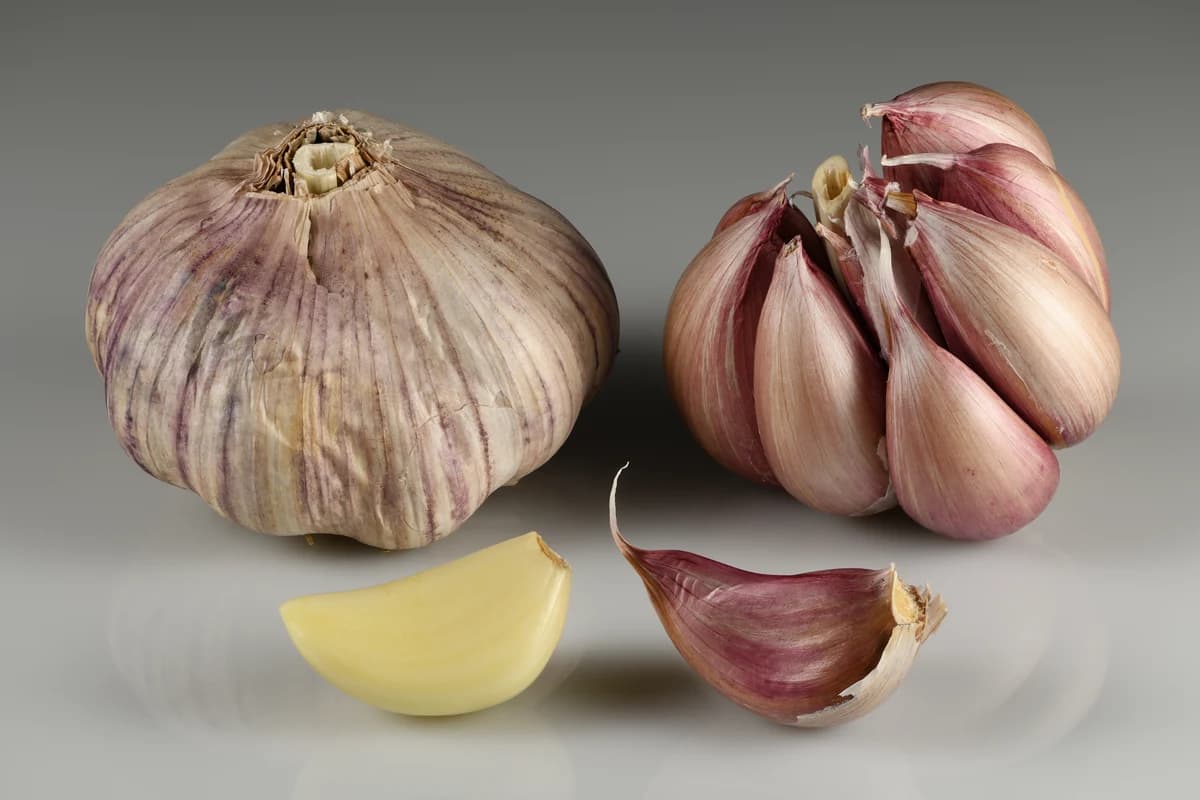
Garlic is a bulbous perennial grown worldwide for its pungent cloves used in cooking and traditional medicine. It is planted from individual cloves in fall or early spring, forms a bulb underground over several months, and is harvested when lower leaves yellow. Two main types exist: hardneck varieties produce scapes, fewer but larger cloves, and tolerate cold winters; softneck varieties yield more cloves per bulb, store longer, and suit warmer climates. Garlic is highly responsive to photoperiod and vernalization, requiring cold exposure for proper bulb formation. It repels many insect pests, making it a popular companion plant, but is susceptible to several soilborne fungal diseases, especially white rot.
Temperature: 10-30°C (optimal 18°C). Humidity: 40-75% (optimal 60%). Light DLI: 15 mol/m²/day. Photoperiod: 14h.
Hydroponic System Compatibility:
DWC: Suitable. DWC can produce garlic but requires careful management: roots submerged while bulbs must remain above the waterline in net pots. Main challenge is keeping the bulb crown dry to prevent rot. Better suited for garlic greens than full bulb production. Aeration is critical — use air stones to maintain dissolved oxygen.
NFT: Not suitable. NFT channels are poorly suited for garlic bulb production. The shallow nutrient film does not accommodate bulb expansion, and garlic's long growth cycle risks biofilm buildup and channel clogging from root mass. May work for short-cycle garlic greens/scapes only.
Ebb and Flow: Suitable. Ebb and flow is well-documented for hydroponic garlic. The intermittent flood-drain cycle keeps roots moist while allowing substrate and bulb crown to drain between cycles. Flood every 4-6 hours. Use perlite, clay pebbles, or coco coir with good drainage.
Drip: Suitable. Drip systems are the most flexible hydroponic option for garlic bulb production. Substrate-based drip (coco coir, perlite mix) allows precise moisture control, keeping roots moist while the bulb stays in well-drained media. Scalable and ensures the bulb crown stays dry.
Kratky: Suitable. Kratky is feasible for garlic, especially garlic greens, due to its simplicity and zero electricity requirement. For full bulb production, the declining water level must be monitored over the long growth cycle. No aeration means oxygen can become limited. Best for small-scale setups.
Aeroponics: Suitable. Aeroponics provides excellent root oxygenation but challenges include the long growth cycle (6-9 months), misting nozzle clogging, and supporting the bulb structure mid-air. High complexity and cost relative to benefit. No peer-reviewed garlic-specific aeroponic studies found.
Common Issues:
White Rot
Symptoms: Yellowing and wilting of leaves starting from the tips. Fluffy white mycelial growth on the bulb base and roots. Small round black sclerotia (0.2-0.5 mm) embedded in decaying tissue. Roots rot completely, allowing easy plant removal from soil
Causes: Soilborne fungus Stromatinia cepivora (syn. Sclerotium cepivorum). Sclerotia persist in soil for over 20 years without a host. Germination triggered by sulfur compounds in Allium root exudates. Favored by cool soil temperatures of 10-20°C (optimal 15-18°C)
Solutions: Remove and destroy infected plants and surrounding soil immediately — do not compost. Apply approved fungicides (tebuconazole, penthiopyrad, fludioxonil) in a 15 cm band over planting rows at planting. Hot-water treat seed cloves at 46-49°C for 15-20 minutes before planting to reduce pathogen load. Consider soil solarization in warm climates to reduce sclerotia viability
Prevention: Plant only certified disease-free seed stock from fields with no white rot history. Avoid moving soil, equipment, or plant material from infested fields. Rotate away from all Allium crops for as long as possible, though sclerotia survive 20+ years. Clean and sanitize tools, boots, and machinery between fields
Fusarium Basal Rot
Symptoms: Brown discoloration of the basal plate visible when bulb is cut vertically. Yellowing foliage and leaf dieback progressing from tips downward. Dark brown to pinkish roots; white or pink fungal growth may appear at the bulb base. Stem plate becomes pitted with dry rot; outer scales crack under dry conditions
Causes: Fusarium proliferatum (most virulent and common in garlic) and Fusarium oxysporum. Optimal soil temperature for infection is 25-28°C, with range of 15-32°C. Both pathogens can colonize garlic asymptomatically within 2 months of planting. Contaminated seed cloves are the primary introduction pathway
Solutions: Remove infected plants and do not replant Alliums in the same soil for 4+ years. Store harvested bulbs below 4°C at low relative humidity to slow post-harvest rot. Discard heavily infected seed lots — no reliable method exists to eradicate the pathogen from seed cloves. Sanitize field equipment with quaternary ammonium compounds between plantings
Prevention: Use garlic seed tested for Fusarium basal rot pathogens from certified seed programs. Select clean seed from fields with no history of basal rot. Avoid planting in warm, poorly drained soils where Fusarium thrives. Practice 4-year crop rotation with non-Allium crops
Downy Mildew
Symptoms: Pale green to yellow elongated patches on older leaves. Gray-purple fuzzy fungal growth on leaf surfaces, especially undersides. Leaves lose rigidity, curl, and eventually collapse. Severe infections cause stunted growth and reduced bulb size
Causes: Oomycete Peronospora destructor. Thrives in cool (7-16°C), humid conditions with prolonged leaf wetness. Oospores survive in soil and on infected plant debris. Spread by wind-dispersed sporangia during cool, moist weather
Solutions: Apply fungicides containing metalaxyl, mancozeb, or chlorothalonil at first sign of symptoms. Increase plant spacing to improve air circulation and speed leaf drying. Remove and destroy severely infected leaves to reduce spore load. Avoid overhead irrigation; use drip irrigation to keep foliage dry
Prevention: Plant only disease-free seed cloves from reputable sources. Rotate crops for 3-4 years away from all Allium species. Avoid overcrowding and plant in well-drained sites with good air movement. Time irrigation for morning hours so foliage dries quickly during the day
Purple Blotch
Symptoms: Small water-soaked lesions on older leaves that enlarge into elliptical spots. Lesions develop concentric zonate rings with purplish-brown centers and yellow margins. Affected leaves yellow, wilt, and die back from tips. Can spread to seed stalks and bulb neck tissue
Causes: Fungus Alternaria porri. Favored by warm temperatures (24-29°C) and high humidity with alternating wet-dry cycles. Spores spread by wind and rain splash. Thrives on stressed or wounded plant tissue
Solutions: Apply protectant fungicides (chlorothalonil, mancozeb) on a 7-10 day schedule during humid conditions. Rotate fungicide modes of action to prevent resistance development. Remove and destroy infected plant debris promptly. Ensure adequate but not excessive nitrogen fertilization
Prevention: Practice long rotations (3-4 years) with non-host crops. Reduce leaf wetness duration through proper spacing, drainage, and irrigation timing. Avoid working in fields when foliage is wet to prevent mechanical spore spread. Incorporate crop residues after harvest to speed decomposition of overwintering spores
Botrytis Neck Rot
Symptoms: Soft, brownish, spongy decay in inner scales starting at the neck. Gray mold (Botrytis mycelium) visible on and between cloves. Black sclerotia may form on affected tissue during advanced stages. Often symptomless at harvest, developing during storage
Causes: Botrytis porri and Botrytis allii fungi. Infection enters through the cut neck at harvest or through wounds. Cool, moist conditions near harvest favor infection. Sclerotia survive in soil and on crop debris for multiple seasons
Solutions: Cure bulbs promptly after harvest in warm (27-32°C), dry, well-ventilated conditions for 2-4 weeks. Store cured bulbs at 0-4°C with 60-70% relative humidity. Inspect stored bulbs regularly and remove any showing soft rot or mold. Apply pre-harvest fungicides during the final weeks before harvest in high-risk seasons
Prevention: Harvest at proper maturity — do not leave bulbs in soil too long in wet conditions. Allow foliage to dry thoroughly before topping and handling. Avoid mechanical damage to bulbs during harvest and handling. Incorporate all Allium crop debris into soil immediately after harvest
Garlic Rust
Symptoms: Small white flecks (1-2 mm) on leaves that enlarge into oval orange pustules (3-5 mm). Pustules rupture to release masses of orange urediniospores. Severely affected leaves turn chlorotic, dry out, and die prematurely. Reduced bulb size and quality when infection is severe
Causes: Fungus Puccinia allii (syn. P. porri). Optimal infection at cool temperatures (10-15°C) with at least 4 hours of leaf wetness. Spores spread by wind over long distances. Favored by dense plantings, excessive nitrogen, and wet foliage
Solutions: Apply DMI fungicides (tebuconazole) at 7-14 day intervals at first sign of pustules. For organic production, use neem oil or sulfur-based fungicides to suppress spore germination. Remove and destroy heavily infected lower leaves to slow spread. Maintain adequate potassium nutrition to improve plant resistance
Prevention: Rotate out of Allium crops for 2-3 years and destroy all volunteers and Allium weeds. Avoid dense plantings that restrict airflow through the canopy. Do not over-apply nitrogen fertilizer, which promotes lush growth susceptible to infection. Use drip irrigation and avoid wetting foliage; irrigate in the morning if overhead irrigation is necessary
Stem and Bulb Nematode
Symptoms: Stunted, thickened, and distorted leaves with a bloated appearance. Swollen, misshapen bulbs with soft, spongy tissue (garlic bloat). Brown ring patterns visible when infested cloves are cut crosswise. Plants may yellow, wilt, and collapse in severe infestations
Causes: Nematode Ditylenchus dipsaci invades roots, bulbs, and foliage. Spreads via infested seed cloves, contaminated soil, and water runoff. Can survive in dried plant tissue for years in a dormant state. Thrives in cool, moist conditions (10-20°C)
Solutions: Hot-water treat seed cloves at 49°C for 20 minutes (carefully controlled to avoid clove damage). Remove and destroy all infested plants and surrounding soil — do not compost. Do not replant Alliums in infested soil for at least 4 years. Use nematode-free planting stock from certified disease-free programs
Prevention: Source seed cloves only from nematode-tested, certified clean suppliers. Practice strict sanitation — clean tools, boots, and equipment between fields. Rotate with non-host crops (grasses, cereals) for 4+ years in infested areas. Avoid moving infested soil on equipment or transplants to clean fields
Onion Maggot
Symptoms: Wilting and yellowing of seedlings, especially in cool wet springs. Plants break easily at the soil line when pulled. Larvae visible as small white maggots feeding in the bulb base and roots. Secondary bacterial soft rot often follows maggot damage
Causes: Larvae of the fly Delia antiqua bore into plant bases and developing bulbs. Adult flies lay eggs near the base of Allium plants in soil. Attracted to decaying organic matter and Allium volatiles. Multiple generations per year in temperate climates (spring through fall)
Solutions: Apply beneficial nematodes (Steinernema feltiae) to soil to parasitize larvae. Use floating row covers immediately after planting to exclude egg-laying adults. Remove and destroy infested plants promptly to break the pest cycle. Apply granular insecticides at planting in fields with a history of severe maggot pressure
Prevention: Rotate garlic plantings to new locations each season to reduce soil-dwelling populations. Remove all bulb remnants, culls, and volunteer Alliums at season end. Avoid applying fresh manure or compost near planting time, which attracts egg-laying adults. Use floating row covers from planting through the first generation of adult fly activity
Thrips
Symptoms: Silvery-white streaks and stippling on leaf surfaces. Leaves become distorted, curled, and scarred under heavy feeding. Reduced plant vigor and smaller bulbs in severe infestations. Tiny (1-2 mm) pale yellow to brown insects visible in leaf axils
Causes: Onion thrips (Thrips tabaci) and western flower thrips (Frankliniella occidentalis). Thrips rasp leaf surfaces and feed on cell contents. Populations build rapidly in hot, dry conditions. Adults migrate from nearby grain fields, weeds, and other crops
Solutions: Apply insecticidal soap, horticultural oil, or spinosad-based products for organic control. Use overhead irrigation to physically dislodge thrips from plants. Introduce predatory insects (Orius spp., lacewings) for biological control. Apply systemic insecticides only when economic thresholds are exceeded and beneficials are insufficient
Prevention: Avoid planting garlic adjacent to grain fields or alfalfa, which harbor thrips. Remove weeds in and around garlic beds that serve as alternate thrips hosts. Use reflective mulch to disorient adult thrips and reduce colonization. Monitor leaf axils weekly with a hand lens to detect populations before they build
Bulb Mites
Symptoms: Stunted growth and poor root development. Soft, rotting tissue on the basal plate and outer scales. Tiny (< 1 mm) shiny white or translucent mites visible in clusters under scales. Secondary fungal and bacterial infections follow mite-damaged tissue
Causes: Bulb mites (Rhizoglyphus spp. and Tyrophagus spp.) feed on damaged or wounded tissue. Enter through cuts, bruises, or existing disease lesions. Persist in soil and on stored bulbs in warm, humid conditions. Often associated with Fusarium or other rotting organisms as secondary invaders
Solutions: Hot-water treat seed cloves at 49°C for 20 minutes to kill mites on planting stock. Discard infested stored bulbs and sanitize storage areas. Allow fields to fallow for a season between successive Allium crops. Predatory mites (Hypoaspis spp.) can provide biological control in greenhouse settings
Prevention: Handle bulbs carefully during harvest and storage to minimize wounds that attract mites. Avoid successive Allium crops in the same field without a fallow period. Store bulbs in cool (0-4°C), dry conditions where mite activity is suppressed. Inspect seed cloves before planting and reject any showing soft rot or visible mites
Penicillium Blue Mold
Symptoms: Blue-green powdery mold on individual cloves, often starting at wounds or cut surfaces. Cloves become soft, watery, and eventually dry and shriveled. Strong musty odor from severely infected bulbs. Primarily a storage and seed-clove disease rather than a field disease
Causes: Fungi Penicillium hirsutum and Penicillium allii. Infection enters through wounds, bruises, or cracks in clove skin during handling. Favored by storage temperatures of 10-14°C with moderate humidity. Does not persist long-term in soil but is ubiquitous in storage environments
Solutions: Cure bulbs thoroughly before storage to seal wound sites. Store at 0-4°C with low humidity to suppress mold growth. Discard any cloves showing blue-green mold — do not use as seed stock. Apply approved fungicide dips to seed cloves before planting in regions with chronic problems
Prevention: Handle bulbs carefully during harvest, curing, and storage to prevent wounding. Maintain cold, dry storage conditions (0-4°C, 60-70% RH). Ensure good air circulation during curing and storage. Use only clean, firm, unblemished cloves for seed stock
commonIssues: Garlic faces 11 well-documented pests and diseases. White rot caused by Stromatinia cepivora is the most devastating soilborne disease — sclerotia persist in soil for 20+ years and are triggered by Allium root exudates [1][2]. Fusarium basal rot (F. proliferatum, F. oxysporum) causes basal plate decay and is the most common Fusarium pathogen in California garlic [3]. Foliar diseases include downy mildew (Peronospora destructor), purple blotch (Alternaria porri), botrytis neck rot (Botrytis porri), and rust (Puccinia allii), all favored by cool-moist or humid conditions [4][5][6][7]. The stem and bulb nematode (Ditylenchus dipsaci) causes characteristic bulb bloating and can survive dormant in dried tissue for years [8]. Key insect pests are onion thrips (Thrips tabaci), onion maggot (Delia antiqua), and bulb mites (Rhizoglyphus spp.) [9][10][11]. Penicillium blue mold is primarily a storage disease entering through wounds [12]. Hot-water seed treatment (49°C/20 min) is a cross-cutting management tool effective against multiple pathogens and pests [1][3][8].
harvesting: Harvest timing is the single most critical factor for garlic storage quality. The reliable indicator is leaf senescence: harvest when 3-4 lower leaves have yellowed but 5-6 green leaves remain, as each green leaf corresponds to one wrapper layer on the bulb [13][14]. Bulbs should be loosened with a fork and lifted gently — never pulled by stems [14]. Curing requires 2-4 weeks in warm (27-32°C), dry, well-ventilated shade until necks are fully papery [13][14][15]. Post-curing storage at 0-4°C and 60-70% RH extends shelf life: softneck types store 6-8 months, hardneck 3-5 months, with Silverskin and Creole cultivars reaching 10-12 months [13][15]. Garlic does not regrow from the same bulb — each planted clove produces one new bulb [14].
temperature: Garlic (Allium sativum) has distinctive temperature requirements driven by its vernalization-dependent life cycle. Cloves sprout optimally at soil temperatures of 10-15°C, with germination occurring in 7-14 days [20][26]. Active vegetative growth is greatest between 15-25°C, with an optimal target of 18°C for sustained leaf and root development [18][24]. Bulbing is triggered by the combination of warm temperatures (20-25°C) and long photoperiods (>13h) [18][19]. Critically, garlic requires vernalization — 4-8 weeks at 0-10°C — for proper bulb differentiation; without this cold period, bulbing fails or produces monoclove (round, undivided) bulbs [18][19][21]. Hardneck varieties need more cold than softneck. In hydroponic systems, pre-chill cloves in a refrigerator (2-5°C) for 4-8 weeks before planting.
humidity: Garlic performs well at 50-75% relative humidity during active growth [26]. An optimal target of around 60% balances moisture needs with disease prevention. Excessive humidity promotes white rot (Sclerotium cepivorum), purple blotch (Alternaria porri), and Botrytis, which are the most damaging garlic diseases [26]. During bulb curing and storage, reduce humidity to 50-60% with good air circulation [20]. Pre-planting stock should be stored at 10°C and 60% RH [20]. Indoor growers should maintain moderate humidity and ensure foliage stays dry.
light: Garlic requires full sun and is photoperiod-sensitive for bulbing. Long days (>13h) combined with warm temperatures trigger bulb initiation — this is a defining physiological trait of the species [18][19]. For indoor growing, provide 14-16 hours of light at approximately 300 µmol/m²/s PPFD, yielding a DLI of about 15 mol/m²/d [18][19][27]. During the vegetative phase before bulbing, 10-12 hours may suffice for leaf growth, but the transition to long days is essential for bulb formation. Short-day conditions (<10h) suppress bulbing entirely [18][19].
airflow: Good air circulation is important for garlic to prevent foliar fungal diseases, particularly white rot and purple blotch [26]. Maintain gentle airflow of 0.3-0.8 m/s across the canopy indoors. Garlic foliage should dry quickly after irrigation. During post-harvest curing, hang bulbs in netted sacks or braids with air circulation on all sides [20][26]. In enclosed growing environments, oscillating fans help reduce boundary-layer humidity around leaves.
nutrition: Garlic follows a potassium-dominant nutrition strategy with an overall NPK ratio of approximately 24-7-36 [28][30][53]. During the seedling phase, demand is low as the mother clove supplies initial energy — target N 50-80, P 20-40, K 80-130 ppm [54]. The vegetative stage is the critical nitrogen window: N 120-180 ppm (optimal 150), K 150-220 ppm [28][53][54]. Cornell research found no yield benefit above 50 lb N/acre, confirming garlic’s modest, front-loaded N needs [54]. At scape emergence, reduce N to 80-120 ppm while K surges to 200-280 ppm [28][30]. During bulb fill, minimize N to 30-70 ppm for storage quality while K peaks at 220-300 ppm [30][53]. Sulfur is uniquely critical — allicin concentration increases 5-fold with adequate S supply, targeting 60-100 ppm during bulb fill [29]. Calcium 130-180 ppm and magnesium 50-70 ppm at Ca:Mg ratio 2.5:1 support bulb development [28][29]. Key micronutrients: Fe 3.0, Zn 0.5, B 0.5, Cu 0.15 ppm. Garlic accumulates selenium at 20-30x ordinary vegetable levels [34].
One study reports higher nitrogen tolerance at 200 kg N/ha as ML-optimized for maximum yield [53], though Cornell field trials show no benefit above 56 kg N/ha [54]. The Haifa Group commercial program recommends higher total N (267 kg/ha) split across the full season [30].
propagation: Garlic is propagated vegetatively from cloves — individual segments of a mature bulb. Select the largest, healthiest outer cloves from disease-free stock bulbs and plant them pointed end up, 5-7 cm deep, in well-drained soil or media [56][57][59]. This is a straightforward process rated easy difficulty. Hardneck varieties also produce bulbils (topsets on the flower scape), which can be planted in fall and grown on, but they take 2-3 seasons to produce full-size bulbs and are mainly used for seed stock increase [58][61]. True seed production in garlic is extremely rare due to cultivar sterility, and is limited to specialized breeding programs [58][61]. For home and commercial production, clove planting is the universal standard.
Some specialist growers use tissue culture for virus-free stock production, but this is an industrial propagation method not relevant to home or small-scale growers.
calendar: Garlic follows a unique fall-plant, summer-harvest cycle in temperate climates. Plant cloves directly outdoors in October-November, 6-8 weeks before the first hard frost [56][57][59]. Roots establish in fall, the plant goes dormant through winter, then resumes vigorous growth in spring. This cold period (vernalization) is essential for proper bulb differentiation [56][59]. Harvest occurs when the lower 2-3 leaves turn brown, typically late June through August depending on region and variety [56][57]. Hardneck scapes appear in June and should be removed promptly [56][60]. Spring planting (Feb-Mar) is a secondary option but consistently produces smaller bulbs due to inadequate vernalization [56][59]. Container-started garlic (Sep-Oct indoors) should be moved outdoors for winter cold exposure [63][64].
In mild-winter climates (USDA zones 8-10), planting can occur as late as December-January, and softneck varieties that require less chilling are preferred over hardneck types [59].
environments: Garlic grows in all four environments. Outdoor cultivation is the primary and best-documented method, with fall planting for summer harvest in temperate climates [20][21][26]. Greenhouse production offers environmental control and is documented in research settings [22]. Container growing is popular among home gardeners — use containers at least 20 cm deep with good drainage [20][26]. Indoor growing is feasible but challenging: the 6-9 month growth cycle, vernalization requirement, and high-light needs make it the most demanding environment. Indoor growers must pre-chill cloves and provide strong artificial lighting with a long-day photoperiod [22][23].
systemCompat: Hydroponic garlic is uncommon but documented, with the primary challenge being keeping bulb crowns dry while roots stay moist [22][23]. Drip systems are the most recommended: substrate-based drip with perlite or coco coir allows precise moisture control and accommodates bulb expansion [22][23]. Ebb-and-flow is also well-suited, with the flood-drain cycle naturally providing moist-then-dry conditions [25]. DWC and Kratky can work, particularly for garlic greens, but full bulb production requires careful management of the waterline to prevent crown rot [22][23]. NFT is poorly suited for bulb crops due to channel geometry constraints. Aeroponics is theoretically feasible but unverified for garlic and overly complex for its long cycle [22]. In all hydroponic systems, cloves must be vernalized (refrigerated 4-8 weeks at 2-5°C) before planting.
growingMedia: Garlic performs best in well-drained, loose, fertile loamy soil with pH 6.0-7.0 and good organic matter content (5-8%) [56][57][59]. Drainage is the critical factor — waterlogged or compacted media causes clove rot and stunted growth [57][59]. For container growing, amend garden soil with compost and perlite, or use a soilless mix of coco coir and perlite (70:30). Sand improves drainage in heavier mixes. In hydroponic or soilless systems, clay pebbles or perlite-based mixes provide the aeration garlic roots need. Avoid pure vermiculite or peat moss alone, as they retain too much moisture around the developing bulb [57][62].
Raised beds with amended soil are an excellent compromise between in-ground and container growing, especially in areas with heavy clay soils [57][59].
containerSpecs: Garlic is well-suited to container growing provided depth and drainage are adequate [63][64]. Roots can reach 30-45 cm, so use containers at least 25 cm deep — deeper is better for full-size bulb development. A minimum width of 25 cm accommodates 3-4 cloves at 10-15 cm spacing [63][64]. Terracotta and fabric pots offer superior drainage and aeration, reducing rot risk. Plastic is acceptable with generous drainage holes and fast-draining media. For overwintering, containers need to withstand freezing (terracotta may crack — insulate or use plastic/fabric in cold climates). Avoid overcrowding cloves in containers, as competition reduces individual bulb size [63][64].
Some growers use shallow containers (15-20 cm) for garlic greens/scallion-style harvest rather than full bulb production. For this purpose, smaller containers work since the goal is foliage, not bulb development.
trainingSupport: Garlic does not need trellis, staking, or structural support. The sole training practice is scape removal on hardneck varieties [56][60][65]. Research by John Zandstra at the University of Guelph demonstrated that hand removal of scapes increases yield by 20-30% [60][65]. University of Maine found that leaving scapes on the plant reduces harvested bulb size by up to 48% [56]. Timing matters: remove scapes early when they form a single curl. Waiting until the scape elongates reduces the benefit by approximately 9%, and cutting leaves during removal reduces yields by 13% per leaf [60]. Softneck garlic does not produce scapes and requires no pruning at all.
Some growers intentionally leave scapes to produce bulbils for planting stock increase, accepting the reduction in bulb size as a trade-off for propagation material [58][61].
Propagation: Garlic is propagated almost exclusively from cloves (individual segments of a mature bulb). Break the bulb apart just before planting, select the largest outer cloves, and plant pointed end up 5-7 cm deep. Hardneck varieties produce bulbils (topsets on scape), which require 2-3 seasons to reach full bulb size. True seed propagation is extremely rare.
Harvesting: Harvest garlic when the lower 3-4 leaves have yellowed and dried but 5-6 green leaves remain — each green leaf corresponds to a wrapper layer protecting the bulb. Loosen soil around bulbs with a garden fork, then gently lift bulbs; never pull by the stem as it can separate from the bulb. Brush off loose soil but do not wash. Cure immediately by hanging bundles or laying bulbs in a single layer in a warm (27-32°C), dry, well-ventilated area out of direct sunlight for 2-4 weeks until necks are completely dry and papery. After curing, trim roots to 6 mm and cut stems to 2-3 cm above the bulb (or braid softneck varieties). Store hardneck types at 0-4°C and 60-70% humidity for 3-5 months; softneck types store 6-8 months under the same conditions. Silverskin and Creole varieties can store up to 10-12 months.
Growing Media: Garlic requires well-drained, loose, fertile media with pH 6.0-7.0. Loamy soil rich in organic matter is ideal. Heavy clay or waterlogged media causes rot. For soilless mixes, coco coir with perlite (70:30) provides good drainage. Sand improves drainage in heavier mixes. Avoid pure vermiculite or peat alone.
Container: Garlic roots can extend 30-45 cm, so use containers at least 25 cm deep. A 25 cm wide pot fits 3-4 cloves at proper spacing. Terracotta and fabric pots offer superior aeration. Plastic is acceptable with generous drainage holes. Containers must withstand freezing for overwintering.
Training: Garlic needs no trellis or structural support. Scape removal on hardneck varieties increases bulb yield 20-30%. Remove scapes when they form a single curl in early summer. Softneck garlic does not produce scapes and requires no pruning.