Receita de Jardim de Ervas Mistas em Solo
Uma receita versátil à base de solo para cultivar um jardim de ervas companheiras com orégano, tomilho, alecrim, salsa e cebolinha, usando fertilizantes orgânicos e sintéticos para máximo sabor e aroma.
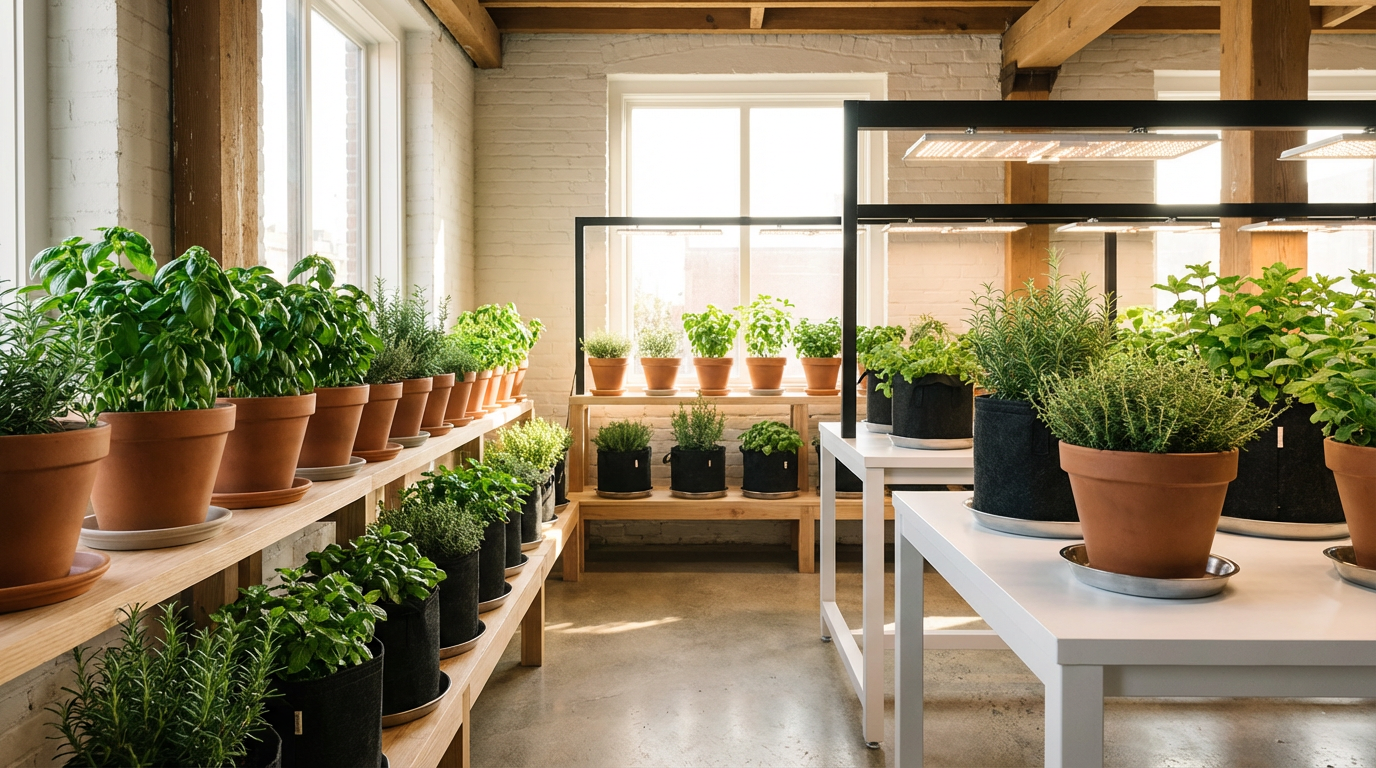
Nem todo jardim de ervas precisa de um sistema hidropônico. Esta receita à base de solo é perfeita para cultivadores que desejam a simplicidade e a tolerância do solo, sem deixar de otimizar os nutrientes para obter a melhor qualidade possível das ervas. Ao combinar ervas de crescimento rápido (salsa, cebolinha, coentro) com perenes lenhosas (alecrim, tomilho, orégano), você cria um jardim de ervas diverso e produtivo, com colheitas durante todo o ano. O solo fornece um tampão natural de nutrientes e um ecossistema microbiano no qual muitas ervas prosperam. Ervas mediterrâneas como alecrim, tomilho e orégano, na verdade, preferem um solo levemente pobre em nutrientes e bem drenado, que imita seu habitat nativo — fertilizar demais essas ervas reduz a concentração de óleos essenciais e enfraquece seu sabor. Esta receita usa uma estratégia de adubação leve para ervas lenhosas e uma abordagem de adubação moderada para ervas folhosas. A mistura de solo combina um substrato de qualidade com perlita para drenagem e húmus de minhoca para nutrição orgânica de liberação lenta. A adubação suplementar usa a linha de fertilizantes líquidos da Fox Farm, que fornece nutrientes orgânicos e prontamente disponíveis. O ponto-chave é que ervas cultivadas pelo sabor devem receber menos nutrientes do que ervas cultivadas para volume — um estresse nutricional leve concentra os óleos essenciais e produz ervas mais aromáticas e saborosas.
Estágios Nutricionais (ppm)
Tags
Unlock Full Recipe
Sign in to access detailed ingredients, instructions, and analysis
Perguntas Frequentes
Por que minhas ervas de interior têm menos sabor do que as ervas cultivadas ao ar livre?
Ervas cultivadas em ambiente interno muitas vezes têm menos sabor devido à luz insuficiente e ao excesso de fertilização. Os óleos essenciais (a fonte de sabor e aroma) ficam concentrados quando as plantas passam por estresse leve — luz forte, condições levemente secas e nutrientes moderados. Garanta 6-8 horas de luz solar direta ou mais de 14 horas sob luzes de cultivo. Alimente ervas mediterrâneas com metade da dose recomendada. Temperaturas noturnas frescas (55-60°F) também aumentam a produção de óleos essenciais.
Com que frequência devo regar meu jardim de ervas?
A frequência de rega depende do tipo de erva. Ervas mediterrâneas (alecrim, tomilho, orégano) preferem secar entre as regas — regue quando as 1-2 polegadas superiores do solo estiverem secas, normalmente a cada 3-5 dias. Ervas folhosas (salsa, cebolinha, coentro) preferem umidade constante — regue quando a meia polegada superior estiver seca, normalmente a cada 2-3 dias. O excesso de água é o erro mais comum — mais ervas morrem por água demais do que por água de menos.
Posso cultivar todas essas ervas no mesmo vaso?
Você pode, mas agrupe-as por necessidade de água. Coloque ervas mediterrâneas tolerantes à seca (alecrim, tomilho, orégano) juntas em um vaso com perlita extra para drenagem. Coloque ervas que gostam de umidade (salsa, cebolinha, coentro) em um vaso separado com uma mistura que retenha mais umidade. Misturar ervas tolerantes à seca e ervas que gostam de umidade no mesmo recipiente leva a apodrecimento das raízes ou falta de água.
Como evito que o coentro floresça cedo?
O coentro floresce e produz sementes rapidamente em condições quentes acima de 75°F e com mais de 14 horas de luz. Para atrasar a floração: mantenha o coentro na parte mais fresca do jardim, forneça meia-sombra no verão, colha com frequência para retardar a formação de flores e escolha variedades de florescimento lento como 'Calypso' ou 'Santo'. A melhor estratégia é o plantio sucessivo — semeie novo coentro a cada 3 semanas para ter fornecimento contínuo.
Qual é o melhor fertilizante para um jardim de ervas orgânico?
Para jardins de ervas orgânicos, o húmus de minhoca é o melhor condicionador geral — fornece nitrogênio de liberação lenta e micróbios benéficos sem risco de excesso de fertilização. Fox Farm Big Bloom é uma excelente opção orgânica líquida, segura para cada rega. Emulsão de peixe (5-1-1) fornece um reforço de nitrogênio, mas tem cheiro forte. Para ervas mediterrâneas, menos fertilizante produz melhor sabor — alimente com metade da dose recomendada.