Hydroponic Strawberries: Grow 2–3× More Fruit Without Soil
Science-backed guide to growing hydroponic strawberries at home. Covers best systems, varieties, pH/EC ranges, pollination, and troubleshooting — with university research data.
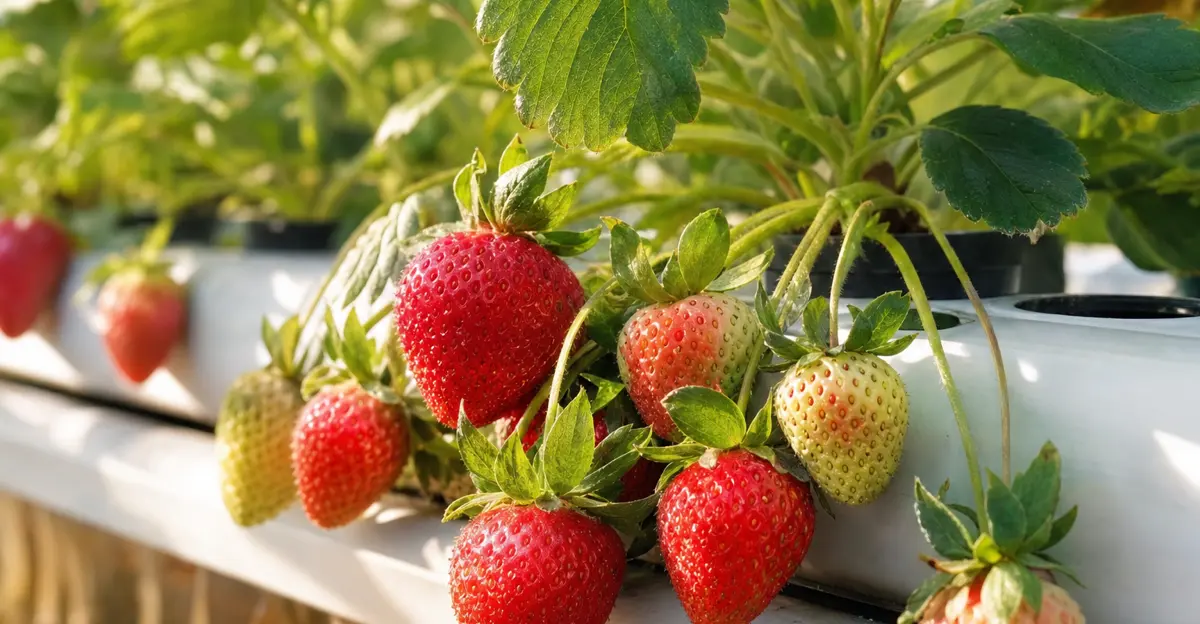
Key takeaway: Hydroponic strawberries can produce 2 to 3 times more fruit per unit area than soil-grown plants, with year-round harvests and no soil-borne diseases. The higher end of that range comes from vertical systems maximizing space efficiency and substrate culture outperforming water-culture methods — not from a single plant producing 3× more berries. A 2025 study in Frontiers in Plant Science found that substrate-based hydroponic systems outperform all water-culture alternatives for strawberry yield and resource efficiency. Day-neutral varieties like Albion and Monterey let you harvest continuously from 60 days after transplanting, and you can start a basic substrate system for under $100 (excluding grow lights — see Light Requirements if growing indoors).
Why Grow Strawberries Hydroponically?
Strawberries are one of the most rewarding crops to grow without soil. The results from university research are compelling:
- Higher yields. Plants grown in hydroponic systems routinely produce 2–3× more fruit per unit area than soil controls across multiple university trials. In one vertical greenhouse trial, a hydroponic system achieved 21 kg/m² — up to 35% more efficient than open field cultivation under the same conditions (Mendoza-Paredes et al., 2023).
- Better fruit quality. Soilless-grown strawberries show higher fruit weight, firmness, soluble solids content (sugar), and anthocyanin levels compared to soil-grown fruit.
- No soil-borne diseases. Eliminating soil removes the risk of Verticillium wilt, Phytophthora crown rot, and nematode damage — three of the most destructive strawberry pathogens in conventional production.
- Year-round production. With day-neutral varieties and controlled lighting, you can harvest strawberries every month of the year regardless of outdoor season.
- Water efficiency. Closed-loop hydroponic systems recirculate nutrient solution, using 70–90% less water than open-field production depending on system type and climate (Alavi et al., 2025).
Best Hydroponic Systems for Strawberries
Not all hydroponic systems perform equally for strawberries. A 2025 study by Hutchinson et al. at the University of Georgia tested four systems head-to-head over 129 days with 'Florida Brilliance' and 'Florida Beauty' cultivars. The results were clear.
| System | Yield Ranking | Best For | Setup Cost |
|---|---|---|---|
| Substrate culture (perlite, coir, or peat) | Highest | Beginners and commercial growers | $50–150 |
| Vertical tower | Second | Space-limited growers, apartments | $80–200 |
| Aeroponics | Third | Experienced growers | $150–400 |
| NFT (Nutrient Film Technique) | Lowest in this trial | Leafy greens; used commercially for strawberries but demands precise management | $80–150 |
Substrate Culture — The Top Performer
Substrate-based systems had the greatest marketable yield and the best water use efficiency and energy use efficiency in the Hutchinson et al. study. Strawberry roots prefer a stable, moist environment with consistent oxygen access — substrate systems deliver exactly that.
A SARE-funded study at the University of New Hampshire (grant report, not peer-reviewed) compared peat-based substrates (50% white peat, 25% white peat 0–20, 15% black peat fiber, 15% perlite) against peat-coir blends (10–30% white peat, 40% coco peat, 20% perlite). There was no significant difference in yield between the two, meaning coconut coir can partially replace peat without sacrificing production — a more sustainable option.
For beginners, a Dutch bucket or drip system with perlite-coir mix is the simplest entry point. Fill 11–19 L (3–5 gallon) buckets with 70% perlite and 30% coconut coir, set up a drip line from a reservoir, and you have a functioning system.
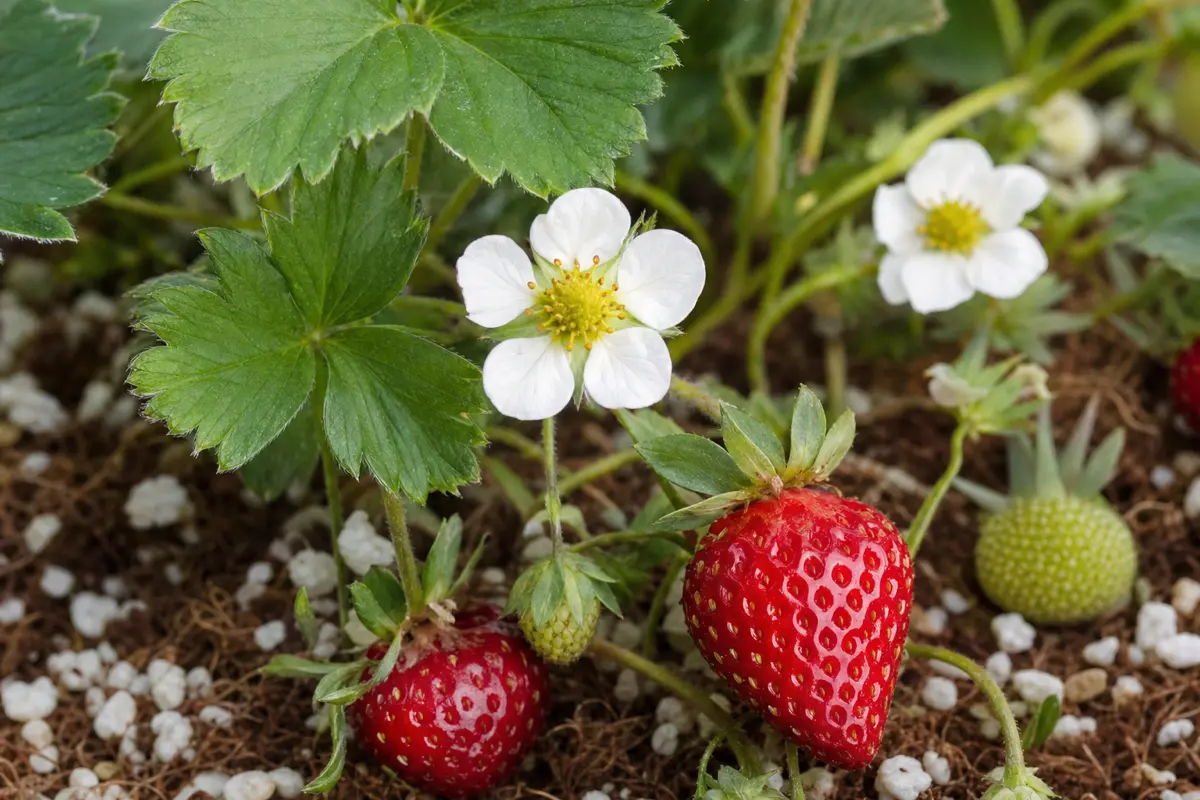
Vertical Tower Systems — Best for Small Spaces
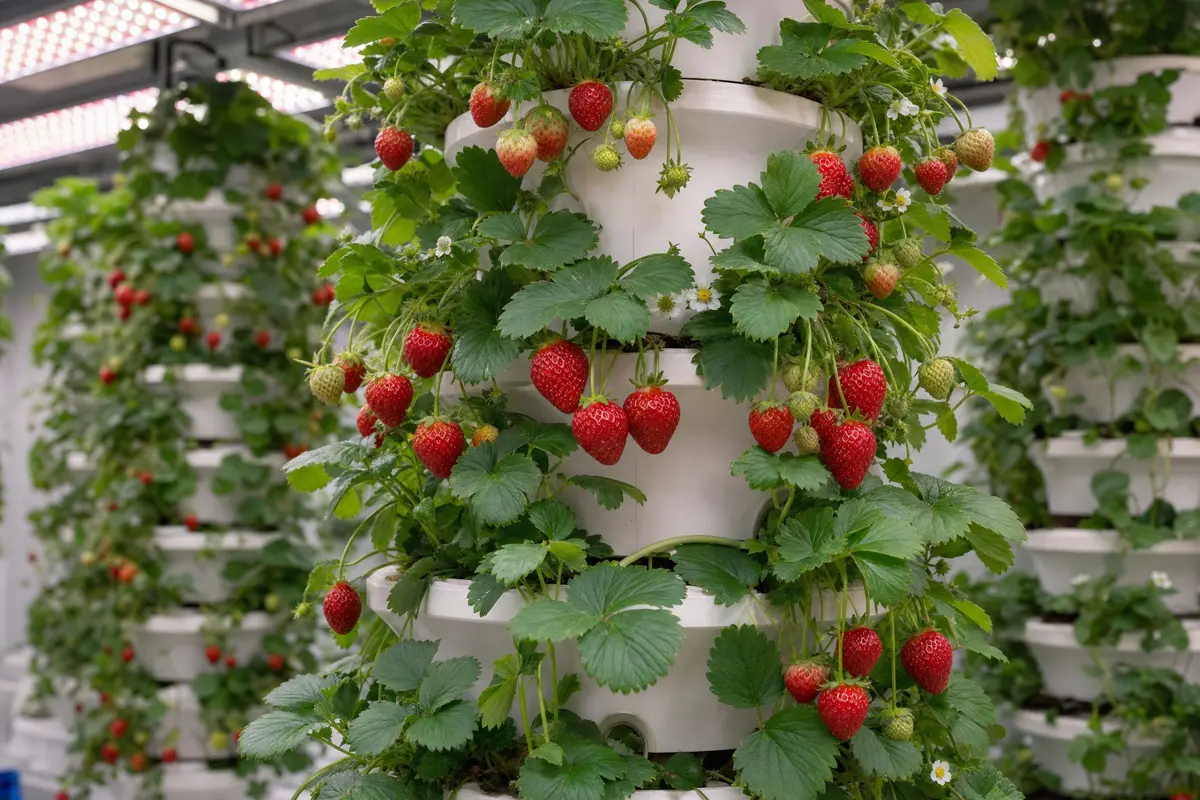
Vertical towers ranked second in the Hutchinson et al. study. A single trial published in Agro Productividad (Mendoza-Paredes et al., 2023) reported that a vertical hydroponic greenhouse system achieved fruit yields of 21 kg/m², up to 35% more efficient than field cultivation or multi-tunnel production under the same conditions. If you're growing in an apartment or balcony, vertical towers let you grow 20–30 plants in under one square meter of floor space.
DWC (Deep Water Culture) — Proceed with Caution
While DWC works well for leafy greens, it's not ideal for strawberries. Fully submerged roots increase the risk of crown rot, and strawberry's sensitivity to dissolved oxygen levels makes DWC more demanding to manage. If you do use DWC, ensure vigorous aeration with multiple air stones and keep the water temperature below 20°C (68°F).
Optimal Growing Conditions
pH and EC
Strawberries are salt-sensitive plants that require careful nutrient management.
| Parameter | Vegetative Stage | Fruiting Stage |
|---|---|---|
| pH | 5.5–6.0 | 5.5–6.0 |
| EC | 1.0–1.4 mS/cm | 1.2–1.8 mS/cm (warm climate) / 1.4–2.0 mS/cm (cool climate)* |
*EC ranges vary by source and climate. The University of Arizona's Controlled Environment Agriculture Center recommends keeping EC at or below 1.2 mS/cm due to strawberry's salt sensitivity, particularly in warm climates where transpiration rates are high. Meanwhile, the Illinois Extension trial successfully used 1.8 mS/cm in a temperate high tunnel. Start conservative (1.0–1.4 mS/cm) and increase gradually during fruiting, watching for leaf tip burn — the earliest sign of salt stress.
Oklahoma State University Extension recommends a pH range of 5.5–6.0 for hydroponic strawberries. The Illinois Extension trial maintained EC at approximately 1.8 mS/cm throughout the growing cycle using a formula of 3-15-28 fertilizer at 1 lb/gallon plus calcium nitrate (15.5-0-0) at 0.5 lb/gallon. Notably, the Illinois trial operated at pH 6.6 — above the typical recommended range — and still achieved good yields, though 5.5–6.0 remains the safer target for nutrient availability.
Adjust pH with phosphoric acid (to lower) or potassium hydroxide (to raise). Check pH and EC daily — strawberry nutrient uptake patterns shift measurably between vegetative growth and fruit development.
Nutrient Solution
A balanced strawberry nutrient solution contains approximately:
- Nitrogen (N): 160–170 ppm
- Phosphorus (P): 55–60 ppm
- Potassium (K): 400–500 ppm
Potassium demand is notably high in strawberries — nearly 3× that of nitrogen — because potassium drives fruit development, sugar accumulation, and disease resistance. Calcium (150–200 ppm) and magnesium (50–60 ppm) are critical secondary nutrients. Calcium deficiency causes tip burn on young leaves and misshapen fruit.
The UNH study found that potassium uptake was significantly higher (p ≤ 0.0128) in aquaponic treatments compared to synthetic hydroponic solutions, suggesting that organic nutrient sources may enhance potassium bioavailability for strawberries.
Temperature
| Period | Optimal Range | Critical Threshold |
|---|---|---|
| Day | 18–24°C (65–75°F) | Above 35°C: fruiting stops |
| Night | 10–12°C (50–54°F) | Below 5°C: growth halts |
Lower night temperatures improve flavor by increasing sugar-to-acid ratios in the fruit. The UNH study found that all cultivars exhibited reduced fruiting above 35°C (95°F), making active cooling essential for summer production in warm climates.
Light Requirements
The UNH study tested three daily light integrals (DLI) with an 18-hour photoperiod and found that lighting is one of the strongest predictors of yield:
| DLI | Light Intensity | Result |
|---|---|---|
| 14 mol/m²/day | 216 μmol/m²/s | Lowest yield, lowest sugar |
| 20 mol/m²/day | 308 μmol/m²/s | Good performance |
| 26 mol/m²/day | 401 μmol/m²/s | Highest yield and sugar content |
Plants at DLI 26 produced significantly higher yields, more fruit, and higher sugar content compared to DLI 14 (p ≤ 0.044, with fruit count at p = 0.008). For home growers, aim for at least 14–16 hours of LED lighting daily at 300+ μmol/m²/s. A DLI of 20 offers a practical balance between yield and electricity cost.
Best Strawberry Varieties for Hydroponics
Day-neutral varieties are the clear choice for hydroponic systems because they produce fruit continuously regardless of day length, unlike June-bearing types that produce one large flush per year.
Day-Neutral Varieties (Recommended)
| Variety | Yield | Fruit Size | Flavor | Best For |
|---|---|---|---|---|
| Monterey | Highest — 345 g/plant (0.76 lb) | Medium — ~20 g/fruit | Excellent, balanced | Maximum production |
| San Andreas | Medium — 245 g/plant (0.54 lb) | Largest — ~25 g/fruit | Sweet, firm | Large berry lovers |
| Albion | Lower — 220 g/plant (0.48 lb) | Smaller — ~15 g/fruit | Aromatic, complex | Flavor priority |
| Seascape | Variable | Medium | Good | Hot climates (heat tolerant) |
This yield data comes from a single 2023 Illinois Extension trial (one location, one season) comparing all three varieties in a vertical stack system with perlite substrate and 100 harvests from May through October. Yields will vary with your setup, climate, and nutrient management.
Albion was recommended by the UNH study for greenhouse production due to its "high yields, large fruit, and excellent flavor." However, the Illinois Extension trial noted Albion tended toward acidity in their conditions, while Monterey showed superior flavor. Flavor profiles can shift with nutrient solution, light levels, and temperature — so your growing environment influences which variety tastes best. Albion remains the most widely planted day-neutral variety commercially because of its consistent quality and yield reliability.
Seascape sacrifices a small degree of flavor for significant gains in heat tolerance and overall productivity — making it the best choice if your growing area regularly exceeds 27°C (80°F).
June-Bearing Varieties (Seasonal Use)
June-bearing cultivars like Chandler and Camarosa produce one large harvest per year but with bigger individual yields during that window. Auburn University is actively researching 'Camarosa' and other cultivars for hydroponic feasibility in the Southeast. Use these only if you want a single seasonal harvest rather than year-round production.
Step-by-Step Growing Guide
1. Start from Transplants, Not Seeds
Strawberry seeds can take 2–3 years to produce meaningful fruit. Always start with bare-root crowns or plug transplants — they begin flowering within 4–6 weeks and produce harvestable fruit in 60–90 days.
Source bare-root crowns from reputable nurseries. Most bare-root crowns are shipped pre-chilled (vernalized), but if yours have not been cold-stored, they may need 200–300 hours at 0–7°C (32–45°F) before planting to break dormancy and trigger strong flowering. Check with your supplier. Soak roots in room-temperature water for 1 hour before transplanting into your substrate. Trim any dead or damaged roots with clean scissors.
2. Set Up Your System
For a beginner substrate system:
- Fill 11–19 L (3–5 gallon) containers with 70% perlite, 30% coconut coir
- Install drip emitters (one per pot, 2 L/hour flow rate)
- Connect to a 75–150 L (20–40 gallon) reservoir
- Add nutrient solution at EC 1.0–1.2 mS/cm and pH 5.8
- Set timer for 1-minute irrigations every hour during the light period
3. Vegetative Stage (Weeks 1–4)
During the first month, plants establish roots and produce new leaves. Keep EC at 1.0–1.4 mS/cm during this phase. Remove any flowers that appear in the first 3–4 weeks — this directs energy into root and crown development, increasing long-term yields.
Remove runners (stolons) as they appear unless you want to propagate new plants. Runners divert energy from fruit production.
4. Flowering and Pollination
Strawberry flowers are self-fertile, but they still need physical movement of pollen from anthers to stigma. Outdoors, wind and bees handle this. Indoors, you must intervene.
Three pollination methods:
- Paintbrush method: Use a small, soft artist's brush to gently dab each open flower, moving pollen from the ring of anthers to the central stigma cluster. Visit every flower every 2–3 days.
- Fan method: An oscillating fan provides gentle air movement that can distribute pollen. Position it to create consistent but light airflow across flowering plants.
- Shaking method: Gently shake the main stems of each plant every other day to dislodge pollen.
The paintbrush method produces the most uniform fruit. Poor pollination results in misshapen berries with hard, undeveloped sections — a common complaint from indoor growers.
5. Fruiting Stage (Weeks 6–12+)
Once flowers are pollinated, fruit develops over 4–6 weeks. Gradually increase EC to support the high potassium and calcium demands of developing fruit — target 1.2–1.8 mS/cm in warm climates or 1.4–2.0 mS/cm in cool climates (see pH and EC for details). Monitor for tip burn on leaves — this signals excess salts or calcium deficiency.
The Illinois Extension trial noted that yield increased significantly from mid-August through September, suggesting that established plants hit peak production 3–5 months after transplanting.
6. Harvesting
Harvest when berries are fully red with no white or green shoulders. Ripe hydroponic strawberries do not continue ripening after picking. Cut the stem 1 cm above the fruit rather than pulling — this reduces crown damage and infection risk.
Day-neutral varieties produce fruit continuously. Expect cyclical peaks and dips in production. The UNH study documented a yield decline at weeks 6–7 of each cycle, suggesting staggered plantings (new transplants every 4–6 weeks) ensure continuous harvests.
Plant replacement: Hydroponic strawberry plants typically remain productive for 8–12 months before yields decline noticeably. Plan to replace plants annually with fresh crowns. Some growers maintain a rolling system — replacing the oldest third of their plants every 4 months — to avoid a full production gap during the transition.
Common Problems and Solutions
Salt Stress and Nutrient Burn
Strawberries are among the most salt-sensitive hydroponic crops. Symptoms include brown leaf margins, stunted growth, and reduced fruit size. If you notice leaf tip burn, flush the substrate with pH-adjusted water (no nutrients) and reduce EC by 0.2–0.4 mS/cm.
Botrytis (Gray Mold)
Gray, fuzzy mold on fruit and flowers. Thrives in high humidity (above 80%) and still air. Prevention: maintain humidity below 70%, use oscillating fans for airflow, remove dead leaves and overripe fruit promptly, and space plants so foliage does not touch.
Powdery Mildew
White powdery coating on leaves, usually the undersides first. Keep humidity below 60% and ensure strong air circulation. Adding potassium silicate (50–100 ppm Si) to the nutrient solution may strengthen cell walls and slow powdery mildew progression, though evidence is limited to a small number of trials and results vary by cultivar. Potassium bicarbonate sprays are an effective organic treatment for active outbreaks.
Spider Mites and Thrips
Two-spotted spider mites (Tetranychus urticae) and western flower thrips (Frankliniella occidentalis) are the most common arthropod pests in indoor strawberry production. Spider mites cause stippled, bronzed leaves and fine webbing; thrips scar developing fruit and can transmit viruses. Both thrive in warm, dry indoor environments. Prevention: maintain humidity at 60–70% (mites dislike moisture), inspect leaf undersides weekly with a hand lens, and introduce predatory mites (Phytoseiulus persimilis for spider mites, Amblyseius cucumeris for thrips) at the first sign of infestation. Yellow sticky traps help monitor thrips populations early.
Poor Pollination
Misshapen, lumpy berries with hard patches indicate incomplete pollination. Switch to the paintbrush method and pollinate every open flower every 2 days. Ensure the growing area has gentle air movement — still air prevents even self-fertile flowers from pollinating effectively.
Yield Expectations
Based on university research data:
| Metric | Expected Range |
|---|---|
| First harvest | 60–90 days from transplant |
| Per-plant yield | 225–360 g (0.5–0.8 lbs) per 8-week cycle |
| Yield vs soil | 2–3× higher in hydroponic systems |
| Area efficiency | Up to 21 kg/m² in vertical systems |
| Production window | Year-round with day-neutral varieties |
The Illinois Extension trial measured 220–345 g (0.48–0.76 lbs) per plant over a single season (100 harvests, May–October). Year-round indoor production with proper lighting can achieve 2–3 harvest cycles per year, significantly increasing annual per-plant yields.
Frequently Asked Questions
Can you grow strawberries hydroponically? Yes. Hydroponic strawberries are commercially grown worldwide, and university research consistently shows they outperform soil-grown plants in yield, fruit quality, and resource efficiency. A substrate-based drip system is the easiest way to start at home.
What is the best hydroponic system for strawberries? Substrate culture (perlite, coir, or peat in containers with drip irrigation) produces the highest yields according to a 2025 University of Georgia study. Vertical tower systems rank second and are ideal for small spaces.
How long until hydroponic strawberries produce fruit? Starting from bare-root transplants, expect first flowers in 4–6 weeks and ripe fruit in 60–90 days. Starting from seed takes 2–3 years — always use transplants.
Do hydroponic strawberries taste good? Hydroponic strawberries can have higher sugar content (Brix values) than field-grown fruit, especially at higher light levels. The UNH study (SARE grant report, not peer-reviewed) measured Brix values of 8.7–9.5 depending on nutrient source, with aquaponic and hydroponic treatments reaching 9.3–9.5. Brix varies significantly by cultivar, harvest timing, and temperature, so expect different values under your conditions.
Do I need to pollinate hydroponic strawberries? Yes, if growing indoors. Outdoor greenhouses with open sides may get natural pollination, but enclosed indoor systems require hand pollination with a small brush, fan assistance, or manual stem shaking every 2–3 days.
Next Steps
Growing hydroponic strawberries is one of the most satisfying projects for home growers — the combination of year-round harvests, superior flavor, and higher yields makes the initial setup worthwhile. Start with a simple substrate system, choose Albion or Monterey transplants, and keep your EC conservative until you learn how your plants respond.
Check out our plant database page for strawberry for detailed nutrient schedules and growing parameters, or explore our NFT hydroponics guide and DWC guide if you want to compare systems before committing to one.