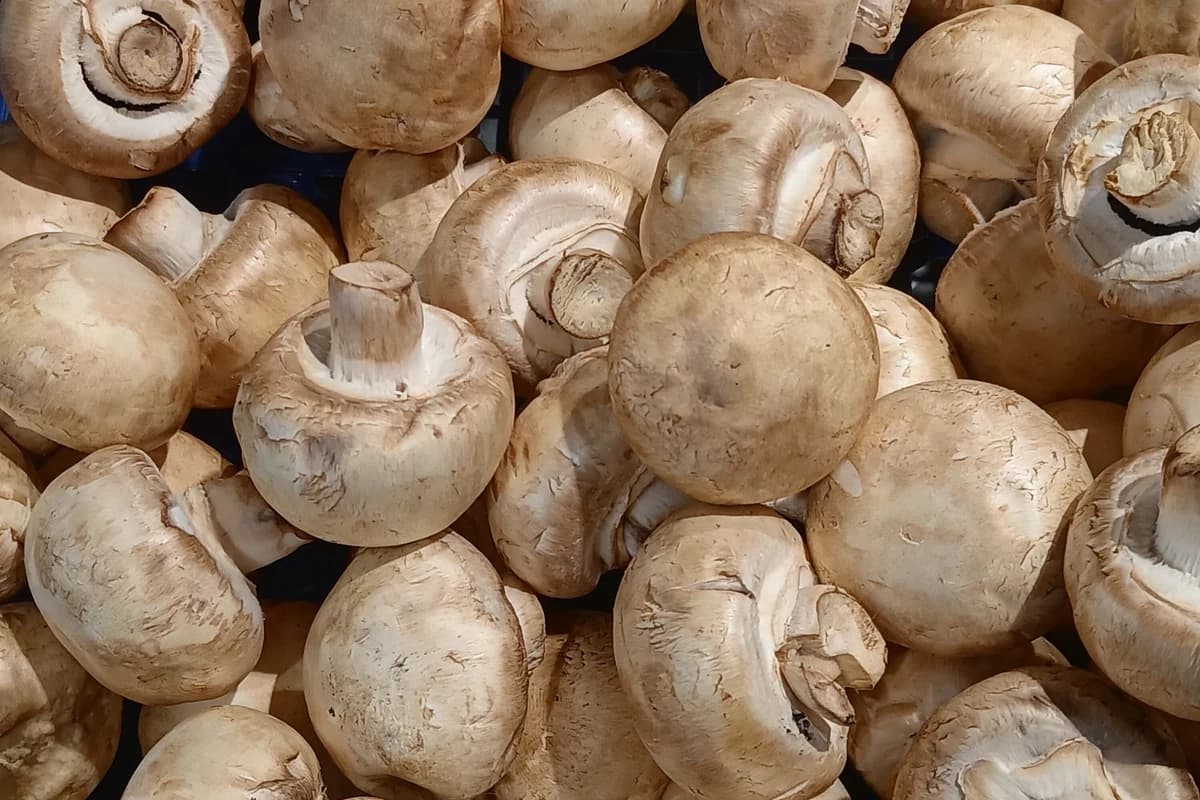
About This Plant
Cremini is the brown immature market form of Agaricus bisporus, the same cultivated species as white button and portobello mushrooms. It is a compost-grown secondary decomposer that needs selective mushroom compost, a moist casing layer, cool fruiting temperatures, high humidity, and careful CO2 and sanitation management.
How to Grow Cremini
Learn how to grow Cremini from seed to harvest in 39 days. Advanced difficulty. Complete nutrient guide, pH/EC requirements, and growing conditions for soil & container.
Backed by 14 peer-reviewed citations.
Nutrient Requirements by Growth Stage
Do not manage cremini with hydroponic NPK ppm. Agaricus bisporus is a secondary decomposer grown on selective compost, where microbes convert straw, manure, gypsum, and supplements into mushroom-available biomass…
Sign in to view nutrient requirements
A free account unlocks NPK targets for all four growth stages, micronutrient levels, a per-stage nutrient calculator, and the full nutrition guide. Signing up takes one click. Truleaf is a free, non-profit project, and every new account helps it grow. No spam, ever.
Growing Environments
The best environment is an indoor mushroom room with control of compost temperature, air temperature, RH, CO2, sanitation, and watering. Containers, trays, shelves, beds, and bags are suitable when filled with prepared compost and a uniform casing layer…
Temperature
Treat the warm phase as spawn run rather than seed germination. Agaricus compost should stay near 24-25C while mycelium colonizes the substrate, with air cooled as needed because compost generates heat. After casing is colonized, lower the room gradually toward 16-17C to initiate pinning, then crop around 14-17C for firm cremini quality. The prior 22-25C and 15-17C values were directionally useful but mislabeled as plant germination and growth.
Humidity
Keep humidity high, but distinguish casing moisture from wet caps. Spawn run and casing colonization need about 90-95% RH so compost and casing do not dry…
Light
Light is not a production driver for cremini. Agaricus bisporus is commonly grown in darkness or very low work light; unlike many specialty mushrooms, light is not the main fruiting signal…
Airflow
Ventilation should be controlled by CO2, heat, and humidity targets rather than by strong air movement. During spawn run, fresh air is limited and high CO2 is tolerated; during pinning, fresh air is introduced to reduce CO2 below about 1000 ppm…
Sign in to view environmental requirements
A free account unlocks exact temperature, humidity, light and airflow targets, including germination and growth ranges, DLI, photoperiod and PPFD, plus the full environment guide. Signing up takes one click. Truleaf is a free, non-profit project, and every new account helps it grow. No spam, ever.
Hydroponic System Compatibility
DWC, NFT, ebb-flow, drip hydroponics, Kratky, and aeroponics are not suitable for cremini. Those systems assume rooted plants taking up dissolved fertilizer, while Agaricus bisporus requires a solid selective compost mass, a casing layer, casing microbiota, and gas exchange through the bed…
Growing Media
Use finished Phase II or Phase III Agaricus compost plus casing. Standard compost starts with straw or straw-bedded manure, poultry or other nitrogen supplements, and gypsum, then is pasteurized and conditioned until ammonia is removed and the substrate favors Agaricus over competitor molds…
Container Specs
Use containers for compost depth, surface management, and climate control. Small trays or bins should be deep enough for a compost layer plus 3.5-5 cm casing, but compost beds should stay below about 30 cm because spawn-run thermogenesis can damage mycelium…
Training & Support
Training support is not applicable. Cremini has no vines, stems, canes, branches, or canopy to stake, cage, prune, top, or trellis…
Sign in to view system compatibility
A free account unlocks why each of the six systems fits or fails, plus growing media, container sizes, training methods, companion plants, and the full systems guide. Signing up takes one click. Truleaf is a free, non-profit project, and every new account helps it grow. No spam, ever.
Propagation
Cremini production starts with selected Agaricus mycelium, not seed. Growers normally buy pure-culture grain spawn, where mycelium has colonized sterilized rye or millet, then mix it uniformly through finished Phase II compost…
Harvesting
Harvest cremini at the firm brown button stage before the veil is stretched or broken, unless intentionally growing larger portobello mushrooms. Pick by gently twisting and pulling the stipe from the casing, then trim the dirty base and remove debris so diseased tissue is not left in the bed…
Planting Calendar
Cremini is a year-round controlled-environment crop, so indoor start and harvest months are all twelve months. The production calendar is biological rather than seasonal: Phase I composting takes roughly 7-20 days, Phase II conditioning 7-18 days, spawn run about 10-21 days, and casing-to-first-harvest about 15-28…
Common Issues
The most important problems are mushroom-specific diseases and pinning failures. Trichoderma green mold creates nonproductive green patches in casing or compost; dry bubble is caused by Lecanicillium fungicola; wet bubble is caused by Hypomyces perniciosus or Mycogone perniciosa; bacterial blotch is associated with…
Get the full science-backed guide
By signing up, you help keep Truleaf free and support the growth of our nonprofit project. Your account unlocks full details for every plant issue—including symptoms, causes, step-by-step solutions, and prevention—plus the month-by-month planting calendar, the complete guide, and all research sources. It only takes one click. No spam, ever.