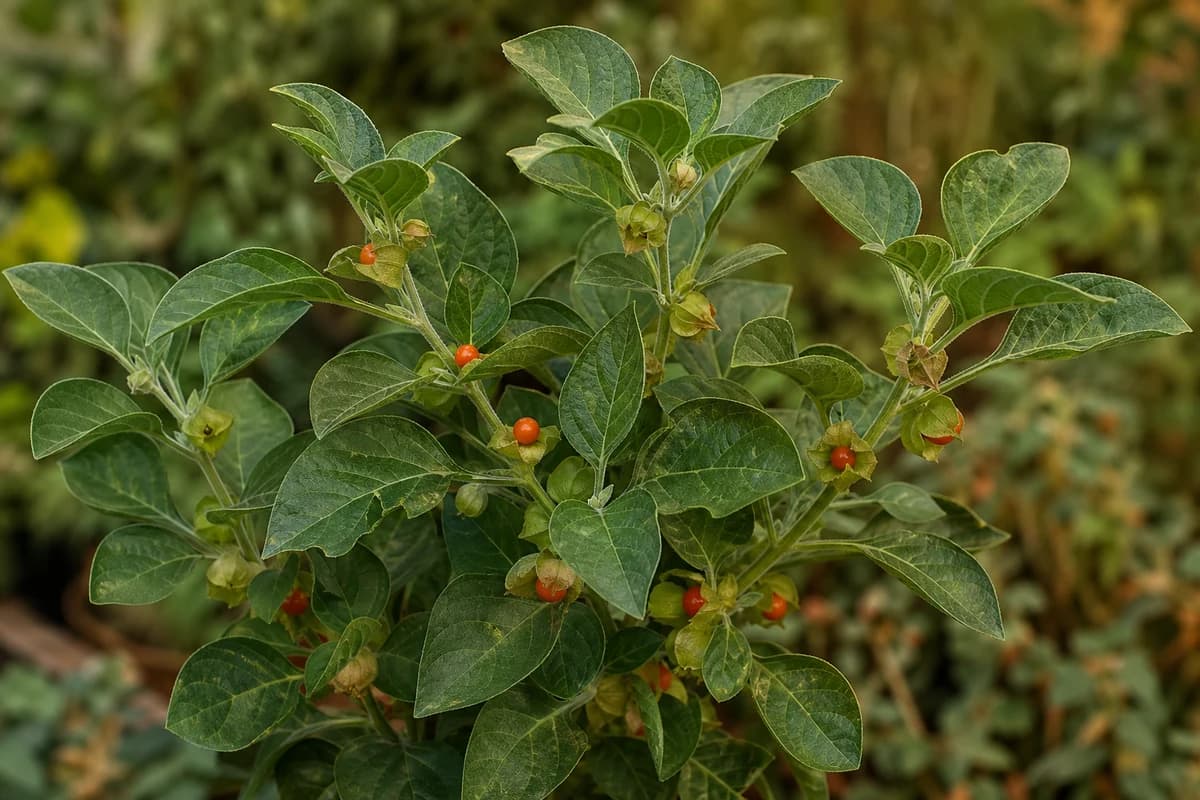
Sobre esta planta
Ashwagandha é uma cultura medicinal de raiz de estação quente, cultivada por suas raízes tuberosas ricas em withanolídeos. Desenvolve-se melhor em pleno sol, condições subtropicais quentes e solo com drenagem acentuada ou sistemas sem solo controlados, com a nutrição manejada como uma cultura de baixa a moderada demanda de insumos, em vez de uma erva folhosa de alta exigência nutricional.
Como Cultivar Ashwagandha (ginseng indiano)
Aprenda a cultivar Ashwagandha (ginseng indiano) da semente à colheita em 170 dias. Dificuldade Intermediate. Guia completo de nutrientes, requisitos de pH/EC e condições de cultivo para hidroponia, solo e estufa.
Respaldado por 17 citações revisadas por pares.
Requisitos nutricionais por estágio de crescimento
As evidências sobre nutrição da ashwagandha sustentam fertilidade de campo baixa a moderada e manejo orgânico ou integrado de nutrientes, não valores de NPK em ppm hidropônicos específicos por estágio. Fontes governamentais e de extensão recomendam esterco orgânico e adubação mineral modesta, com programas como 15 kg…
Entre para visualizar requisitos de nutrientes
Uma conta gratuita libera as metas de NPK das quatro fases de crescimento, os níveis de micronutrientes, uma calculadora de nutrientes por fase e o guia de nutrição completo. Criar a conta leva só um clique. O Truleaf é um projeto gratuito e sem fins lucrativos, e cada nova conta nos ajuda a crescer. Sem spam, nunca.
Ambientes de Cultivo
A produção ao ar livre é o ambiente convencional e mais bem documentado para ashwagandha, especialmente em regiões subtropicais secas em terrenos bem drenados. Estufas e sistemas controlados também são respaldados: NFT, aeroponia, aquaponia, CO2 elevado e estudos em vasos com vermicomposto produziram resultados…
Temperatura
A ashwagandha é uma cultura subtropical de clima quente. Guias de cultivo em campo indicam crescimento em cerca de 20-35C, enquanto a produção controlada em estufa com NFT e aeroponia teve sucesso a 25C. As evidências de germinação são mais amplas do que o antigo valor de 21-25C: alternar 18-25C com luz teve bom desempenho em um estudo de sementes, e outro sistema controlado germinou sementes a 28C sob 16 h de luz. Use 25C como uma meta prática para ambiente controlado, mas evite inícios frios e úmidos.
Umidade
Nenhuma fonte completa estabeleceu um ótimo de umidade relativa específico da espécie para ashwagandha. A melhor referência direta em ambiente controlado é o estudo hidropônico e aeropônico em estufa, que cultivou plantas com sucesso a cerca de 45% de UR…
Luz
A ashwagandha deve ser cultivada sob alta luminosidade. Orientações de extensão dizem que ela precisa de sol pleno e tem desempenho ruim na sombra…
Circulação de Ar
Nenhum artigo localizou uma exigência numérica de fluxo de ar no dossel para ashwagandha, portanto a faixa de fluxo de ar é indireta. O princípio útil é prevenir condições estagnadas e úmidas: o estudo em estufa sem solo usou água aerada durante o estabelecimento das mudas, enquanto guias governamentais e de extensão…
Entre para visualizar requisitos ambientais
Uma conta gratuita libera os valores exatos de temperatura, umidade, luz e ventilação, incluindo faixas de germinação e crescimento, DLI, fotoperíodo e PPFD, além do guia de ambiente completo. Criar a conta leva só um clique. O Truleaf é um projeto gratuito e sem fins lucrativos, e cada nova conta nos ajuda a crescer. Sem spam, nunca.
Compatibilidade com sistemas hidropônicos
NFT e aeroponia têm evidências diretas para ashwagandha. No estudo da HortScience, as mudas foram estabelecidas em cultivo flutuante aerado e depois cultivadas em NFT ou aeroponia; ambos produziram biomassa, mas o NFT foi favorecido pela withaferin A reproduzível e pela praticidade comercial…
Substratos
Use substratos de drenagem rápida. Orientações governamentais dão suporte a solos vermelhos, arenosos, pretos ou argilosos com boa drenagem e pH em torno de 6.5-8.0…
Vasos
A ashwagandha pode ser cultivada em vasos, mas os recipientes devem ser dimensionados para uma cultura de raiz, não para uma erva folhosa rasa. A NC State afirma que ela se desenvolve bem em vasos, precisa de sol pleno e não tolera raízes encharcadas…
Condução e Suporte
Não atribua treliça, gaiola, SCROG ou outro treinamento estrutural à ashwagandha. A cultura é um subarbusto ereto e ramificado, e os guias de cultivo se concentram em espaçamento, desbaste, capina manual, drenagem e colheita de raízes secas, em vez de treinamento de copa…
Entre para visualizar compatibilidade de sistemas
Uma conta gratuita libera por que cada um dos seis sistemas funciona ou não, além de substratos, tamanhos de vaso, métodos de condução, plantas companheiras e o guia de sistemas completo. Criar a conta leva só um clique. O Truleaf é um projeto gratuito e sem fins lucrativos, e cada nova conta nos ajuda a crescer. Sem spam, nunca.
Propagação
Use sementes como o método principal de propagação. Guias de cultivo governamentais e universitários descrevem a semeadura direta ou mudas produzidas em viveiro como a rota comercial padrão…
Colheita
Colha principalmente as raízes na maturidade fisiológica, normalmente 150-180 dias após a semeadura. Orientações governamentais usam folhas secando e bagas amarelo-avermelhadas como indicadores de campo…
Calendário de Plantio
Na produção de campo em regime de monções, semeie canteiros de viveiro em junho-julho ou faça semeadura direta em julho-agosto após as primeiras chuvas; algumas orientações permitem semeadura em setembro onde as chuvas atrasam. Transplante mudas estabelecidas após cerca de 25-42 dias, geralmente de julho a setembro,…
Problemas Comuns
A lista atual de problemas precisava de correção. A mancha foliar de Alternaria é diretamente verificada em Withania somnifera e pode afetar a clorofila e a qualidade dos metabólitos secundários, portanto a prevenção deve enfatizar saneamento, folhagem seca e fluxo de ar aberto…
Acesse o guia completo respaldado pela ciência
Ao se cadastrar, você ajuda a manter o Truleaf gratuito e apoia o crescimento do nosso projeto sem fins lucrativos. Sua conta libera todos os detalhes de cada problema das plantas—incluindo sintomas, causas, soluções passo a passo e prevenção—além do calendário de plantio mês a mês, do guia completo e de todas as fontes de pesquisa. Leva apenas um clique. Sem spam, nunca.