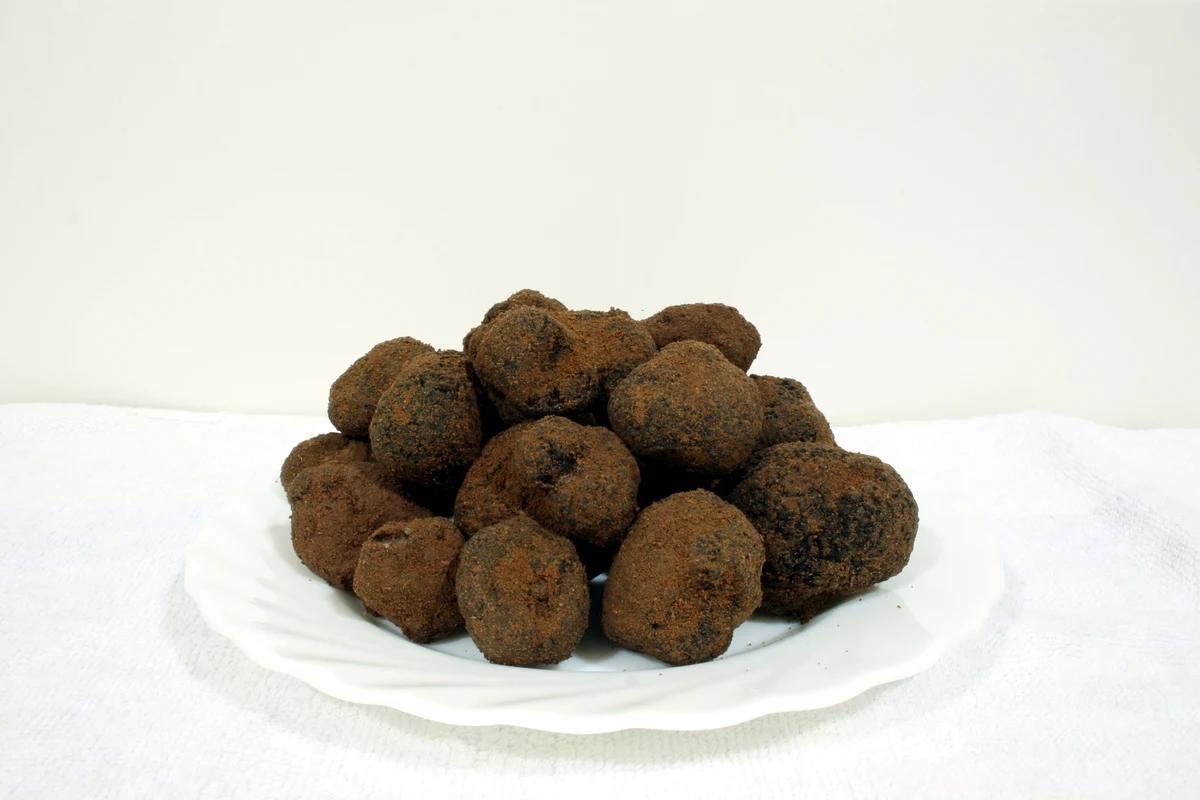
About This Plant
Black truffle is a high-value ectomycorrhizal fungus grown through inoculated host trees, especially oaks and hazelnuts, in alkaline calcareous orchard soils. Reliable production depends on host-tree health, soil pH and carbonate status, irrigation, fungal competition control, and patient winter harvests that often begin 5-10 years after planting.
How to Grow Black Truffle
Learn how to grow Black Truffle from seed to harvest in 2190 days. Expert level. Planting, care, feeding and the right growing conditions.
Sources cited: 18.
Nutrient Requirements by Growth Stage
Stage-specific hydroponic NPK ppm is not applicable for black truffle. T…
Sign in to view nutrient requirements
A free account unlocks NPK targets for all four growth stages, micronutrient levels, a per-stage nutrient calculator, and the full nutrition guide. Signing up takes one click. Truleaf is a free, non-profit project, and every new account helps it grow. No spam, ever.
Growing Environments
Outdoor truffle orchard is the evidence-backed environment. Greenhouse or nursery space is useful for producing and holding inoculated seedlings, but long-term fruiting is tied to field host trees, calcareous soil, climate triggers, and multi-year orchard ecology…
Temperature
Black truffle is best described by orchard climate rather than a grow-room setpoint. Productive sites analyzed across continents had annual mean temperatures about 9.8-16.4C, summer means about 15.8-25.0C, and winter means about 0.5-10.4C. Current 10-25C growth values are usable as a broad root-zone climate band, but there is no verified germination temperature because growers plant inoculated host trees rather than germinating the truffle directly.
Humidity
Air humidity targets are not the controlling variable for this crop. Evidence consistently points to soil moisture and drought management: drought reduced Mediterranean truffle harvests, and irrigation method studies show productive orchards need moisture support without waterlogging…
Light
The truffle fruitbody is subterranean and does not photosynthesize, so direct fungal DLI is not meaningful. Light still matters through the host tree: the fungus receives host carbon, and orchard practice favors open, managed canopies that keep host trees vigorous and leave the floor accessible for dogs and harvest…
Airflow
Airflow should be interpreted as orchard aeration and soil gas exchange, not grow-room fan speed. Productive soils are repeatedly described as well drained, porous, aerated, and calcareous…
Sign in to view environmental requirements
A free account unlocks exact temperature, humidity, light and airflow targets, including germination and growth ranges, DLI, photoperiod and PPFD, plus the full environment guide. Signing up takes one click. Truleaf is a free, non-profit project, and every new account helps it grow. No spam, ever.
Hydroponic System Compatibility
Hydroponic production systems are unsuitable for black truffle because they omit the host-tree ectomycorrhiza and soil habitat. DWC, NFT, ebb-flow, Kratky, and aeroponics should stay false for production…
Growing Media
The production medium is alkaline, calcareous, well-drained field soil. Recent soil studies and North American reviews identify high pH, carbonate, calcium, drainage, aeration, and balanced soil texture as core site traits…
Container Specs
Containers are only verified for the nursery host-seedling phase. Productive black truffle cultivation requires outplanted host trees in an orchard, often at several meters spacing, with the fungus expanding through host roots and soil…
Training & Support
No trellis is required, but the host tree needs orchard care. Young trees may need stakes or guards, and formative pruning from the second year helps maintain a single stem, light penetration, access for trained dogs, and an open productive floor…
Sign in to view system compatibility
A free account unlocks why each of the six systems fits or fails, plus growing media, container sizes, training methods, companion plants, and the full systems guide. Signing up takes one click. Truleaf is a free, non-profit project, and every new account helps it grow. No spam, ever.
Propagation
Propagate the crop by planting certified host-tree seedlings already mycorrhized with T. melanosporum…
Harvesting
Harvest is a winter search-and-excavate operation. Northern Hemisphere T…
Planting Calendar
Use an orchard calendar. Plant inoculated host trees in late autumn or early spring when local frost and soil conditions allow, maintain weed-free establishment zones for the first years, prune host trees before bud break, and irrigate through dry summer and autumn periods…
Common Issues
The two original issues, fungal competition and lack of fruiting, are valid but needed more detail. Competing ectomycorrhizal fungi can replace or dilute T…
Get the full science-backed guide
By signing up, you help keep Truleaf free and support the growth of our nonprofit project. Your account unlocks full details for every plant issue—including symptoms, causes, step-by-step solutions, and prevention—plus the month-by-month planting calendar, the complete guide, and all research sources. It only takes one click. No spam, ever.