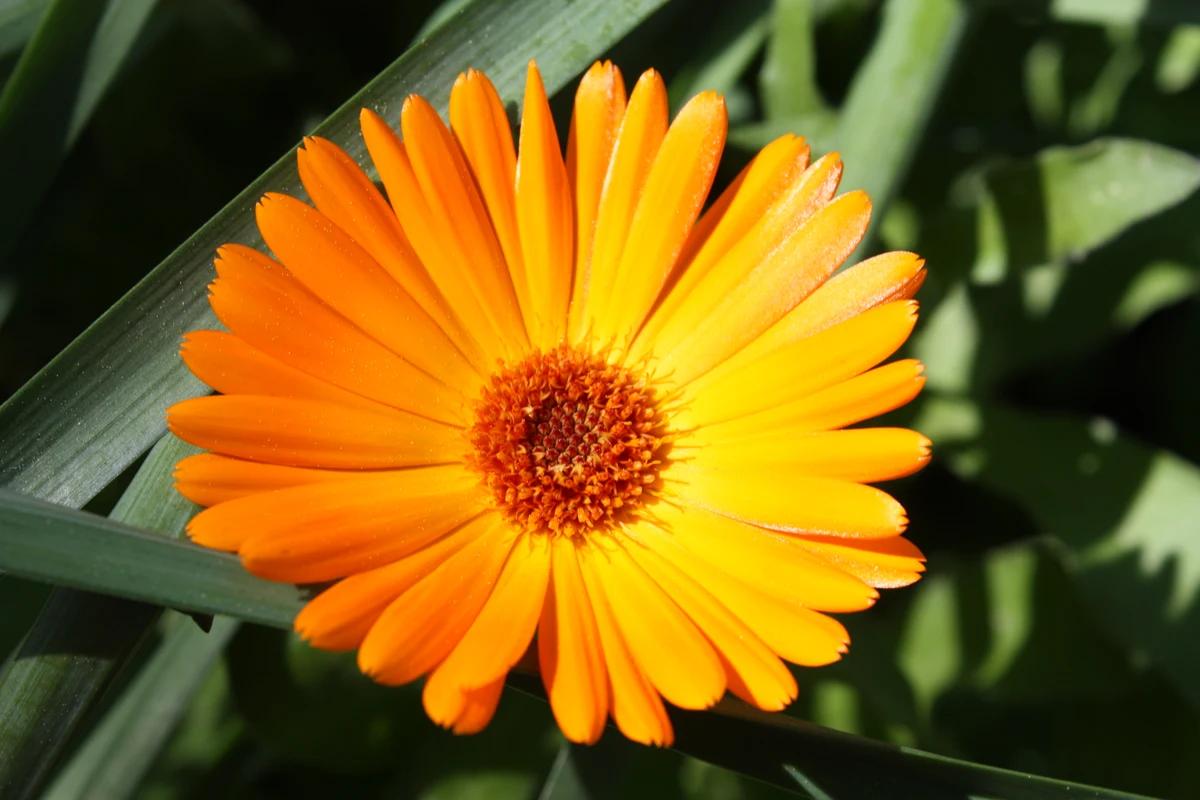
About This Plant
Calendula, also known as pot marigold, is a cool-season annual herb grown for edible, medicinal, and ornamental flower heads. It starts readily from seed, performs best in full sun with well-drained moderately fertile soil, and rewards frequent harvesting or deadheading with repeated bloom.
How to Grow Calendula
Learn how to grow Calendula from seed to harvest in 50 days. Beginner-friendly. Planting, care, feeding and the right growing conditions.
Sources cited: 13.
Nutrient Requirements by Growth Stage
Calendula needs balanced but not excessive fertility. USU recommends soil testing and notes calendula needs little extra fertilizer, while Wisconsin Extension states plants flower best when not heavily fertilized…
Sign in to view nutrient requirements
A free account unlocks NPK targets for all four growth stages, micronutrient levels, a per-stage nutrient calculator, and the full nutrition guide. Signing up takes one click. Truleaf is a free, non-profit project, and every new account helps it grow. No spam, ever.
Growing Environments
Calendula works outdoors, in containers, in greenhouses, and indoors under controlled lighting. Outdoors it prefers full sun and well-drained moderately fertile soil; part shade is useful in hot summers…
Temperature
Calendula is best treated as a cool-season annual. Extension guidance recommends sowing once soil reaches about 60F, and a controlled germination study found the optimum near 16-17C with damage when germinating seed is exposed to high heat. Garden plants prefer cooler weather; Utah State notes bloom often stops in extreme heat above about 85F, while controlled-environment hydroponic studies successfully held plants near 23-25C. Use 15-25C for practical germination, about 18-24C for steady growth, and protect flowering plants from prolonged hot, dry periods.
Humidity
Calendula tolerates normal garden humidity, but disease risk rises when humidity remains high inside a crowded canopy. A plant-factory DWC trial maintained 50-70 percent relative humidity, while another controlled-environment study averaged about 73 percent RH without reporting humidity as a limiting factor…
Light
Calendula performs in full sun and also tolerates part shade during hot summers. Indoor trials show useful production at moderate controlled light: DWC plants received 300 umol/m2/s for a 12-hour photoperiod, producing a DLI near 13 mol/m2/day, while an ebb-and-flow study used 200 umol/m2/s under a 16-hour photoperiod…
Airflow
None of the calendula papers we found gave a numeric canopy air-speed target, so airflow values should be treated as operational guidance rather than species-specific research. The need for air movement is well supported: USU recommends good air circulation for powdery mildew management, PNW recommends spacing plants…
Sign in to view environmental requirements
A free account unlocks exact temperature, humidity, light and airflow targets, including germination and growth ranges, DLI, photoperiod and PPFD, plus the full environment guide. Signing up takes one click. Truleaf is a free, non-profit project, and every new account helps it grow. No spam, ever.
Hydroponic System Compatibility
Direct calendula hydroponic evidence supports DWC and ebb-and-flow systems. Munyanont et al…
Growing Media
Use a drained medium rather than a wet heavy root zone. USU recommends fertile, well-drained soils with pH 6-7 and cautions against overwatering…
Container Specs
Calendula is well suited to containers and patios. Because mature plants are typically 30-60 cm tall and wide, use at least a 20 cm deep and wide container for compact cultivars, with more volume for repeated flower harvest…
Training & Support
Calendula does not need structural support, but it does respond to simple canopy management. Wisconsin Extension recommends pinching vegetative buds once plants are several inches tall to encourage a bushier habit…
Sign in to view system compatibility
A free account unlocks why each of the six systems fits or fails, plus growing media, container sizes, training methods, companion plants, and the full systems guide. Signing up takes one click. Truleaf is a free, non-profit project, and every new account helps it grow. No spam, ever.
Propagation
Calendula propagation is straightforward from seed. USU recommends planting seed 1/4 inch deep once soil reaches about 60F, with germination in one to two weeks…
Harvesting
Harvest calendula repeatedly for best quality and continued bloom. USU recommends picking the complete flower at full bloom and notes plants rebloom in about two weeks…
Planting Calendar
In temperate Northern Hemisphere gardens, start calendula indoors in late winter to early spring, about 6-8 weeks before the last frost, or direct sow around the last frost once soil reaches 60F. Transplant after danger of heavy frost has passed, though calendula is cooler tolerant than many annual flowers…
Common Issues
The most verified calendula problems are powdery mildew, aphids/whiteflies, thrips, and root/foliar diseases. USU lists aphids, whiteflies, and powdery mildew, with aphids causing curled leaves and honeydew and mildew causing white fungal patches…
Get the full science-backed guide
By signing up, you help keep Truleaf free and support the growth of our nonprofit project. Your account unlocks full details for every plant issue—including symptoms, causes, step-by-step solutions, and prevention—plus the month-by-month planting calendar, the complete guide, and all research sources. It only takes one click. No spam, ever.