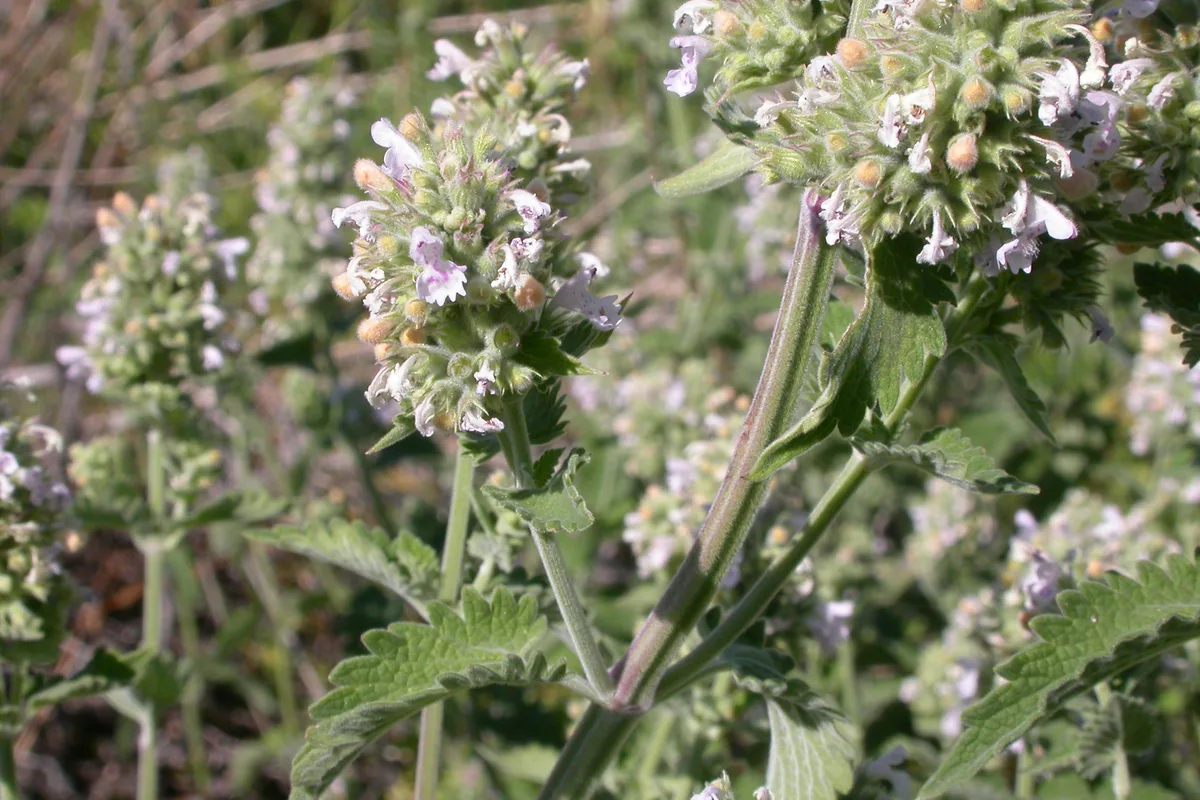
About This Plant
Catnip is a hardy perennial Lamiaceae herb grown for aromatic leaves and flowering tops rich in nepetalactones. It performs best in sun, well-drained media, moderate fertility, and repeated cutting, with full-bloom harvests producing the strongest dried-herb aroma.
How to Grow Catnip
Learn how to grow Catnip from seed to harvest in 75 days. Beginner-friendly. Planting, care, feeding and the right growing conditions.
Sources cited: 15.
Nutrient Requirements by Growth Stage
Treat catnip as a moderate-feeding aromatic herb. Field research in Kazakhstan found N100-P80-K120 kg/ha increased growth, biomass, and essential oil yield, but this is a field benchmark rather than a hydroponic recipe…
Sign in to view nutrient requirements
A free account unlocks NPK targets for all four growth stages, micronutrient levels, a per-stage nutrient calculator, and the full nutrition guide. Signing up takes one click. Truleaf is a free, non-profit project, and every new account helps it grow. No spam, ever.
Growing Environments
Catnip can be grown outdoors, indoors, in greenhouses, or in containers. Extension sources agree it prefers full sun, well-drained average soil, and tolerates partial shade, poor soils, and drought once established…
Temperature
Catnip germinates reliably in the cool-mild range: grower guidance gives 7-10 days at 16-21C, while Rutgers greenhouse work germinated CR9 under 20-23C before hydroponic transfer. Keep established plants around 18-24C; heat and humidity reduce quality and can increase stress, so warm indoor systems need ventilation, shade during heat spikes, and root-zone stability.
Humidity
Use moderate humidity rather than wet greenhouse conditions. Rutgers hydroponic catnip averaged 57.8% relative humidity, and extension profiles emphasize well-drained sites, full sun to part shade, and sensitivity to heat-humidity combinations…
Light
Use full sun outdoors or a long indoor photoperiod of 15-16 hours. Rutgers catnip studies used 16/8 light-dark greenhouse production and 15.5 hours of full light plus dawn and dusk in growth chambers…
Airflow
Provide steady gentle airflow across the canopy, especially indoors or in greenhouses. Catnip is adapted to open, well-drained sites, and leaf spot and mildew risk rises when foliage remains wet or crowded…
Sign in to view environmental requirements
A free account unlocks exact temperature, humidity, light and airflow targets, including germination and growth ranges, DLI, photoperiod and PPFD, plus the full environment guide. Signing up takes one click. Truleaf is a free, non-profit project, and every new account helps it grow. No spam, ever.
Hydroponic System Compatibility
Catnip is compatible with hydroponic and substrate systems if oxygen and drainage are protected. A Rutgers study moved washed CR9 seedlings into hydroponic clone-machine reservoirs with half-strength Hoagland solution adjusted to pH 5.8-6.0…
Growing Media
Use a well-drained medium. Outdoors, catnip grows best in average, well-drained soil and tolerates poor, dry, or sandy soils once established…
Container Specs
Use a container at least 25 cm deep and wide for a small herb plant, with 7 L as a practical minimum and 10-12 L preferred for repeated harvests. Mature catnip commonly reaches 45-90 cm tall and can spread widely under good fertility…
Training & Support
Catnip needs pruning, not structural support. Pinch young transplants to encourage branching, shear after the first flowering to keep plants compact, and cut old stems back in spring as new growth resumes…
Sign in to view system compatibility
A free account unlocks why each of the six systems fits or fails, plus growing media, container sizes, training methods, companion plants, and the full systems guide. Signing up takes one click. Truleaf is a free, non-profit project, and every new account helps it grow. No spam, ever.
Propagation
Catnip is easy from seed, cuttings, or division. Seeds need light, so press them onto the surface or barely cover them; germination is typically 7-10 days at 16-21C…
Harvesting
Harvest aerial stems at full bloom for the strongest dried-catnip aroma. Illinois Extension states flavor and aroma peak at full bloom, and Rutgers harvested aboveground biomass at full flowering because compounds of interest are highest then…
Planting Calendar
Start seed indoors 6-8 weeks before the last spring frost, or direct sow after frost danger passes. Rutgers sowed catnip in April-May, transplanted 45-day seedlings in May, and made the first full-flowering harvest 73 days after transplanting…
Common Issues
The current spider mite and powdery mildew records are valid but needed schema repair. Spider mites cause stippling, bronzing, and webbing under hot dry stress; manage with scouting, water sprays, oils or soaps, and predator conservation…
Get the full science-backed guide
By signing up, you help keep Truleaf free and support the growth of our nonprofit project. Your account unlocks full details for every plant issue—including symptoms, causes, step-by-step solutions, and prevention—plus the month-by-month planting calendar, the complete guide, and all research sources. It only takes one click. No spam, ever.