Permacultura no Quintal: Pare de Lutar Contra a Natureza, Comece a Cultivar Alimentos
E se o seu jardim trabalhasse com a natureza em vez de contra ela? Aprenda a conceber um quintal produtivo e de baixa manutenção utilizando princípios de permacultura — desde o planeamento por zonas e a construção do solo até às florestas alimentares e à consociação de plantas.
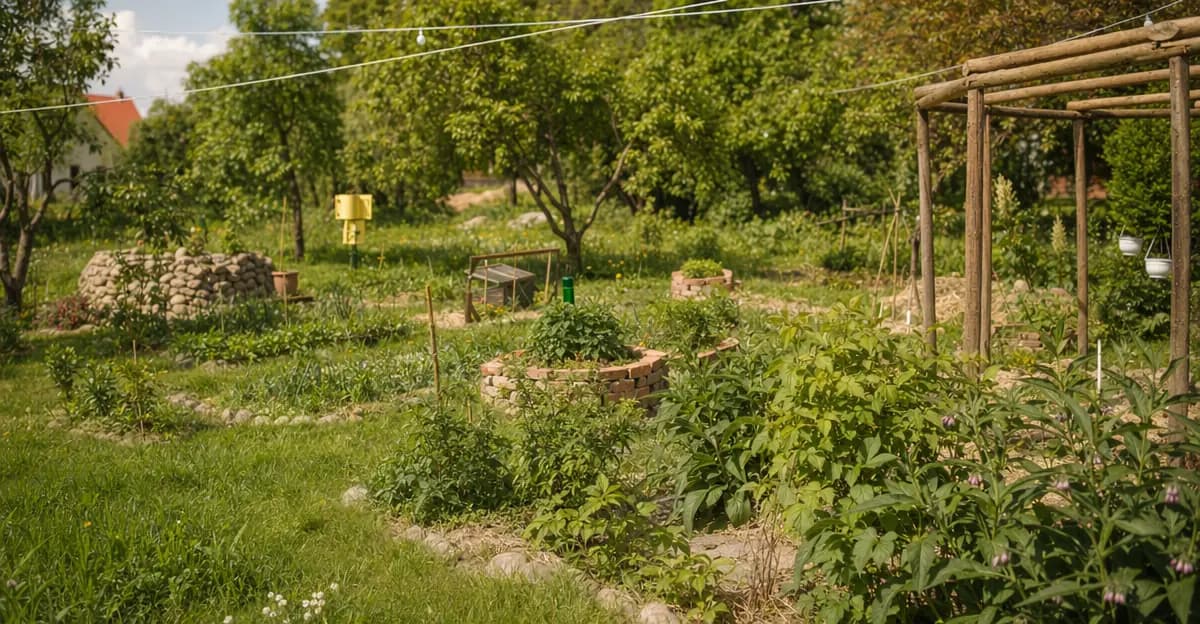
Ponto-chave: A permacultura é um sistema de design que modela o seu jardim segundo os ecossistemas naturais — e a ciência confirma-o. Um estudo de campo de 2024 concluiu que os terrenos em permacultura apresentavam 27% mais carbono no solo, 201% mais abundância de minhocas e mais de cinco vezes a riqueza de espécies vegetais em comparação com terrenos agrícolas convencionais Reiff et al., 2024. Não precisa de hectares de terreno para começar: um único canteiro elevado, uma guilda de árvore de fruto ou até um jardim em vasos na varanda podem aplicar princípios de permacultura. O essencial é observar primeiro, começar pequeno e conceber o espaço de modo a que cada elemento no seu jardim desempenhe múltiplas funções.
O que é a permacultura?
A permacultura é um sistema de design para a criação de habitats humanos sustentáveis, seguindo os padrões da natureza. O termo — uma combinação de "permanente" e "agricultura" — foi cunhado no final da década de 1970 pelos ecologistas australianos Bill Mollison e David Holmgren. O seu livro de 1978, Permaculture One, apresentou a ideia fundacional: em vez de combater os processos naturais com lavoura, fertilizantes sintéticos e monoculturas, devemos conceber ecossistemas produtivos que funcionem com a natureza Krebs & Bach, 2018.
Holmgren definiu mais tarde a permacultura de forma mais abrangente como "paisagens conscientemente concebidas que imitam os padrões e relações encontrados na natureza, ao mesmo tempo que proporcionam abundância de alimentos, fibras e energia para as necessidades locais" Holmgren, 2002. Na prática, um jardim de permacultura não se assemelha a uma horta convencional com solo nu entre as fileiras. Em vez disso, parece-se mais com uma paisagem exuberante e ligeiramente selvagem onde árvores de fruto ensombram arbustos de bagas, ervas aromáticas atraem polinizadores, plantas de cobertura protegem o solo e trepadeiras cobrem cada superfície vertical.
A diferença entre a permacultura e a jardinagem convencional não é apenas estética — é mensurável. Uma revisão académica abrangente de 2018 encontrou evidência científica que sustenta todos os doze princípios de design de Holmgren, concluindo que "a permacultura tem o potencial de contribuir para a transformação sustentável da agricultura" Krebs & Bach, 2018. E um estudo de campo de referência de 2024 conduzido por Reiff et al. na Universidade RPTU de Kaiserslautern-Landau examinou nove explorações de permacultura na Alemanha e no Luxemburgo, comparando-as com locais de controlo convencionais. Os resultados foram marcantes: os terrenos de permacultura apresentaram 27% mais carbono no solo, 20% menor densidade aparente do solo e uma riqueza de espécies dramaticamente superior — 457% mais espécies de plantas vasculares, 197% mais espécies de aves e 77% mais espécies de minhocas em comparação com os campos convencionais Reiff et al., 2024.
As três éticas
Antes de qualquer princípio de design, a permacultura assenta em três éticas fundamentais que orientam cada decisão:
- Cuidar da Terra — Utilizar métodos orgânicos e sustentáveis que regenerem em vez de esgotar a terra.
- Cuidar das pessoas — Conceber sistemas que proporcionem alimento, abrigo, ligação e bem-estar.
- Partilha justa — Estabelecer limites ao consumo e redistribuir excedentes. (Originalmente formulado por Mollison como "estabelecer limites à população e ao consumo," mais tarde reformulado por Holmgren como "partilhar o excedente.")
Estas éticas distinguem a permacultura de uma simples técnica de jardinagem. Significam que um design de permacultura não visa apenas a produtividade máxima — visa um sistema que se sustente a si próprio, que alimente o solo, que apoie a vida selvagem e que partilhe a abundância com vizinhos e a comunidade NC State Extension.
Os 12 princípios de design da permacultura
David Holmgren publicou doze princípios de design no seu livro de 2002, Permaculture: Principles and Pathways Beyond Sustainability. Estes princípios não são regras — são ferramentas de pensamento para observar o seu terreno e tomar decisões de design. Eis como cada um se aplica a um jardim de quintal:
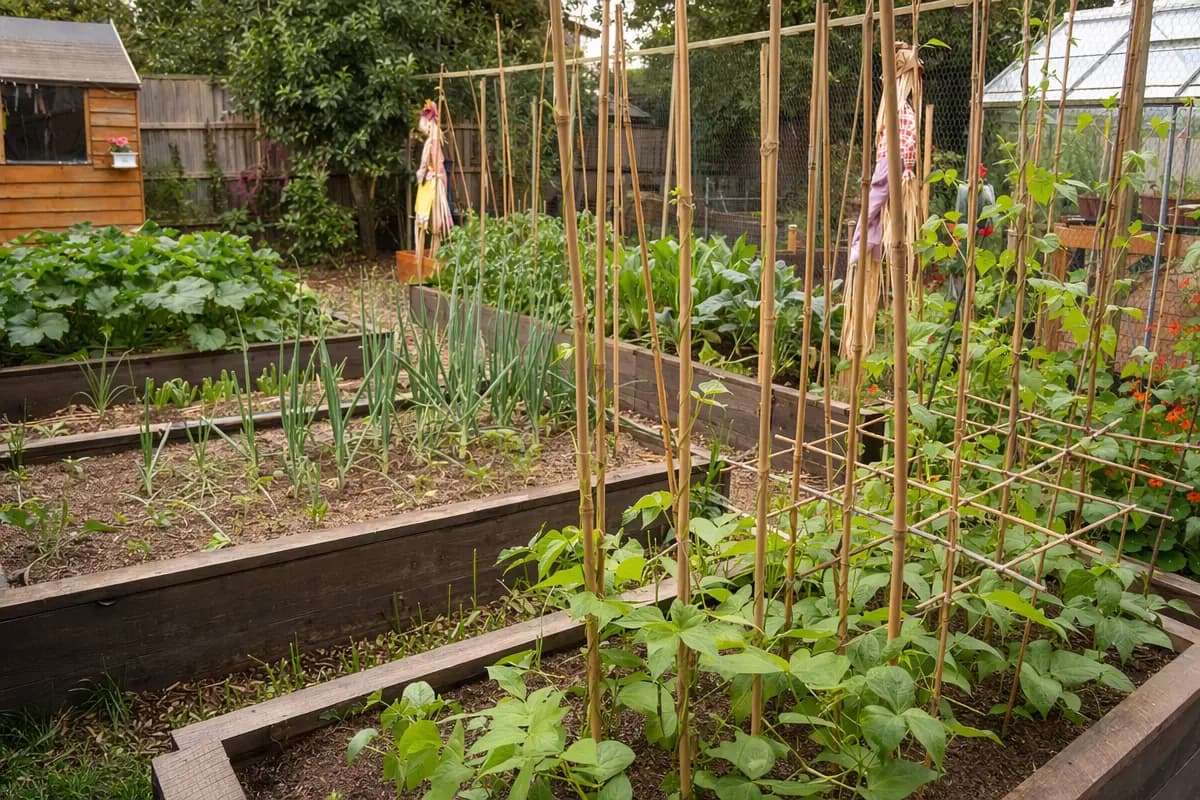
| # | Princípio | Aplicação no quintal |
|---|---|---|
| 1 | Observar e interagir | Dedique uma estação completa a observar os padrões solares, o fluxo de água, o vento e a vida selvagem antes de plantar |
| 2 | Captar e armazenar energia | Instale depósitos de água pluvial, construa valas de infiltração (swales), plante árvores caducifólias para sombra no verão e sol no inverno |
| 3 | Obter uma colheita | Garanta que cada elemento produz algo — alimento, cobertura morta, composto, habitat para polinizadores |
| 4 | Aplicar autorregulação e aceitar feedback | Observe o que prospera e o que se debate; ajuste em vez de forçar |
| 5 | Usar e valorizar recursos renováveis | Compostar restos de cozinha, recolher água da chuva, utilizar cobertura de aparas de madeira |
| 6 | Não produzir desperdício | Folhas caídas tornam-se cobertura morta, podas tornam-se material para hugelkultur, restos de cozinha tornam-se composto |
| 7 | Conceber dos padrões aos detalhes | Planeie primeiro as suas zonas e sectores, depois escolha as plantas específicas |
| 8 | Integrar em vez de segregar | Plantar em consociação em vez de monocultura; combinar árvores de fruto, ervas aromáticas e hortícolas |
| 9 | Usar soluções pequenas e lentas | Comece com um canteiro, não com todo o quintal; ferramentas manuais em vez de maquinaria |
| 10 | Usar e valorizar a diversidade | Plantar muitas espécies para resiliência — policultura, não monocultura |
| 11 | Usar os limites e valorizar o marginal | Bordaduras curvas nos canteiros criam mais espaço de plantação; vedações e muros tornam-se jardins verticais |
| 12 | Usar criativamente a mudança e responder-lhe | Aceitar a sucessão — uma área coberta de ervas daninhas pode tornar-se uma floresta alimentar ao longo do tempo |
Nota: Estes princípios têm fundamentação científica. A revisão de 2018 por Krebs e Bach encontrou evidência científica revista por pares que sustenta cada um dos doze princípios, com evidência particularmente forte para a diversidade (princípio 10), a integração (princípio 8) e a reciclagem de resíduos (princípio 6) Krebs & Bach, 2018.
Conceber o seu quintal: o sistema de zonas
O sistema de zonas é o conceito mais prático da permacultura de quintal. Organiza a sua propriedade pela frequência com que visita cada área, de modo a que as coisas de que necessita mais frequentemente fiquem mais perto da sua porta.
| Zona | Frequência de visita | O que colocar aqui | Exemplos no quintal |
|---|---|---|---|
| 0 | Sempre | A sua casa | Cozinha, início de sementes em interior, ervas aromáticas no parapeito |
| 1 | Várias vezes por dia | Plantas de alta manutenção e colheita diária | Espiral de ervas aromáticas, folhas para salada, horta junto à cozinha, compostor |
| 2 | Diariamente | Culturas que requerem atenção regular | Canteiros de hortícolas, arbustos de bagas, galinheiro |
| 3 | Semanalmente | Produção alimentar de menor manutenção | Árvores de fruto, hortícolas perenes, culturas de cobertura |
| 4 | Mensal / sazonalmente | Intervenção mínima | Nogueiras e castanheiros, zona de lenha, troncos para cogumelos, recolecção |
| 5 | Raramente | Apenas observação | Área selvagem deixada para biodiversidade e aprendizagem |
A maioria dos quintais suburbanos incluirá apenas as zonas 0 a 3, e isso é perfeitamente adequado. A ideia central é a colocação: ponha as folhas para salada junto à porta da cozinha (zona 1) para que as colha efetivamente todos os dias, e coloque as árvores de fruto mais afastadas (zona 3) onde só vai na altura da colheita. Como refere a NC State Extension, "a observação contínua e ponderada é a chave para um bom design," e o sistema de zonas garante que observa as suas plantas mais importantes constantemente, simplesmente ao passar por elas NC State Extension.
Sectores: trabalhar com as forças externas
Enquanto as zonas se organizam pela sua frequência de utilização, os sectores mapeiam as energias externas que atravessam o seu terreno: trajectória solar, ventos predominantes, escoamento de água, ruído e vistas. Faça um esboço da sua propriedade e marque:
- Sector solar — Onde nasce e se põe o sol no verão versus no inverno? Isto determina onde colocar culturas que adoram sol e culturas tolerantes à sombra.
- Sector do vento — A direcção do vento predominante indica onde plantar quebra-ventos (sebes, perenes altas) e onde evitar colocar plantas delicadas.
- Sector da água — Para onde flui a água da chuva durante tempestades? Estes são os locais ideais para valas de infiltração, jardins de chuva ou plantas que apreciam humidade.
Ao mapear zonas e sectores em conjunto, cria um design que trabalha com as energias naturais do seu terreno em vez de contra elas.
Construir o solo: a base de tudo
Um solo saudável é o elemento mais importante num jardim de permacultura. Em vez de importar sacos de substrato comercial a cada estação, a permacultura constrói o solo no local, utilizando técnicas que imitam os processos do coberto florestal.
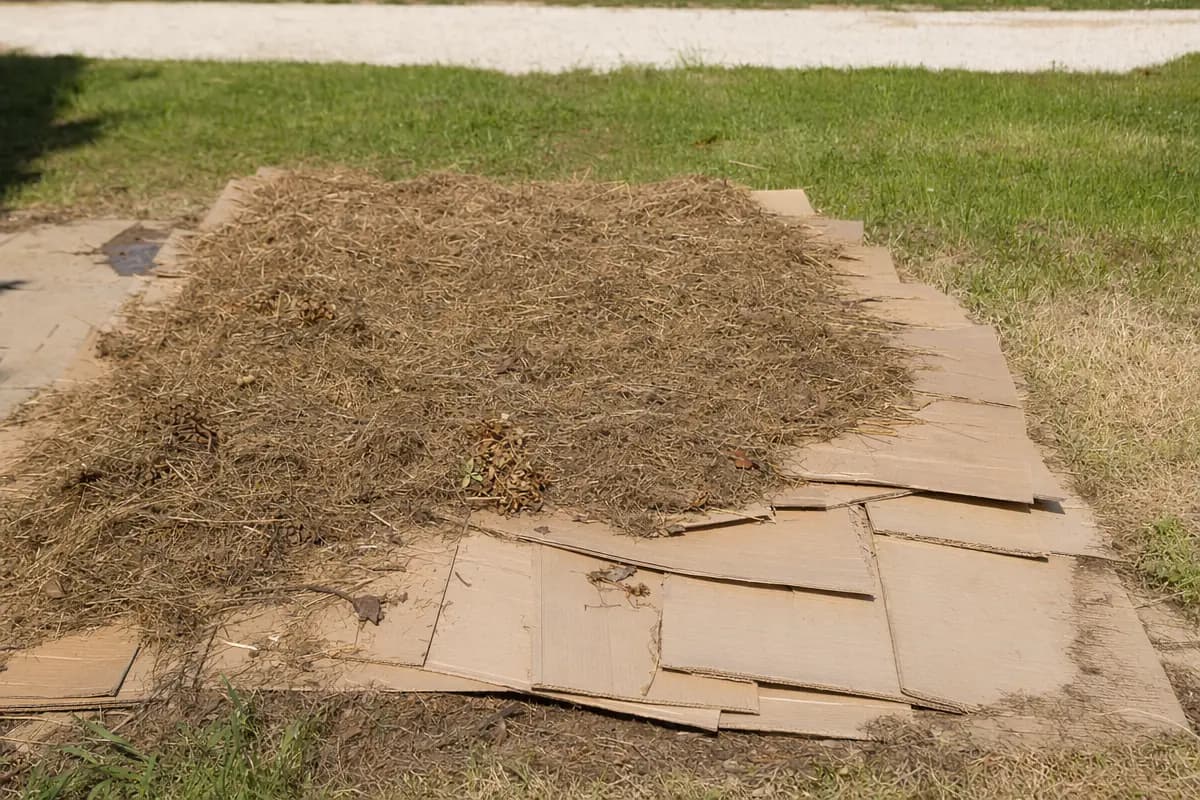
Mulching em camadas (jardinagem lasanha)
O mulching em camadas é a técnica de referência da permacultura para converter relvado ou solo nu em canteiros produtivos — sem qualquer escavação. A Oregon State University Extension recomenda-o como uma técnica de construção de solo baseada em cartão que suprime as ervas daninhas enquanto alimenta a vida do solo OSU Extension.
Como fazer mulching em camadas num novo canteiro:
- Corte ou achate a vegetação existente — não a remova. Esta torna-se a primeira camada de matéria orgânica.
- Coloque cartão sobreposto (retire fita adesiva e agrafos) directamente sobre o solo. Sobreponha as peças em pelo menos 15 cm para bloquear a luz e sufocar as ervas daninhas.
- Molhe bem o cartão — deve ficar encharcado para permanecer no lugar e começar a decompor-se.
- Adicione uma camada azotada (5–10 cm): aparas de relva, restos de cozinha, estrume bem curtido ou borras de café.
- Adicione uma camada carbonada (10–15 cm): palha, folhas secas, aparas de madeira ou papel triturado.
- Repita as camadas até a altura total atingir 30–45 cm.
- Cubra com 5–8 cm de composto acabado se quiser plantar imediatamente, ou deixe o canteiro a decompor-se durante 3 a 6 meses.
Dica: Evite utilizar cartão plastificado ou com muita tinta, e nunca inclua restos de jardim com sementes de ervas daninhas — ao contrário da compostagem quente, o mulching em camadas é um processo frio que não elimina sementes ou agentes patogénicos.
Compostagem
Todo o jardim de permacultura necessita de pelo menos um sistema de compostagem. Um sistema simples de três contentores funciona bem para quintais: um contentor a encher activamente, um em decomposição e um acabado e pronto a usar. O composto alimenta o seu solo, completa o ciclo de nutrientes e concretiza o princípio 6 (não produzir desperdício).
Culturas de cobertura
Em qualquer canteiro temporariamente vazio, semeie uma cultura de cobertura. Leguminosas como o trevo encarnado ou as ervilhacas fixam o azoto atmosférico no solo. Gramíneas como o azevém anual adicionam matéria orgânica. Quando estiver pronto para plantar, corte a cultura de cobertura e deixe-a como cobertura morta — acabou de construir fertilidade do solo gratuitamente.
A floresta alimentar: o modelo da natureza para o jardim
Uma floresta alimentar é um jardim concebido para imitar a estrutura de um bosque natural utilizando plantas comestíveis. É a expressão máxima do princípio "integrar em vez de segregar" da permacultura, e pode ser dimensionada desde uma única guilda de árvore de fruto num quintal suburbano até um sistema de vários hectares.
As sete camadas
As florestas naturais organizam-se em camadas verticais, e uma floresta alimentar copia esta estrutura:
| Camada | Altura | Exemplos para o quintal |
|---|---|---|
| 1. Copado | 10+ m | Macieira, pereira, castanheiro, nogueira de tamanho normal |
| 2. Sub-bosque | 3–10 m | Árvores de fruto anãs, amoreira, figueira, anoneira |
| 3. Arbustiva | 1–3 m | Mirtilo, groselha, groselha-espinhosa, sabugueiro |
| 4. Herbácea | Menos de 1 m | Confrei, ruibarbo, azedas, alcachofra, erva-cidreira |
| 5. Cobertura do solo | Superfície do solo | Morangueiro, tomilho rasteiro, trevo branco |
| 6. Trepadeira | Cresce na vertical | Videira, kiwi, maracujá, lúpulo |
| 7. Raiz | Subterrânea | Alho, batata-doce, rábano-rústico, tupinambo |
Alguns praticantes adicionam uma oitava camada — a camada fúngica — que inclui cogumelos comestíveis cultivados em troncos ou em camadas de aparas de madeira (shiitake, pleuroto, Stropharia).
Dica: Uma pequena floresta alimentar de quintal não precisa de todas as sete camadas. Comece com uma árvore de fruto de sub-bosque, rodeie-a com uma camada arbustiva e cobertura do solo, e já tem uma guilda funcional de floresta alimentar.
Guildas de plantas: consociação por design
Uma guilda é um grupo de plantas dispostas em torno de uma espécie central — geralmente uma árvore de fruto — onde cada planta desempenha uma função específica que apoia o grupo no seu todo. Não se trata de consociação aleatória; é design intencional baseado na forma como as plantas interagem.
Funções dentro de uma guilda:
- Fixadoras de azoto — Trevo, tremoço ou outras leguminosas cujas bactérias radiculares convertem o azoto atmosférico em forma disponível para as plantas
- Plantas recicladoras de nutrientes — Plantas de raízes profundas como o confrei e a mil-folhas que acumulam minerais nos seus tecidos foliares e os disponibilizam aos vizinhos de raízes superficiais através da cobertura com folhas (por vezes designadas "acumuladoras dinâmicas" — investigação emergente sustenta este papel para o confrei relativamente ao potássio e ao silício, embora a validação científica mais ampla ainda esteja em curso Cornell Small Farms, 2022)
- Atractoras de polinizadores — Erva-cidreira, borragem e alfazema que atraem abelhas e insectos benéficos
- Repelentes de pragas — Ervas aromáticas como o orégão, a hortelã e o alho que dissuadem pragas comuns
- Coberturas do solo — Morangueiro ou tomilho rasteiro que suprimem ervas daninhas, retêm humidade e protegem o solo nu
Uma guilda clássica de macieira:
Plante uma macieira semi-anã como peça central. Na sua base, plante confrei (reciclador de nutrientes), trevo branco (fixador de azoto e cobertura do solo), cebolinho (repelente de pragas — os compostos de enxofre dissuadem a sarna da macieira), bolbos de narciso (dissuadem roedores e competição de gramíneas) e borragem (atractora de polinizadores). Cada planta conquista o seu lugar preenchendo uma função, não simplesmente ocupando espaço.
A ciência por detrás da consociação de plantas
Uma meta-análise global de 2025 que sintetizou 609 estudos confirmou que o aumento da diversidade vegetal suprime consistentemente as populações de pragas e melhora o desempenho das plantas em zonas tropicais e temperadas, tanto em pastagens como em sistemas agrícolas Nature Ecology & Evolution, 2025. A consociação de culturas — o equivalente agrícola da plantação em guildas — demonstrou aumentar as populações de artrópodes benéficos (predadores, parasitóides e polinizadores) enquanto reduz a pressão de pragas herbívoras.
Talvez a guilda mais famosa da história seja as Três Irmãs: milho, feijão e abóbora, cultivadas por nações indígenas da América do Norte durante mais de cinco séculos antes do contacto europeu USDA National Agricultural Library. O milho fornece uma estrutura de suporte para o feijão, o feijão fixa azoto no solo para o milho, e as folhas largas da abóbora ensombram o solo para suprimir ervas daninhas e reter humidade. A investigação de Mt. Pleasant (2016) concluiu que a policultura das Três Irmãs produz mais energia (12,25 x 10⁶ kcal/ha) e mais proteína (349 kg/ha) por unidade de terreno do que qualquer uma das três culturas cultivada isoladamente — o suficiente para sustentar aproximadamente 13 pessoas por hectare por ano Mt. Pleasant, 2016.
Design Avançado de Florestas Alimentares e Seleção de Plantas
Conceber uma floresta alimentar que prospere ao longo de décadas exige compreender as interacções entre plantas a um nível mais profundo do que a plantação básica em guildas. Esta secção fornece modelos de guildas adaptados ao clima, orientações de espaçamento e estratégias de gestão do copado.
Modelos de Guildas Adaptados ao Clima
Nem todas as guildas funcionam em todo o lado. Eis três designs de guildas comprovados para diferentes condições de cultivo:
Guilda Temperada (USDA Zones 5–7)
| Camada | Espécie | Função | Distância ao centro |
|---|---|---|---|
| Copado | Macieira semi-anã (Malus domestica) | Produção principal | Centro |
| Sub-bosque | Amelanchier (Amelanchier alnifolia) | Fruto secundário, habitat para aves | 3–4 m |
| Arbustiva | Groselha vermelha (Ribes rubrum) | Fruto, tolerância a sombra parcial | 2–3 m |
| Herbácea | Confrei (Symphytum officinale) | Reciclagem de nutrientes (K, Si) | 1–1,5 m |
| Cobertura do solo | Trevo branco (Trifolium repens) | Fixação de azoto, cobertura viva | Sementeira a lanço |
| Raiz | Alho (Allium sativum) | Supressão de pragas (compostos de enxofre) | Círculos de 30 cm |
Guilda Mediterrânica (USDA Zones 8–10)
| Camada | Espécie | Função | Distância ao centro |
|---|---|---|---|
| Copado | Figueira (Ficus carica) | Produção principal, sombra de verão | Centro |
| Sub-bosque | Romãzeira (Punica granatum) | Fruto secundário, tolerância à seca | 3–4 m |
| Arbustiva | Alecrim (Salvia rosmarinus) | Repelente de pragas, atractora de polinizadores | 1,5–2 m |
| Herbácea | Alcachofra (Cynara cardunculus) | Produção perene, raiz pivotante profunda | 1,5 m |
| Cobertura do solo | Tomilho rasteiro (Thymus serpyllum) | Supressão de ervas daninhas, forragem para polinizadores | Sementeira a lanço |
| Trepadeira | Videira (Vitis vinifera) | Produção vertical | Treliça a 2 m |
Guilda Subtropical (USDA Zones 9–11)
| Camada | Espécie | Função | Distância ao centro |
|---|---|---|---|
| Copado | Abacateiro (Persea americana) | Produção principal | Centro |
| Sub-bosque | Bananeira (Musa spp.) | Produção secundária, produção de cobertura morta | 3 m |
| Arbustiva | Feijão-guandu (Cajanus cajan) | Fixação de azoto, biomassa | 2 m |
| Herbácea | Batata-doce (Ipomoea batatas) | Cobertura do solo + produção de raízes | 60 cm |
| Cobertura do solo | Amendoim perene (Arachis glabrata) | Fixação de azoto, controlo de erosão | Sementeira a lanço |
| Trepadeira | Maracujá (Passiflora edulis) | Produção vertical, atractora de polinizadores | Treliça a 2 m |
Gestão do Copado e Penetração de Luz
O fracasso mais comum em florestas alimentares é a sobrelotação. À medida que as árvores de copado amadurecem, a luz que atinge as camadas inferiores diminui — podendo reduzir para metade a produção do sub-bosque se não for gerida. Siga estas orientações:
- Desramação da copa: Remova 15–25% dos ramos interiores a cada 2–3 anos para manter 40–60% de transmissão de luz através do copado
- Estratégia de aberturas no copado: Espace as árvores de copado a 1,5 vezes o diâmetro da sua copa em maturidade para criar corredores de luz permanentes
- Planeamento de sucessão: Plante culturas intolerantes à sombra (bagas, ervas aromáticas) nas aberturas primeiro; transicione para espécies tolerantes à sombra (groselhas, hortelãs) à medida que o copado se fecha ao longo de 5–10 anos
- Talhadia: Utilize fixadoras de azoto de crescimento rápido (robínia, caragana) como plantas de biomassa para "cortar e deixar cair" — corte rente ao solo a cada 2–3 anos para reiniciar o copado e produzir cobertura morta
A meta-análise de 2025 de 609 estudos concluiu que a supressão de pragas através da diversidade vegetal era mais forte quando as espécies estavam dispostas em padrões espaciais estruturados e não em misturas aleatórias — exactamente o que o design de guildas alcança.
Gestão da água: captar e armazenar a chuva
O princípio 2 — "captar e armazenar energia" — aplica-se com particular eficácia à água. Num jardim de permacultura, o objectivo é abrandar a água, espalhá-la e infiltrá-la no solo antes que abandone a sua propriedade.
Valas de infiltração (swales): a obra de terra mais simples
Uma vala de infiltração é uma trincheira pouco profunda escavada em curva de nível (nivelada ao longo do seu comprimento) com a terra escavada amontoada no lado a jusante para formar um talude. Quando chove, a água acumula-se na vala e infiltra-se lentamente no solo em vez de escoar superficialmente. As árvores e arbustos plantados no talude têm acesso a uma reserva profunda de humidade subsuperficial.
Como construir uma vala de infiltração básica no quintal:
- Encontre a curva de nível utilizando um nível em A (dois varas unidas no topo com um fio de prumo). Marque uma linha nivelada ao longo do declive.
- Escave a trincheira ao longo da curva de nível — 30–45 cm de largura e 15–30 cm de profundidade.
- Amontoe a terra escavada no lado a jusante para formar o talude.
- Plante o talude com árvores de fruto, arbustos de bagas ou ervas aromáticas perenes.
- Cubra tudo com cobertura morta — tanto o fundo da vala como o talude — com aparas de madeira ou palha.
Mesmo num declive suave suburbano, uma única vala de infiltração pode captar milhares de litros de água pluvial por evento de precipitação e direccioná-los para as zonas radiculares das suas árvores em vez de para a rua.
Depósitos e cisternas de água pluvial
A água que escoa do telhado é gratuita e limpa. Um simples depósito de água da chuva ligado a uma caleira capta mais de 1.000 litros a partir de apenas 25 mm de chuva num telhado típico. Utilize esta água para rega das zonas 1 e 2 durante períodos secos. Para sistemas maiores, cisternas subterrâneas podem armazenar água para irrigação gota-a-gota por gravidade.
Jardins de chuva
Um jardim de chuva é uma depressão pouco profunda plantada com espécies tolerantes à água que recebe o excedente de superfícies impermeáveis (acessos para automóveis, pátios). Funciona como um filtro vivo, limpando o escoamento enquanto recarrega as águas subterrâneas. Plante-o com juncos nativos, íris e ervas tolerantes à chuva.
Iniciar o seu jardim de permacultura: passo a passo
Eis um roteiro prático para transformar um quintal convencional num jardim de permacultura. Siga o princípio 9 — soluções pequenas e lentas — e resista à tentação de transformar tudo de uma vez.
Primeiro ano: observar e planear
- Mapeie o seu terreno — Faça um esboço da sua propriedade mostrando a casa, árvores existentes, vedações, caminhos e infraestruturas. Marque o norte.
- Acompanhe o sol — Registe quais as áreas que recebem sol pleno (6+ horas), sol parcial (3–6 horas) e sombra ao longo das estações.
- Observe a água — Onde é que a água da chuva se acumula após tempestades? Onde escoa? Estas observações orientam a colocação de valas de infiltração e jardins de chuva.
- Teste o seu solo — Obtenha uma análise básica do solo através do serviço de extensão agrícola local. Isto indica-lhe o pH, a matéria orgânica e os níveis de nutrientes.
- Identifique as suas zonas — Marque as zonas 0–3 (ou as que se adequem ao seu espaço) no mapa do terreno com base na forma como utiliza efectivamente o seu quintal.
Segundo ano: construir a estrutura
- Faça mulching em camadas no primeiro canteiro na zona 1 (junto à porta da cozinha) — este torna-se o seu jardim de ervas aromáticas e saladas.
- Plante uma guilda de árvore de fruto na zona 2 ou 3 — mesmo uma única macieira, pereira ou figueira semi-anã inicia a sua floresta alimentar.
- Instale um elemento de gestão de água — um depósito de água pluvial, uma pequena vala de infiltração ou um simples jardim de chuva.
- Comece a compostar — um sistema básico de dois contentores ou uma simples pilha num canto discreto.
- Semeie culturas de cobertura em qualquer solo descoberto — trevo encarnado no outono, trigo-sarraceno no verão.
Terceiro ano e seguintes: expandir e diversificar
- Adicione mais camadas à sua floresta alimentar — arbustos, plantas herbáceas, coberturas do solo, trepadeiras.
- Construa canteiros adicionais utilizando mulching em camadas.
- Introduza hortícolas perenes — espargos, ruibarbo, alcachofra, azedas — para colheitas que regressam ano após ano sem replantação.
- Crie habitat — um monte de ramos para insectos benéficos, um monte de troncos para anfíbios, um prato de água raso para polinizadores.
- Partilhe o seu excedente — produtos extra, sementes, estacas e conhecimento com os vizinhos. Esta é a ética da "partilha justa" em acção.
Nota: O erro mais comum dos principiantes é tentar fazer tudo na primeira estação. A permacultura consiste em conceber sistemas que se constroem sobre si mesmos ao longo do tempo. Uma única guilda de árvore de fruto bem concebida no primeiro ano estará a produzir alimentos, a construir solo e a atrair polinizadores durante décadas.
Calendário de Permacultura para Todo o Ano
Este calendário fornece um enquadramento estação a estação para a gestão de um jardim de permacultura em zona temperada (USDA Zones 5–8). Adapte o calendário às suas datas de geada locais e ao seu clima.
Início da Primavera (6–8 semanas antes da última geada)
| Tarefa | Zona | Detalhes |
|---|---|---|
| Verificação da temperatura do solo | 1–2 | Comece a plantar quando o solo atingir 10 °C a 10 cm de profundidade |
| Podar árvores de fruto | 2–3 | Remova madeira morta e ramos cruzados; molde para penetração de luz |
| Semear culturas de cobertura | 2–3 | Semeie a lanço trevo encarnado ou ervilhacas nos canteiros ainda não plantados |
| Iniciar sementes em interior | 0 | Tomates, pimentos, beringelas — 6–8 semanas antes da transplantação |
| Cortar e deixar cair | 2–3 | Corte o confrei que passou o inverno rente ao solo; deixe como cobertura morta |
| Observar o fluxo de água | Todas | Observe onde o degelo e a chuva se acumulam — refine a colocação das valas de infiltração |
Final da Primavera (última geada ao início do verão)
| Tarefa | Zona | Detalhes |
|---|---|---|
| Sementeira directa de culturas de estação quente | 1–2 | Feijões, abóboras, pepinos após o solo atingir 15 °C |
| Transplantação de plântulas | 1–2 | Aclimatize e plante tomates, pimentos, ervas aromáticas |
| Cobertura morta abundante | 1–3 | Aplique 10–15 cm de aparas de madeira ou palha em redor das perenes |
| Plantar as Três Irmãs | 2 | Milho primeiro, depois feijões e abóboras 2 semanas mais tarde |
| Instalar depósitos de água pluvial | — | Ligue às caleiras antes dos períodos secos de verão |
| Monitorizar polinizadores | 2–3 | Registe quais as espécies em floração que atraem mais insectos benéficos |
Verão (época de crescimento pleno)
| Tarefa | Zona | Detalhes |
|---|---|---|
| Colheita diária | 1 | Colha ervas aromáticas, folhas para salada e hortícolas no ponto ideal de frescura |
| Cortes de confrei | 2–3 | Corte o confrei 3–4 vezes por estação; utilize as folhas como cobertura morta ou activador de composto |
| Sementeira sucessiva | 1–2 | Semeie culturas rápidas (alface, rabanete, feijão-verde) a cada 2–3 semanas |
| Gestão da água | Todas | Utilize água pluvial armazenada para as zonas 1–2; rega profunda das árvores de fruto semanalmente em seca |
| Semear culturas de cobertura de outono | 2–3 | Trigo-sarraceno como cobertura rápida de verão; corte antes da formação de sementes |
| Observar e registar | Todas | Registe a pressão de pragas, o desempenho das plantas e os efeitos do microclima |
Outono (aproximação da primeira geada)
| Tarefa | Zona | Detalhes |
|---|---|---|
| Mulching em camadas de novos canteiros | 2–3 | Coloque cartão + matéria orgânica para plantação na primavera |
| Plantar alho | 1–2 | 4–6 semanas antes do solo gelar; cubra com 10 cm de palha |
| Recolher sementes | Todas | Guarde sementes das variedades de polinização aberta com melhor desempenho |
| Semear culturas de cobertura de inverno | 2–3 | Azevém anual, trevo encarnado ou ervilhacas de inverno |
| Colher e conservar | 1–2 | Processe o excedente: seque ervas, conserve tomates, congele bagas |
| Limpeza do composto | 1 | Vire o contentor activo; inicie uma nova pilha com folhas de outono e restos do jardim |
Inverno (estação de dormência)
| Tarefa | Zona | Detalhes |
|---|---|---|
| Planear e conceber | 0 | Reveja as observações da estação; actualize o mapa do seu terreno |
| Encomendar sementes e árvores | 0 | Adquira árvores de fruto de raiz nua para plantação no final do inverno |
| Manutenção de ferramentas | 0 | Afie, lubrifique e repare ferramentas manuais |
| Ler e aprender | 0 | Estude design de permacultura, participe em workshops, conecte-se com grupos locais |
| Verificar a água armazenada | — | Esvazie os depósitos de água pluvial se houver risco de gelo; inspeccione os sistemas de cisterna |
| Habitat para vida selvagem | 4–5 | Deixe montes de ramos e cabeças de sementes de pé para insectos e aves em hibernação |
Dica: Mantenha um diário de permacultura — mesmo que seja um simples caderno junto à porta da cozinha. Registar observações mensais sobre o que cresce, o que se debate e que vida selvagem observa constrói os dados que orientam melhores decisões de design a cada ano (princípio 1: observar e interagir).
Permacultura para espaços pequenos
Não precisa de uma grande propriedade para praticar permacultura. Os princípios adaptam-se a qualquer espaço:
- Varanda ou pátio — Guildas em vasos com um citrino anão ou figueira, ervas aromáticas e morangueiros pendentes aplicam o conceito de múltiplas camadas na vertical. Utilize vasos com auto-irrigação para captar e armazenar água.
- Pequeno quintal urbano — Uma espiral de ervas aromáticas (um canteiro elevado em espiral construído com pedras) cria múltiplos microclimas em menos de 2 m² — ervas mediterrânicas que preferem solo seco no topo, hortelã que aprecia humidade na base.
- Superfícies verticais — Vedações, muros e treliças tornam-se espaço de cultivo produtivo para trepadeiras (videiras, passiflora, kiwi) e árvores de fruto em espaldeira. Uma cerca belga — árvores de fruto conduzidas num padrão de treliça em losango — produz fruta em abundância com menos de 60 cm de profundidade.
- Canteiros em buraco de fechadura — Canteiros elevados em forma de U que permitem alcançar todas as plantas a partir de uma única posição de pé, reduzindo a compactação e maximizando a área de plantação.
A lógica de design é a mesma em qualquer escala: observe as suas condições, sobreponha funções, integre elementos e recicle nutrientes.
Escalar: Do Quintal à Pequena Exploração
Uma vez estabelecido o seu sistema de permacultura no quintal, poderá querer expandir — quer para uma propriedade maior, uma horta comunitária ou uma pequena exploração agrícola. Os mesmos princípios de design aplicam-se a todas as escalas, mas sistemas maiores introduzem novas considerações em torno da infraestrutura hídrica, da mão-de-obra e da gestão de produção.
Expandir o Sistema de Zonas
Numa propriedade maior (0,2–2 hectares), o sistema completo de zonas entra em jogo:
| Zona | Mudança de escala | Infraestrutura necessária |
|---|---|---|
| 1 | Mantém-se junto à casa — jardim de ervas aromáticas maior, canteiros mais intensivos | Linhas de irrigação, estufins, estruturas de extensão de estação |
| 2 | Expande-se para incluir canteiros de hortícolas maiores, parcelas de bagas, aves de capoeira | Vedações, galinheiros móveis ou fixos, mais capacidade de compostagem |
| 3 | Floresta alimentar à escala de pomar, parcelas de cereais perenes, colmeias | Sistemas de valas de infiltração, caminhos de acesso para carrinho de mão, área de processamento de fruta |
| 4 | Bosque gerido, produção de cogumelos, madeira e lenha | Mínima — trilhos de acesso, talhadia ocasional |
| 5 | Zona selvagem para observação da biodiversidade | Nenhuma — sem intervenção |
Infraestrutura Hídrica à Escala
Um depósito de água pluvial no quintal capta centenas de litros. À escala de uma exploração, a captação de água torna-se um motor primário de design:
- Redes de valas de infiltração: Múltiplas valas paralelas em curva de nível, cada uma alimentando fileiras de árvores de fruto nos taludes. Uma rede de valas bem concebida num declive suave pode infiltrar milhares de litros por metro linear durante precipitação intensa, direccionando a água para as zonas radiculares em vez de a deixar sair da propriedade.
- Tanques agrícolas: Um tanque de 0,1 ha com 2 m de profundidade média armazena aproximadamente 2 milhões de litros — o suficiente para irrigação gota-a-gota por gravidade de um pomar de 0,5 ha durante um período seco de verão típico.
- Design de linha-chave (keyline): Uma versão à escala das valas de infiltração em curva de nível, a lavoura em linha-chave direcciona a água dos vales (onde se concentra naturalmente) para as cumeeiras (onde é escassa), equilibrando a distribuição de humidade em toda uma propriedade em encosta.
Projecções de Produção e Auto-suficiência Alimentar
De quanto terreno se precisa para alimentar uma família? A resposta depende da dieta, do clima e da maturidade do design, mas a investigação em permacultura oferece algumas referências:
- A policultura das Três Irmãs produz 12,25 x 10⁶ kcal/ha e 349 kg/ha de proteína — o suficiente para fornecer as necessidades calóricas de aproximadamente 13 pessoas por hectare por ano.
- Uma floresta alimentar madura produz significativamente mais por unidade de área do que o cultivo convencional em fileiras, ao sobrepor produção nas sete camadas — cada metro quadrado contribui simultaneamente com fruta do copado, colheita do sub-bosque, arbustos, herbáceas, cobertura do solo, trepadeiras e culturas de raiz.
- Reiff et al. observaram que os locais de permacultura no seu estudo produziram rendimentos "comparáveis aos da agricultura industrial" enquanto simultaneamente construíam carbono no solo, apoiavam a biodiversidade e necessitavam de menos factores de produção externos.
Muitos designers de permacultura experientes estimam que 0,1–0,2 hectares de zonas 1–3 intensivamente concebidas podem suprir a maioria das necessidades de hortícolas e fruta de uma família dentro de 3 a 5 anos de estabelecimento.
Considerações sobre Mão-de-obra e Gestão
Sistemas maiores exigem mais trabalho inicialmente, mas menos por unidade de área à medida que amadurecem:
- Anos 1–3 (estabelecimento): Espere 10–20 horas por semana para um sistema de 0,5 ha — a maior parte do tempo é dedicada a mulching em camadas, plantação de árvores, construção de valas de infiltração e infraestrutura.
- Anos 3–7 (transição): O trabalho diminui para 5–10 horas por semana à medida que os sistemas perenes se estabelecem e a cobertura morta suprime as ervas daninhas.
- Ano 7+ (maturidade): Um sistema bem concebido pode manter a produção com 3–5 horas por semana de gestão — principalmente colheita, poda ligeira e gestão de composto.
A chave para escalar é não fazer tudo de uma vez. Aplique o princípio 9 (soluções pequenas e lentas): estabeleça completamente uma zona antes de expandir para a seguinte. Um cronograma comum para uma exploração:
- Ano 1: Conceber toda a propriedade; implementar as zonas 1 e 2
- Anos 2–3: Estabelecer a floresta alimentar da zona 3 e a rede de valas de infiltração
- Anos 4–5: Desenvolver a zona 4 (bosque gerido, cogumelos, abelhas)
- Ano 5+: Permitir que a zona 5 se desenvolva naturalmente à medida que todo o sistema amadurece
Perguntas frequentes
Qual é a diferença entre permacultura e jardinagem orgânica?
A jardinagem orgânica centra-se principalmente naquilo que não se utiliza — sem fertilizantes sintéticos, pesticidas ou OGM. A permacultura centra-se na forma como se concebe — é uma abordagem de sistema integral que inclui práticas orgânicas mas vai mais longe ao modelar o seu jardim segundo ecossistemas naturais. Pode jardinar organicamente sem utilizar quaisquer princípios de permacultura, e a permacultura inclui sempre métodos orgânicos mas acrescenta design intencional, captação de água, silvicultura alimentar e integração ecológica.
Preciso de ser agricultor para praticar permacultura?
De modo algum. Os princípios de permacultura aplicam-se a um parapeito com ervas aromáticas, a um quintal suburbano, a uma parcela de horta comunitária ou a uma exploração rural. O sistema de zonas adapta-se naturalmente a qualquer dimensão: uma varanda citadina é a sua zona 1, uma parcela de horta comunitária pode ser a sua zona 2.
Quanto tempo demora a ver resultados?
Canteiros preparados com mulching em camadas podem ser plantados dentro de 3 a 6 meses. Hortícolas anuais produzem na primeira estação de crescimento. Ervas aromáticas perenes estabelecem-se dentro de um a dois anos. Árvores de fruto tipicamente dão fruto em 3 a 5 anos. Uma floresta alimentar amadurece ao longo de 5 a 10 anos. O aspecto notável da permacultura é que o sistema se torna mais produtivo e exige menos trabalho à medida que amadurece — o oposto da jardinagem convencional.
A permacultura consegue realmente produzir tanta comida como a jardinagem convencional?
A investigação ainda está a emergir, mas a evidência é encorajadora. O estudo de 2024 de Reiff et al. indicou que dados não publicados dos seus locais de estudo de permacultura mostravam rendimentos "comparáveis aos da agricultura industrial". Uma meta-análise global de 609 estudos confirmou que a diversidade vegetal (um princípio fundamental da permacultura) melhora consistentemente a produtividade das culturas Nature Ecology & Evolution, 2025. A vantagem principal é que a permacultura alcança esta produtividade enquanto simultaneamente constrói solo, sequestra carbono e apoia a biodiversidade — benefícios que os sistemas convencionais sacrificam.
E se o meu quintal tiver pouco sol?
A sombra é um recurso na permacultura, não uma limitação. Muitas plantas do sub-bosque florestal prosperam em sombra parcial: groselhas, groselhas-espinhosas, anoneiras, ruibarbo, azedas, hortelãs e muitas folhas para salada. Um quintal sombreado é naturalmente adequado para as camadas inferiores de uma floresta alimentar. Concentre as suas culturas que adoram sol (tomates, pimentos, abóboras) nas zonas com sol pleno que tiver, e preencha as áreas sombreadas com comestíveis tolerantes à sombra.
Qual é a técnica de permacultura mais fácil para começar?
O mulching em camadas. Não requer ferramentas, não requer escavação e utiliza maioritariamente materiais gratuitos (cartão, folhas, aparas de relva). Pode fazer mulching em camadas sobre o relvado existente e ter um novo canteiro em poucos meses. Combine-o com uma simples guilda de árvore de fruto e terá implementado múltiplos princípios de permacultura num único fim de semana.
Conclusão
A permacultura não é um conjunto de regras rígidas — é uma forma de pensar o seu jardim como um sistema vivo. Quando observa o seu terreno, concebe com intenção, constrói solo, planta em camadas e recicla nutrientes, cria um jardim que se torna mais produtivo e mais resiliente a cada ano. A ciência apoia cada vez mais o que os praticantes de permacultura observam há décadas: que a diversidade ecológica planeada supera as monoculturas simplificadas não apenas em biodiversidade e saúde do solo, mas na própria produção alimentar.
Comece com um princípio, um canteiro, uma árvore. Observe o que acontece. Depois faça um pouco mais. Isso é permacultura.