Fungus Gnats in Hydroponics: 7 Root-Safe Control Steps
Follow 7 root-safe steps to control fungus gnats in hydroponics: confirm larvae, find wet breeding sites, correct conditions, treat, and monitor.
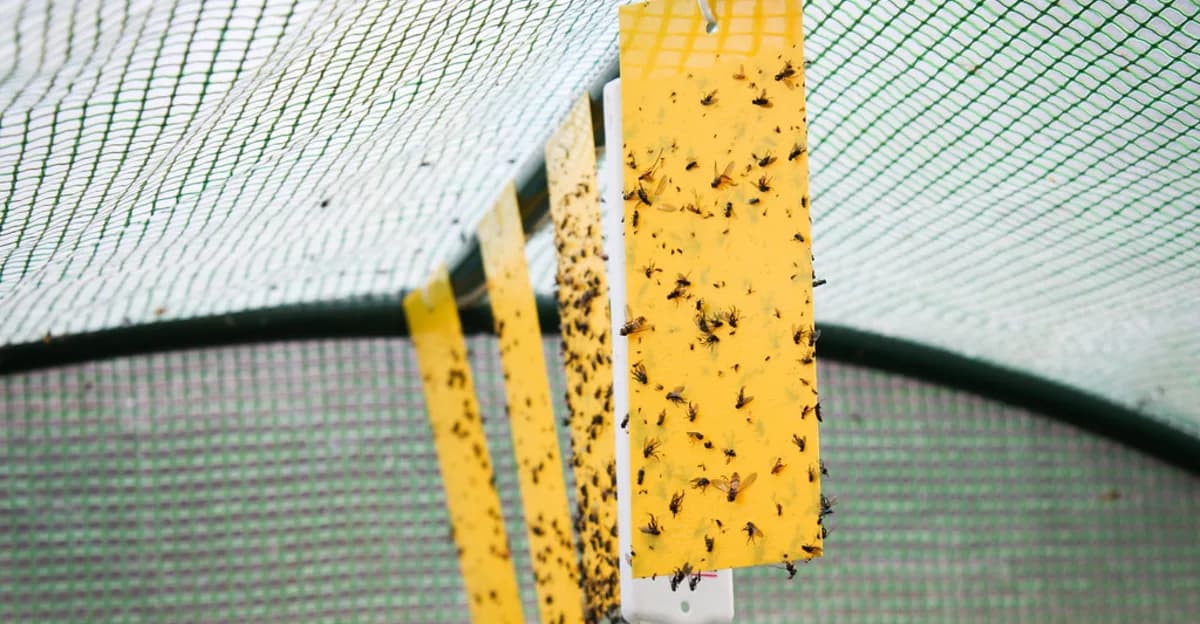
Key point: Fungus gnats can live in hydroponic gardens when the system includes persistently moist starter plugs, coir, peat, bark, rockwool, algae, dead roots, or another wet organic interface. The cited studies do not show that clean nutrient solution alone is a breeding site. Find the larvae and the material supporting them before putting anything into the reservoir.
The small flies are easy to notice. The damaging stage is harder to see. Fungus gnat larvae live around the root zone and can feed on roots, crowns, and young stems, with seedlings and newly rooted plants at greater risk. Adults are mainly a nuisance and a sign that you need to inspect below.
For fungus gnats in hydroponics, control works best as a sequence: confirm the insect, locate the wet breeding interface, correct the conditions that support it, target the larvae with an authorized treatment, then watch both adults and larvae for decline.
First, make sure they are fungus gnats
Adult fungus gnats are small, delicate, dark flies with long legs and long antennae. Common Bradysia species have a Y-shaped vein near the tip of each wing, although you may need a hand lens to see it. Their larvae are pale or translucent, legless, and marked by a distinct black head.
Do not identify them by “tiny black fly” alone. Shore flies are stockier and have shorter antennae. Fruit flies also need a different food source and control path. Use our broader plant pest identification guide if the adult does not fit the fungus gnat description.
| What you observe | What it tells you | What it does not tell you |
|---|---|---|
| Delicate, long-legged adults caught near plugs or media | Fungus gnats are a reasonable identification if the other features match | Whether larvae are present or damaging roots |
| Pale larvae with black heads in moist media or around roots | The breeding site is active | Why the plant is wilting or whether disease is present |
| Adults on yellow cards, but no larvae found | Keep monitoring and inspect more wet interfaces | That the reservoir needs treatment |
| Stocky flies around algae or standing water | Shore flies become a stronger possibility | A fungus gnat diagnosis |
Hydroponics can still provide a breeding site
Soil-free growing does not remove every moist habitat. Peer-reviewed reports have documented fungus gnats in floating tobacco seedling trays containing pine-bark substrate and in semi-hydroponic strawberry bags containing rice husk, peat, or commercial growing media. Larvae were also found among damaged roots in the strawberry systems.
Those studies define the limit of the evidence. They show that substrate-based hydroponic and semi-hydroponic systems can support fungus gnats. They do not show that an otherwise clean Deep Water Culture (DWC) reservoir, Nutrient Film Technique (NFT) channel, or aeroponic chamber breeds them in the nutrient solution itself.
If your system is mostly bare water, inspect the small pieces of material around it. A damp propagation plug, algae at a net pot, dead roots in a channel, spilled coir under a tray, or a slow leak outside the intended flow path may provide the moist interface the insects need.
Diagnose the infestation before treating it
1. Monitor adults near the root zone
Place yellow sticky cards close to the surface of the plugs or growing medium. Use them to confirm that adults are present and to compare the capture trend over time. Cards can catch some adults, but they do not measure the number of larvae and should not be the only control.
There is no universal trap-count threshold that proves root damage or tells you when an infestation is gone. Record the date and card position, then compare like with like. A falling catch is useful evidence only when direct larval checks are moving in the same direction.
2. Look for larvae where the system stays moist
Inspect starter plugs, media surfaces, net pots, drain areas, and roots with good light. In media that can be checked without damaging the crop, a slice of raw potato placed on the moist surface can attract larvae to the underside. Check it regularly and look for the pale body and black head.
The potato check is a monitoring method, not a treatment. Direct inspection may work better around exposed roots, narrow net pots, or channels where a potato slice will not sit safely. Avoid disturbing young roots to chase a sample.
3. Separate insect damage from other root problems
Larvae can feed on roots, but wilt, stunting, discoloration, and weak growth have many possible causes. If the plant is declining, also check the system's water and oxygen supply, temperature, salt conditions, irrigation behavior, and signs of root disease. Confirming adult gnats does not prove that they caused every symptom.
Fungus gnats can carry or transmit some plant pathogens in experimental and production settings. The importance varies by pathogen and growing environment, and UConn Extension describes their role in commercial greenhouse transmission as unclear. Gnats do not diagnose Pythium, Fusarium, or any other root disease.
Audit Every Wet Interface
Trace the system from propagation area to drain instead of focusing on the reservoir. Record whether each location contains larvae, adults, algae, debris, or excess surface moisture.
| Inspection point | What to check | Root-safe correction |
|---|---|---|
| Starter plugs and propagation cells | A needlessly saturated top, algae, dead seedlings, and black-headed larvae | Correct drainage or cycle timing where the crop permits, but do not let the plug dry through |
| Net pots and collars | Algae, trapped leaf pieces, dead root fragments, and wet media exposed above the intended water path | Remove loose debris and correct the source of persistent surface wetness |
| Coir, peat, bark, or rockwool | Wet surfaces that never drain, decomposing material, and larvae below the surface | Adjust irrigation only within the crop's safe range and remove discarded media from the growing area |
| Channels, benches, and floors | Leaks, puddles, algae, spilled media, and drain points that stay wet | Repair leaks, restore drainage, and clean algae and debris |
| Reservoir and plumbing | Floating debris, dead roots, algae near openings, and material caught around fittings | Remove reachable debris and correct light or maintenance faults; do not assume the solution itself is the breeding site |
Moisture advice must fit hydroponics. Container guidance often recommends drying the surface layer, but hydroponic roots and propagation plugs still need their designed water supply. Remove unintended wet habitat without lowering the reservoir beyond its safe operating level or interrupting root-zone oxygen and irrigation.
Photograph and label any place where larvae are found. That location is the first place to recheck after sanitation or treatment.
Correct the habitat before choosing a treatment
Remove dead roots, fallen leaves, discarded plugs, spilled growing medium, and other organic debris. Clean algae from accessible surfaces, repair leaks, clear blocked drains, and correct irrigation or drainage faults that keep the media surface wetter than the crop requires. These actions reduce food and habitat and make a larval treatment less likely to be undermined by the same conditions.
Do not solve excess surface moisture by depriving the crop. Keep active pumps, irrigation, aeration, and designed air gaps operating as the system requires. The correction should remove unintended standing water and saturation, not create a second root problem.
Move infested discarded media away from the growing area. Leaving a wet plug, root ball, or tray beside the system can preserve the breeding site even after the crop area looks clean.
Choose a larval control that fits the crop and system
Once larvae are confirmed, focus treatment on the moist material where they live. Product formulation, crop, application site, larval stage, timing, temperature, and growing medium can all affect performance. Check the current label for your country and use only a product or beneficial organism authorized for that crop and location.
Bti
Bacillus thuringiensis subsp. israelensis (Bti) can suppress fungus gnat larvae in treated growing media. Results depend on applying an appropriate labeled formulation at the right stage and timing. A mushroom-substrate study found reduced adult emergence in its tested Bti bioassays, but the same paper discusses different results in other systems. That makes Bti an option, not a guaranteed cure.
Do not copy a houseplant drench or research dose into a hydroponic reservoir. The cited evidence does not establish a universal reservoir dose or show that adding Bti to bare nutrient solution is the right treatment site.
Beneficial nematodes
The nematode Steinernema feltiae can suppress fungus gnat larvae in suitable moist media, especially when applied early. Performance varies with the crop, substrate, timing, and conditions. In oyster mushroom straw, one peer-reviewed study found the treatment ineffective to only slightly effective, which shows why results from one biological substrate should not be transferred directly to another.
Use a current product label or supplier instruction that covers your crop and application site. Do not add nematodes to a bare reservoir unless that use is authorized for the specific product and system.
Predatory mites
The predatory mite Stratiolaelaps scimitus can attack larvae in suitable media. A floating tobacco-seedling trial reported fewer captured adults in the biological-control shed than in the untreated shed, but each treatment was tested in a different shed, so shed conditions may have influenced the result. The researchers also found no difference in root dry mass. The study provides limited, system-specific evidence for a media-based option, not a universal rate or proof that mites match a chemical treatment.
Predatory mites need a habitat they can occupy. They are a poor fit for a clean bare-water system unless a product specifically authorizes and explains that use.
Skip unsupported reservoir remedies
Do not add hydrogen peroxide, soap, cinnamon, essential oils, or another home remedy to nutrient solution for fungus gnats based on the available evidence. The cited evidence does not establish a root-safe, effective hydroponic use for them. It also does not support sand or diatomaceous earth as dependable surface barriers; greenhouse research reviewed by Kansas State reported negative results for those approaches.
A treatment placed in the wrong location may expose roots without reaching the larvae. If larvae are in a plug, coir bag, algae-covered drain, or discarded media, that is the interface the plan needs to address.
Track Whether Control Is Working
Adult cards and larval checks measure different stages, so record both in a plant diary. Keep card placement, inspection points, and timing consistent enough to compare one check with the next.
| Record | What improvement looks like | What calls for another inspection |
|---|---|---|
| Yellow sticky cards | Adult captures trend downward across comparable cards | Captures stay level or rise near one bench, tray, or net pot |
| Potato slice or direct media check | Fewer black-headed larvae appear at the known breeding interface | Larvae persist after the labeled treatment window or appear at a new wet site |
| Plug and media surface | Algae, debris, leaks, and excess surface wetness do not return | The same correction fails because drainage, irrigation, or sanitation remains unresolved |
| Roots and crop growth | New growth remains stable while root damage stops spreading | Wilt, stunting, decay, or root discoloration continues despite fewer gnats |
Do not expect the adult count to reach zero immediately after a larval treatment. Adults already present and immature stages that survive until emergence can keep appearing for a time. Fungus gnat development commonly takes a few weeks and varies with species and temperature.
If adult captures fall but larvae remain at the original site, the larval control has not finished the job. If adults remain but repeated larval checks are negative, widen the search to nearby propagation trays, indoor plants, wet waste, and drain areas before treating the hydroponic system again.
Persistent plant decline needs its own diagnosis. Reducing gnats will not correct low root-zone oxygen, excessive salts, irrigation faults, heat stress, or a separate root disease.
A root-safe fungus gnat plan
Use this order for an indoor or hydroponic garden:
- Identify the adults and distinguish them from shore flies and fruit flies.
- Put yellow sticky cards close to the root-zone surface and record the trend.
- Confirm larvae with direct inspection or a potato slice where that method fits the medium.
- Trace plugs, media, net pots, drains, leaks, algae, debris, roots, and discarded material to find the wet breeding interface.
- Correct sanitation, drainage, and water-management faults without drying roots beyond the needs of the crop and system.
- Apply a current, label-authorized larval control to the actual breeding material. Do not invent a reservoir dose.
- Recheck both adults and larvae, and investigate other root problems if the crop continues to decline.
The location of the larvae should drive the response. In a media-based hydroponic system, that may be a damp plug or bag. In a mostly bare-water system, it may be a small patch of algae, dead roots, spilled substrate, or a leak beside the equipment. Treating the whole reservoir before finding that location risks the roots and may miss the infestation.