Gember kweken: 21 onderzoeken onthullen wat echt werkt
Kweek gember thuis vanuit een wortelstok uit de supermarkt. Op onderzoek gebaseerde gids over grond-, pot- en hydroponische methoden met NPK-schema's per groeifase, oogsttiming voor babygember en rijpe gember, ziektepreventie en bewaring. Bevat gegevens uit 21 peer-reviewed studies.
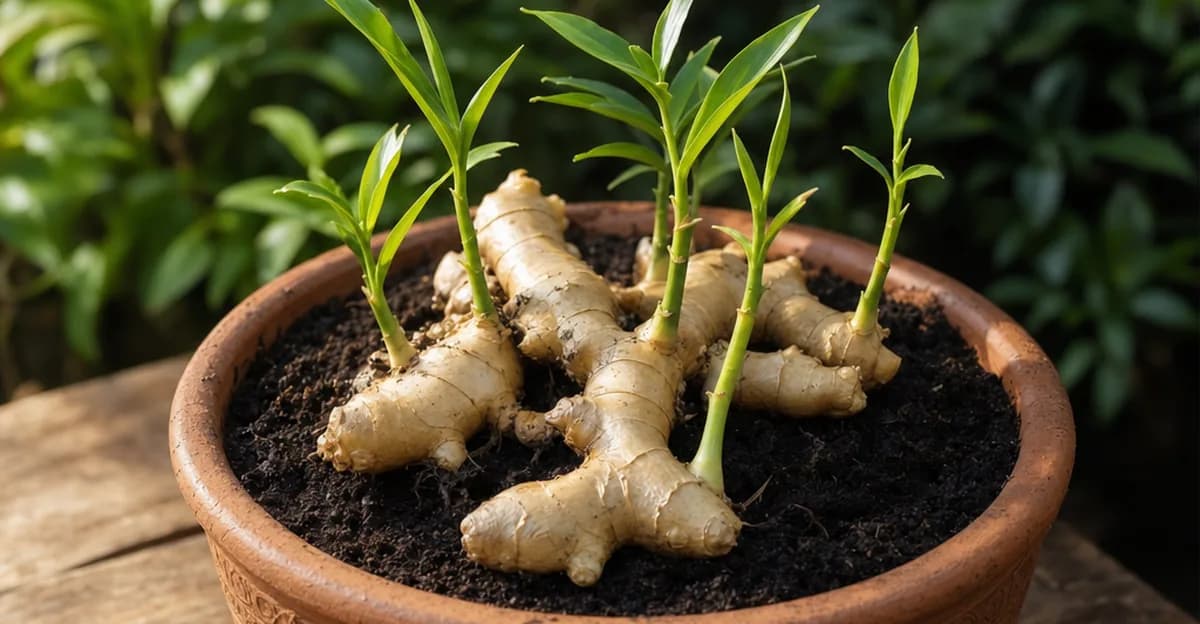
Een stukje gember ter grootte van een duim uit de supermarkt kan in acht tot tien maanden uitgroeien tot wel een kilogram verse wortelstok. Zelfgekweekte gember (Zingiber officinale Roscoe) is sappiger, aromatischer en pittiger dan alles wat in de koeling van de winkel ligt — en het is een van de meest vergevingsgezinde tropische planten die je binnenshuis kunt kweken.
Deze gids behandelt het volledige proces aan de hand van drie kweektmethoden: traditionele tuinbedden, potten en grondloze systemen. Aanbevelingen zijn gebaseerd op peer-reviewed onderzoek en universitaire voorlichtingsdiensten van 11 instellingen, met expliciete opmerkingen waar bronnen van mening verschillen.
Waarom zelf gember kweken?
Versheid en bioactieve stoffen
Gember uit de supermarkt heeft doorgaans al weken in koelhuizen gelegen. Gedurende die tijd wordt de primaire bioactieve stof 6-gingerol geleidelijk omgezet in 6-shogaol door thermische verwerking en uitdroging. Zelf kweken betekent oogsten op het moment van maximale versheid.
Onderzoek van Li et al. (2021) toonde aan dat babygember die in het vroegste stadium wordt geoogst, circa tweemaal zoveel totale fenolische verbindingen bevat (16,9 mg GAE/g) vergeleken met volledig rijpe wortelstokken, samen met een aanzienlijk hogere antioxidantactiviteit (DPPH-afvang van 135,3 TE µM/g bij de oogst, afnemend met circa 41% bij volledige rijpheid). Dit fytochemische voordeel is niet verkrijgbaar via de detailhandel — babygember is in de meeste supermarkten vrijwel onvindbaar.
Kosten en opbrengst
Eén enkele biologische wortelstok van een tot twee euro kan in één groeiseizoen onder goede omstandigheden 500-1.000 g verse gember opleveren. Voor huishoudens die regelmatig met gember koken, verdient de investering zich al bij de eerste oogst terug.
Gember past bovendien van nature naast kurkuma, zijn nauw verwante botanische familielid. Beide hebben vrijwel identieke groeivereisten en gedijen zij aan zij in dezelfde potten of tuinbedden.
Gember begrijpen
Botanische achtergrond
Gember behoort tot de familie Zingiberaceae, samen met kurkuma (Curcuma longa), galanga (Alpinia galanga) en kardemom (Elettaria cardamomum). Het geslacht Zingiber omvat meer dan 180 beschreven soorten, maar Z. officinale is de dominante gecultiveerde soort wereldwijd. India leidt de wereldproductie met meer dan 2,2 miljoen metrische ton per jaar, gevolgd door Nigeria, China en Nepal.
De plant groeit vanuit een ondergrondse wortelstok (technisch gezien een aangepaste stengel) die horizontaal vertakt net onder het grondoppervlak. Bovengronds stuurt de plant smalle, rietachtige pseudostengels omhoog — strak opgerolde bladscheden — die 60-120 cm hoog worden. De bladeren zijn lang, lansvormig en diepgroen met een glanzend oppervlak.
De groeicyclus
Gember heeft een lang seizoen met duidelijk te onderscheiden fasen:
| Fase | Tijdlijn | Belangrijke gebeurtenissen |
|---|---|---|
| Voorkiemen / chitten | 1-4 weken | Knopactivering in warme, vochtige omstandigheden |
| Scheutvorming na planten | 3-8 weken (tot 50+ dagen) | Wortelvestiging; geen bemesting nodig |
| Vegetatieve groei | Maand 3-5 | Blad- en spruitproductie; N-opname bereikt piek |
| Wortelstokinitiatie & vulling | Maand 6-8 | Ondergrondse expansie; K is meest opgenomen voedingsstof |
| Afsterving | Maand 8-10 | Bladvergeeling; koolhydraatverplaatsing naar wortelstokken |
Virginia Cooperative Extension merkt op dat gember "vijftig of meer dagen" nodig kan hebben om te kiemen, dus geduld tijdens de vestigingsfase is essentieel. In koelere klimaten kan de volledige cyclus tot 12 maanden duren.
Babygember vs. rijpe gember
Je kunt in twee duidelijk verschillende stadia oogsten met dramatisch andere eigenschappen:
Babygember (4-6 maanden): Bleek, dunne schil, sappig, mild van smaak. Schillen niet nodig. Roze getinte uiteinden. Li et al. (2021) ontdekten dat babygember circa 2x zoveel totale fenolische verbindingen en een hogere DPPH-antioxidantcapaciteit bevat dan rijpe gember. Het nadeel: het is minder lang houdbaar en levert minder massa per plant op.
Rijpe gember (8-10 maanden): Bruinig, dikke schil, vezelig, sterkere pittigheid. Het bekende supermarktproduct. Wekenlang houdbaar in de koelkast, maandenlang in de vriezer. Hogere totale opbrengst per plant, maar lagere concentratie verse bioactieve stoffen per gram.
Veel thuiskwekers oogsten een deel als babygember halverwege het seizoen — door buitenste wortelstokvingers af te snijden zonder de centrale plant te verstoren — en laten de rest volledig rijpen.
Plantgoed selecteren en voorbereiden
Waar op letten
Het makkelijkste uitgangsmateriaal is een verse wortelstok uit de supermarkt, natuurvoedingswinkel of toko:
- Stevige, mollige textuur — vermijd alles wat verschrompeld, zacht of beschimmeld is
- Zichtbare groeiknoppen ("ogen") — kleine, puntige knobbeltjes op het oppervlak, vergelijkbaar met aardappelogen
- Biologische certificering — conventionele gember wordt soms behandeld met groeiremmers die de kieming onderdrukken; biologische wortelstokken kiemen betrouwbaarder
- Formaat doet ertoe — Girma & Kindie (2008) ontdekten dat grotere zaaiwortelstokken (50-60 g per stuk) significant hogere opbrengsten opleveren doordat ze meer opgeslagen energie bevatten voor de initiële vestiging
Voorkiemen
Voorkiemen voegt enkele weken toe aan je effectieve groeiseizoen — cruciaal in gematigde klimaten.
- Week de wortelstok een nacht in lauwwarm water om eventuele restanten van groeiremmers te verwijderen.
- Wikkel hem in een vochtig (niet druipend) stuk keukenpapier of doek.
- Plaats in een losjes gesloten plastic zak.
- Bewaar op een warme, donkere plek — 21-26°C (70-78°F) is het optimale kiemingsbereik.
- Controleer om de paar dagen; voeg vocht toe als het papier uitdroogt.
- Scheuten verschijnen na 1-4 weken. Plant wanneer scheuten 1-2 cm lang zijn.
Snijden en laten indrogen
Als je uitgangswortelstok groot is, snij hem dan in stukken van 4-5 cm lang, elk met minstens twee tot drie groeiknoppen. Laat snijvlakken 24-48 uur aan de lucht drogen totdat een droog callus gevormd is. Dit vermindert het risico op schimmelinfectie aanzienlijk — Pythium- en Fusarium-soorten koloniseren moeiteloos versgesneden wortelstokweefsel in vochtige grond.
Optimale groeiomstandigheden
Temperatuur
Gember is een echte tropische plant met een goed gedefinieerd temperatuurbereik:
| Parameter | Waarde | Bronbasis |
|---|---|---|
| Optimaal daggemiddelde | 20-28°C (68-82°F) | Gong et al. 2023 (fysiologische data) |
| Kiemingsoptimum | 21-26°C (70-78°F) | Virginia Tech Extension |
| Hittestressdrempel | >35°C (95°F) | Chlorofylindex gehalveerd in 4 dagen |
| Koudeschadedrempel | <10°C (50°F) | Extensieconsensus |
| Commercieel subtropisch bereik | 20-35°C | Raj et al. 2024 |
Gong et al. (2023) toonden aan dat aanhoudende temperaturen boven 35°C in combinatie met intens licht ernstige fysiologische schade veroorzaakten: de chlorofylindex daalde met circa 50% in slechts vier dagen, wat bevestigt dat gember een schaduwminnende soort is die slecht tegen extreme hitte kan. Raj et al. (2024) noemen een breder bereik van 20-35°C voor commerciële subtropische productie, maar dit vertegenwoordigt tolerantie in plaats van het fysiologische optimum.
Voor telers in gematigde klimaten:
- Begin binnenshuis met voorkiemen aan het eind van de winter (februari-maart).
- Verplaats potten naar buiten wanneer nachttemperaturen consistent boven 15°C (59°F) komen.
- Haal ze in de herfst weer naar binnen voordat de temperatuur onder 10°C (50°F) daalt.
Licht
Gember is van oorsprong een ondergroeigewas in tropische bossen. De plant geeft de voorkeur aan helder, indirect licht of lichte schaduw — geen volle middagzon.
Voorlichtingsbronnen geven verschillende aanbevelingen: UF IFAS stelt 2-3 uur direct zonlicht voor, Texas A&M adviseert 2-5 uur en NC State noemt tolerantie tot 6 uur in halfschaduw. De consensus: 2-5 uur gefilterd of ochtendzonlicht is ideaal voor de meeste thuiskwekers. Volle middagzon in warme klimaten veroorzaakt bruine bladpunten en de door Gong et al. gedocumenteerde chlorofylschade.
Binnenshuis: Een helder oost- of zuidgericht raam. Vul aan met een full-spectrum LED-groeilamp tijdens de winter — een fotoperiode van 14 uur bij gematigde intensiteit ondersteunt een sterke vegetatieve groei.
Luchtvochtigheid
Gember presteert het best bij 70-80% relatieve luchtvochtigheid. Het natuurlijke leefgebied is de vochtige tropische bosbodem, waar omstandigheden boven 90% kunnen uitkomen, hoewel 70-80% het gangbare primaire teeltbereik is (Raj et al., 2024). De University of Georgia Extension bevestigt dat gember "hoge luchtvochtigheid" nodig heeft.
In droge binnenruimten kun je de plaatselijke luchtvochtigheid verhogen door:
- Planten bij elkaar te groeperen
- Potten op schotels met kiezels en water te zetten
- Een kleine luchtbevochtiger in de buurt te plaatsen
- Bladeren te benevelen, vooral in verwarmde ruimten
Grond en pH
Gember heeft losse, goed drainerende, organisch rijke grond nodig. De wortelstokken breiden zich horizontaal uit net onder het oppervlak en zullen moeite hebben in verdichte of zware kleigrond.
pH-bereik: 5,5-6,5 (Penn State Extension bevestigt dit bereik; NC State noemt een bredere tolerantie tot circa 7,0). Zure tot bijna neutrale omstandigheden maximaliseren de beschikbaarheid van fosfor, ijzer en mangaan.
Een beproefd potgrondmengsel:
- 40% kwaliteitspotgrond (leemgebaseerd)
- 30% rijpe compost of wormencompost
- 20% perliet of grof zand voor drainage
- 10% kokosvezel voor vochtvasthoudend vermogen
Drie manieren om gember te kweken
Methode 1: Tuinbedden
Het meest geschikt voor USDA-zones 9-12 waar gember zijn cyclus van 8-10 maanden buitenshuis kan voltooien. Kies een plek met ochtendzon en namiddagschaduw, of onder een boomkroon.
Plantdiepte — een opmerking over uiteenlopende bronnen: Voorlichtingsbronnen adviseren verschillende dieptes. UW-Madison en UF IFAS adviseren circa 2,5 cm (1 inch). Texas A&M stelt 5-10 cm (2-4 inch) voor. Virginia Tech beveelt 10-15 cm (4-6 inch) aan voor grotere plantstukken. De diepere aanbevelingen lijken geschikt voor veldomstandigheden waar grond sneller uitdroogt en aanaarden wordt toegepast. Voor de meeste moestuinbedden biedt 5-10 cm (2-4 inch) met aansluitend aanaarden een goede balans tussen rotpreventie en bescherming van de wortelstok.
Plantafstand: 15-20 cm (6-8 inch) tussen stukken voor thuisteelt; breder voor commerciële productie.
Voordelen: Natuurlijke bodembiologie, geen potbeperkingen voor de uitbreiding van wortelstokken, mogelijkheden voor begeleidende beplanting.
Beperkingen: Ziektedruk door bodemgebonden pathogenen (met name Pythium en Ralstonia), minder controle over drainage, niet haalbaar in gematigde klimaten zonder seizoensverlenging.
Methode 2: Potten (aanbevolen voor de meeste kwekers)
Potcultuur is de aanbevolen aanpak voor het merendeel van de thuiskwekers, zelfs in warme klimaten. Zes of meer voorlichtingsbronnen bevelen potten expliciet aan als primaire methode.
Waarom potten uitstekend geschikt zijn voor gember:
- Volledige controle over grondsamenstelling en drainage
- Verplaatsbaarheid tussen binnen- en buitenomgeving
- Eenvoudig oogsten door de pot op zijn kant te leggen
- Isolatie van bodemgebonden ziekten die gember in tuinbedden verwoesten
Potselectie: Gemberwortelstokken groeien horizontaal, dus breedte is belangrijker dan diepte:
- Minimum: 30 cm breed x 25 cm diep (12" x 10")
- Aanbevolen: 38-45 cm breed x 30 cm diep (15-18" x 12")
- Een pot van 35 cm (14") biedt ruimte voor ongeveer drie wortelstokstukken
- Kweekzakken van stof (40-60 liter) bieden superieure beluchting en voorkomen wortelcirculatie
Drainagegaten zijn verplicht. Gemberwortelstokken rotten snel in drassige omstandigheden — Pythium myriotylum kan weefsel binnen dagen vernietigen in verzadigde grond.
Planten in potten: Plaats voorgekiemde wortelstokstukken horizontaal, met knoppen naar boven, en bedek met 2-5 cm (1-2 inch) grond. Ondieper planten vermindert het rotrisico in potten waar het vochtgehalte consistenter is.
Methode 3: Hydroponische en grondloze systemen
Peer-reviewed onderzoek heeft levensvatbare gemberproductie aangetoond in meerdere grondloze systemen:
- Grondloze substraatcultuur — Suhaimi & Sembok (2021) kweekten gember succesvol in grondloos medium gedurende een volledige proef van 9 maanden
- Aeroponisch — Hayden et al. (2004) behaalden opbrengsten vergelijkbaar met in grond gekweekte gember wanneer voedingsoplossingen geoptimaliseerd waren
- Subfloddering (pot-in-pot) — Kratky & Bernabe (2009) ontwikkelden een praktische subfloddermethode specifiek voor de productie van ziektevrij gemberplantgoed
Het belangrijkste voordeel van grondloze teelt is ziektevrije wortelstokproductie. Aangezien natrot (Pythium) en bacterieverwelking (Ralstonia) bodemgebonden zijn, elimineert het weglaten van grond de primaire ziektevectoren.
Basisparameters hydroponisch:
- pH: 5,5-6,5 (gelijk aan grond)
- EC: 0,8-2,5 mS/cm (faseafhankelijk — lager tijdens vestiging, hoger tijdens vulling)
- N-concentratie: 200 mg/L is optimaal voor opbrengst; 400 mg/L levert een hoger 6-gingerolgehalte op, maar met afnemende opbrengstvoordelen
Hydroponische en aeroponische gember: opzet en parameters
Grondloze substraatopties:
- Kokosvezel + perliet (70:30) — goed vochtvasthoudend met voldoende beluchting
- Geëxpandeerde kleikorrels (LECA) — uitstekende drainage, herbruikbaar, laag pathogenenrisico
- Perliet + vermiculiet (60:40) — lichtgewicht, eenvoudig te oogsten
Fasespecifiek voedingsbeheer (grondloze/hydroponische systemen):
| Groeifase | EC (mS/cm) | N (mg/L) | P (mg/L) | K (mg/L) | pH |
|---|---|---|---|---|---|
| Vestiging (maand 1-2) | 0,8-1,2 | 80-120 | 30-40 | 80-120 | 6,0-6,5 |
| Vegetatief (maand 3-5) | 1,4-1,8 | 150-200 | 50-60 | 150-200 | 5,8-6,2 |
| Vulling (maand 6-8) | 1,8-2,5 | 120-150 | 50-70 | 200-250 | 5,5-6,0 |
| Afsterving (maand 9+) | Verlagen/stoppen | — | — | — | — |
Belangrijke aandachtspunten:
- Houd de watertemperatuur op 22-26°C; gemberwortels zijn gevoelig voor koude voedingsoplossingen
- Aeroponische systemen vereisen vernevelingsintervallen van 30-60 seconden elke 5-10 minuten tijdens actieve groei
- De subfloddermethode van Kratky & Bernabe (2009) is het goedkoopste instapmodel — geneste potten met een waterreservoir eronder, zonder pompen of timers
- Ziektevrij vermeerderingsmateriaal geproduceerd in hydrosystemen kan in volgende seizoenen in grond worden overgeplant
Water geven, bemesting en doorlopende verzorging
Water geven
Consistent vocht is cruciaal tijdens actieve groei, maar gember verdraagt kortstondig uitdrogen veel beter dan in drassige grond te staan:
- Water wanneer de bovenste 2-3 cm (1 inch) grond droog aanvoelt
- Elke keer goed doorgieten totdat water uit de drainagegaten stroomt
- Tijdens de piekgroei in de zomer kan het nodig zijn om elke 2-3 dagen water te geven
- Verminder het water geven wanneer de bladeren in de herfst beginnen te vergelen — dit bevordert de rijping van de wortelstok en vermindert het rotrisico
- Geef geen water aan slapende, bladloze planten gedurende de winter
Mulchen
Breng een laag van 5-8 cm (2-3 inch) organische mulch aan (stro, versnipperde bladeren of houtsnippers). Mulch houdt vocht vast, matigt de bodemtemperatuur, onderdrukt onkruid en creëert het vochtige microklimaat dat gember verkiest.
Aanaarden
Naarmate gember groeit, kunnen uitdijende wortelstokken boven het grondoppervlak uitkomen. Breng periodiek extra grond of compost aan rond de basis — vergelijkbaar met het aanaarden van aardappelen. Virginia Tech beveelt aan om één tot drie keer tijdens het groeiseizoen aan te aarden.
Bemesting
Gember is een matige tot zware voeder met een kenmerkend voedingsopnamepatroon. Meerdere studies bevestigen dat kalium de meest opgenomen voedingsstof is — aanzienlijk meer dan stikstof of fosfor.
Algemeen bemestingsschema:
- Bij het planten: Langzaamwerkende organische meststof door de potgrond mengen
- Vestiging (maand 1-2): Alleen licht bijmesten; wortels zijn ondiep en gevoelig
- Vegetatieve fase (maand 3-5): Verdunde vloeibare meststof elke 2-3 weken; gebalanceerde N-P-K
- Wortelstokvorming (maand 6-8): Overschakelen naar kaliumrijke meststof (tomatenvoeding werkt goed)
- Voor de oogst (maand 9+): Stop alle bemesting wanneer de plant in afstervingsfase gaat
Veldschaalreferentie: Onderzoek identificeert consequent NPK-verhoudingen rond 125:50:100 kg/ha als optimaal voor gember in open veld, met stikstof optimaal bij 120-125 kg/ha en kaliumtoediening bij 120 kg/ha die 17,6 t/ha opleverde.
Gedetailleerd voedingsschema per groeifase
Het volgende is een synthese van peer-reviewed voedingsonderzoek met voorlichtingsrichtlijnen voor grond- en potcultuur. EC-waarden gaan uit van een basis-EC van het water van 0,3-0,5 mS/cm. Voor grondloze/hydroponische doelwaarden, zie de sectie Hydroponische opzet hierboven.
| Groeifase | Maanden | N (ppm) | P (ppm) | K (ppm) | EC (mS/cm) | pH | Opmerkingen |
|---|---|---|---|---|---|---|---|
| Rust / voorkiemen | 0 | — | — | — | — | — | Geen bemesting; opgeslagen reserves voeden de initiële groei |
| Kieming / vestiging | 1-2 | 50-80 | 20-30 | 50-80 | 0,6-1,0 | 6,0-6,5 | Alleen licht bijmesten; wortels zijn ondiep en gevoelig |
| Vegetatief (blad en spruit) | 3-5 | 120-180 | 40-60 | 120-180 | 1,2-1,8 | 5,8-6,2 | N stuurt bladontwikkeling; N-opname bereikt hier piek |
| Wortelstokinitiatie | 6 | 100-150 | 50-70 | 150-200 | 1,4-2,0 | 5,8-6,0 | Begin K-dominante verhouding voor zetmeelafzetting |
| Wortelstokvorming | 7-8 | 80-120 | 50-70 | 180-250 | 1,6-2,2 | 5,5-6,0 | K is cruciaal — gewas onttrekt tot 950 kg K2O/ha |
| Afsterving | 9-10 | Stoppen | Stoppen | Stoppen | — | — | Laat mobilisatie van reserves naar wortelstokken toe |
Grondloze optimalisatie-afweging: Suhaimi & Sembok (2021) ontdekten dat 200 mg/L N de maximale wortelstokopbrengst oplevert, terwijl 400 mg/L N het 6-gingerolgehalte maximaliseert. Thuiskwekers die optimaliseren voor culinaire kwaliteit kunnen de voorkeur geven aan een matig hogere N-gift tijdens de vullingsfase.
Oogsten, narijpen en bewaren
Wanneer oogsten
Babygember (4-6 maanden): Let op stengels van minstens 30 cm hoog met meerdere bladeren. Oogst selectief buitenste wortelstokvingers door voorzichtig rond de rand van de pot te graven zonder de centrale plant te verstoren. Babygember is herkenbaar aan de dunne, bleke, vaak roze getinte schil en het ontbreken van vezelige textuur.
Rijpe gember (8-10 maanden): Oogst wanneer bladeren en pseudostengels op natuurlijke wijze vergelen en neerbuigen. Dit afstervingssignaal betekent dat de plant de verplaatsing van koolhydraten en gingerolen naar de wortelstokken heeft voltooid. In koelere klimaten kan de oogst tot 12 maanden uitlopen.
Hoe te oogsten
- Stop met water geven 1-2 weken voor de oogst om de wortelstokken steviger te maken en oppervlaktevocht te verminderen.
- Leg de pot bij potcultuur op zijn kant en breek de kluit voorzichtig uit elkaar.
- Scheid nieuwe wortelstokvingers van de uitgeputte moederwortelstok.
- Schud overtollige grond eraf — was niet als je langdurig wilt bewaren (oppervlaktevocht bevordert rotting).
- Zet de molligste vingers met gezonde knoppen apart voor herplanting volgend seizoen.
Narijpen en bewaren
Onderzoek van Paull et al. (1988) stelde vast dat gewichtsverlies tijdens gemberbewaring voornamelijk komt door vochtverdamping, waarbij zetmeel-naar-suikeromzetting plaatsvindt tijdens het narijpingsproces.
Optimale langdurige bewaring: 12-14°C (54-57°F) bij 85-90% relatieve luchtvochtigheid. Onder deze omstandigheden kan nagerijpte gember 3-4 maanden houdbaar zijn.
| Methode | Duur | Opmerkingen |
|---|---|---|
| Aanrecht (kamertemperatuur) | 1-2 weken | Geschikt voor direct gebruik |
| Koelkast (ongeschild, in papieren zak) | Tot 3 weken | Aanbeveling Texas A&M |
| Vriezer (heel, ongeschild) | Tot 6 maanden | Rasp rechtstreeks vanuit de vriezer |
| Gedroogd / gedehydrateerd | 6-12 maanden | Snijd in dunne plakjes; droog bij 50-55°C |
| Herplantingsmateriaal | Overwinterd | Bewaar bij 15-18°C in droog medium |
Waarschuwing voor koudeschade: Bewaring onder 8°C veroorzaakt koudeschade aan gemberwortelstokken, consistent met hun subtropische oorsprong.
De wetenschap van gingerolen: baby vs. rijp
Fytochemisch profiel per oogststadium
Li et al. (2021) leverden de eerste gedetailleerde fytochemische vergelijking over gemberoogststadia, met significante verschillen die van belang zijn voor zowel culinaire als gezondheidstoepassingen:
| Verbinding | Babygember | Rijpe gember | Significantie |
|---|---|---|---|
| Totaal fenolische inhoud | ~16,9 mg GAE/g | ~8,5 mg GAE/g | Baby heeft 2x TPC |
| DPPH-antioxidantafvang | 135,3 TE µM/g | ~80 TE µM/g | ~41% daling bij rijpheid |
| 6-gingeroldominantie | 15x hoger dan 6-paradol | Behouden | Primaire scherpe stof |
| Remming van vetophoping | 20% reductie | Lager | In-vitro bevinding (Li et al., 2021) |
De primaire scherpe stof 6-gingerol is circa 15 keer meer geconcentreerd dan 6-paradol en 53 keer meer dan 6-shogaol in verse gember. Door thermische verwerking en uitdroging wordt 6-gingerol omgezet in 6-shogaol — een transformatie gedocumenteerd door Mao et al. (2019), die ook de moleculaire routes beschreven waarmee deze verbindingen interageren in laboratoriummodellen.
Praktische implicatie: Als het maximaliseren van de bioactieve stofdichtheid uw doel is, oogst dan eerder (babygemberstadium). Als het maximaliseren van de totale opbrengst en houdbaarheid het doel is, wacht dan tot volledige rijpheid.
Gingerolgehalte maximaliseren: oogsttiming en narijpingsstrategieën
Op basis van de fytochemische gegevens van Li et al. (2021) en het biochemisch overzicht van Mao et al. (2019):
- Babygember bij 4-6 maanden heeft de hoogste verse bioactieve dichtheid — ideaal voor sappen en verse culinaire bereidingen waar de 6-gingerolconcentratie per gram het meest telt
- Oogst niet vroeg als totale gingerolmassa het doel is — rijpe gember heeft een lagere concentratie per gram maar beduidend meer totale wortelstokmas
- Minimaliseer blootstelling aan hitte na de oogst — gingerol degradeert tot shogaol boven 60°C. Houd de dehydratortemperatuur op 50-55°C bij het drogen
- Bewaar koel, niet koud — het bereik van 12-14°C laat voortdurende enzymatische activiteit toe zonder thermische afbraak
- Invriezen behoudt gingerol goed — voor langdurige bewaring van bioactieve stoffen met verse kwaliteit is invriezen superieur aan koeling
- De 400 mg/L N grondloze bevinding suggereert dat hogere stikstofbeschikbaarheid tijdens de vullingsfase de gingerolsynthese kan verhogen, zij het met een opbrengstafweging. Thuiskwekers kunnen experimenteren met een licht verhoogde N-gift in de laatste maand van actieve groei
Ziektepreventie en -bestrijding
Natrot (Pythium-soorten)
De ernstigste bedreiging voor thuisgekweekte gember. Een uitgebreid overzicht van Le et al. (2023) documenteert dat natrot 50-90% opbrengstverlies kan veroorzaken in commerciële productie. De primaire pathogenen zijn Pythium aphanidermatum en Pythium myriotylum, waarbij Le et al. (2014) via moleculaire identificatie bevestigden dat P. myriotylum het dominante pathogeen is in de Australische productie.
Symptomen: Snelle vergeeling, verwelking ondanks vochtige grond, waterig wortelstokweefsel, rottingslucht.
Preventie (consensus over 4+ bronnen):
- Goed drainerende grond en potten met adequate drainagegaten
- Laat potten nooit in stilstaand water staan
- Laat de bovenste grondlaag opdrogen tussen waterbeurten
- Laat alle gesneden wortelstokoppervlakken indrogen voor het planten
- Gebruik schoon, ziektevrij uitgangsmateriaal
- Vruchtwisseling (plant gember niet opnieuw in dezelfde grond)
Bacterieverwelking (Ralstonia pseudosolanacearum)
Vier onafhankelijke bronnen documenteren de verwoestende impact van bacterieverwelking op gember. Kumar et al. (2020) identificeerden Ralstonia Race 4 als Zingiberaceae-specifiek, terwijl Guji et al. (2019) opbrengstverliezen tot 100% documenteerden in besmette velden in Ethiopië. Het CTAHR-programma van de University of Hawaii bevestigt dat een eenmaal besmet bedrijf niet opnieuw met gember kan worden beplant.
Symptomen: Snelle bladvergeeling en verwelking, slijmerig bacterieel vocht uit gesneden stengels, jarenlange persistentie in de bodem.
Voor thuiskwekers: Bacterieverwelking komt veel minder vaak voor bij potcultuur omdat u het groeimedium zelf beheert. Het voornaamste risico is besmet uitgangsmateriaal of het hergebruiken van grond van geïnfecteerde planten. Vermijd het planten van gember op plekken waar tomaten, paprika's of aubergines groeiden — deze nachtschaden dragen hetzelfde pathogeen.
Fusarium-vergeeling
Fusarium oxysporum f. sp. zingiberi veroorzaakt geleidelijke bladvergeeling en wortelstokverval. Minder explosief dan Pythium-natrot, maar moeilijk uit de bodem te elimineren als het zich eenmaal gevestigd heeft. Preventie volgt dezelfde principes: schoon plantgoed, goede drainage, vruchtwisseling.
Geavanceerd ziektebestrijdingsprotocol
Voor telers die te maken hebben met terugkerende ziektedruk, ondersteunt peer-reviewed onderzoek meerdere interventiestrategieën:
Biologische bestrijding (ondersteund door meerdere peer-reviewed bronnen):
- Trichoderma harzianum toegevoegd aan potgrond creëert competitieve bodemomstandigheden die Pythium onderdrukken
- Bacillus licheniformis bereikt 67% ziektereductie tegen Ralstonia
- Pseudomonas fluorescens-inoculanten bieden rhizosfeerbeseherming
Zaadbehandelingsopties:
- Warmwaterbehandeling bij 50°C gedurende 10 minuten vermindert de Ralstonia-pathogenenbelasting
- Magnetronbehandeling bij 42°C bestrijdt bacterieverwelking
- Trichoderma-suspensiedip (1%) gedurende 30 minuten voor het planten
Bodemsolarisatie:
- Bedek vochtige grond met doorzichtig plastic gedurende 4-6 weken voor het planten
- Vermindert pathogeenpopulaties van 10^8 naar 10^3 cfu/g in de bovenste grondlaag
Geïntegreerde bestrijding (hoogste effectiviteit):
- Guji et al. (2019) ontdekten dat de combinatie van schoon plantgoed + Trichoderma + vruchtwisseling opbrengstverliezen significant verminderde vergeleken met elke afzonderlijke interventie
- Wang et al. (2023) bevestigden dat het combineren van 2-3 beheermethoden een ziektereductie van 30-90% oplevert
Potspecifiek voordeel:
- Gebruik elk seizoen verse potgrond — hergebruik nooit gembergrond
- De subfloddermethode van Kratky & Bernabe (2009) is specifiek ontworpen voor de productie van ziektevrij gemberplantgoed
- Hydroponische systemen elimineren bodemgebonden pathogeenvectoren volledig
Veelvoorkomende problemen en oplossingen
Vergeling van bladeren (niet-ziektegerelateerd)
Niet alle vergeeling is pathologisch. Veelvoorkomende niet-ziektegerelateerde oorzaken:
- Te veel water — de meest voorkomende oorzaak; controleer de drainage en verminder de frequentie
- Voedingstekort — met name stikstof of ijzer; vul aan met vloeibare meststof
- Natuurlijke afsterving — vergeeling laat in het seizoen vanaf maand 8+ is normaal en duidt op oogstrijpheid
Bruine bladpunten
Duidt meestal op lage luchtvochtigheid of te veel direct zonlicht. Gong et al. (2023) documenteerden dat intens licht in combinatie met hoge temperatuur het chlorofylgehalte in slechts vier dagen halveert. Verplaats de plant naar een schaduwrijkere positie en verhoog de luchtvochtigheid.
Trage of geen kieming
Als na 6-8 weken in warme, vochtige omstandigheden geen groei zichtbaar is:
- De wortelstok is mogelijk behandeld met een kiemremmer — week 24 uur in warm water en probeer opnieuw
- Controleer op rotting — zacht, verkleurd weefsel betekent mislukking; begin met vers biologisch materiaal
- De temperatuur is mogelijk te laag — zorg voor constante warmte boven 21°C (70°F)
Plagen
Gember heeft weinig ernstige plaagproblemen bij thuisteelt in potten. UW-Madison Extension merkt op dat er "geen significante insecten- of ziekteproblemen in het Midwesten" zijn. Incidenteel:
- Spintmijten in droge binnenruimten — verhoog de luchtvochtigheid en bespuit het blad
- Varenrouwmuggen in te vochtige potgrond — laat het oppervlak opdrogen tussen waterbeurten
Begeleidende beplanting
De schaduwtolerantie en lage bladerdek van gember maken het een uitstekende ondergroeipartner:
- Kurkuma — vrijwel identieke vereisten; natuurlijk pot- of tuinbedduo
- Citroengras — zelfde warme, vochtige omstandigheden; weert sommige insectenplagen
- Bonen en erwten — peulvruchten binden stikstof en hogere stengels bieden halfschaduw
- Fruitbomen — ideale ondergroei onder citrus-, bananen- of andere tropische kruinbomen
Vermijd: Walnootbomen (juglontoxiciteit) en nachtschaden zoals tomaten en aubergines, die Ralstonia solanacearum herbergen — het bacterieverwelkingspathogeen dat ook gember verwoest.
Snel naslagwerk: spiekbriefje voor het kweken van gember
| Parameter | Aanbeveling |
|---|---|
| USDA-winterhardheidszone | 9-12 buiten; potcultuur elders |
| Binnenshuis starten | Februari-maart (voorkiemen) |
| Naar buiten verplaatsen wanneer | Nachten consistent boven 15°C (59°F) |
| Licht | Helder indirect / 2-5 uur gefilterde zon |
| Temperatuur | 20-28°C (68-82°F) optimaal; min 10°C (50°F) |
| Luchtvochtigheid | 70-80% aanbevolen |
| Bodem-pH | 5,5-6,5 |
| Pot | Breed en ondiep; min 30 cm (12") voor 1 stuk, 35 cm (14") voor 3 stuks |
| Plantdiepte | 2-5 cm potten; 5-10 cm tuinbedden |
| Plantafstand | 15-20 cm (6-8 inch) |
| Water geven | Vochtig houden, niet nat; verminderen in de herfst |
| Meststof | Gebalanceerd vroeg; K-rijk tijdens vulling |
| Babygemberoogst | 4-6 maanden |
| Rijpe oogst | 8-10 maanden (wanneer bladeren vergelen) |
| Bewaring | 12-14°C, 85-90% RV voor langdurig; invriezen 6 maanden |