Cómo Cultivar Melisa: 3 Métodos que la Mayoría de Guías No Te Muestran
Descubre 3 métodos respaldados por la ciencia para cultivar melisa (Melissa officinalis) — incluyendo datos precisos de hidroponía, comparativas de variedades y ciencia de la germinación que la mayoría de guías omiten.
Punto clave: La melisa es una de las hierbas más fáciles de cultivar — prospera en zonas USDA 3–7, tolera la semisombra y rebrota año tras año. Lo más importante que debes saber es que se propaga agresivamente por auto-siembra y rizomas, así que cultívala en un contenedor o elige la variedad estéril 'Compacta' si quieres mantenerla bajo control. Para cultivadores hidropónicos, una solución nutritiva de nitrato puro produce la mayor biomasa y el mayor contenido fenólico.
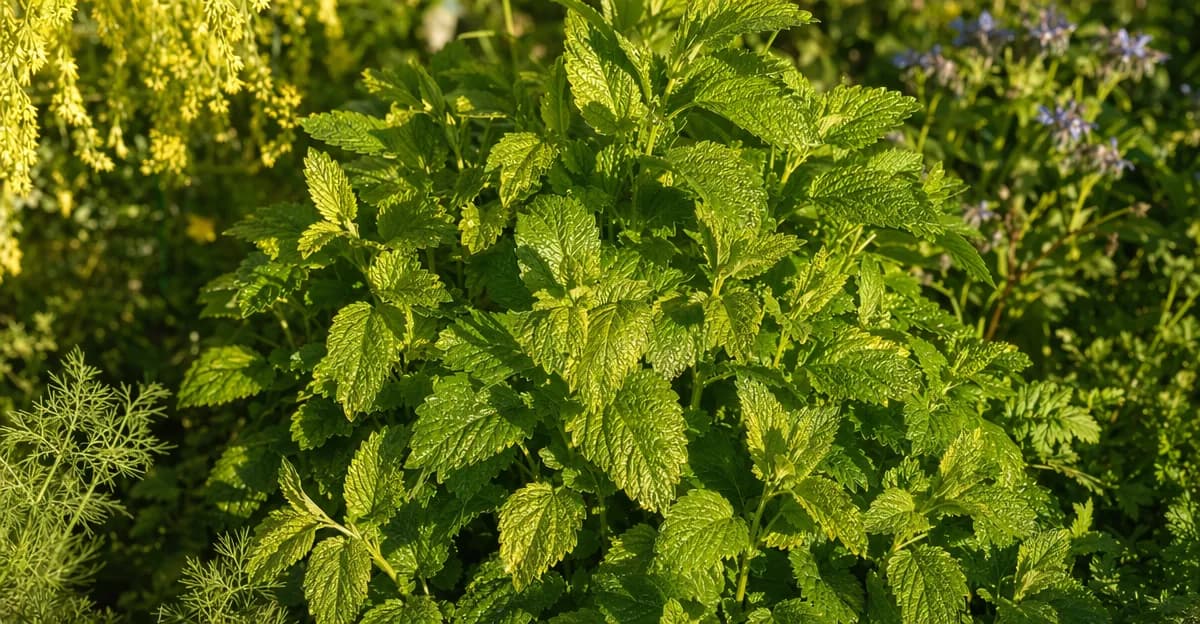
Imagen: Amitchell125 vía Wikimedia Commons (CC BY-SA 4.0). Una planta de melisa sana mostrando las características hojas dentadas de color verde brillante.
¿Qué es la melisa?
La melisa (Melissa officinalis L.) es una hierba perenne de la familia de las mentas (Lamiaceae), originaria del sur de Europa, la cuenca mediterránea, Irán y Asia Central (Shakeri et al., 2016). Se cultiva desde hace más de dos mil años — los antiguos griegos y romanos la utilizaban como planta atrayente de abejas y hierba medicinal, y su nombre de género, Melissa, es la palabra griega para "abeja de la miel".
La planta alcanza entre 60 y 100 cm (2–3 pies) de altura, con hojas de color verde brillante, acorazonadas y dentadas que liberan un intenso aroma a limón al rozarlas o estrujarlas (Sousa et al., 2022). De junio a agosto aparecen pequeñas flores de color blanco a amarillo pálido, dispuestas en verticilos a lo largo del tallo. Las abejas — especialmente las abejas melíferas y los abejorros — se sienten fuertemente atraídas por las flores ricas en néctar, lo que convierte a la melisa en una de las mejores hierbas que puedes plantar para apoyar a los polinizadores.
Hoy en día, la melisa se ha naturalizado en gran parte del mundo, desde Norteamérica hasta Nueva Zelanda. Crece en zonas arenosas y arbustivas y en terrenos baldíos húmedos, desde el nivel del mar hasta altitudes montañosas. Su aceite esencial contiene principalmente citral (la combinación de geranial y neral, responsable del aroma a limón), citronelal y β-cariofileno, con un rendimiento de aceite esencial que varía entre el 0,01 % y el 0,72 % del peso seco según el cultivar y las condiciones de cultivo. Las hojas también son ricas en ácido rosmarínico — aproximadamente el 4,1 % del peso seco de la hoja — que es el principal compuesto antioxidante de la planta.
Variedades de melisa que merece la pena cultivar
No toda la melisa es igual. Elegir la variedad adecuada puede marcar la diferencia entre una hierba bien contenida en maceta y una invasora agresiva en el jardín.
| Variedad | Altura | Rasgo clave | ¿Se propaga? | Ideal para |
|---|---|---|---|---|
| Común (M. officinalis) | 60–100 cm | Aroma clásico a limón, vigorosa | Sí — agresivamente | Jardines grandes, parterres abiertos |
| 'Aurea' (Dorada) | ~65 cm | Hojas variegadas en oro y verde | Auto-siembra reducida | Ornamental, semisombra |
| 'All Gold' | 45–60 cm | Follaje completamente dorado | Moderada | Semisombra, macetas decorativas |
| 'Compacta' (Enana) | 30–40 cm | Porte compacto, estéril | No — no se auto-siembra | Contenedores, espacios pequeños, hidroponía |
| 'Lime' | 50–70 cm | Aroma a lima en lugar de limón | Sí | Variedad culinaria, cócteles |
¿Cuál deberías elegir? Si cultivas en contenedores o en interior, 'Compacta' es la mejor opción — su esterilidad significa que no intentará apoderarse de tu jardín, y su tamaño compacto se adapta a alféizares e instalaciones hidropónicas. Para parterres exteriores donde la propagación no sea un problema, la especie común produce el mayor rendimiento de aceite esencial. 'Aurea' y 'All Gold' son excelentes opciones ornamentales, pero desarrollan su mejor coloración foliar en semisombra.
Cultivar melisa desde semilla
Las semillas de melisa son diminutas y necesitan luz para germinar — son positivamente fotoblásticas, lo que significa que las tasas de germinación son significativamente más altas cuando las semillas se exponen a la luz en lugar de mantenerse en oscuridad (Atashi et al., 2013).
Temperaturas cardinales para la germinación: La investigación ha establecido una temperatura base de 7,2 °C (45 °F), un óptimo de 28,9 °C (84 °F) y un techo de 40,1 °C (104 °F), con aproximadamente 35,6 °C-días de tiempo térmico necesarios para alcanzar el 50 % de la germinación máxima.
Siembra paso a paso
- Calendario: Inicia las semillas en interior 4–6 semanas antes de la última fecha prevista de heladas (Wisconsin Horticulture Extension).
- Siembra: Esparce las semillas sobre la superficie de un sustrato húmedo para semilleros. Presiónalas suavemente contra la superficie pero no las cubras — necesitan luz para germinar.
- Temperatura: Mantén las bandejas a 20–25 °C (68–77 °F). Una esterilla térmica ayuda a mantener un calor constante.
- Humedad: Pulveriza la superficie para mantenerla consistentemente húmeda pero no encharcada. Una cúpula de humedad es de gran ayuda.
- Germinación: Las plántulas aparecerán en 10–21 días. Sin estratificación en frío, la germinación puede ser lenta e irregular. Un período de estratificación en frío de 1–2 semanas (colocando las semillas en un papel de cocina húmedo en el frigorífico a 4–5 °C) antes de la siembra puede mejorar las tasas de germinación.
- Trasplante: Cuando las plántulas midan 5–8 cm (2–3 pulgadas) de alto y tengan dos pares de hojas verdaderas, aclimatálas durante una semana y trasplántalas al exterior después de la última helada.
Consejo: Las semillas pierden viabilidad relativamente rápido. Utiliza semillas frescas (de menos de un año) para obtener los mejores resultados. Si las compras a un proveedor, comprueba la fecha de envasado.
Otros métodos de propagación
La siembra desde semilla es el método más lento. Para resultados más rápidos:
- División: Desentierra una mata establecida en primavera o a principios de otoño y divídela en secciones, cada una con tres o cuatro yemas de crecimiento. Replántalas inmediatamente a la misma profundidad. Este es el método más sencillo para expandir una plantación existente (USU Extension).
- Esquejes de tallo: Toma esquejes de 10–15 cm (4–6 pulgadas) de tallos sin flor, retira las hojas inferiores y enraíza en perlita húmeda o agua. Las raíces se desarrollan en dos a cuatro semanas.
- Acodo: Selecciona un tallo flexible de 15–30 cm, haz una incisión en la parte inferior a la altura de un nudo, fíjalo a la superficie del suelo y cubre la sección incidida con 5–8 cm de tierra. Las raíces se desarrollan en uno o dos meses.
Plantación y condiciones de cultivo
Luz
Pleno sol (más de 6 horas de luz solar directa) produce el crecimiento más compacto y la mayor concentración de aceite esencial. Sin embargo, la melisa tolera bien la semisombra — y las plantas cultivadas con algo de sombra tienden a producir hojas más grandes y jugosas con un sabor más suave, que muchos cocineros prefieren (USU Extension). En climas cálidos (zonas 7+), la sombra por la tarde previene las quemaduras foliares.
Suelo
La melisa se adapta a una amplia gama de tipos de suelo — arcilla, marga, arena e incluso suelos rocosos poco profundos (NC State Extension). El requisito fundamental es un buen drenaje. Tolera suelos pobres y la sequía una vez establecida, pero rinde mejor en suelos ricos, con abundante humus y húmedos.
pH: Ligeramente ácido a neutro — apunta a 6,0–7,0. NC State Extension documenta crecimiento satisfactorio en un rango más amplio (por debajo de 6,0 hasta 8,0), pero el punto óptimo para la disponibilidad de nutrientes y la producción de aceite esencial está en el rango ligeramente ácido.
Riego
Mantén el suelo húmedo pero nunca encharcado. La melisa tolera mejor las condiciones secas que el exceso de agua — la pudrición de raíces por exceso de riego es la causa más común de fracaso. Deja que los 2–3 cm superiores del suelo se sequen ligeramente entre riegos. Acolcha alrededor de las plantas de exterior para conservar la humedad del suelo y moderar la temperatura.
Temperatura y rusticidad
La melisa es notablemente resistente al frío para ser una hierba mediterránea. Crece como perenne fiable en las zonas USDA 3–7 (NC State Extension; Missouri Botanical Garden). La parte aérea muere en invierno, pero el sistema radicular sobrevive a temperaturas muy por debajo de cero y produce nuevo crecimiento cada primavera.
En zonas 8 y superiores, la melisa puede mantenerse semiperenne pero puede tener dificultades con los veranos cálidos y húmedos. La sombra por la tarde y una buena circulación de aire ayudan.
Distancia de plantación
Separa las plantas 40–60 cm (16–24 pulgadas) para permitir su hábito arbustivo y expansivo (Wisconsin Horticulture Extension). Las matas maduras alcanzan 45–90 cm (1,5–3 pies) de ancho.
Cultivar melisa en interior
La melisa se adapta bien al cultivo en interior, lo que la convierte en una excelente opción para horticultores de apartamento y cultivadores de hierbas durante todo el año.
Montaje del contenedor
Elige una maceta de al menos 20–25 cm (8–10 pulgadas) de diámetro con agujeros de drenaje. Un sustrato estándar con perlita añadida (proporción 70/30) proporciona el drenaje que la melisa necesita. 'Compacta' es la variedad ideal para el cultivo en interior — se mantiene pequeña y no se auto-siembra.
Requisitos de luz en interior
La investigación sobre melisa cultivada bajo iluminación LED en ambientes controlados encontró que una densidad de flujo fotónico fotosintético (PPFD) de 125 µmol m⁻² s⁻¹ con un fotoperíodo de 16 horas (equivalente a una integral de luz diaria de aproximadamente 7,2 mol m⁻² d⁻¹) era suficiente para un crecimiento saludable (Rihan et al., 2022). Entre los espectros lumínicos probados, la luz LED blanca produjo el mejor crecimiento general y el mayor rendimiento de aceite esencial, superando a los espectros de predominio rojo y azul.
En términos prácticos: Coloca la melisa en un alféizar luminoso orientado al sur (al menos seis horas de luz directa) o bajo una lámpara de cultivo de espectro completo encendida 14–16 horas al día. Es menos exigente que la albahaca o los tomates — un panel LED de potencia moderada es suficiente.
Una temperatura de 23 ± 2 °C (73 ± 4 °F) y una humedad relativa del 60–70 % son el punto óptimo para el crecimiento en interior.
Melisa hidropónica
Aquí es donde la melisa se vuelve interesante para los cultivadores de interior — y donde los datos de Truleaf te dan ventaja frente a los consejos genéricos de jardinería.
Mejor sistema: La investigación que comparó múltiples sistemas hidropónicos encontró que los sistemas de inundación (DWC) y los basados en agregados produjeron los mayores rendimientos — 7,87 y 7,57 kg/m² respectivamente — mientras que NFT produjo el más bajo con 5,20 kg/m² (Sharafzadeh & Alizadeh, 2021). Para cultivadores domésticos, un simple tarro Kratky o un cubo DWC es la configuración más fácil y productiva.
Solución nutritiva — el hallazgo clave: Un estudio de 2024 en BMC Plant Biology probó cinco proporciones diferentes de amonio y nitrato (NH₄⁺:NO₃⁻) en melisa cultivada hidropónicamente y descubrió que la nutrición de nitrato puro (0:100 NH₄⁺:NO₃⁻) produjo los mejores resultados en todos los parámetros (Safaei et al., 2024):
| Parámetro | Nitrato puro (0:100) | Mixto (25:75) | Amonio puro (100:0) |
|---|---|---|---|
| Biomasa fresca | 105,57 g (la más alta) | Intermedia | Plantas destruidas (toxicidad) |
| Fenoles totales | 60,40 mg GAE/g PS | Inferior | — |
| Flavonoides | 12,97 mg QUE/g PS | Inferior | — |
| Carotenoides | 83,06 mg/100 g PS | Inferior | — |
| Clorofila a | 31,32 mg/100 g PS | Inferior | — |
La conclusión: utiliza una fórmula nutritiva basada en nitratos para la melisa hidropónica. Evita los fertilizantes con alto contenido en amonio — con la proporción 100:0 NH₄⁺:NO₃⁻, las plantas murieron por toxicidad de amonio.
Parámetros objetivo:
| Parámetro | Rango |
|---|---|
| pH | 5,5–6,5 |
| EC | 1,0–1,6 mS/cm |
| Forma de nitrógeno | Nitrato puro (0:100 NH₄⁺:NO₃⁻) |
| Temperatura | 21–29 °C (70–84 °F) |
Programa Detallado de Nutrientes para Melisa Hidropónica
Los parámetros objetivo anteriores te servirán para empezar, pero optimizar el aporte de nutrientes según la fase de crecimiento mejora significativamente tanto el rendimiento en biomasa como la calidad fitoquímica. Este programa se basa en el enfoque de nutrición de nitrato puro validado por Safaei et al. (2024).
Fase 1 — Establecimiento tras el trasplante (semanas 1–3): Inicia los trasplantes con un EC reducido de 0,8–1,0 mS/cm para evitar el estrés osmótico en las raíces en desarrollo. Utiliza una solución nutritiva equilibrada con una proporción NPK de aproximadamente 3-1-3, manteniendo el nitrógeno en forma de nitrato puro (NO₃⁻). Mantén el pH en 5,8–6,2 y la temperatura de la solución a 20–22 °C. Cambia el depósito cada 5–7 días durante esta fase, ya que las plantas jóvenes absorben los nutrientes de forma desigual.
Fase 2 — Crecimiento vegetativo (semanas 4–8): Aumenta el EC a 1,2–1,4 mS/cm a medida que el sistema radicular se establece. Cambia a una proporción con mayor nitrógeno (NPK 4-1-3) para favorecer el rápido desarrollo de hojas y tallos. En condiciones óptimas de luz y temperatura, espera que las plantas dupliquen su tamaño cada 10–14 días durante esta fase. Controla el pH a diario — la absorción de nitratos por parte de la melisa eleva el pH, requiriendo ajustes frecuentes con corrector de pH (ácido fosfórico).
Fase 3 — Maduración pre-cosecha (semanas 8–12): Reduce ligeramente el EC a 1,0–1,2 mS/cm y oriéntate hacia una formulación rica en potasio (NPK 3-1-4). La menor disponibilidad de nitrógeno durante esta fase limita los brotes vegetativos y concentra la producción de aceite esencial en las hojas maduras. Esto refleja el hallazgo de que un equilibrio moderado de nutrientes aumenta la acumulación de fenoles y flavonoides — Safaei et al. (2024) documentaron fenoles totales de 60,40 mg GAE/g PS y flavonoides de 12,97 mg QUE/g PS bajo nutrición óptima de nitratos. Mantén el fotoperíodo en 16 horas para mantener la integral de luz diaria por encima de 7 mol m⁻² d⁻¹.
Fase 4 — Recuperación post-cosecha (1–2 semanas tras el corte): Tras una cosecha importante (cortando hasta un tercio del follaje), aumenta el EC de nuevo a 1,2–1,4 mS/cm con una proporción NPK equilibrada (3-1-3) para favorecer el rebrote. La melisa se recupera rápidamente de la cosecha — el nuevo crecimiento emerge de los nudos cortados en 5–7 días. Retoma el programa de pre-cosecha una vez que la cobertura vegetal se haya regenerado hasta aproximadamente el 75 %.
| Fase de crecimiento | Duración | EC (mS/cm) | Proporción NPK | pH objetivo | Enfoque clave |
|---|---|---|---|---|---|
| Trasplante | Semanas 1–3 | 0,8–1,0 | 3-1-3 | 5,8–6,2 | Establecimiento radicular |
| Vegetativo | Semanas 4–8 | 1,2–1,4 | 4-1-3 | 5,5–6,0 | Crecimiento de hojas y tallos |
| Pre-cosecha | Semanas 8–12 | 1,0–1,2 | 3-1-4 | 5,5–6,0 | Concentración de aceite |
| Post-cosecha | 1–2 semanas | 1,2–1,4 | 3-1-3 | 5,8–6,2 | Soporte al rebrote |
Consideraciones sobre micronutrientes: La melisa responde especialmente al hierro y al magnesio disponibles. En sistemas DWC, el hierro quelado (Fe-DTPA a pH < 6,5 o Fe-EDDHA a pH > 6,5) a 2–3 ppm previene la clorosis intervenal — la deficiencia de micronutrientes más común en la melisa hidropónica. El magnesio a 40–50 ppm favorece la síntesis de clorofila; Safaei et al. (2024) documentaron niveles de clorofila-a de 31,32 mg/100 g PS en condiciones óptimas de nitrato puro.
Nota: Estos rangos específicos por fase son orientativos, basados en hallazgos de investigación y práctica hidropónica profesional. Tus resultados variarán según el cultivar, la intensidad lumínica y la temperatura ambiente. Empieza por el extremo inferior de cada rango de EC y aumenta solo si las plantas no muestran signos de quemadura en las puntas o estrés salino.
Cuidados de la melisa
Abonado
La melisa tiene bajos requerimientos nutricionales. El exceso de fertilización — especialmente con nitrógeno — produce un crecimiento rápido y desgarbado con menor concentración de aceite esencial y sabor diluido.
Plantas de exterior: Aplica un fertilizante equilibrado de uso general (10-10-10) en primavera cuando aparezca el nuevo crecimiento, y una vez más después de una cosecha importante. Eso es suficiente para la mayoría de suelos.
Plantas en contenedor: Un fertilizante líquido a media dosis cada cuatro a seis semanas durante la temporada de crecimiento (de primavera a otoño). Reduce o deja de abonar en invierno cuando el crecimiento se ralentiza.
Poda y control de la propagación
Este es el paso de mantenimiento que la mayoría de cultivadores subestiman. La melisa se auto-siembra prolíficamente y se propaga mediante rizomas subterráneos. Sin control, colonizará parterres enteros (NC State Extension).
Para controlar la propagación:
- Retira las flores marchitas. Elimina los tallos florales antes de que las semillas maduren. Esta es la medida de control más eficaz.
- Poda drástica tras la primera floración. Cortar los tallos a 5–8 cm del suelo a mediados de verano favorece un nuevo brote de follaje aromático e impide la formación de semillas.
- Cultiva en contenedor. Incluso en el suelo, hundir una maceta sin fondo o una barrera de tela para raíces limita la propagación por rizomas.
- Elige 'Compacta'. La variedad estéril elimina por completo el problema de la auto-siembra.
Control de plagas y enfermedades
La melisa tiene pocos problemas graves de plagas o enfermedades — su alto contenido en aceite esencial le proporciona una resistencia natural (Missouri Botanical Garden).
Problemas ocasionales:
- Oídio: La enfermedad más común, que aparece como una capa blanca polvorienta en las hojas en condiciones húmedas con mala circulación de aire. Mejora el espaciado y la ventilación. Evita el riego por aspersión al atardecer.
- Mancha foliar y moho gris: Pueden aparecer en condiciones persistentemente húmedas. Retira el follaje afectado y mejora el drenaje.
- Pulgones y araña roja: Poco frecuentes, pero posibles en plantas de interior estresadas. Pulveriza con un chorro fuerte de agua o aplica jabón insecticida.
La melisa rara vez es molestada por ciervos o conejos debido a sus aceites aromáticos.
Guía Avanzada de Resolución de Problemas
Los problemas comunes de plagas y enfermedades anteriores cubren la mayoría de situaciones que encontrará un cultivador doméstico. Esta sección aborda problemas menos evidentes — particularmente trastornos nutricionales y estrés ambiental en sistemas hidropónicos y de interior — que requieren precisión diagnóstica para resolverse.
Toxicidad por amonio (sistemas hidropónicos): Este es el problema más crítico para los cultivadores de melisa hidropónica. Safaei et al. (2024) demostraron que la nutrición de amonio puro (100:0 NH₄⁺:NO₃⁻) era letal para las plantas de melisa, mientras que incluso una proporción de 75:25 de amonio a nitrato redujo significativamente el crecimiento. Los síntomas progresan en esta secuencia:
- Curvatura de los márgenes foliares hacia abajo (epinastia) en los 3–5 días siguientes a la exposición
- Clorosis intervenal que progresa de las hojas más viejas a las más jóvenes
- Oscurecimiento y colapso radicular — las raíces se vuelven oscuras y blandas, perdiendo su color blanco
- Muerte de la planta en 10–14 días a concentraciones altas de amonio
Protocolo de recuperación: Si sospechas toxicidad por amonio, drena el depósito inmediatamente y reemplázalo con una solución de nitrato puro a la mitad del EC (0,5–0,8 mS/cm). Añade nitrato de calcio a 100 ppm de Ca para estabilizar la zona radicular. Si más del 50 % de la masa radicular está marrón, es poco probable que la planta se recupere — toma esquejes de tallo del crecimiento superior más sano y enraízalos en solución nueva.
Deficiencia de hierro vs. deficiencia de magnesio: Ambas se presentan como clorosis intervenal (hojas amarillas con nervios verdes), lo que las hace fáciles de confundir:
- La deficiencia de hierro aparece primero en el crecimiento nuevo (hojas más jóvenes) — los nervios permanecen verdes mientras el limbo se vuelve de amarillo pálido a blanco. Se debe a un pH superior a 6,5 (el hierro se vuelve inaccesible) o a una cantidad insuficiente de hierro quelado en la solución.
- La deficiencia de magnesio aparece primero en el crecimiento antiguo (hojas más viejas) — un patrón similar pero que progresa desde la base de la planta hacia arriba. Se debe a un exceso de potasio o calcio que compiten por la absorción.
Solución: Para el hierro, baja el pH a 5,5–6,0 y añade hierro quelado (Fe-DTPA) a 2–3 ppm. Para el magnesio, añade sal de Epsom (sulfato de magnesio) a 1 g/L al depósito.
Deterioro de la calidad del aceite esencial: Si tu melisa huele débil o a "hierba" en lugar de tener un aroma fresco y alimonado, el problema es casi siempre uno de estos:
- Exceso de nitrógeno: La fertilización excesiva produce hojas grandes y de crecimiento rápido con una concentración de aceite esencial diluida. Reduce el EC un 20–30 % y cosecha antes del siguiente ciclo de fertilización.
- Luz insuficiente: La producción de aceite esencial se correlaciona directamente con la intensidad lumínica. Las plantas que reciben menos de una integral de luz diaria (DLI) de 5 mol m⁻² d⁻¹ producen significativamente menos aceite que las que están en el óptimo de 7,2 mol m⁻² d⁻¹. Aumenta el fotoperíodo o la intensidad lumínica.
- Cosecha tardía: Una vez que comienza la floración, la composición del aceite esencial cambia y el aroma de las hojas se debilita. Cosecha siempre antes de que se abran los capullos florales.
Estrés por temperatura de la zona radicular (DWC/Kratky): Una temperatura de la solución por encima de 25 °C favorece los patógenos radiculares (Pythium, Fusarium) y reduce el oxígeno disuelto. Por debajo de 16 °C, la absorción de nutrientes se ralentiza drásticamente y el crecimiento se detiene. La temperatura óptima de la zona radicular para la melisa es de 18–22 °C. En ambientes cálidos, aísla los depósitos o añade botellas de agua congelada para bajar la temperatura de la solución. En ambientes fríos, un calentador de acuario sumergible ajustado a 20 °C es la solución más sencilla.
Cuándo empezar de nuevo: Si una planta de melisa ha perdido más del 60 % de su masa radicular por pudrición, o si el oídio ha colonizado más de la mitad del área foliar, propagar nuevas plantas a partir de esquejes de tallo sanos es más rápido y productivo que intentar la recuperación. Los esquejes de melisa enraízan en dos a cuatro semanas y crecen rápidamente una vez establecidos.
Preparación para el invierno
En zonas 3–7, la melisa muere hasta el suelo a finales de otoño y rebrota desde las raíces en primavera. No se necesita protección especial para el invierno en estas zonas — el sistema radicular es extraordinariamente resistente al frío. Corta el follaje muerto a finales de invierno para dejar espacio al nuevo crecimiento.
En contenedores, traslada las macetas a un garaje sin calefacción o a un invernadero frío si las temperaturas caen regularmente por debajo de −15 °C (5 °F). Las raíces necesitan un período de latencia fría pero no deben congelarse por completo.
Renueva las plantas de exterior cada tres o cuatro temporadas, ya que las matas más viejas tienden a volverse leñosas y menos productivas.
Cosecha de la melisa
Cuándo cosechar
Cosecha antes de la floración para obtener la mayor concentración de aceite esencial y el mejor sabor. Una vez que la planta florece, la energía se desvía hacia la producción de semillas y la calidad de las hojas disminuye. La primera cosecha se puede realizar cuando las plantas miden 15–20 cm (6–8 pulgadas) de alto y están bien establecidas.
Las plantas establecidas soportan dos a tres cosechas por temporada. Corta hasta un tercio del follaje cada vez, y la planta rebrotará en pocas semanas.
Cómo cosechar
Corta los tallos con tijeras o podaderas limpias, justo por encima de un nudo foliar para fomentar la ramificación y el rebrote. La cosecha por la mañana — después de que se haya secado el rocío pero antes del calor del mediodía — captura el mayor contenido de aceite esencial.
Evita magullar las hojas durante la manipulación. La melisa magullada se oxida rápidamente, oscureciéndose y perdiendo su fresco aroma alimonado.
Secado y conservación
El uso en fresco es ideal — la melisa pierde una cantidad significativa de su aroma al secarse.
Para secar: Ata los tallos en pequeños manojos y cuélgalos boca abajo en una habitación oscura y bien ventilada a 20–30 °C. Alternativamente, extiende las hojas individuales en una rejilla de secado. El secado tarda de tres a siete días dependiendo de la humedad. Una vez completamente secas, separa las hojas de los tallos y guárdalas en tarros de cristal herméticos protegidos de la luz. La melisa seca conserva su potencia durante unos seis meses.
Para congelar: Congela rápidamente las hojas individuales en una bandeja de horno y después transfiérelas a una bolsa de congelación. Esto preserva más sabor que el secado.
Usos de la melisa
Culinario
La melisa aporta una nota fresca y cítrica a infusiones, ensaladas, postres, cócteles y platos de fruta. Combina especialmente bien con pescado, aves y verduras de verano. Añade las hojas frescas al final de la cocción — el calor destruye rápidamente los aceites volátiles.
La infusión de melisa es quizás el uso más popular: infusiona un puñado de hojas frescas (o 1–2 cucharaditas de hojas secas) en agua caliente durante 5–10 minutos.
Propiedades respaldadas por la investigación
La melisa tiene una larga historia en la medicina tradicional, y la investigación moderna ha confirmado varias de sus propiedades. Las hojas secas contienen aproximadamente un 11,8 % de polifenoles totales, siendo el ácido rosmarínico (4,1 %) el compuesto dominante. El extracto demuestra una fuerte capacidad de neutralización de radicales libres, con una eliminación de radicales DPPH con un IC50 de 48,76 µg/mL.
Las actividades farmacológicas respaldadas por la investigación incluyen efectos antioxidantes, antimicrobianos, antivirales (particularmente contra el virus del herpes simple tipo 1, con actividad virucida a concentraciones tan bajas como 1,5 µg/mL) y ansiolíticos (Sousa et al., 2022; Shakeri et al., 2016).
Nota: Estos son hallazgos de investigación, no consejos médicos. Consulta con un profesional sanitario antes de utilizar la melisa con cualquier finalidad terapéutica.
Asociación de cultivos
La melisa es una excelente planta compañera. Sus flores ricas en néctar atraen polinizadores durante toda la temporada de crecimiento, y sus aceites aromáticos pueden ayudar a disuadir ciertas plagas. Buenos compañeros incluyen tomates, pimientos, calabacines y otras hierbas como orégano, tomillo y manzanilla.
Preguntas frecuentes
¿La melisa rebrota cada año? Sí. La melisa es una perenne resistente en las zonas USDA 3–7. El follaje muere en invierno, pero la planta rebrota de forma fiable desde las raíces cada primavera.
¿Es invasiva la melisa? Puede serlo. La melisa se propaga tanto por auto-siembra como por rizomas subterráneos, y colonizará los parterres del jardín si no se controla. Eliminar las flores marchitas, cultivar en contenedores o elegir la variedad estéril 'Compacta' son los controles más eficaces.
¿Puedo cultivar melisa solo en agua? Sí — la melisa crece bien en hidroponía. La investigación muestra que los métodos DWC (Cultivo en Agua Profunda) y Kratky producen excelentes rendimientos. Utiliza una solución nutritiva basada en nitratos a pH 5,5–6,5 y EC 1,0–1,6 para los mejores resultados.
¿Cuánta melisa debería plantar? De dos a tres plantas proporcionan hojas frescas de sobra para un hogar. Si piensas secar y almacenar melisa para infusiones, añade dos o tres plantas más.
¿Necesita la melisa pleno sol? El pleno sol produce las plantas más compactas y el mayor contenido de aceite, pero la semisombra (2–6 horas de sol directo) funciona bien y de hecho produce hojas más grandes y tiernas. En climas cálidos, algo de sombra por la tarde es beneficioso.
Guía de Escalado Comercial
La melisa es una de las hierbas con mayor viabilidad comercial para la producción a pequeña escala debido a su rápido crecimiento, sus múltiples ciclos de cosecha y sus diversos canales de comercialización. Esto es lo que los datos de la investigación nos dicen sobre el paso de la producción aficionada a la comercial.
Proyecciones de rendimiento por metro cuadrado: La selección del sistema hidropónico tiene un impacto directo en el rendimiento comercial. Basándonos en los datos comparativos de Sharafzadeh & Alizadeh (2021):
| Sistema | Rendimiento anual (kg/m²) | Rendimiento relativo | Complejidad de montaje |
|---|---|---|---|
| DWC (Cultivo en Agua Profunda) | 7,87 | El más alto | Baja |
| Basado en agregados | 7,57 | Casi el más alto | Media |
| NFT (Técnica de Película Nutritiva) | 5,20 | 34 % inferior al DWC | Alta |
Para un área de producción de 100 m² usando DWC, espera aproximadamente 787 kg de biomasa fresca al año — asumiendo cuatro a cinco ciclos de cosecha con tres a cuatro semanas de rebrote entre cortes.
Economía del ciclo de producción: La melisa alcanza la primera cosecha en 8–12 semanas desde el trasplante y soporta dos a tres cosechas por temporada en exterior o cuatro a cinco cosechas al año en un ambiente controlado de interior. Cada cosecha produce aproximadamente un tercio de la biomasa aérea, y el rebrote entre cosechas tarda de tres a cuatro semanas en condiciones óptimas.
Factores clave de coste:
- Energía: El coste operativo principal de la producción en interior es la iluminación. Paneles LED blancos a 125 µmol m⁻² s⁻¹ PPFD funcionando 16 horas al día consumen aproximadamente 30–50 kWh por m² al mes, dependiendo de la eficiencia de las luminarias.
- Nutrientes: Las formulaciones de nitrato puro cuestan aproximadamente un 15–25 % más que los fertilizantes hidropónicos estándar que contienen amonio, pero las ganancias en rendimiento y calidad fitoquímica documentadas por Safaei et al. (2024) justifican la prima a escala comercial.
- Mano de obra: La melisa requiere un entrenamiento o poda mínimos. Las principales aportaciones de mano de obra son la cosecha, la gestión del depósito (semanal) y la vigilancia de plagas (semanal). Para una operación de 100 m², espera 8–12 horas de trabajo semanales durante la producción activa.
Canales de comercialización y valor añadido: La melisa fresca tiene una vida útil corta (5–7 días refrigerada), lo que limita las ventas directas en fresco a mercados locales, restaurantes y venta directa en finca. Los canales de mayor valor incluyen:
- Hoja seca para infusiones: La melisa seca se vende al por menor a aproximadamente 30–80 USD/kg dependiendo de la calidad y la certificación. La certificación ecológica aumenta los márgenes un 40–60 %.
- Aceite esencial: El aceite esencial de melisa (aceite de melissa) es uno de los más caros del mercado — 8.000–15.000 USD/kg para aceite puro — debido al rendimiento de extracción extremadamente bajo (0,01–0,72 % del peso seco). Sin embargo, el coste de capital del equipo de destilación y el volumen de materia vegetal necesario hacen que esto solo sea viable a escalas mayores o mediante colaboraciones con destiladores a contrata.
- Extracto de ácido rosmarínico: Con un contenido documentado de ácido rosmarínico del 4,1 % del peso seco, la melisa es una fuente comercialmente relevante para aplicaciones nutracéuticas y cosméticas — un mercado emergente con demanda creciente.
Recomendación de escalado: Para pequeños productores comerciales (menos de 500 m²), DWC con nutrición de nitrato puro ofrece la mejor relación rendimiento-complejidad. Céntrate inicialmente en la venta de infusiones secas y hierba fresca, ya que estas requieren un procesamiento post-cosecha mínimo. La destilación de aceite esencial se vuelve viable por encima de 1.000 m² de área de producción o al colaborar con un destilador a contrata.
Conclusión final
La melisa es de las hierbas más fáciles que encontrarás. Crece en casi cualquier suelo, tolera la sombra, resiste los fríos invernales hasta la zona 3 y casi no tiene problemas de plagas. Lo único que hay que gestionar es su entusiasmo por propagarse — retira las flores marchitas, cultívala en maceta o planta la variedad estéril 'Compacta' y disfrutarás de años de cosechas frescas con aroma a limón y un esfuerzo mínimo.
Para cultivadores hidropónicos, la ciencia es clara: la nutrición de nitrato puro en un simple montaje DWC o Kratky produce tanto la mayor biomasa como la mayor concentración de compuestos fenólicos beneficiosos. Ajusta el pH a 5,5–6,5, el EC a 1,0–1,6 y proporciona 14–16 horas de luz. Eso es todo lo que se necesita.