10 Fastest Indoor Hydroponic Herbs (pH & EC Cheat Sheet)
The 10 easiest herbs to grow hydroponically indoors. Includes a pH and EC cheat sheet for each herb, plus lighting, nutrient, and harvest timing recommendations.
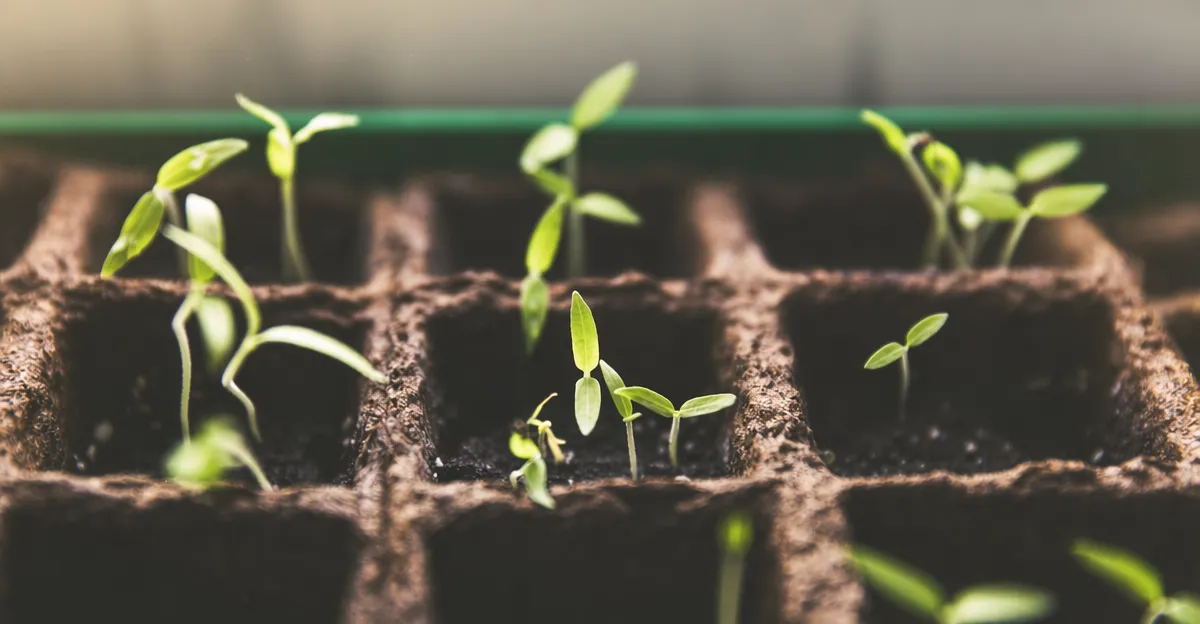
Key takeaway: Herbs are among the easiest and most rewarding crops to grow hydroponically indoors. Most culinary herbs thrive in a pH range of 5.5–6.5 and an EC of 1.0–2.0 mS/cm, need 14–16 hours of light, and reach harvest 30–50% faster than soil-grown plants. A single countertop system can produce year-round basil, mint, thyme, cilantro, and oregano — with better flavor control and no soil-borne diseases.
Why Grow Herbs Hydroponically?
If you have ever bought a clamshell of "fresh" basil from the grocery store and watched it wilt within two days, you already understand the problem indoor hydroponics solves. Herbs harvested from your own system are truly fresh — minutes old, not days.
But convenience is only part of it. The science makes a strong case:
Faster growth. Rajaseger et al. (2023) documented that hydroponic crops grow 30–40% faster than their soil-grown counterparts. Herbs are no exception — hydroponic basil reaches harvest in roughly 28 days versus 45–60 in soil.
Dramatically less water. Hydroponic systems use up to 90% less water than conventional growing because the nutrient solution recirculates rather than draining away. For a small indoor herb garden, that translates to refilling a reservoir every 1–2 weeks rather than daily watering.
No soil problems. No fungus gnats, no damping-off, no root rot from overwatering, no weeds. Soil-borne diseases are the number one killer of indoor herb gardens — removing soil removes the problem entirely.
Year-round production. With LED grow lights, your herbs do not care whether it is January or July. You control the photoperiod, temperature, and nutrients. The University of Minnesota Extension recommends herbs and leafy greens as the best crops for indoor hydroponic production precisely because of this consistency.
Better phytochemical control. Research from MDPI Horticulturae found that adjusting the EC of the nutrient solution directly affects phenolic content and antioxidant capacity in basil. Lower EC (0.5–1.0 mS/cm) produced basil with significantly higher total phenolic content, while higher EC (3.0 mS/cm) maximized biomass. You can tune your herbs for flavor intensity or volume — something soil growing does not easily allow.
The Best Herbs for Indoor Hydroponics
Not all herbs perform equally in water-based systems. Soft-stemmed, fast-growing herbs adapt immediately. Woody perennials like rosemary take longer to establish but still outperform their soil-grown equivalents once established. Here is how the most popular culinary herbs rank:
Tier 1 — Easiest (start here)
- Basil — The gold standard. Fastest to harvest, highest yield, most forgiving.
- Mint — Nearly impossible to kill. Aggressive grower; give it its own container.
- Cilantro — Prefers cooler temperatures. Bolt-resistant in hydroponics because you control the environment.
Tier 2 — Intermediate
- Oregano — Thrives at slightly higher EC. Slow to germinate but productive once established.
- Thyme — Compact grower, tolerates a wide pH range. Excellent for small systems.
- Parsley — Slow germination (14–21 days) but reliable once it starts.
- Dill — Fast-growing but needs vertical space. Harvest frequently to prevent bolting.
Tier 3 — Advanced
- Rosemary — Woody perennial that takes 90+ days to reach harvest. Sensitive to overwatering — ironic in hydroponics, but root zone oxygenation matters.
- Sage — Similar to rosemary. Slow but long-lived once established.
- Lemon balm — Vigorous grower that can dominate a shared system. Treat like mint.
Growing Parameters by Herb
This is the reference table you will come back to. Every number is drawn from peer-reviewed research and university extension data.
| Herb | pH | EC (mS/cm) | Temp (°C / °F) | Light (hrs) | Germination | Days to Harvest |
|---|---|---|---|---|---|---|
| Basil | 5.5–6.5 | 1.0–1.6 | 24–27 / 75–80 | 14–16 | 5–10 days | 28 |
| Thai basil | 5.5–6.5 | 1.0–1.6 | 24–27 / 75–80 | 14–16 | 5–10 days | 35 |
| Cilantro | 5.8–6.4 | 1.2–1.8 | 10–21 / 50–70 | 12 | 7–10 days | 50–55 |
| Mint | 5.5–6.0 | 2.0–2.4 | 18–21 / 65–70 | 14–16 | 10–15 days | 35–42 |
| Parsley | 5.5–6.0 | 0.8–1.8 | 16–21 / 60–70 | 14–16 | 14–21 days | 70–90 |
| Oregano | 6.0–7.0 | 1.8–2.3 | 18–27 / 65–80 | 12–16 | 7–21 days | 42–56 |
| Thyme | 5.5–7.0 | 0.8–1.6 | 16–21 / 60–70 | 12–16 | 14–21 days | 42–56 |
| Rosemary | 5.5–6.0 | 1.0–1.6 | 21–29 / 70–85 | 11–16 | 14–21 days | 90+ |
| Dill | 5.5–6.5 | 1.0–1.6 | 16–21 / 60–70 | 14–16 | 7–14 days | 40–55 |
| Sage | 5.5–6.5 | 1.0–1.6 | 16–21 / 60–70 | 14–16 | 10–21 days | 75–90 |
| Lemon balm | 5.5–6.5 | 1.0–1.6 | 16–21 / 60–70 | 14–16 | 10–14 days | 42–56 |
Key patterns to notice: Most herbs cluster around pH 5.5–6.5 and EC 1.0–1.8 mS/cm. The outliers are mint (higher EC tolerance, 2.0–2.4) and oregano (tolerates near-neutral pH up to 7.0). Cilantro is the only common herb that prefers significantly cooler temperatures and fewer light hours.
Choosing Your Hydroponic System
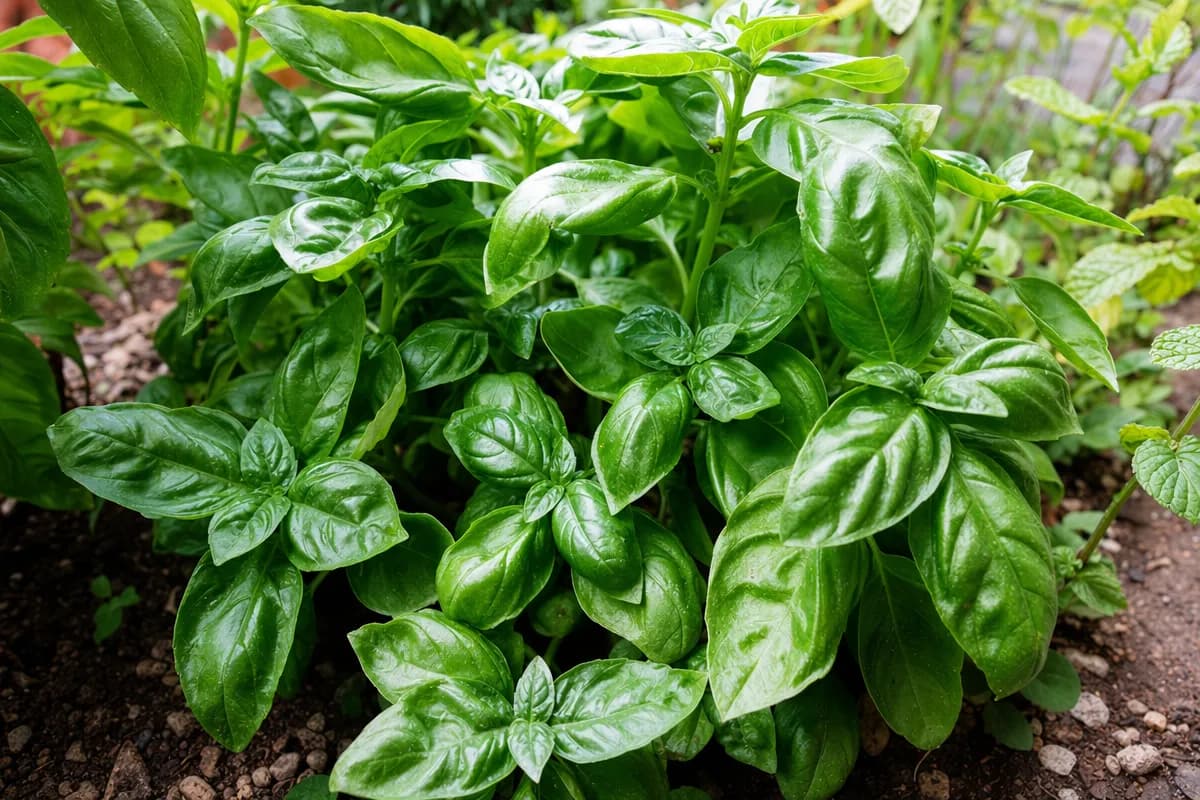
You do not need an expensive setup. Herbs are forgiving, and the simplest systems work well.
Deep Water Culture (DWC) — Plants sit in net pots above an aerated reservoir. An air pump keeps the roots oxygenated. The University of Minnesota Extension recommends DWC as the simplest system for beginners. Cost: under $30 for a basic single-plant setup.
Kratky method — The passive, no-pump approach. Fill a container with nutrient solution, place the plant in a net pot, and let the roots grow down as the water level drops. No electricity required. Best for single herbs like basil and lettuce. Watch the EC — as the plant drinks water, the solution concentrates. Start at a lower EC (0.8–1.0 mS/cm) to account for this.
Nutrient Film Technique (NFT) — A thin film of nutrient solution flows continuously over the roots in a sloped channel. Excellent for growing multiple herbs in a row. The University of Minnesota Extension recommends a flow rate of 8–10 oz/min for a 25-gallon reservoir. Best for experienced growers who want to scale.
Wick systems — The simplest possible setup: a fabric wick draws solution from a reservoir into the growing medium. Penn State Extension recommends wick and float systems for first-time hydroponic growers. Works well for slow-drinking herbs like thyme and sage.
For most indoor herb growers, DWC or Kratky is the right starting point. Both are inexpensive, quiet (Kratky is silent), and scale from a single mason jar to a multi-plant setup.
Setting Up Your Indoor Herb Garden
What You Need
- Container: Any food-safe, light-proof container. Mason jars wrapped in tape, plastic storage bins, or purpose-built DWC buckets all work. Light-proofing prevents algae growth.
- Net pots: 2-inch (5 cm) for most herbs. 3-inch for larger plants like dill.
- Growing medium: Hydroton (expanded clay pebbles), perlite, or rockwool cubes. These anchor the plant and wick moisture to the roots.
- Nutrients: A general-purpose hydroponic nutrient solution. Two-part or three-part formulas let you adjust ratios. Start at half the manufacturer's recommended dose.
- pH kit: pH test drops or a digital pH pen. Non-negotiable — wrong pH locks out nutrients regardless of how much you add.
- EC meter: A digital EC/TDS pen. Under $15. This single tool prevents nutrient burn and underfeeding.
- Grow light: Any full-spectrum LED rated at 150–250 PPFD (photosynthetic photon flux density). A 20–30 watt LED panel is sufficient for a small herb garden. Light spectrum matters — red and blue wavelengths drive photosynthesis, but full-spectrum white LEDs produce natural-looking growth.
- Air pump and air stone (DWC only): Keeps dissolved oxygen above 5 mg/L. Stagnant water drowns roots.
- Timer: For the grow light. Set it and forget it.
Step-by-Step
-
Start seeds in rockwool or a damp paper towel. Soak rockwool cubes in pH-adjusted water (5.5) for 30 minutes before planting. Place 2–3 seeds per cube. Keep moist and warm (21–24°C / 70–75°F) until germination.
-
Prepare your nutrient solution. Fill your reservoir with water. Mix nutrients to half the recommended strength — targeting an EC of 0.8–1.0 mS/cm for seedlings. Adjust pH to 5.8–6.2. Penn State Extension recommends starting seedlings at half-strength and moving to full strength after the second set of true leaves.
-
Transplant seedlings. Once seedlings have two true leaves, place the rockwool cube into a net pot filled with hydroton. Position the net pot so the bottom sits 1–2 cm (0.5 in) below the water line in DWC, or just above the water line in Kratky (roots will grow down to reach it).
-
Set your light timer. 14–16 hours on, 8–10 hours off for most herbs. Cilantro prefers 12 hours — longer photoperiods trigger bolting.
-
Check pH and EC every 2–3 days. Top off evaporated water with plain pH-adjusted water (not nutrient solution). Replace the full reservoir every 1–2 weeks with fresh solution.
Nutrient Solution for Herbs
Most culinary herbs are light-to-moderate feeders. A general vegetative formula with a 3-1-2 NPK ratio works well across the board.
Penn State Extension's Modified Sonneveld's Solution — one of the most widely cited reference formulas — provides these targets for herbs and leafy greens:
| Nutrient | Target (ppm) |
|---|---|
| Nitrogen (N) | 150 |
| Phosphorus (P) | 31 |
| Potassium (K) | 210 |
| Calcium (Ca) | 90 |
| Magnesium (Mg) | 24 |
| Iron (Fe) | 1.0 |
| Manganese (Mn) | 0.25 |
| Zinc (Zn) | 0.13 |
| Copper (Cu) | 0.023 |
| Boron (B) | 0.16 |
| Molybdenum (Mo) | 0.024 |
In practice, a quality two-part or three-part hydroponic nutrient provides all of these. You do not need to mix from raw salts unless you want granular control. The research supports this approach — the MDPI cilantro/dill/parsley study (2019) found that nutrient solution strength did not significantly interact with daily light integral for herb growth. In other words, getting the EC roughly right matters more than obsessing over exact elemental ratios.
For mint specifically: Research on spearmint found that nitrogen at 200 mg/L (ppm) optimized both essential oil quality and biomass, with constant potassium at 325 mg/L and phosphorus at 50 mg/L. Mint is a heavier feeder than most herbs — its higher target EC of 2.0–2.4 mS/cm reflects this.
Light and Temperature
Light
Herbs need 14–16 hours of light per day at a minimum of 150 PPFD. Ren et al. (2022) found that basil grew optimally under 200 PPFD with a red-to-blue light ratio of 7:3 (140:60 µmol/m²/s), with a 16-hour photoperiod.
If you are relying on a windowsill, you are almost certainly not getting enough light. Even a south-facing window in the northern hemisphere delivers only 4–6 hours of direct sunlight in winter — well below what herbs need for compact, flavorful growth. Supplement with a grow light, or grow entirely under LEDs.
Signs of too little light: Leggy, stretched stems. Pale leaves. Weak flavor. Slow growth.
Signs of too much light: Leaf curling, bleached or scorched tips. This is rare with LED panels under 300 PPFD but can happen if the light sits too close (under 15 cm / 6 in).
Temperature
Most herbs prefer 18–24°C (65–75°F) during the day and a slight drop of 3–5°C (5–9°F) at night. This differential drives optimal transpiration and nutrient uptake.
Cilantro is the exception. It prefers 10–21°C (50–70°F) and bolts quickly in warm environments. If your indoor space stays above 24°C (75°F), cilantro will rush to flower and stop producing leaves. Grow it away from heat sources and consider a cooler room.
Basil is the opposite. It thrives in warmth — 24–27°C (75–80°F) during the day. Temperatures below 10°C (50°F) cause chilling injury. Keep basil close to your grow light, where radiant heat creates a warmer microclimate.
Herb-by-Herb Growing Guide
Basil
The fastest herb to grow hydroponically. Basil reaches harvestable size in about 28 days — roughly half the time it takes in soil. It responds well to pruning: cutting above a leaf node produces two new branches, doubling your yield with each harvest.
Ren et al. (2022) found that basil grown at half-strength nutrients (0.5x) produced comparable biomass to full-strength, while improving nutrient use efficiency fivefold. Start conservative with EC and increase only if growth slows.
Flavor note: Research comparing hydroponic and soil-grown basil found that hydroponic culture produces higher levels of methyl chavicol (a peppery, anise-like compound) but lower linalool (the sweet, floral note). If you prefer sweeter basil, harvest younger leaves — linalool concentration is highest in young tissue.
For Thai basil, follow the same parameters but expect 5–7 extra days to first harvest. Thai basil is more heat-tolerant and handles higher PPFD without stress.
Cilantro
Cilantro is the herb most improved by hydroponics — not because it grows faster, but because you can control the one factor that destroys it in soil: heat. Cilantro bolts (flowers and stops producing leaves) when temperatures exceed 24°C (75°F) or when day length exceeds 14 hours.
In an indoor hydroponic system, keep the temperature at 15–20°C (59–68°F) and the photoperiod at 12 hours. The MDPI study found cilantro tolerates a wide EC range (0.5–4.0 dS/m) without significant growth differences, so nutrient management is forgiving.
Succession planting: Cilantro has a limited harvest window before it bolts. Start new seeds every 3 weeks to maintain a continuous supply.
Mint
Mint is the most productive herb you can grow hydroponically — and the most aggressive. It spreads by runners and will invade any shared reservoir. Always grow mint in its own container.
Research on mint nutrient requirements found optimal essential oil yield at full-strength nutrients with 50% replacement when EC drops by half. The highest menthol content (82.4%) was achieved at standard nutrient concentration with 0.5 × 0.25 m spacing.
Mint yields 3–5 harvests before the plant needs replacing. Cut stems back to 5 cm (2 in) above the base to encourage regrowth. Mint propagates easily from cuttings — drop a stem with a few nodes into water and roots appear within a week.
Thyme
Thyme is a compact, slow-growing herb that rewards patience. It germinates slowly (14–21 days) and takes 6–8 weeks to reach first harvest. But once established, a single thyme plant produces for months.
Thyme tolerates the widest pH range of any common herb (5.5–7.0) and prefers lower EC (0.8–1.6 mS/cm). It does not like wet roots — in DWC systems, ensure strong aeration. In Kratky setups, leave a generous air gap above the water line.
Oregano
Oregano grows slowly from seed (7–21 days to germinate) but becomes a prolific producer once established. It tolerates higher EC than most herbs (1.8–2.3 mS/cm) and a wider pH range (6.0–7.0).
Harvest oregano when the stems are 15 cm (6 in) or longer. Cut just above a leaf pair to encourage branching. Oregano's essential oil content — the compounds that give it flavor — increases as the plant matures, so avoid harvesting too young.
Rosemary
Rosemary is the most challenging common herb to grow hydroponically, but the most rewarding if you succeed. It takes 90+ days from seed to first harvest and is sensitive to root zone conditions.
The critical factor is dissolved oxygen. Rosemary roots evolved in well-drained Mediterranean soils and suffocate in stagnant water. In DWC, use an oversized air pump. In Kratky, the air gap is essential — never let the water level rise above the bottom of the net pot after the roots have established.
Start rosemary from cuttings rather than seed. Cuttings reach harvest size in roughly half the time and have much higher success rates.
Harvesting for Maximum Regrowth
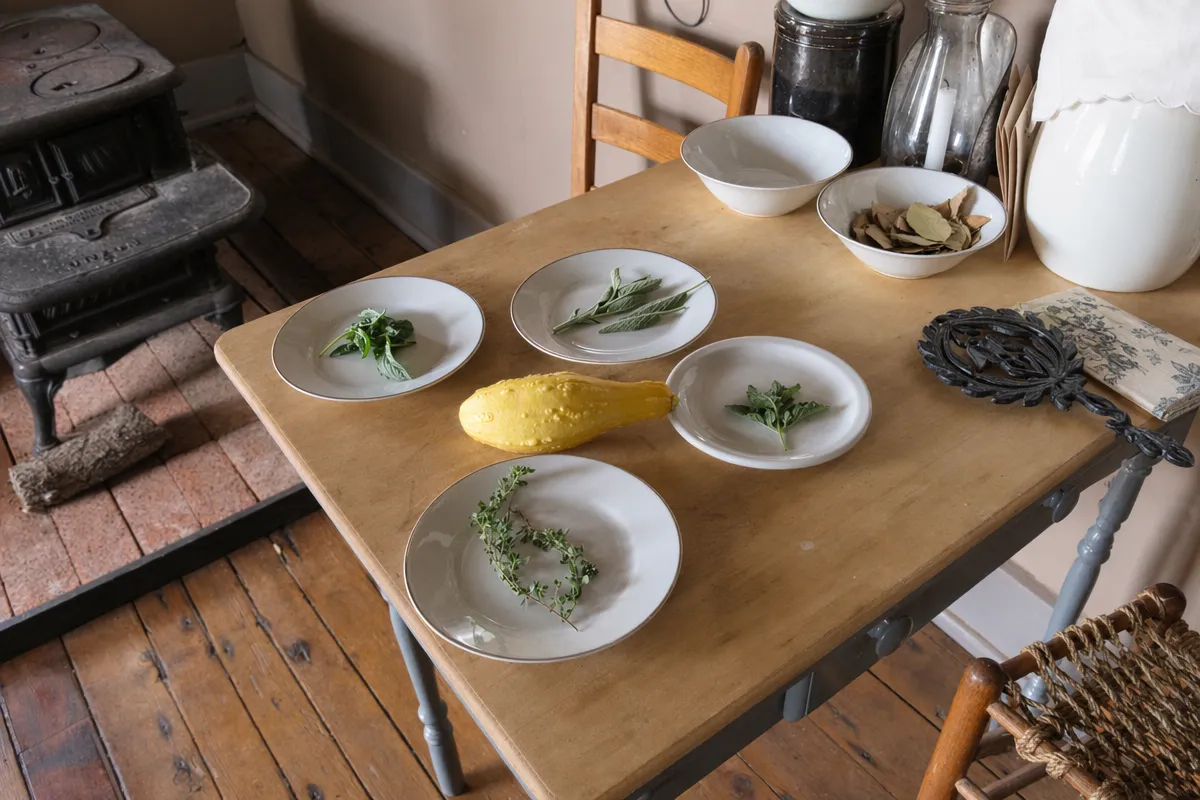
How you harvest determines whether your herbs produce for weeks or months.
Cut-and-come-again herbs (basil, mint, lemon balm, oregano): Always cut above a leaf node — the point where two leaves emerge from the stem. Two new branches will grow from that node. Never remove more than one-third of the plant at once.
Rosette herbs (cilantro, parsley, dill): Harvest outer leaves first, leaving the center growing point intact. New leaves emerge from the crown.
Woody herbs (thyme, rosemary, sage): Harvest sprigs from the outer tips. Avoid cutting into old, woody growth — it does not regenerate as reliably as green stems.
Timing: Harvest in the morning, just after the lights turn on. Essential oil concentration peaks during the dark period and begins to volatilize as temperature rises under the lights.
Common Problems and Solutions
| Problem | Likely Cause | Fix |
|---|---|---|
| Leggy, stretched stems | Insufficient light | Move light closer or increase photoperiod (up to 16 hrs) |
| Yellow lower leaves | Nitrogen deficiency or pH out of range | Check pH first; adjust to 5.8–6.2. If pH is fine, increase nutrient strength by 0.2 mS/cm |
| Brown, crispy leaf tips | Nutrient burn (EC too high) | Dilute reservoir with plain pH-adjusted water to target EC |
| Slimy or brown roots | Root rot from low dissolved oxygen or high temperature | Add or upgrade air pump; keep solution below 24°C (75°F) |
| Cilantro flowering early | Temperature too high or photoperiod too long | Move to a cooler spot; reduce light to 12 hrs |
| Slow germination | Temperature too low or seeds too old | Maintain 21–24°C (70–75°F); use seeds less than 2 years old |
| Algae on reservoir surface | Light reaching the nutrient solution | Cover all exposed solution surfaces; use opaque containers |
| Weak flavor | Insufficient light or harvesting too late in the day | Increase light intensity; harvest in the morning |
Key Takeaways
- Herbs are the ideal indoor hydroponic crop — fast growth, compact size, high value, and forgiving nutrient requirements.
- Most culinary herbs share a safe zone of pH 5.5–6.5, EC 1.0–1.8 mS/cm, and 14–16 hours of light per day. Refer to the parameter table above for herb-specific targets.
- Start with basil, mint, or cilantro. These three cover the widest range of flavors, grow quickly, and tolerate beginner mistakes.
- DWC and Kratky are the best systems for beginners — low cost, minimal equipment, proven results.
- Harvest above leaf nodes to trigger branching. Never remove more than one-third of the plant at once.
- An EC meter and pH pen are non-negotiable. These two tools prevent 90% of hydroponic growing problems.
- Hydroponic herbs grow 30–40% faster than soil-grown herbs, use 90% less water, and produce year-round under LED lighting.
Ready to start growing? Browse the plant database for detailed profiles on each herb, or check the nutrient calculator to dial in your solution. If you are new to hydroponics, the Kratky method guide is the simplest way to grow your first herb with zero equipment.