Queimadura por Nutrientes na Hidroponia: A Ciência por Trás da Sobrealimentação das Plantas
Saiba o que é realmente a queimadura por nutrientes, como identificá-la e como corrigi-la. Guia baseado em ciência que aborda stress osmótico, limiares de EC, sintomas visuais e a diferença entre queimadura e deficiência de nutrientes.
Ponto-chave: A queimadura por nutrientes não é uma doença — é stress osmótico causado por excesso de sais dissolvidos na solução nutritiva. Quando a EC sobe demasiado, a água flui para fora das células radiculares em vez de entrar, e os iões em excesso acumulam-se nas pontas das folhas, onde destroem o tecido. A solução é simples: lavagem, diluição e retoma da alimentação com menor concentração. A prevenção resume-se a ter um medidor de EC e verificá-lo diariamente.
O Que É Realmente a Queimadura por Nutrientes
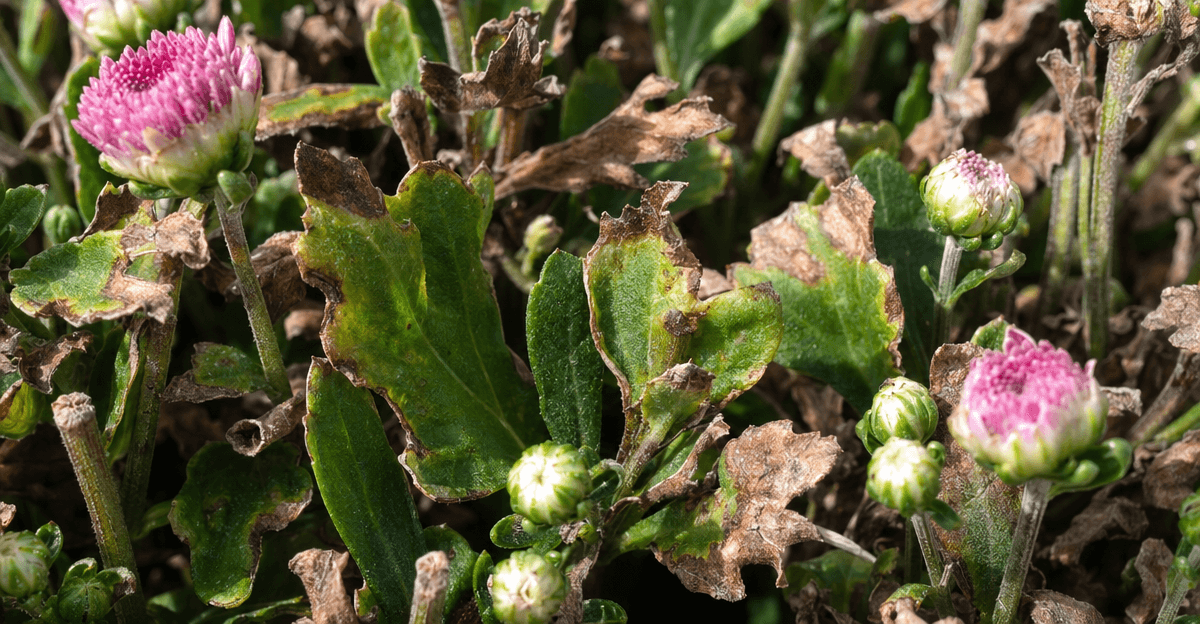
Todos os cultivadores já viram isto: pontas das folhas castanhas e crocantes que avançam para o interior ao longo das margens. O instinto é adicionar mais nutrientes, assumindo que a planta tem fome. Esse instinto está quase sempre errado. Aquelas pontas queimadas são sinal de excesso, não de carência.
A nível celular, a queimadura por nutrientes é um evento de stress osmótico. A solução nutritiva é uma mistura de sais minerais dissolvidos — azoto, potássio, cálcio, magnésio e outros. Cada ião dissolvido contribui para a concentração total de sais da solução, medida como condutividade elétrica (EC) em milliSiemens por centímetro (mS/cm) ou como sólidos totais dissolvidos (TDS) em partes por milhão (ppm).
Em condições normais, as células radiculares mantêm uma concentração interna de solutos superior à da solução nutritiva circundante. Este gradiente impulsiona a água para dentro através dos canais de aquaporinas nas membranas das células radiculares — osmose padrão.
Quando se alimenta em excesso, a solução externa torna-se mais concentrada do que o interior da célula. O gradiente inverte-se. A água flui para fora das células radiculares em direção à solução nutritiva, em vez de entrar. Os investigadores descrevem isto como "seca fisiológica" — a planta sofre défice hídrico mesmo estando rodeada de líquido.
Munns e Tester (2008), na sua revisão fundamental publicada no Annual Review of Plant Biology, estabeleceram um modelo bifásico de stress salino que se aplica diretamente à sobrealimentação hidropónica:
- Fase 1 — Stress osmótico (rápido): O crescimento das folhas jovens é inibido em poucas horas, pois a planta não consegue manter a pressão de turgescência. Os estomas fecham-se. A fotossíntese diminui.
- Fase 2 — Toxicidade iónica (gradual): Os iões em excesso — particularmente sódio, cloreto e amónio — acumulam-se no tecido foliar maduro ao longo de dias. Concentram-se nas pontas e margens das folhas, onde a transpiração os deposita à medida que a água evapora. Em concentrações letais, estes iões destroem as membranas celulares e o tecido morre.
É por isso que a queimadura por nutrientes começa sempre nas pontas das folhas. São os pontos terminais do sistema vascular — a última paragem para a água que viaja através da planta. Os sais seguem o fluxo de transpiração até às pontas, a água evapora e os sais permanecem em concentrações cada vez maiores até as células colapsarem.
Os Números: Limiares de EC por Fase de Crescimento
Nem todas as plantas toleram a mesma concentração de nutrientes, e a mesma planta necessita de quantidades diferentes em fases distintas. A Extensão da Oklahoma State University e o livro Plant Nutrition of Greenhouse Crops da Universidade de Wageningen (Sonneveld & Voogt, 2009) fornecem as seguintes orientações gerais:
| Fase de Crescimento | EC Alvo (mS/cm) | Notas |
|---|---|---|
| Plântula / Clone | 0,5–1,0 | As raízes jovens são altamente sensíveis ao sal |
| Vegetativo Inicial | 1,0–1,6 | Aumentar gradualmente à medida que a massa radicular se desenvolve |
| Vegetativo Avançado | 1,2–1,8 | Suportar crescimento constante sem excesso |
| Floração / Frutificação | 1,5–2,5 | Plantas exigentes (tomate, pimento) toleram o limite superior |
| Pré-Colheita | 1,0–1,5 | Reduzir gradualmente; alguns cultivadores fazem lavagem até quase zero |
Dados específicos por cultura, segundo a investigação:
- Alface: Ótimo a 1,4–1,8 mS/cm (UF IFAS Extension). Adhikari et al. (2023) verificaram que aumentar a EC de um valor base de 1,6–2,0 mS/cm para aproximadamente 12–16 mS/cm via stress salino com NaCl reduziu a massa fresca em cerca de 76% e a condutância estomática em 86% em 19 dias.
- Tomate: Rendimento ótimo a aproximadamente 2,0 mS/cm. Rosca et al. (2023) documentaram que a taxa fotossintética caiu 10–12% a 6 mS/cm. A 7,6 mS/cm, os rendimentos diminuíram aproximadamente para metade. Curiosamente, a salinidade moderada (até 5 mS/cm) melhorou a qualidade do fruto — maior brix e licopeno — embora reduzisse o rendimento total.
- Ervas aromáticas (manjericão, coentro): 1,0–1,6 mS/cm.
- Morango: 1,0–1,5 mS/cm (particularmente sensível).
- Pimentos: 2,0–3,0 mS/cm (tolerância moderada).
A regra fundamental: nunca saltar a EC entre fases. Aumente no máximo 0,2 mS/cm por ajuste. Picos súbitos desencadeiam choque osmótico agudo — o mesmo mecanismo da queimadura por nutrientes, mas comprimido em horas.
O Que Acontece Dentro da Célula
Para os cultivadores que querem compreender a biologia, eis o que a investigação mostra que acontece quando a concentração de sais ultrapassa a tolerância da planta:
Plasmólise. O gradiente osmótico força a água a sair do vacúolo celular. A membrana celular afasta-se da parede celular. A célula perde turgescência, colapsa metabolicamente e, se o stress se mantiver, sofre morte celular programada.
Espécies reativas de oxigénio (ROS). O défice hídrico induzido pelo sal reduz a condutância estomática e compromete o transporte de eletrões fotossintético. O excesso de energia de excitação gera espécies reativas de oxigénio — superóxido, peróxido de hidrogénio, radicais hidroxilo — que danificam lípidos de membrana, proteínas e DNA. Balasubramaniam et al. (2023) descrevem isto como "disfunção metabólica irreversível" quando as defesas antioxidantes da planta são ultrapassadas.
Deslocamento iónico. O excesso de sódio desloca o potássio dos locais de ligação enzimática. O excesso de cloreto compete com a absorção de nitrato. O excesso de potássio bloqueia o cálcio e o magnésio. A Penn State Extension documentou um caso em que potássio a 2.050 ppm (contra um alvo de 205 ppm) causou sintomas de deficiência de azoto apesar de haver azoto adequado na solução — porque o potássio antagonizou a sua absorção.
Esta cascata explica por que razão os sintomas de queimadura por nutrientes podem parecer confusamente semelhantes a uma deficiência. A planta pode ter abundância de um dado nutriente na solução, mas a competição iónica impede-a de absorver o que necessita.
Sintomas Visuais: Como Identificar a Queimadura por Nutrientes
A queimadura por nutrientes segue uma progressão previsível:
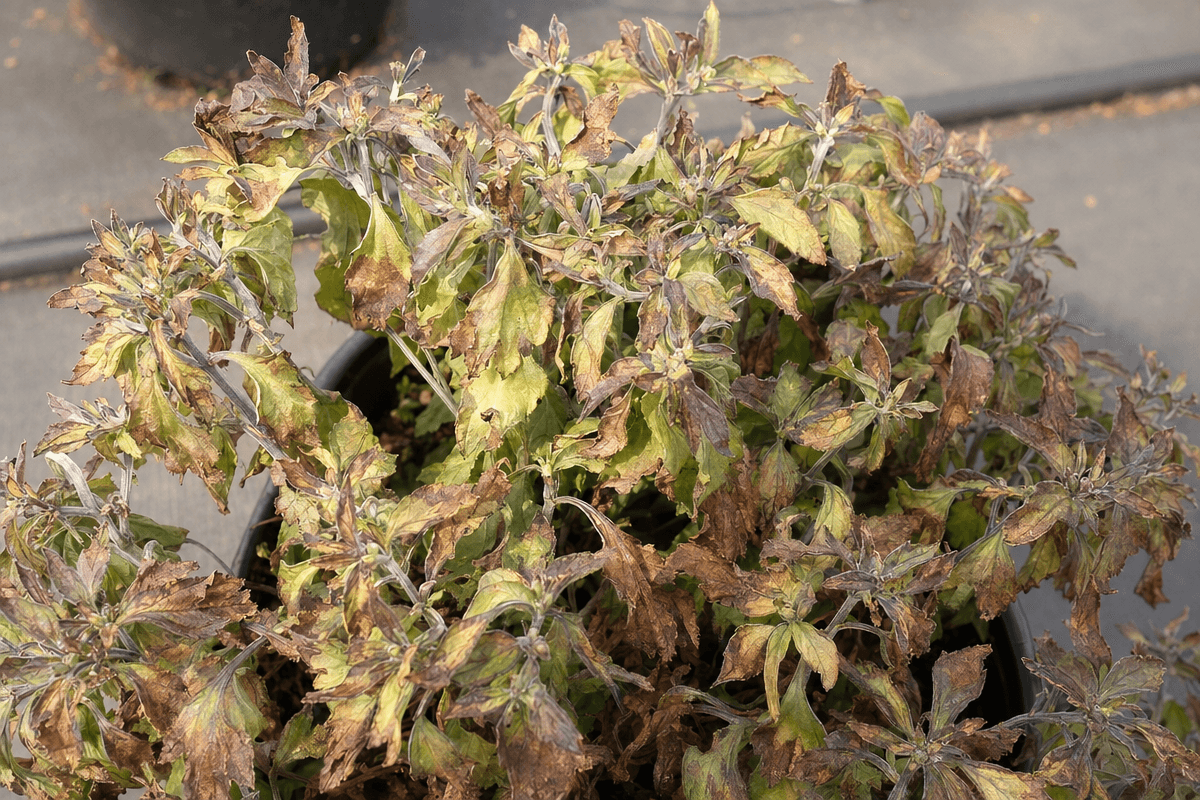
Fase 1 — Queimadura das pontas. O sinal mais precoce. As pontas das folhas ficam amarelas, depois castanhas e crocantes. Afeta a maioria das folhas simultaneamente, começando frequentemente pelo crescimento mais recente, uma vez que o tecido jovem é mais sensível ao choque osmótico.
Fase 2 — Necrose das margens. O dano castanho e crocante estende-se das pontas ao longo dos bordos das folhas. As margens tornam-se quebradiças e podem enrolar para cima.
Fase 3 — Propagação interveinal. A necrose avança para o interior entre as nervuras. As folhas desenvolvem um aspeto queimado e manchado.
Fase 4 — Morte total da folha. Se não for corrigido, folhas inteiras morrem e caem. O crescimento para. As raízes podem apresentar-se castanhas e danificadas em vez de brancas e saudáveis.
Outros indicadores precoces:
- A folhagem torna-se excessivamente verde-escura e brilhante — sinal de excesso de azoto, frequentemente o precursor da queimadura visível.
- As pontas das folhas dobram-se ou enrolam ligeiramente antes de qualquer escurecimento.
- Em casos graves, pode formar-se uma crosta branca de sal na superfície do meio de cultivo.
Queimadura por Nutrientes vs. Deficiência de Nutrientes: Como Distinguir
Este é o erro de diagnóstico mais comum na hidroponia. As duas condições podem parecer semelhantes à primeira vista, mas diferem no padrão, na progressão e no que os medidores indicam.
| Característica | Queimadura por Nutrientes (Excesso) | Deficiência de Nutrientes |
|---|---|---|
| Onde começa | Pontas e margens das folhas | Na lâmina foliar ou entre as nervuras |
| Quais folhas | Todas as folhas, frequentemente as mais novas primeiro | Folhas velhas primeiro (nutrientes móveis: N, P, K, Mg) ou folhas novas primeiro (imóveis: Ca, Fe, B) |
| Cor | Pontas castanhas/crocantes em folhagem verde-escura | Amarelecimento (clorose), verde-pálido, amarelecimento interveinal |
| Velocidade | Rápida — visível em dias | Lenta — desenvolve-se em 1–2 semanas |
| Leitura de EC | Alta (acima do alvo para a fase de crescimento) | Normal ou baixa |
| Leitura de pH | Frequentemente dentro da faixa | Frequentemente fora da faixa, causando bloqueio de nutrientes |
| Aspeto das raízes | Pode apresentar queimadura química (pontas castanhas) | Raízes geralmente saudáveis mas subdimensionadas |
O protocolo de diagnóstico: Pegue no medidor de EC e na caneta de pH antes de alterar o que quer que seja. Se o pH estiver na faixa (5,5–6,5 para a maioria das culturas hidropónicas) e a EC estiver acima do alvo, tem queimadura por nutrientes. Se o pH estiver fora da faixa, a aparente "queimadura" pode na verdade ser uma deficiência induzida por bloqueio — adicionar mais nutrientes agravaria o problema.
Como Corrigir a Queimadura por Nutrientes
Depois de confirmar o diagnóstico, o tratamento é simples:
Passo 1: Parar a Alimentação
Cesse toda a aplicação de nutrientes imediatamente. Não adicione nada ao reservatório.
Passo 2: Lavagem ou Diluição
- Sistemas com substrato (coco, perlite, lã de rocha): Faça uma lavagem com água limpa com pH ajustado, num volume equivalente a 3 vezes o do recipiente. Meça a EC da água de drenagem — continue a lavagem até que desça para a faixa alvo da fase de crescimento atual.
- Sistemas recirculantes (DWC, NFT, ebb and flow): Dilua o reservatório com água com pH ajustado para reduzir a EC até ao alvo. Se a solução estiver severamente sobreconcentrada, faça uma mudança completa do reservatório com solução fresca, corretamente misturada na concentração apropriada.
- Sistemas Kratky / passivos: O método Kratky é especialmente vulnerável à queimadura por nutrientes porque a solução concentra-se à medida que a planta bebe água mas deixa os sais para trás. Um reservatório que começa a 1,5 mS/cm pode atingir mais de 7 mS/cm quando 80% da água foi consumida. Se surgir queimadura, dilua a solução restante com água limpa com pH ajustado, ou substitua-a inteiramente a metade da concentração.
Passo 3: Remover o Tecido Morto
Corte as folhas totalmente necróticas. Não vão recuperar, e o tecido morto atrai pragas e doenças. Deixe as folhas parcialmente danificadas — ainda fazem fotossíntese.
Passo 4: Retomar com Concentração Reduzida
Recomece a alimentação a 50% da concentração anterior. Aumente gradualmente ao longo de 1–2 semanas de volta à EC alvo para a fase de crescimento. Alvos conservadores de recuperação:
| Fase de Crescimento | EC de Recuperação (mS/cm) |
|---|---|
| Plântula | 0,5–0,8 |
| Vegetativo | 1,0–1,4 |
| Floração | 1,2–1,8 |
As folhas queimadas não vão recuperar a cor, mas o novo crescimento deverá surgir saudável dentro de uma semana.
Porque É que os Sistemas Passivos e Estáticos São de Alto Risco
Nos sistemas recirculantes, uma bomba mistura continuamente a solução e é possível monitorizar a EC em tempo real. Nos sistemas passivos — particularmente o método Kratky — a física trabalha contra si.
À medida que a planta transpira, remove água do reservatório, mas os sais minerais dissolvidos ficam para trás. A concentração de nutrientes aumenta ao longo do tempo à medida que o volume diminui. Em ambientes quentes, a evaporação acelera este efeito ainda mais.
Um exemplo prático: Enche um frasco Kratky com 1 litro de solução a 1,5 mS/cm. A planta consome 800 mL ao longo de três semanas. Os 200 mL restantes contêm agora todos os sais originais num quinto do volume — uma EC efetiva de aproximadamente 7,5 mS/cm. Isto está bem dentro da faixa tóxica para a alface.
É por isso que os cultivadores Kratky experientes começam com concentrações de nutrientes deliberadamente baixas (0,6–0,8 mS/cm), utilizam reservatórios sobredimensionados e completam com água pura em vez de solução nutritiva.
Toxicidade Específica por Ião: Nem Todas as Queimaduras São Iguais
Diferentes excessos de nutrientes produzem sintomas diferentes. Saber qual ião é responsável ajuda a ajustar a fórmula, não apenas a concentração.
Azoto (o mais comum). O excesso de amónio é diretamente tóxico para as células. O excesso de nitrato causa folhagem verde-escura, excessivamente exuberante, com paredes celulares moles e frágeis. Visual clássico: folhas brilhantes, curvadas para baixo, com pontas castanhas.
Potássio. O potássio em excesso cria um antagonismo severo — bloqueia a absorção de cálcio e magnésio. No tomate, manifesta-se como podridão apical (bloqueio de cálcio). Pantha et al. (2023) verificaram que o excesso de potássio em Arabidopsis levou ao esgotamento simultâneo de sete nutrientes essenciais, incluindo metabolitos contendo azoto.
Fósforo. O excesso de fósforo bloqueia o zinco, o ferro e o manganês. Os sintomas imitam uma deficiência de micronutrientes: clorose interveinal, crescimento novo atrofiado.
Boro. Tem a margem mais estreita entre deficiência e toxicidade de qualquer micronutriente. O excesso causa manchas amarelas e mortas nas margens das folhas.
Como Prevenir a Queimadura por Nutrientes
A prevenção custa menos do que o tratamento — em tempo, em stress para a planta e em rendimento perdido.
-
Tenha um medidor de EC e utilize-o diariamente. Uma caneta de EC calibrada é a ferramenta mais importante na hidroponia, a seguir ao pH. Teste tanto a solução de entrada como o reservatório ou a drenagem. Se está a cultivar sem medidor de EC, está a adivinhar.
-
Comece baixo, aumente gradualmente. Comece pelo limite inferior da faixa de EC para a fase de crescimento. Aumente no máximo 0,2 mS/cm por ajuste. Os calendários de nutrientes dos fabricantes são frequentemente agressivos — comece com 50–75% da dose recomendada.
-
Ajuste a concentração à fase de crescimento. As plântulas necessitam de muito menos do que as plantas em floração. Utilize a tabela de EC por fase apresentada acima e ajuste à medida que a planta amadurece.
-
Considere os fatores ambientais. Temperatura elevada e humidade baixa aumentam a taxa de transpiração, o que concentra os sais nas folhas mais rapidamente. Durante vagas de calor, considere reduzir ligeiramente a EC. A intensidade luminosa também afeta a absorção de nutrientes — maior PPFD impulsiona mais transpiração e uma acumulação mais rápida de sais nas pontas das folhas.
-
Mude os reservatórios regularmente. Nos sistemas recirculantes, substitua o reservatório completo a cada 1–2 semanas. As plantas absorvem nutrientes a taxas diferentes, o que altera a proporção de iões ao longo do tempo. Uma mistura fresca restaura o equilíbrio correto. Sonneveld e Voogt (2009) documentaram que os sais de lastro (sódio, cloreto, sulfato) — iões que as plantas mal absorvem — acumulam-se continuamente em sistemas fechados e só podem ser removidos com a substituição do reservatório.
-
Conheça a sua água. Água da torneira dura (EC base alta devido a cálcio, magnésio e carbonatos) deixa menos margem para nutrientes antes de atingir os limites de EC. Se a sua água da torneira começa acima de 0,4 mS/cm, considere água de osmose inversa ou filtrada.
-
Nunca meça nutrientes a olho. Utilize seringas de medição ou balanças. Uns poucos mililitros a mais de solução nutritiva concentrada podem elevar a EC bem acima dos níveis seguros num reservatório pequeno.
Pontos-Chave
- A queimadura por nutrientes é stress osmótico: demasiados sais dissolvidos invertem o gradiente hídrico nas raízes, e os iões em excesso acumulam-se nas pontas das folhas até o tecido morrer.
- Diagnostique sempre com medidores, não a olho. Verifique EC e pH antes de alterar o que quer que seja. EC alta com pH normal significa queimadura por nutrientes. pH fora da faixa com EC normal significa bloqueio, não queimadura.
- Corrija com lavagem ou diluição e depois retome a alimentação a 50% da concentração.
- Sistemas passivos como o Kratky são especialmente vulneráveis porque a solução concentra-se à medida que a água é consumida. Comece baixo (0,6–0,8 mS/cm) e complete com água pura.
- A prevenção é um medidor de EC e a disciplina de o utilizar diariamente. Comece com metade da recomendação do fabricante e aumente gradualmente.
Pronto para ajustar as concentrações de nutrientes? Utilize a nossa calculadora de nutrientes para obter dosagens exatas para o seu sistema e fase de crescimento, ou explore a base de dados de plantas para alvos de EC e pH específicos por cultura.