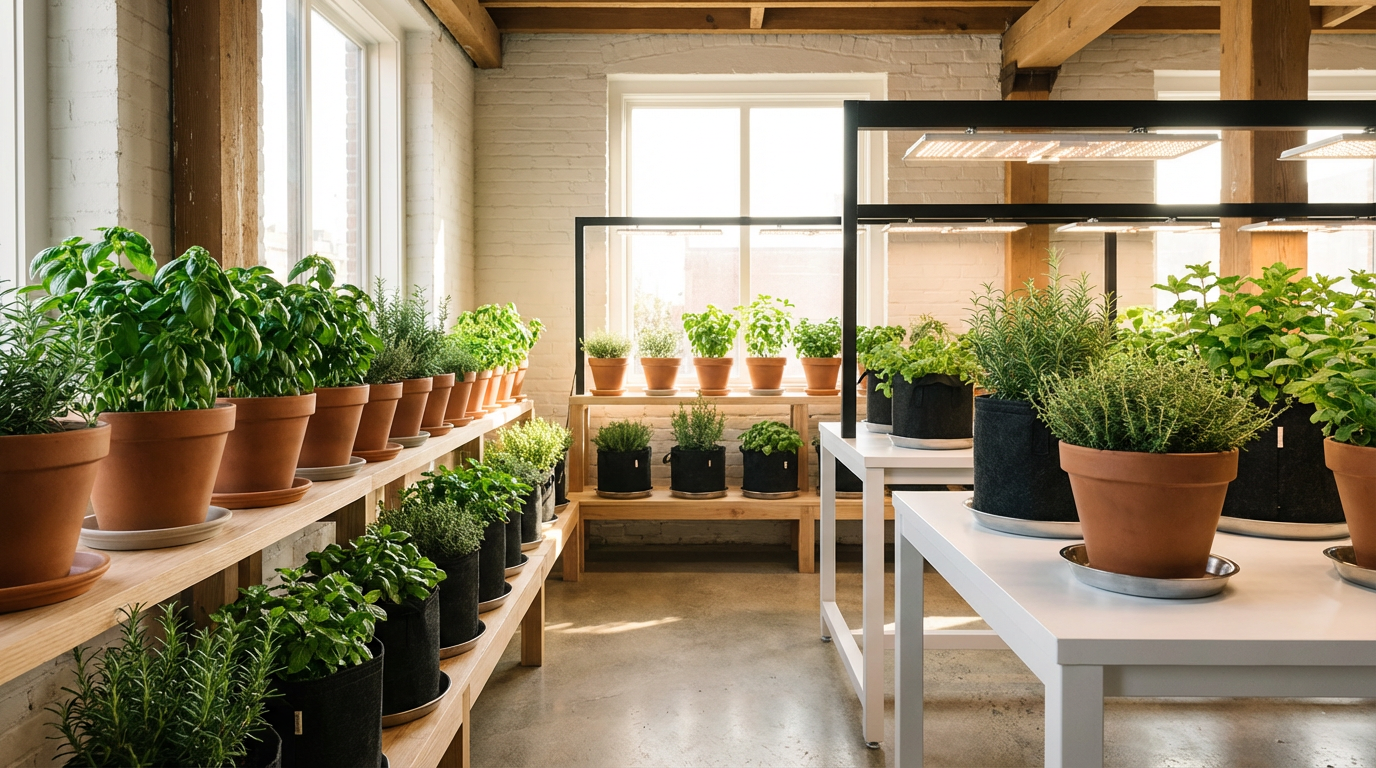
Receta de jardín de hierbas mixtas en suelo
Una receta versátil a base de suelo para cultivar un jardín de hierbas compañeras con orégano, tomillo, romero, perejil y cebollino usando fertilizantes orgánicos y sintéticos para maximizar el sabor y el aroma.
No todos los jardines de hierbas necesitan un sistema hidropónico. Esta receta a base de suelo es perfecta para cultivadores que quieren la sencillez y tolerancia del suelo sin dejar de optimizar los nutrientes para obtener la mejor calidad posible de las hierbas. Al combinar hierbas de crecimiento rápido (perejil, cebollino, cilantro) con plantas perennes leñosas (romero, tomillo, orégano), creas un jardín de hierbas diverso y productivo con cosechas durante todo el año. El suelo proporciona un amortiguador natural de nutrientes y un ecosistema microbiano en el que muchas hierbas prosperan. Las hierbas mediterráneas como el romero, el tomillo y el orégano en realidad prefieren un suelo ligeramente pobre en nutrientes y bien drenado que imite su hábitat nativo; sobrefertilizar estas hierbas reduce su concentración de aceites esenciales y apaga su sabor. Esta receta usa una estrategia de nutrición ligera para hierbas leñosas y un enfoque de nutrición moderada para hierbas de hoja. La mezcla de suelo combina un sustrato de calidad con perlita para el drenaje y humus de lombriz para una nutrición orgánica de liberación lenta. La fertilización suplementaria usa la línea de fertilizantes líquidos de Fox Farm, que aporta nutrientes orgánicos y fácilmente disponibles. La idea clave es que las hierbas cultivadas por su sabor deben recibir menos alimento que las hierbas cultivadas para producir volumen: un estrés nutricional leve concentra los aceites esenciales y produce hierbas más aromáticas y sabrosas.
Etapas Nutricionales (ppm)
Etiquetas
Unlock Full Recipe
Sign in to access detailed ingredients, instructions, and analysis
Preguntas Frecuentes
¿Por qué mis hierbas de interior tienen menos sabor que las de exterior?
Las hierbas de interior a menudo carecen de sabor por falta de luz y sobrefertilización. Los aceites esenciales (la fuente del sabor y el aroma) se concentran cuando las plantas experimentan un estrés leve: luz intensa, condiciones ligeramente secas y nutrientes moderados. Asegura 6-8 horas de luz solar directa o más de 14 horas bajo luces de cultivo. Fertiliza las hierbas mediterráneas a la mitad de la dosis recomendada. Las temperaturas nocturnas frescas (55-60°F) también aumentan la producción de aceites esenciales.
¿Con qué frecuencia debo regar mi jardín de hierbas?
La frecuencia de riego depende del tipo de hierba. Las hierbas mediterráneas (romero, tomillo, orégano) prefieren secarse entre riegos: riega cuando las 1-2 pulgadas superiores del suelo estén secas, normalmente cada 3-5 días. Las hierbas de hoja (perejil, cebollino, cilantro) prefieren humedad constante: riega cuando la media pulgada superior esté seca, normalmente cada 2-3 días. El exceso de riego es el error más común: mueren más hierbas por demasiada agua que por muy poca.
¿Puedo cultivar todas estas hierbas en la misma maceta?
Puedes hacerlo, pero agrúpalas según sus necesidades de agua. Pon las hierbas mediterráneas tolerantes a la sequía (romero, tomillo, orégano) juntas en una maceta con perlita extra para drenaje. Pon las hierbas amantes de la humedad (perejil, cebollino, cilantro) en una maceta separada con una mezcla que retenga más humedad. Mezclar hierbas tolerantes a la sequía y amantes de la humedad en un solo recipiente provoca pudrición de raíces o falta de riego.
¿Cómo evito que el cilantro espigue?
El cilantro espiga (produce semillas) rápidamente en condiciones cálidas por encima de 75°F y con más de 14 horas de luz. Para retrasar el espigado: mantén el cilantro en la parte más fresca de tu jardín, proporciona sombra parcial en verano, cosecha con frecuencia para retrasar la formación de flores y elige variedades de espigado lento como 'Calypso' o 'Santo'. La mejor estrategia es la siembra escalonada: siembra cilantro nuevo cada 3 semanas para un suministro continuo.
¿Cuál es el mejor fertilizante para un jardín de hierbas orgánico?
Para jardines de hierbas orgánicos, el humus de lombriz es la mejor enmienda general: aporta nitrógeno de liberación lenta y microbios beneficiosos sin riesgo de sobrefertilización. Fox Farm Big Bloom es una excelente opción orgánica líquida, segura para cada riego. La emulsión de pescado (5-1-1) aporta un refuerzo de nitrógeno, pero tiene un olor fuerte. Para hierbas mediterráneas, menos fertilizante produce mejor sabor: fertiliza a la mitad de la dosis recomendada.