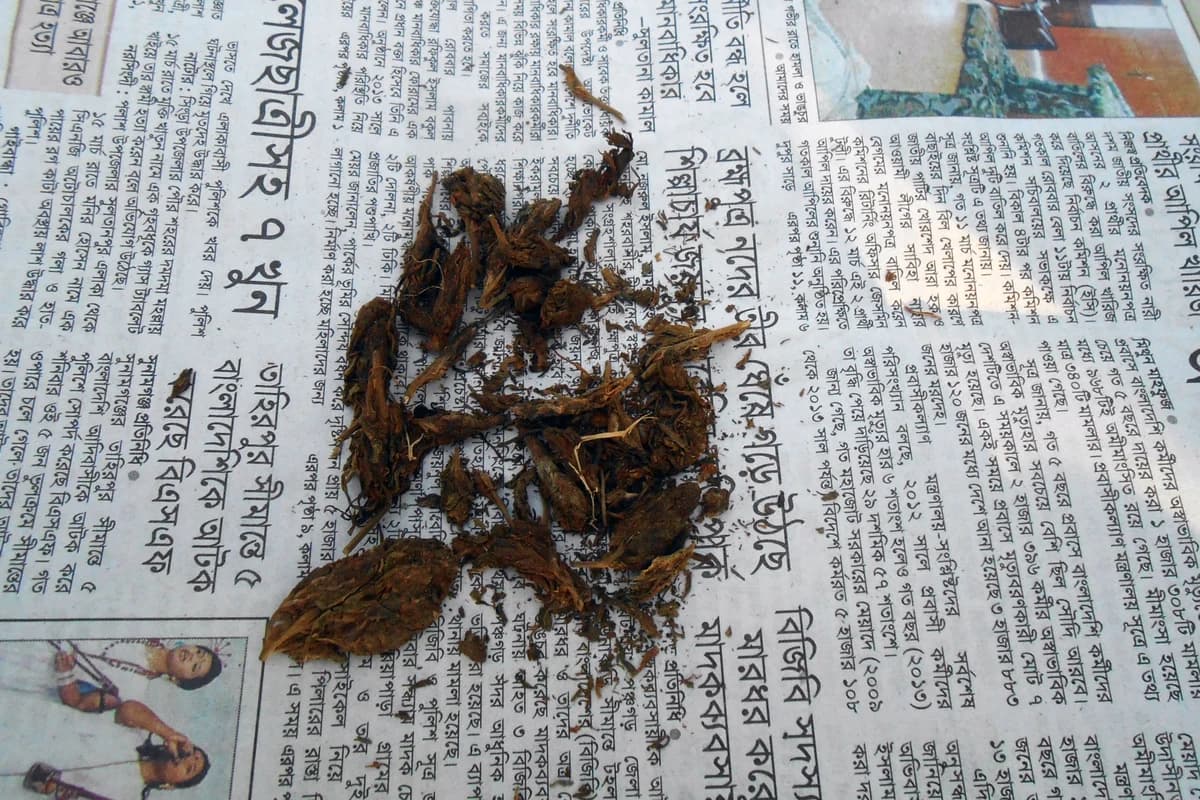
About This Plant
Afghan Kush is a compact indica landrace Cannabis sativa cultivar associated with Hindu Kush genetics, dense resinous inflorescences, and hash-oriented production. Because peer-reviewed Afghan Kush-specific production trials were not found, this profile uses controlled Cannabis sativa evidence plus indica-sibling context and flags cultivar claims conservatively.
How to Grow Afghan Kush
Learn how to grow Afghan Kush from seed to harvest in 105 days. Beginner difficulty. Complete nutrient guide, pH/EC requirements, and growing conditions for hydroponics, soil & greenhouse.
Sources cited: 15.
Nutrient Requirements by Growth Stage
The current record overemphasized flowering potassium and phosphorus compared with controlled cannabis nutrition trials. Cannabis studies support moderate nitrogen, relatively low phosphorus, and no need for very high potassium during flowering…
Sign in to view nutrient requirements
A free account unlocks NPK targets for all four growth stages, micronutrient levels, a per-stage nutrient calculator, and the full nutrition guide. Signing up takes one click. Truleaf is a free, non-profit project, and every new account helps it grow. No spam, ever.
Growing Environments
The strongest evidence supports indoor and greenhouse cannabis production where light, humidity, CO2, nutrition, sanitation, and photoperiod can be managed. Outdoor Afghan Kush is possible only where laws permit and the season is warm with dry autumn weather; wet late flower raises Botrytis risk…
Temperature
Use the verified Cannabis sativa temperature envelope rather than cultivar folklore. Hemp seed germination work supports a practical 20-30C germination range, and controlled cannabis photosynthesis work supports warm production around 25-30C when water, CO2, and light are not limiting. Keep Afghan Kush near 20-28C in growth, with stable root-zone temperatures. Cooler late-flower nights can protect quality, but temperature stress should not be used as a maturity signal.
Humidity
The prior record had humidity min and max set to 0, which is biologically invalid. Use stage-aware humidity: high humidity for unrooted cuttings, moderate humidity during vegetative growth, and about 40-50% RH during dense flowering to reduce powdery mildew and Botrytis risk…
Light
Afghan Kush is a photoperiod Cannabis sativa cultivar. Maintain vegetative plants under long days such as 18/6h, then use a short-day flowering program with uninterrupted darkness…
Airflow
Airflow was missing from the current record. Cannabis flowering rooms need active circulation to remove boundary-layer humidity, reduce stagnant pockets inside trained canopies, and lower Botrytis and powdery mildew pressure…
Sign in to view environmental requirements
A free account unlocks exact temperature, humidity, light and airflow targets, including germination and growth ranges, DLI, photoperiod and PPFD, plus the full environment guide. Signing up takes one click. Truleaf is a free, non-profit project, and every new account helps it grow. No spam, ever.
Hydroponic System Compatibility
Drip fertigation in coco or rockwool is the preferred full-cycle system because it supports controlled EC, pH, dry-back, and runoff monitoring. DWC can work when dissolved oxygen and nutrient solution strength are tightly managed, and aeroponics is useful for advanced propagation or high-control systems…
Growing Media
Coco coir, rockwool, clay pebbles, peat-perlite blends, and well-drained soil can all grow Cannabis sativa when irrigation, pH, and sanitation are managed. Coco coir with drip fertigation is preferred for Afghan Kush because it balances aeration, water holding, and frequent nutrient delivery…
Container Specs
Use enough root volume for a trained photoperiod cannabis plant: at least 19 L indoors, with 26 L preferred when vertical space allows. Containers should be at least 35-40 cm wide or deep, drain freely, and support runoff EC checks…
Training & Support
Training is recommended for Afghan Kush because an even canopy improves light interception and reduces humid shaded zones. Use topping, LST, SCROG netting, pruning, and stakes to spread branches, support flowers, and maintain airflow…
Sign in to view system compatibility
A free account unlocks why each of the six systems fits or fails, plus growing media, container sizes, training methods, companion plants, and the full systems guide. Signing up takes one click. Truleaf is a free, non-profit project, and every new account helps it grow. No spam, ever.
Propagation
Propagate Afghan Kush by stem cuttings when the goal is preserving a selected female phenotype. Recent cannabis cutting research shows rooting depends on cultivar, temperature, humidity, substrate, and hormone treatment…
Harvesting
Harvest timing should be based on flower maturity and quality checks rather than calendar alone. Monitor capitate-stalked trichomes and harvest when most are cloudy with only a limited amber fraction, then dry slowly in darkness at moderate temperature and humidity before curing…
Planting Calendar
Indoor Afghan Kush can be scheduled year-round because photoperiod is controlled by lighting. Keep vegetative plants under long days and initiate flowering with a short-day schedule; 12h is the conservative flowering trigger, while slightly longer days are genotype dependent…
Common Issues
The current record listed only nutrient burn and mold or mildew. Peer-reviewed cannabis pathology work supports a broader production risk set: powdery mildew, Botrytis bud rot, Fusarium or Pythium root disease, spider mites, hemp russet mites, fungus gnats, Hop latent viroid, and nutrient burn…
Get the full science-backed guide
By signing up, you help keep Truleaf free and support the growth of our nonprofit project. Your account unlocks full details for every plant issue—including symptoms, causes, step-by-step solutions, and prevention—plus the month-by-month planting calendar, the complete guide, and all research sources. It only takes one click. No spam, ever.