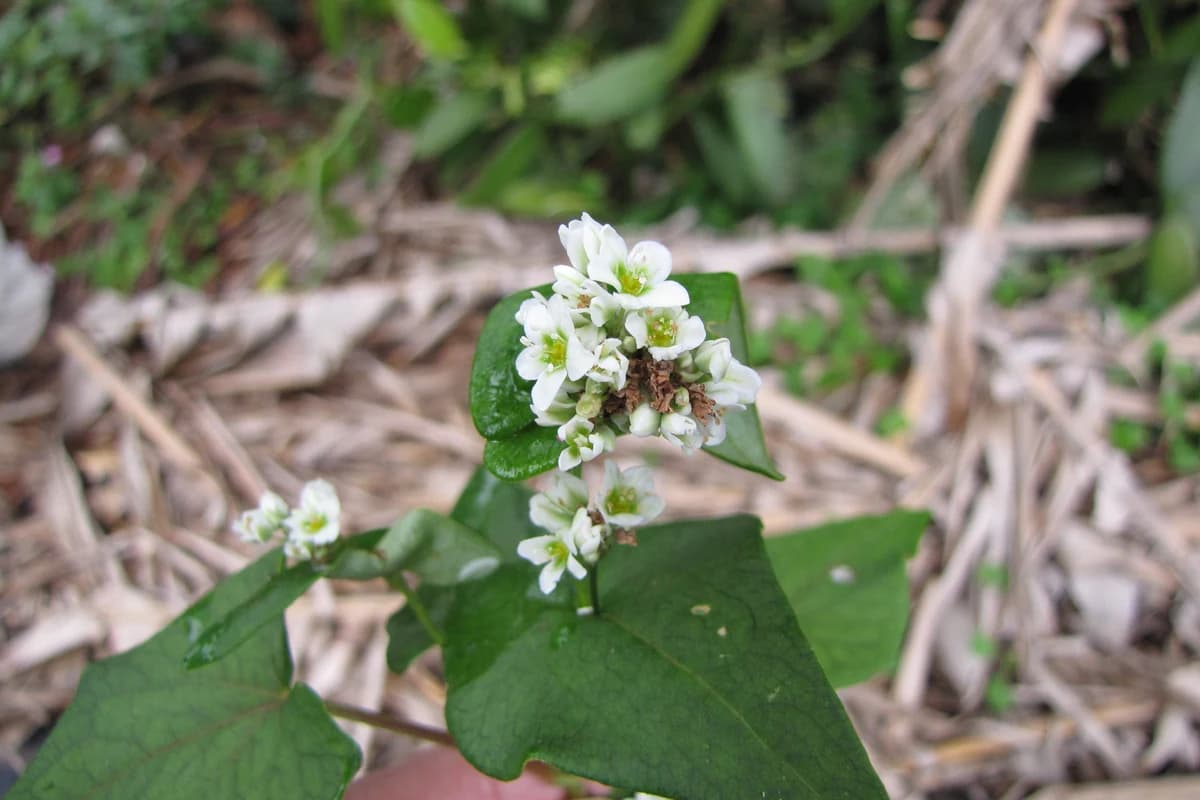
About This Plant
Buckwheat is a fast-growing, frost-sensitive annual pseudocereal grown for triangular grain, cover cropping, pollinator flowers, and short-season soil improvement. It establishes quickly, flowers indeterminately, and performs best in mild weather with modest fertility rather than heavy nitrogen feeding.
How to Grow Buckwheat
Learn how to grow Buckwheat from seed to harvest in 84 days. Beginner-friendly. Planting, care, feeding and the right growing conditions.
Sources cited: 7.
Nutrient Requirements by Growth Stage
Buckwheat is a low-input pseudocereal, and field research supports modest nitrogen rather than heavy feeding. Use low-to-moderate hydroponic strength where controlled culture is attempted: about 50-80 ppm N in seedlings, 70-110 ppm during vegetative growth, and no aggressive nitrogen increase after flowering…
Sign in to view nutrient requirements
A free account unlocks NPK targets for all four growth stages, micronutrient levels, a per-stage nutrient calculator, and the full nutrition guide. Signing up takes one click. Truleaf is a free, non-profit project, and every new account helps it grow. No spam, ever.
Growing Environments
Buckwheat is best validated outdoors in fields or garden beds, and it also fits greenhouses or containers when the goal is observation, seed saving, flowers, or modest grain yield. Indoor production is possible only with strong light, good airflow, and enough root volume; it is less efficient than leafy herbs because…
Temperature
Buckwheat is a cool-season annual that performs best when vegetative growth and flowering stay in the mild range. Use 18-25C as the practical indoor target, keep flowering below about 27C when possible, and avoid frost because the crop is frost-sensitive. Controlled stress work confirms that temperature strongly changes buckwheat growth and flowering behavior, while extension guidance warns that hot, dry flowering weather reduces seed set.
Humidity
Peer-reviewed buckwheat field studies rarely prescribe indoor relative humidity, so humidity guidance is inferred from disease risk and normal crop physiology rather than a single controlled RH trial. Keep a moderate 45-65 percent RH in indoor or greenhouse production, with lower humidity and stronger ventilation once…
Light
Buckwheat is grown as an open-field, full-sun crop, so grain production needs high light rather than shaded herb conditions. For indoor trials, target 350-500 umol/m2/s PPFD with a 14-16 hour photoperiod, or roughly a 20-28 mol/m2/day DLI, then watch plant height and lodging as indicators of inadequate light…
Airflow
Buckwheat has small flowers and a dense branching canopy, so indoor airflow should be steady but not desiccating. Use about 0.2-0.6 m/s canopy airflow to prevent stagnant humidity, limit powdery mildew risk, and help maintain uniform temperature during flowering…
Sign in to view environmental requirements
A free account unlocks exact temperature, humidity, light and airflow targets, including germination and growth ranges, DLI, photoperiod and PPFD, plus the full environment guide. Signing up takes one click. Truleaf is a free, non-profit project, and every new account helps it grow. No spam, ever.
Hydroponic System Compatibility
Treat soil and well-drained container or drip culture as the primary systems. Hydroponic evidence exists for sprouts and controlled buckwheat culture, including recirculating approaches, but not enough mature-grain evidence to rate DWC, NFT, Kratky, or aeroponics as primary production systems…
Growing Media
Use soil as the preferred medium for grain buckwheat: a loose, well-drained, moderately fertile seedbed supports rapid emergence and canopy closure. Buckwheat tolerates relatively poor soils better than many grains, but it does not benefit from waterlogging or heavy nitrogen…
Container Specs
Container buckwheat should be grown in wide, stable, well-drained planters rather than small herb pots. Use at least 25 cm depth and 30 cm width, with 10-15 L minimum volume for a small clump and larger troughs for meaningful flowering or seed set…
Training & Support
Buckwheat does not require trellising, cages, topping, or pruning. It is managed like a short annual grain or cover crop: sow at an appropriate density, avoid excess nitrogen, and maintain airflow to reduce lodging risk…
Sign in to view system compatibility
A free account unlocks why each of the six systems fits or fails, plus growing media, container sizes, training methods, companion plants, and the full systems guide. Signing up takes one click. Truleaf is a free, non-profit project, and every new account helps it grow. No spam, ever.
Propagation
Propagate buckwheat by seed. Direct sowing is the validated method for grain and cover-crop production, with shallow sowing into a firm, weed-free seedbed after frost risk passes…
Harvesting
Harvest grain buckwheat when most seeds have matured and turned dark, but before excessive shattering. Because buckwheat flowers indeterminately, green flowers and mature seed often occur together; extension guidance recommends timing harvest when about 75 percent of seeds are mature, then drying and threshing…
Planting Calendar
Schedule buckwheat as a frost-free, short-season crop. In temperate North American calendars, direct sow in late spring through mid-summer after soil warms, and harvest about 10-12 weeks after sowing depending on weather and cultivar…
Common Issues
The main buckwheat risks are poor seed set during hot or dry flowering weather, frost injury, lodging after excess nitrogen, powdery mildew in dense humid canopies, and root disease in poorly aerated soilless systems. Field nitrogen studies reinforce that more nitrogen is not automatically better; over-fertility can…
Get the full science-backed guide
By signing up, you help keep Truleaf free and support the growth of our nonprofit project. Your account unlocks full details for every plant issue—including symptoms, causes, step-by-step solutions, and prevention—plus the month-by-month planting calendar, the complete guide, and all research sources. It only takes one click. No spam, ever.