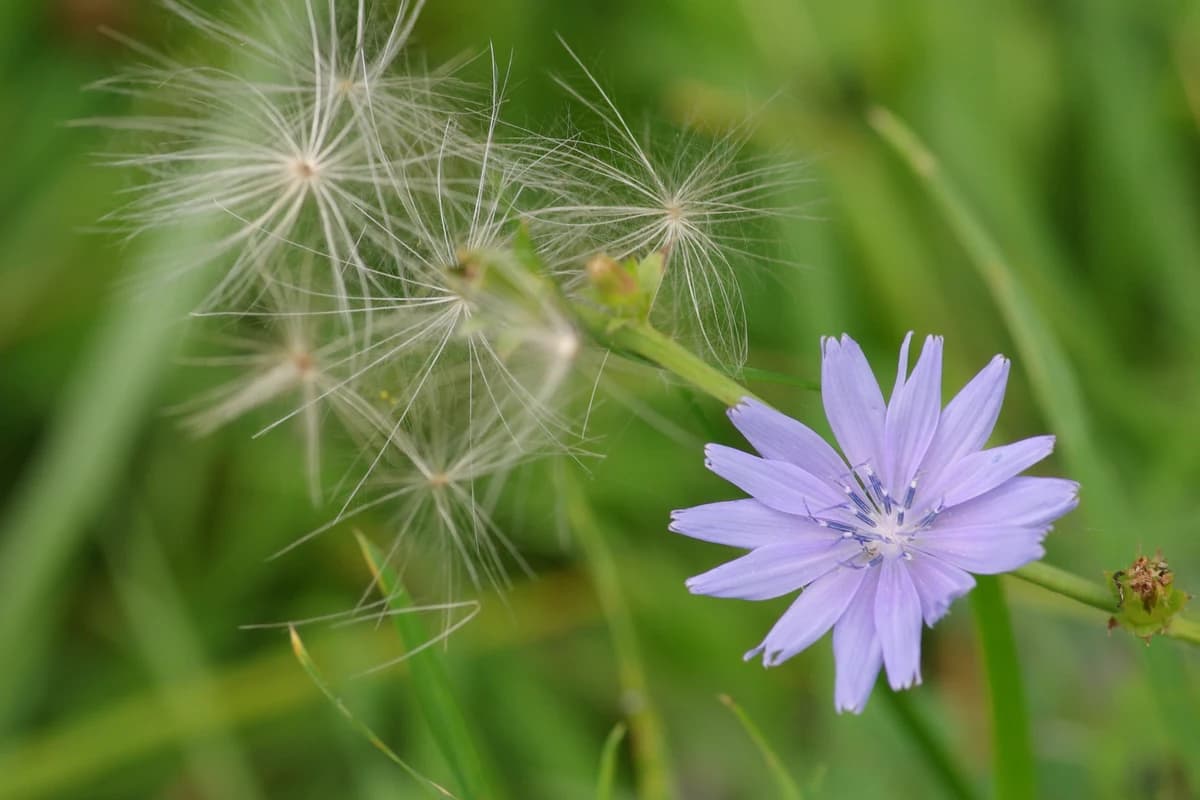
About This Plant
Chicory is a cool-season Cichorium crop grown for bitter salad leaves, radicchio-style heads, roasted taproots, forage, or forced witloof chicons. It establishes from seed, prefers fertile well-drained soil and moderate temperatures, and can also be grown in controlled hydroponic systems when pH, EC, and heat are managed carefully.
How to Grow Chicory
Learn how to grow Chicory from seed to harvest in 75 days. Beginner difficulty. Complete nutrient guide, pH/EC requirements, and growing conditions for hydroponics, soil & greenhouse.
Sources cited: 18.
Nutrient Requirements by Growth Stage
NPK was corrected by stage. Seedlings are supported at lower solution strength, about 50-95 ppm N, 7-40 ppm P, and 66-108 ppm K, while vegetative hydroponic chicory supports about 156-224 ppm N, 46-81 ppm P, and 215-391 ppm K…
Sign in to view nutrient requirements
A free account unlocks NPK targets for all four growth stages, micronutrient levels, a per-stage nutrient calculator, and the full nutrition guide. Signing up takes one click. Truleaf is a free, non-profit project, and every new account helps it grow. No spam, ever.
Growing Environments
Chicory is compatible with outdoor, greenhouse, indoor, and container production when matched to the crop type. Outdoor and field production are supported by extension and NRCS guidance for cool-season establishment in well-drained soils…
Temperature
Chicory is best handled as a cool-season crop. Seeds germinate best near 18-21C and germination declines above about 27C, while leaf and head quality drops in warm weather. Controlled-environment chicory studies used about 22C for seedling/growth-chamber work and 25C in aeroponic work, but greenhouse heat peaks were stress conditions rather than optima. Keep production near 10-24C with a practical 20C setpoint for steady leafy growth.
Humidity
The existing 40-70% humidity band is supported for ordinary leafy chicory. Controlled chamber work used about 60% RH and aeroponic chicory used 55% RH, while greenhouse trials tolerated wider daily swings around 44-76%…
Light
Outdoor chicory prefers sun, but high-radiation heat can reduce quality and encourage bolting. Controlled-environment papers commonly use a 16 h photoperiod, so the photoperiod was moved from 14 to 16 h while retaining the DLI and PPFD as operational targets rather than paper-verified optima…
Airflow
No accepted source gave a chicory-specific airflow speed in m/s. Manage airflow by outcomes: avoid stagnant wet canopies, maintain uniform temperature and humidity, and keep hydroponic or forcing systems oxygenated and sanitary…
Sign in to view environmental requirements
A free account unlocks exact temperature, humidity, light and airflow targets, including germination and growth ranges, DLI, photoperiod and PPFD, plus the full environment guide. Signing up takes one click. Truleaf is a free, non-profit project, and every new account helps it grow. No spam, ever.
Hydroponic System Compatibility
Hydroponic chicory is verified, but not every named system has equal evidence. NFT-like channels and controlled hydroponic comparisons have the strongest support for leafy production…
Growing Media
The preferred medium is fertile, loose, well-drained soil with steady moisture. NRCS guidance accepts well or moderately well drained soils with pH at least 5.5, and FAO EcoCrop places the broader Cichorium intybus pH optimum around 6.0-7.5 with deeper soil preferred…
Container Specs
Container guidance is partly inferred because complete sources do not specify exact pot volumes or material for generic chicory. For leafy/radicchio plants, use at least 20-30 cm spacing and a drained container about 25-30 cm wide and deep…
Training & Support
Chicory requires no trellis, cage, stakes, strings, or pruning support. The crop grows as a basal rosette with a taproot before heading, leaf harvest, root harvest, or bolting…
Sign in to view system compatibility
A free account unlocks why each of the six systems fits or fails, plus growing media, container sizes, training methods, companion plants, and the full systems guide. Signing up takes one click. Truleaf is a free, non-profit project, and every new account helps it grow. No spam, ever.
Propagation
Chicory is normally propagated from seed. Sow about 0.25 inch deep for garden chicory and radicchio, or slightly deeper for forage stands, then thin after 3-4 true leaves…
Harvesting
Harvest depends on the product. Leaf chicory can be cut young or clipped above the crown for regrowth; radicchio is cut when heads reach full size, before heat or delay increases toughness and bitterness…
Planting Calendar
Use chicory as a spring or fall cool-season crop. Direct sow 3-4 weeks before the last frost-free date or transplant near that date for spring production…
Common Issues
The issue list was expanded beyond bolting. Bolting and bitter leaves are supported by cool-season guidance and radicchio production notes, though the prior exact 24C prevention threshold was not independently verified…
Get the full science-backed guide
By signing up, you help keep Truleaf free and support the growth of our nonprofit project. Your account unlocks full details for every plant issue—including symptoms, causes, step-by-step solutions, and prevention—plus the month-by-month planting calendar, the complete guide, and all research sources. It only takes one click. No spam, ever.