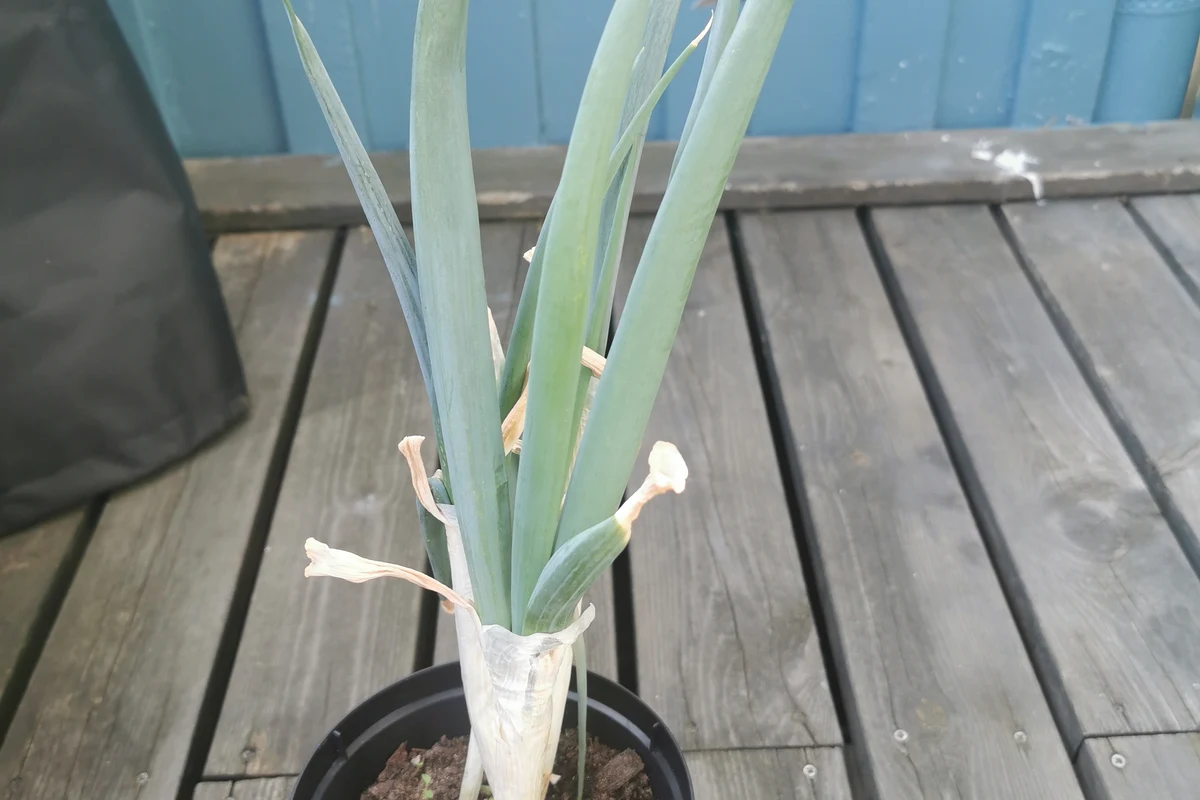
About This Plant
Leek (Allium porrum, a cultivar group of Allium ampeloprasum) is a hardy, cool-season biennial allium grown as an annual for its blanched white pseudostem (shank) and green leaves. Closely related to onion and garlic, it needs a long growing season and is blanched by deep planting or hilling to lengthen the tender white shaft. It is harvested vegetatively before bolting and does not flower or set fruit in cultivation.
How to Grow Leek
Learn how to grow Leek from seed to harvest in 135 days. Intermediate difficulty. Planting, care, feeding and the right growing conditions.
Sources cited: 38.
Nutrient Requirements by Growth Stage
Leek is a long-season, medium-to-heavy nitrogen feeder harvested wholly for its blanched pseudostem (shank), and it is distinctly potassium- and sulfur-forward. There is no true hydroponic literature for leek, so these ppm targets are anchored to genus-direct field N-uptake experiments, onion solution-culture work,…
Sign in to view nutrient requirements
A free account unlocks NPK targets for all four growth stages, micronutrient levels, a per-stage nutrient calculator, and the full nutrition guide. Signing up takes one click. Truleaf is a free, non-profit project, and every new account helps it grow. No spam, ever.
Growing Environments
Leek suits outdoor beds, greenhouses, containers and indoor hydroponic setups, though its long season and full-sun light demand make outdoor or greenhouse culture the most productive for full-size shanks; baby leeks are the better fit for indoor and container systems. Outdoor soilless production of leek is…
Temperature
Leek is a cool-season allium. Germinate seed at a moderate 18-24C (optimum ~20C); germination is favored by moderate regimes and becomes unreliable as temperatures approach 30C, so avoid hot propagation environments. Grow the crop at 13-24C with a vegetative optimum near 18C. The single most important temperature rule for leek is bolting control: flowering is cold-induced, not photoperiod-driven. Vernalization is optimal at 5C and inductive across 0-18C, while temperatures above 18C devernalize (reverse the induction). Once plants pass the juvenile phase (~2 g fresh weight or five visible leaves) they become cold-sensitive, so hold them above ~18C to keep them vegetative and prevent premature bolting. Target ~18C as the compromise that maximizes vegetative growth while sitting at the top of the bolt-suppressing window.
Humidity
Maintain moderate relative humidity around 60-75% (optimal ~65%). No leek-specific peer-reviewed humidity threshold exists, so this band is retained from general allium practice rather than a measured optimum…
Light
Provide bright light equivalent to full sun: a daily light integral around 15 mol/m2/day, roughly 325 umol/m2/s at the canopy, over a ~14 h photoperiod. Field guidance calls for full sun (6-8+ h/day)…
Airflow
Leek has no measured airflow requirement, but steady gentle air movement is valuable for two reasons: it lowers leaf-surface wetness and humidity in the dense, upright stand, the conditions that drive leek rust, and it helps strengthen the tall pseudostems. Aim for light continuous circulation without desiccating the…
Sign in to view environmental requirements
A free account unlocks exact temperature, humidity, light and airflow targets, including germination and growth ranges, DLI, photoperiod and PPFD, plus the full environment guide. Signing up takes one click. Truleaf is a free, non-profit project, and every new account helps it grow. No spam, ever.
Hydroponic System Compatibility
Leek is proven in recirculating soilless culture: van Os et al. developed and evaluated substrate (drip-fed rockwool/coir), NFT and deep-flow (deep water culture) systems for outdoor leek, reaching market weight in as little as 40-60 days in summer at 80+ plants/m2…
Growing Media
Use a sterile, free-draining inert medium. Rockwool (stone wool) and coco coir are the documented raising and growing substrates for soilless leek; coir gives good water retention for the long crop while rockwool plugs are excellent for sterile seed starting and transplant anchorage…
Container Specs
Give leek depth and spacing rather than width. Allow a minimum ~30 cm of rooting/reservoir depth for the long root system and to accommodate deep planting or blanching collars, with drainage mandatory…
Training & Support
Leek needs no trellis, cage or staking (the pseudostem is self-supporting), so no structural training method applies. Its one essential cultural operation is blanching to lengthen the tender white shank…
Sign in to view system compatibility
A free account unlocks why each of the six systems fits or fails, plus growing media, container sizes, training methods, companion plants, and the full systems guide. Signing up takes one click. Truleaf is a free, non-profit project, and every new account helps it grow. No spam, ever.
Propagation
Propagate leek from seed only; there is no routine vegetative cutting or division in commercial or home practice. Sow in a nursery or modules about 10-12 weeks (70-84 days) before transplanting, ~6 mm deep, and germinate at 18-24C; germination is reliable below ~25C and severely suppressed at 30C, so keep propagation…
Harvesting
Leek is a long-season crop, ready roughly 120-150 days after transplanting (~135 days for early/mid cultivars; large main-crop types run longer), and is cold-hardy enough to stand in the field and be lifted progressively through autumn and winter. Harvest the whole plant (leek does not regrow after cutting) by…
Planting Calendar
Grow leek on a long-season biennial calendar. Sow under cover in late winter to early spring (roughly February-March), 10-12 weeks before transplanting…
Common Issues
Leek's defining problems are rust, two Allium-specialist insects, and the usual hydroponic root-zone and nutrition risks. Leek rust (Puccinia porri, syn…
Get the full science-backed guide
By signing up, you help keep Truleaf free and support the growth of our nonprofit project. Your account unlocks full details for every plant issue—including symptoms, causes, step-by-step solutions, and prevention—plus the month-by-month planting calendar, the complete guide, and all research sources. It only takes one click. No spam, ever.