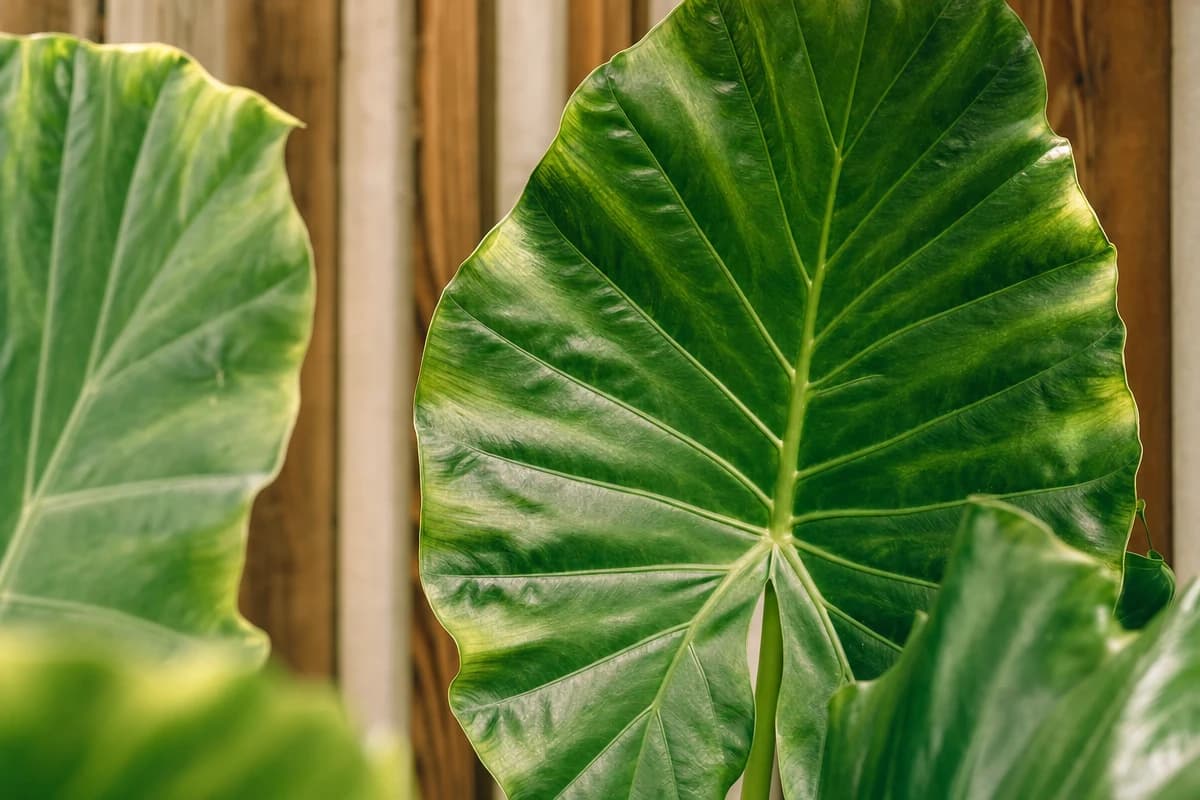
About This Plant
Taro is a tropical corm crop grown for starchy edible corms, leaf vegetables, and ornamental elephant-ear foliage. It performs best with warm temperatures, high moisture, fertile acidic media, and careful disease prevention because dense wet canopies can favor taro leaf blight.
How to Grow Taro
Learn how to grow Taro from seed to harvest in 240 days. Advanced difficulty. Complete nutrient guide, pH/EC requirements, and growing conditions for hydroponics, soil & greenhouse.
Sources cited: 14.
Nutrient Requirements by Growth Stage
Taro is nutrient responsive, but complete sources do not verify a four-stage hydroponic NPK ppm recipe. The strongest nitrogen evidence found corm biomass highest at 5-10 mM N, with about 10 mM N near the corm-production optimum; 15 mM N produced more total biomass but shifted growth toward leaves and suckers…
Sign in to view nutrient requirements
A free account unlocks NPK targets for all four growth stages, micronutrient levels, a per-stage nutrient calculator, and the full nutrition guide. Signing up takes one click. Truleaf is a free, non-profit project, and every new account helps it grow. No spam, ever.
Growing Environments
Taro can be grown outdoors, in greenhouses, indoors as a large foliage crop, and in containers. Production sources distinguish wetland taro grown in flooded or bog systems from upland taro grown in moist but aerated soil…
Temperature
Taro is a warm tropical crop. FAO EcoCrop and greenhouse work support growth around 21-30C, while the existing 21-32C growth band remains reasonable for managed production. Growth slows in cool conditions, and outdoor planting should wait until soil and nights are reliably warm. Use about 27C as a practical target for active corm growth, but protect plants from cold, dry wind.
Humidity
Direct relative-humidity optima are not well established for taro, but moisture demand is strongly verified. CTAHR and FAO describe taro as a crop of warm, moist environments with reliable rainfall or irrigation…
Light
Taro tolerates full sun to partial shade. NC State lists both full sun and partial shade, while FAO EcoCrop indicates clear-sky conditions are optimal but light shade is tolerated…
Airflow
No complete source gives a numeric taro airflow rate, so the 0.2-0.6 m/s range is an indoor management inference. The verified principles are stronger: protect the large leaves from tearing in strong wind, avoid dense stagnant spacing that favors Southern blight and taro leaf blight, and keep foliage drying after…
Sign in to view environmental requirements
A free account unlocks exact temperature, humidity, light and airflow targets, including germination and growth ranges, DLI, photoperiod and PPFD, plus the full environment guide. Signing up takes one click. Truleaf is a free, non-profit project, and every new account helps it grow. No spam, ever.
Hydroponic System Compatibility
Drip-irrigated substrate beds are the best-supported controlled system because CTAHR describes drip fertigation and steady moisture for upland taro. Ebb-flow or media beds can work if corms are supported and oxygen remains adequate…
Growing Media
Use fertile, moisture-retentive, acidic media. CTAHR recommends deep, well-drained friable loams and pH 5.5-6.5, while FAO EcoCrop also supports medium to organic textures and the same pH band…
Container Specs
Container sources verify the need for large, moisture-retentive containers but do not prove a single mature-corm volume standard. A practical minimum is about 40 cm wide and 30 cm deep, with larger tubs preferred for edible corms and large foliage…
Training & Support
Taro requires no trellis, cage, or formal training. Production and extension sources focus on spacing, weed control, water, fertility, wind protection, and sanitation rather than pruning systems…
Sign in to view system compatibility
A free account unlocks why each of the six systems fits or fails, plus growing media, container sizes, training methods, companion plants, and the full systems guide. Signing up takes one click. Truleaf is a free, non-profit project, and every new account helps it grow. No spam, ever.
Propagation
Taro propagation is vegetative. Use healthy disease-free huli, cormels, suckers, or corm pieces; CTAHR describes huli as the upright stem with a small corm section attached, and Njuguna et al…
Harvesting
Harvest timing depends on system and cultivar, but 8-10 months is well supported for upland taro, and controlled nitrogen research harvested mature corms around 245-265 days after planting. Lift the whole clump when foliage yellows or petioles decline, trim roots and leaves, wash corms, and grade them…
Planting Calendar
In tropical production, plant taro when rainfall begins or whenever reliable irrigation is available. For temperate container culture, start corms warm indoors in March-April, move plants outdoors after warm nights in May-June, and lift or shelter before frost…
Common Issues
The highest-confidence issues are taro leaf blight, corm/root rots, water stress, salinity stress, pests, and calcium oxalate irritation. Taro leaf blight from Phytophthora colocasiae is a major food-security disease and is favored by wet canopies…
Get the full science-backed guide
By signing up, you help keep Truleaf free and support the growth of our nonprofit project. Your account unlocks full details for every plant issue—including symptoms, causes, step-by-step solutions, and prevention—plus the month-by-month planting calendar, the complete guide, and all research sources. It only takes one click. No spam, ever.