Fall Garlic Planting: Hardneck vs Softneck and the Cold to Bulb
A research-backed guide to planting garlic in fall: why garlic needs a cold period to bulb (vernalization), how to choose between hardneck and softneck for your climate, and exactly when to get cloves in the ground before winter.
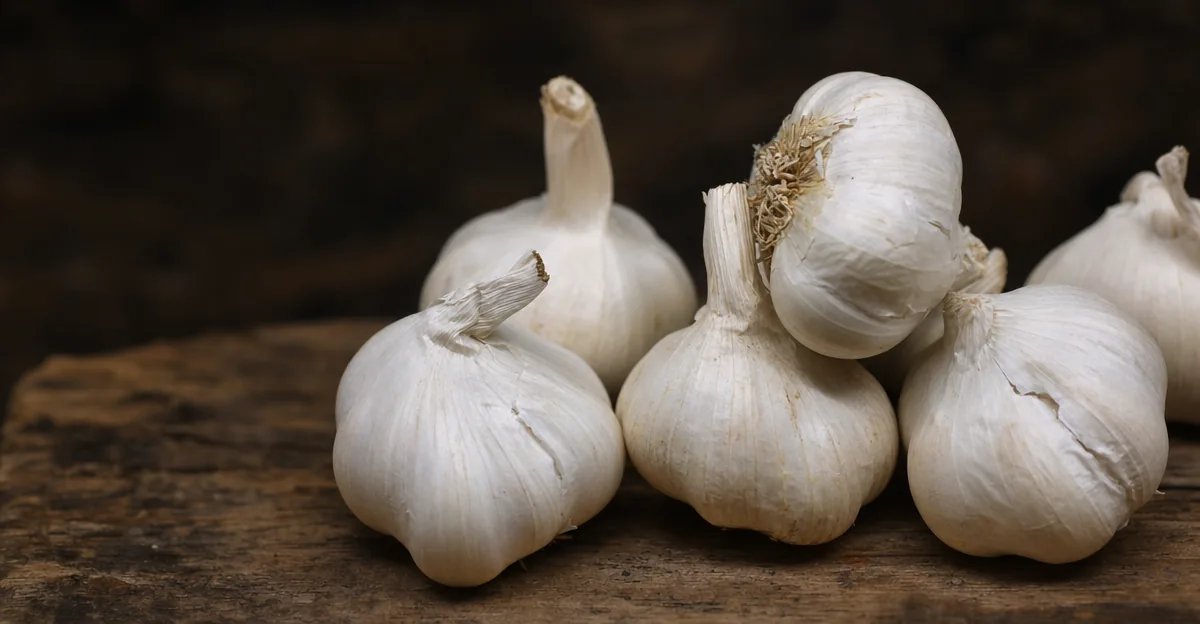
Garlic is one of the few crops you plant in autumn and harvest the following summer. It goes into the ground as the season is winding down, sits through winter, and does most of its visible work the next spring. That timing is not tradition for its own sake. It is built around a single requirement of the plant's biology: garlic (Allium sativum) needs a stretch of cold before it will form a proper bulb.
This guide is about the fall-planting decision specifically, not the whole season of growing garlic. It covers the three questions that decide whether your fall planting succeeds: why the cold requirement (vernalization) matters, whether you should plant hardneck or softneck for your climate, and exactly when to get cloves in the ground before winter closes in. For soil prep, spacing, feeding, and harvest, see the full garlic plant profile; here we stay on the seasonal choice in front of you right now.
Why Garlic Is a Fall Crop
The reason to plant in fall is straightforward: you want the cloves to establish roots before the ground freezes, without pushing up significant top growth that winter would only kill back. Extension guidance across regions agrees on this logic, and it is the whole point of the fall window. A clove planted in autumn spends the cold months growing quietly underground, so that when spring arrives it already has an anchored root system and can move straight into leaf and bulb development.
That underground head start is also where the plant meets its cold requirement, which is the part most new growers underestimate.
The Cold Requirement: Why Garlic Needs Winter
Garlic will not reliably split into a cluster of cloves and bulb up unless it first passes through a cold period. This process is called vernalization, and for hardneck (bolting-type) garlic it is not optional. Popular and extension guidance frames it simply: garlic wants roughly two months of cold in the 0–10 °C range, and hardnecks in particular are often described as needing about ten weeks of cold, commonly stated as four to six weeks below roughly 40–45 °F (about 4–7 °C), to divide and bulb properly.
A clove that never gets that cold, planted in a warm climate or started too late, tends to produce a single undivided "round" or a poorly formed bulb rather than the segmented head you are after. Fall planting delivers the cold naturally: the clove sits in cooling soil through winter and satisfies the requirement on its own.
The Vernalization Numbers: What the Research Actually Shows
The rule-of-thumb week counts above line up with controlled research, which puts sharper numbers on the same requirement.
- The thresholds. In controlled treatments, garlic met its cold requirement with about 30–40 days at 0–4 °C, or 50–60 days at 10 °C, applied around the four-leaf stage. Only after that cold did a long photoperiod (13 hours or more) together with warmth near 20 °C trigger the plant to bolt and bulb. This is why fall timing and spring day length work as a pair: winter supplies the cold, and lengthening spring days finish the job.
- Pre-plant clove chilling. Chilling cloves before planting can substitute for some field cold. In one study, 5 °C for 60 days shortened the crop cycle from about 250 days to roughly 212 days and raised the bolting rate compared with unchilled controls; shorter and warmer chills (10 °C for 40 days, 5 °C for 20 days) also raised bolting and sped growth. This is mainly a lever for warm-climate and indoor growers who cannot count on the ground getting cold enough.
- How cold is best. One seed-clove trial under Brazilian field conditions found that vernalization at −1 to −3 °C for 50 days outperformed near-zero and above-zero temperatures, adding roughly 2.3–3.0 t/ha and producing more premium large-diameter bulbs. Read that as a controlled seed-treatment result, not a home instruction to freeze your cloves. For a home grower, the safe and effective target is ordinary field or refrigerator cold in the 0–10 °C band.
- Variety matters. The cold-and-daylength response is cultivar-dependent, not one-size-fits-all: different garlic cultivars grown under varied photoperiod and temperature regimes showed measurably different growth and bulb quality. That is the research backing for the advice in the next section, choose a type suited to your climate.
Hardneck vs. Softneck: The Choice That Depends on Your Winter
Once you understand the cold requirement, the hardneck-versus-softneck decision makes sense, because the two subspecies handle winter very differently.
Hardneck garlic (A. sativum var. ophioscorodon) is the cold specialist. It needs a genuine cold period to bulb, sends up a rigid central flowering stalk, and produces an edible curl called a scape. Hardnecks tend to form fewer but larger cloves with bolder, more complex flavor, and they store for a shorter time, roughly four to six months.
Softneck garlic (A. sativum var. sativum) is the milder-climate type. It does not require prolonged cold, forms no scape, and packs more and smaller cloves per bulb. Its flexible neck is what makes garlic braids possible, and it is the longest-storing type, commonly keeping nine to twelve months.
| Hardneck | Softneck | |
|---|---|---|
| Cold requirement | Needs a genuine cold period to bulb | Does not require prolonged cold |
| Scape | Yes, edible curl | No scape |
| Cloves | Fewer, larger | More, smaller |
| Storage | About 4–6 months | About 9–12 months |
| Best for | Cold winters | Mild or warm winters |
Matching the type to your climate
The practical rule follows directly from the biology: hardneck is the dependable choice where winters are genuinely cold (commonly cited as USDA zones 3–6), while softneck suits mild or warm winters (roughly zones 7–10). In the overlap band around zones 6–7, both can grow well. Because cultivar responses are real and measurable rather than folklore, the strongest move if you live in that overlap or near a boundary is to check which named varieties have performed in regional trials, then match your pick to your own winter rather than a general zone chart.
When to Plant: Timing the Fall Window
Fall planting is about hitting the window where cloves can root without breaking dormancy into vulnerable top growth. Two signals matter more than any single calendar date.
Watch the soil, not just the frost date. The common target is to plant about three to six weeks before the ground freezes, once soil has cooled to roughly 50–60 °F (about 10–15 °C). Cooling soil is the cue that the season is right for root establishment.
Adjust for your region. In practice that puts planting in northern zones around September into October, and in southern zones as late as November into January. Colder regions plant earlier because their ground freezes sooner; warmer regions can wait.
Mulch after planting. A layer of mulch over the bed buffers temperature swings and protects fall root growth through winter, which is especially valuable in colder zones where freeze-and-thaw cycles can heave shallow cloves.
Sources vary on the exact number of weeks and the precise soil temperature, which is why it is safer to anchor to a range plus a local signal (your first-freeze timing and soil temperature) than to a single national date. The underlying goal is constant: roots in, top growth minimal, cold requirement met over winter.
Quick Reference: The Fall-Planting Decision
| Decision | What to do | Why |
|---|---|---|
| Season | Plant in fall | Roots establish before freeze, with little top growth |
| Cold requirement | Ensure ~2 months of cold, 0–10 °C | Vernalization is required for hardneck bulbing |
| Cold climate (≈ zones 3–6) | Choose hardneck | Needs and tolerates real winter cold |
| Mild climate (≈ zones 7–10) | Choose softneck | Bulbs without prolonged cold; stores longest |
| Overlap (≈ zones 6–7) | Either, guided by variety trials | Both perform; response is cultivar-dependent |
| Timing | ~3–6 weeks before ground freeze, soil ~50–60 °F | Root establishment window |
| After planting | Mulch the bed | Buffers winter temperature swings |
| Warm-climate workaround | Pre-chill cloves before planting | Substitutes for missing field cold |
The whole fall decision reduces to two things: pick the type your winter can support, and plant into cooling soil early enough for roots to take hold before the ground locks up. Get those right and the plant handles the rest over winter.
Want the full-season picture, including soil prep, feeding, harvest, and curing? See the garlic plant profile.