Best Hydroponic System for Beginners? 6 Methods Ranked
We ranked 6 hydroponic systems — Kratky, DWC, NFT, ebb and flow, drip, and aeroponics — to find the best hydroponic system for beginners by budget and goals.
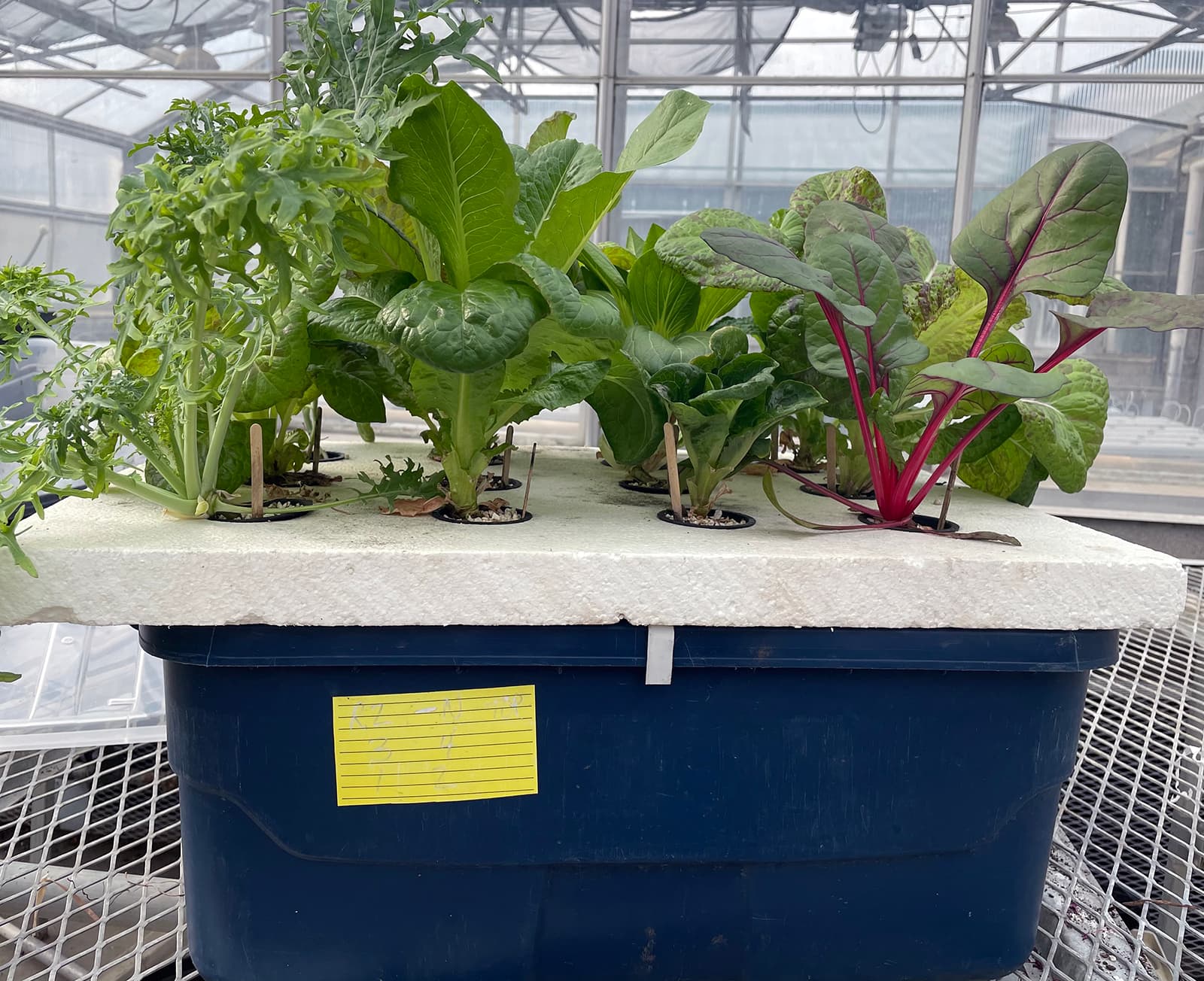
Key takeaway: There is no single "best" hydroponic system — the right choice depends on your budget, available time, and what you want to grow. For most beginners, start with the Kratky method (under $15, no electricity) or Deep Water Culture (under $40, one air pump). Both are forgiving, inexpensive, and proven in peer-reviewed research. This guide compares all six major hydroponic systems so you can pick the one that fits your situation.
The 6 Systems at a Glance
Before diving into details, here is the short version. Every hydroponic system delivers nutrients to plant roots through water instead of soil — the difference is how that water reaches the roots.
| System | Electricity? | DIY Cost | Maintenance | Best For | Beginner-Friendly? |
|---|---|---|---|---|---|
| Kratky method | None | $5-15 | Very low | Leafy greens, herbs | Yes |
| Deep Water Culture (DWC) | Yes (air pump) | $25-40 | Low-moderate | All crop types | Yes |
| NFT | Yes (water pump) | $80-200 | Moderate | Leafy greens, herbs | Moderate |
| Ebb and Flow | Yes (pump + timer) | $60-150 | Moderate | Herbs to fruiting plants | Moderate |
| Drip | Yes (pump + timer) | $50-150 | Moderate-high | Fruiting crops, large plants | Moderate |
| Aeroponics | Yes (high-pressure pump) | $200-500+ | High | Fast-growing greens | No |
The rest of this guide explains each system in plain language, with honest pros and cons, so you can make a confident decision.
Kratky Method: The No-Electricity Option
The Kratky method is the simplest form of hydroponics. You fill a container with nutrient solution, place a plant in a net pot on top, and walk away. No pump, no timer, no electricity. The plant's roots grow down into the solution while an air gap between the lid and the water surface provides oxygen.
How It Works
Dr. Bernard A. Kratky at the University of Hawaii developed this method, first describing it in HortTechnology in 1993 and later publishing a widely cited paper in Acta Horticulturae in 2009. The concept is elegantly simple: as a plant drinks nutrient solution, the water level drops. This creates a growing air gap where roots develop thick, fuzzy root hairs that absorb oxygen directly from the air. The lower roots stay submerged to take up water and nutrients.
No additional water or nutrients are added after the initial fill. The plant grows through a single batch of solution — typically 4-8 weeks for lettuce and herbs.
A 2022 study validated simplified Kratky-style systems for urban food production, finding that a vertical non-circulating system could produce 60 lettuce heads using just 90 liters of water per cycle — 13% less water than conventional soil farming for the same yield.
Pros and Cons
Pros:
- Lowest cost to start ($5-15 for a mason jar or food container setup)
- Zero electricity — no pumps, no timers, no ongoing energy cost
- Minimal maintenance — check pH once or twice per week
- Completely silent
- Ideal for apartments, classrooms, and off-grid locations
Cons:
- Limited to single-harvest crops (one batch of solution per grow cycle)
- Not suitable for large or long-season fruiting plants (tomatoes, peppers)
- No recirculation means you cannot top off nutrients mid-cycle without disrupting the air gap
- Smaller containers are vulnerable to rapid temperature changes
Best For
Kratky is the best starting point if you have never grown hydroponically and want to test the concept with zero risk. It is also ideal for anyone growing in a space without reliable power. Start with lettuce, basil, or mint in a mason jar or 5-gallon bucket.
Read our full guide: Kratky Method: The Complete No-Pump Hydroponics Guide
Deep Water Culture: The Most Popular Starter
Deep Water Culture (DWC) is the most popular active hydroponic system for beginners. Plant roots are fully suspended in a deep reservoir of nutrient solution, and an air pump with an air stone continuously bubbles oxygen into the water to keep roots healthy.
How It Works
A DWC system is a single container — usually a 5-gallon bucket — filled with nutrient solution. A net pot in the lid holds the plant, and roots grow down into the water. An air pump connected to an air stone at the bottom of the bucket provides dissolved oxygen.
The deep reservoir is DWC's key advantage. With 19 liters of solution per plant, pH drifts slowly, temperature changes gradually, and nutrient depletion happens over days rather than hours. This buffering effect makes DWC very forgiving of missed checks.
Virginia Tech Cooperative Extension tested four hydroponic systems side by side — NFT, DWC floating raft, vertical media stack, and flood-and-drain — and found that NFT and DWC produced the highest yields for leafy greens like spinach and parsley. DWC's simplicity gives it an edge for home growers: fewer components mean fewer failure points.
A 2024 study in Scientia Horticulturae compared DWC and NFT for butterhead lettuce across seasons. In fall growing conditions, DWC produced lettuce with better photosynthetic rates, higher growth rates, and greater fresh yield than NFT. DWC-grown lettuce also had higher concentrations of vitamin C, total carotenoids, and chlorophyll. In summer, NFT yielded more — but with significantly more tip burn damage.
Pros and Cons
Pros:
- Low cost ($25-40 per bucket setup)
- Simple — only one moving part (air pump)
- Large reservoir buffers pH, temperature, and nutrient swings
- Supports all crop types, including heavy fruiting plants like tomatoes
- Quiet (just a gentle bubbling sound)
- Hours of buffer time if the air pump fails temporarily
Cons:
- Requires electricity for the air pump (runs 24/7)
- Each bucket needs individual pH and EC monitoring
- Scaling beyond 6-8 plants becomes tedious (consider RDWC at that point)
- Reservoir temperature needs monitoring in warm environments
Best For
DWC is the best all-around system for beginners who want to grow a variety of crops — from lettuce and herbs to tomatoes and peppers. It is more versatile than Kratky (supports continuous harvests and fruiting plants) at a small step up in cost and complexity.
Read our full guide: DWC Hydroponics: Build a $25 System and Harvest in 30 Days
NFT: The Commercial Standard
Nutrient Film Technique (NFT) is the most widely used commercial hydroponic system in the world. A thin, continuously flowing stream of nutrient solution runs through slightly sloped channels, passing over plant roots.
How It Works
A submersible pump pushes nutrient solution from a central reservoir to the top of one or more channels. The solution flows by gravity across the channel floor — ideally just 1-3 mm deep — past the plant roots, then drains back to the reservoir. This continuous recirculation is what makes NFT efficient: the system uses very little water because the same solution cycles repeatedly.
The "nutrient film" — that thin layer of solution flowing across the roots — is the defining feature. The upper portion of the root system is exposed to air, providing oxygen without needing air stones. The lower roots sit in the moving film of nutrients.
Virginia Tech's system comparison found NFT produced up to 11.55 oz per plant of spinach with supplemental lighting (9.61 oz without) — among the highest yields in their trial. However, for fruiting crops like tomatoes, media-based systems (Dutch buckets, grow bags) outperformed NFT significantly: 8.3 lbs per plant versus 4.4 lbs in NFT. A separate 2024 study comparing hydroponic systems for organic lettuce production confirmed this pattern, finding that substrate-based systems outperformed liquid-culture methods like NFT for overall plant growth. The takeaway: NFT excels at what it was designed for — fast-cycling leafy crops — but is not the right tool for everything.
Pros and Cons
Pros:
- Very water-efficient (continuous recirculation uses minimal water)
- Excellent space efficiency — modular channels pack more plants per square meter than DWC buckets
- One reservoir serves multiple channels, simplifying pH and EC management at scale
- Well-documented in research — hundreds of published studies spanning nearly five decades
- Industry standard for commercial leafy green production
Cons:
- Higher upfront cost ($80-200 for a DIY system)
- Pump must run continuously — if the pump fails, roots can begin wilting within 1-2 hours
- Limited to shallow-rooted crops — large root masses (tomatoes, peppers) can block channels
- Requires more precise pH and EC management than DWC (thin film has less buffering)
- Channel slope and flow rate need accurate setup (1:30-1:40 slope, 1-2 L/min flow)
Best For
NFT makes sense when you want to grow multiple leafy greens and herbs efficiently and you are comfortable with a moderate setup. It is the natural upgrade path from a single DWC bucket when you want to scale to 20+ plants. If you want to grow tomatoes or peppers, skip NFT and choose DWC or a drip system instead.
Read our full guide: NFT Hydroponics: Full DIY Guide
Ebb and Flow: The Versatile Middle Ground
Ebb and flow (also called flood and drain) is a timer-controlled system where a pump periodically floods a grow tray with nutrient solution, then lets it drain back to a reservoir. Plants sit in a growing medium like clay pebbles, perlite, or rockwool. For a full parts list, timing tables, and a step-by-step build, see our ebb and flow hydroponics setup guide.
How It Works
A submersible pump in a reservoir is connected to a timer. On a set schedule (typically every 2-4 hours during the light period), the pump floods the grow tray to a depth of 1-2 inches. The solution soaks the growing medium, delivering nutrients to the roots. When the pump turns off, gravity drains the solution back through the same inlet, pulling fresh air into the root zone.
This wet-dry cycle mimics natural soil conditions more closely than any other hydroponic method. Roots get both nutrients (during flood) and oxygen (during drain) without needing continuous pumping or aeration.
Pros and Cons
Pros:
- Versatile — grows herbs, greens, and fruiting crops effectively
- Growing medium provides support for tall or heavy plants
- Pump runs intermittently (lower energy use than NFT)
- Moderate failure tolerance — medium retains moisture for hours if the pump or timer fails
- Easy to customize tray size and plant spacing
Cons:
- More components than DWC (pump, timer, overflow fitting, grow tray, reservoir)
- Growing medium adds cost and needs replacing between grow cycles
- Timer malfunction can over-flood or under-water plants
- Root rot risk if drain is blocked or medium stays waterlogged
- More difficult to inspect roots compared to DWC or NFT
Best For
Ebb and flow is a solid choice for growers who want one system that handles both greens and fruiting crops. If you plan to grow a mix of tomatoes, peppers, herbs, and lettuce in a single setup, ebb and flow offers the flexibility to do that — though at higher complexity than DWC. It is also a common choice in classrooms and educational settings because the wet-dry cycle is easy to observe and understand.
Drip: The Customizable Option
Drip systems deliver nutrient solution directly to the base of each plant through small emitters connected to a main supply line. The solution either drains back to a reservoir (recirculating) or runs off as waste (drain-to-waste).
How It Works
A pump pushes nutrient solution through a main line, and individual drip emitters or stakes deliver a slow, steady flow to each plant's root zone. Plants typically grow in a solid medium — perlite, coco coir, rockwool, or clay pebbles — that holds moisture between feedings.
Drip systems are the most common commercial method for fruiting crops. Virginia Tech's comparison found that media-based systems (including drip-fed grow bags) produced tomato yields of 8.3 lbs per plant — nearly double what NFT achieved. The growing medium provides physical support for heavy fruiting plants and acts as a nutrient buffer that cushions against short-term variations in feed schedules.
Pros and Cons
Pros:
- Highly customizable — individual emitters can be adjusted per plant
- Excellent for large, heavy-fruiting plants (tomatoes, cucumbers, peppers)
- Growing medium provides structural support and nutrient buffering
- Drain-to-waste option eliminates disease recirculation risk
- Widely available components
Cons:
- Emitters can clog, especially with organic nutrients or hard water
- Drain-to-waste systems are less water-efficient
- Monitoring individual emitters for blockages adds maintenance
- More components and tubing to manage than DWC or NFT
- Recirculating versions need careful pH and EC management
Best For
Choose a drip system if you plan to focus on large fruiting crops — tomatoes, cucumbers, peppers, and strawberries — especially in a greenhouse or outdoor setting. Drip is the commercial standard for these crops because the growing medium handles the heavy root systems and structural demands that NFT channels cannot.
Aeroponics: Advanced Only
Aeroponics suspends plant roots in air and mists them with nutrient solution at high pressure. Roots have direct access to both nutrients and oxygen without any growing medium.
How It Works
Roots hang freely inside a sealed chamber. High-pressure nozzles spray a fine mist of nutrient solution onto the roots at regular intervals (typically every few minutes). Between misting cycles, roots are exposed to air, providing maximum oxygen availability.
Aeroponics can achieve the fastest growth rates of any hydroponic method because roots receive near-unlimited oxygen and nutrient contact. However, this performance comes at a steep cost in complexity and risk.
Why We Don't Recommend It for Beginners
- Extremely failure-intolerant. If the misting pump fails, roots can begin drying within 30-60 minutes. There is no buffer — no reservoir, no medium holding moisture. A single power outage can kill a crop.
- High-pressure pumps are expensive. True aeroponic systems (not low-pressure "aeroponics" which are really just misting DWC hybrids) require pumps capable of producing 80+ PSI and nozzles that create droplets under 50 microns. This equipment costs $200-500+ and requires regular maintenance.
- Nozzle clogging. Mineral buildup clogs fine-mist nozzles quickly, requiring frequent cleaning.
- No meaningful advantage for beginners. The speed gains over DWC (10-20% faster growth in optimal conditions) do not justify the tenfold increase in cost, complexity, and failure risk for a first-time grower.
If aeroponics interests you, build experience with DWC or NFT first. The pH management, nutrient mixing, and root health monitoring skills you learn in simpler systems transfer directly — and you will be far better equipped to handle aeroponics when the time comes.
Side-by-Side Comparison Table
This table compares all six systems across the factors that matter most for a first-time grower.
| Factor | Kratky | DWC | NFT | Ebb and Flow | Drip | Aeroponics |
|---|---|---|---|---|---|---|
| Startup cost | $5-15 | $25-40 | $80-200 | $60-150 | $50-150 | $200-500+ |
| Electricity | None | Air pump (24/7) | Water pump (24/7) | Pump + timer | Pump + timer | High-pressure pump |
| Maintenance | Very low | Low | Moderate | Moderate | Moderate-high | High |
| Failure tolerance | Very high (no moving parts) | High (hours of buffer) | Low (1-2 hrs to wilt) | Moderate (medium holds moisture) | Moderate (medium holds moisture) | Very low (30-60 min to wilt) |
| Best crops | Leafy greens, herbs | All types | Leafy greens, herbs | All types | Fruiting crops | Fast-growing greens |
| Crop versatility | Low (single-harvest) | Excellent | Limited (shallow roots only) | Good | Good | Limited |
| Water efficiency | High | High | Very high | High | Varies (DTW is lower) | Very high |
| Scalability | Low | Low-moderate (RDWC scales) | Excellent | Good | Excellent | Low |
| Noise | Silent | Quiet bubbling | Pump hum + water flow | Intermittent pump | Pump hum | Pump hum + misting |
| Root inspection | Easy (lift lid) | Easy (lift lid) | Easy (lift channel cover) | Difficult (buried in medium) | Difficult (buried in medium) | Easy (open chamber) |
Crop-System Compatibility Matrix
The comparison table above covers systems in general terms. This matrix maps 20 popular hydroponic crops to specific system recommendations, expected yield ranges, and grow cycle lengths based on published research and extension guidance.
| Crop | Best System(s) | Yield per Plant | Days to Harvest | Notes |
|---|---|---|---|---|
| Butterhead lettuce | DWC, NFT | 5-8 oz | 45-60 | DWC produces higher antioxidant content in fall |
| Romaine lettuce | NFT, DWC | 8-12 oz | 55-70 | NFT channels maximize plant density |
| Spinach | NFT, DWC | 6-12 oz | 35-45 | Up to 11.55 oz/plant with supplemental light |
| Basil | Kratky, DWC, NFT | 2-4 oz/cutting | 25-35 | Kratky works well for single-harvest |
| Mint | Kratky, DWC | 3-6 oz/cutting | 30-40 | Aggressive roots — avoid NFT (channel blockage risk) |
| Cilantro | Kratky, NFT | 1-3 oz | 20-30 | Bolts quickly — fast-cycling systems preferred |
| Parsley | DWC, NFT | 2-5 oz | 60-75 | Slow to establish, long harvest window |
| Tomatoes (cherry) | DWC, Drip | 5-10 lbs | 60-80 | DWC bucket per plant; drip with grow bags at scale |
| Tomatoes (beefsteak) | Drip, DWC | 8-15 lbs | 75-90 | Media-based drip outperforms NFT by nearly 2x |
| Peppers (bell) | DWC, Drip | 3-6 lbs | 70-90 | Need strong support — drip with cages recommended |
| Peppers (hot) | DWC, Drip | 2-4 lbs | 65-85 | Compact varieties also work in ebb and flow |
| Cucumbers | Drip, DWC | 10-20 lbs | 55-70 | Heavy feeders — large reservoir essential |
| Strawberries | NFT, Drip | 1-2 lbs | 60-90 | NFT vertical towers are space-efficient |
| Green onions | Kratky, NFT | 2-4 oz/bunch | 25-35 | One of the easiest Kratky crops |
| Kale | DWC, NFT | 4-8 oz | 50-65 | Cut-and-come-again harvesting extends yield |
| Swiss chard | DWC, Ebb and Flow | 4-8 oz | 50-60 | Tolerates a wide pH range |
| Arugula | Kratky, NFT | 2-4 oz | 20-30 | Fast-cycling — ideal for NFT with quick turnover |
| Bok choy | NFT, DWC | 4-8 oz | 30-45 | Compact and fast-growing |
| Herbs (thyme, oregano) | Ebb and Flow, Drip | 1-3 oz/cutting | 60-90 | Prefer drier root zone — avoid constant submersion |
| Microgreens | Ebb and Flow | 4-8 oz/tray | 7-14 | Flood trays are the commercial standard |
How to Read This Table
- Yield per plant reflects a single growing cycle under typical indoor conditions (16/8 light cycle, 18-24°C, standard nutrient concentrations). Commercial yields with optimized lighting and CO2 supplementation will be higher.
- Days to harvest counts from transplant to first harvest, not from seed.
- Best systems are listed in order of recommendation. The first system listed is the strongest match for that crop.
Key Patterns
Three rules cover most crop-system decisions:
- Leafy greens and herbs → NFT or Kratky (shallow root systems, fast turnover)
- Fruiting crops → DWC or Drip (deep roots, heavy nutrient demand, need structural support)
- Mixed gardens → Ebb and Flow (accommodates both types with adjustable tray configurations)
Our Recommendation
The best system depends on three things: your budget, your time, and what you want to grow. Here is our specific advice for each starting point.
Budget Under $25: Start with Kratky
Buy a mason jar, a net pot, clay pebbles, and hydroponic nutrients. Total cost: $5-15. You will be growing lettuce or basil within a week, with no ongoing electricity cost.
Why this works: You learn the two most important hydroponic skills — pH management and nutrient mixing — without worrying about pumps, timers, or equipment failure. If hydroponics clicks for you, upgrade to DWC for your second grow.
Budget $25-100: Build a DWC Bucket
A single 5-gallon DWC bucket gives you the most flexibility for under $40. Add a second bucket for another $20 when you are ready. The University of Minnesota Extension describes DWC as "the most common type of hydroponic system for small-scale growers", and Oregon State Extension calls it "ideal for both home growers and small greenhouse production."
Why DWC wins here: It is the only system in this price range that supports fruiting crops. A single DWC bucket can produce a tomato plant yielding 20+ lbs of fruit annually. Kratky cannot do this. NFT at this budget is too small to be practical.
The 2024 study by Yang et al. found that DWC-grown lettuce had significantly higher antioxidant content — including vitamin C and carotenoids — compared to NFT-grown lettuce. You get both yield and nutritional quality.
Budget $100+: Choose by Goal
At this budget, match the system to your primary growing goal:
- Leafy greens at scale (20+ plants): Build an NFT system. Modular channels are the most space-efficient way to grow lettuce, spinach, and herbs.
- Fruiting crops (tomatoes, peppers, cucumbers): Build a drip system with grow bags or Dutch buckets. Virginia Tech data shows media-based systems produce nearly double the tomato yield of NFT.
- Mixed garden (greens + fruiting crops): Build an ebb and flow system. The grow tray handles different plant sizes and the timer-controlled flooding works for both crop types.
- Maximum control and learning: Start with a DWC bucket and a small NFT channel. Running two systems teaches you more than any single system — and you will quickly discover which approach fits your growing style.
The Upgrade Path
Most growers follow a natural progression:
- Kratky → Learn pH and nutrients with zero risk
- DWC → Add aeration, grow fruiting crops, refine techniques
- NFT or drip → Scale up when you are ready for more plants
You do not need to follow this path. But it is the lowest-risk way to build skills while producing food at every step.
Automating Your Hydroponic System
Once your first system is running manually, automation reduces daily maintenance from 30 minutes to under 5. Here is what to automate first, by system type.
Universal Automation (All Systems)
pH controller with auto-dosing is the single highest-impact upgrade for any hydroponic system. Manual pH testing and adjustment accounts for most of a beginner's daily maintenance. A pH controller continuously monitors solution pH and injects pH-up or pH-down solution through a peristaltic pump to maintain your target range.
- Entry-level pH controllers: $80-150 (pH only)
- Combined pH/EC controllers: $200-400 (manages both parameters)
- Commercial-grade with data logging: $500-1,000+
Light timers are essential for indoor grows. Digital timers with minute-level precision cost $10-20 and eliminate the most common beginner mistake: inconsistent light schedules.
Environmental monitoring tracks temperature, humidity, and reservoir temperature. Wireless sensors ($30-60) that log to a phone app let you catch problems before they damage plants.
System-Specific Automation
| System | Priority Automation | Cost | Impact |
|---|---|---|---|
| Kratky | None required — that is the point. A pH pen ($15) and TDS meter ($15) are the only tools needed. | $30 | N/A |
| DWC | Backup air pump on battery ($25-40). Add a reservoir heater or chiller if your environment swings more than 5°C daily. | $25-100 | Prevents crop loss from pump failure or temperature stress |
| NFT | Flow rate sensor ($20-40) with alarm. NFT's biggest risk is pump failure — a sensor that alerts you within minutes is cheap insurance. | $20-40 | Turns a potential crop loss into a 5-minute fix |
| Ebb and Flow | Smart timer/controller ($30-60) that adjusts flood frequency based on plant stage. Seedlings need less frequent flooding than mature plants. | $30-60 | Better root development, lower rot risk |
| Drip | Pressure-compensating emitters ($0.50-1 each) replace standard emitters and maintain uniform flow as lines age. Inline filter ($15-30) prevents clogging. | $20-50 | Eliminates the most common drip failure mode |
| Aeroponics | Redundant pump system (mandatory, not optional). A backup high-pressure pump on automatic failover is the minimum for reliable aeroponics. | $200-400 | System is nonviable without it |
The Recommended Automation Sequence
Add automation in this order to maximize return on investment:
- Light timer — $10-20, eliminates inconsistent schedules (do this from day one)
- pH/TDS meters — $30 combined, required for any system
- pH auto-doser — $80-150, removes the number one daily maintenance task
- Environmental sensor — $30-60, catches problems you cannot see
- System-specific safeguards — see the table above
Do not automate nutrient mixing until you understand manual mixing. Automation amplifies both good practices and bad ones — if your baseline knowledge is solid, automation makes you more consistent. If it is not, automation hides problems until they become critical.
FAQ
What is the easiest hydroponic system for a complete beginner?
The Kratky method. It requires no electricity, no moving parts, and costs under $15 to set up. Fill a container with nutrient solution, place a seedling in a net pot, and check pH once or twice a week. Lettuce and basil are ready to harvest in 4-6 weeks.
Can I grow tomatoes in any hydroponic system?
Technically yes, but some systems are much better suited than others. DWC and drip systems are the best choices for tomatoes. The Virginia Tech system comparison showed that media-based systems (drip) produced 8.3 lbs per plant compared to 4.4 lbs in NFT. Kratky is not recommended for tomatoes because the plant will consume the nutrient solution faster than the air gap can develop properly.
How much does it cost to start hydroponics?
As little as $5-15 for a Kratky jar setup, or $25-40 for a single DWC bucket (not counting nutrients and pH supplies, which cost $20-35 and last through multiple grows). NFT and ebb-and-flow systems start at $60-200 depending on size and materials.
Is DWC or NFT better?
It depends on what you grow. Research by Yang et al. (2024) found DWC produced higher-quality lettuce with more antioxidants in fall, while NFT yielded more in summer — but with more tip burn. DWC is more versatile (handles fruiting crops) and more forgiving (large reservoir buffers mistakes). NFT is more space-efficient and water-efficient at scale. For a first system, DWC is the safer choice.
Do I need special water for hydroponics?
Tap water works for most growers. However, if your tap water has high mineral content (generally above 200-300 PPM), it can interfere with nutrient balance. In that case, use filtered or reverse-osmosis water. The University of Minnesota Extension notes you can purchase reverse-osmosis water at most grocery stores for about $0.39 per gallon. Always test your water's pH and EC before mixing nutrients.
Which system uses the least water?
NFT and recirculating aeroponics use the least water because solution is continuously recycled through the system with minimal evaporation. DWC is also water-efficient — most of the "used" water is consumed by the plant rather than lost. Drain-to-waste drip systems use the most water because excess solution is discarded after each feeding cycle.
Advanced Troubleshooting by System Type
Every hydroponic system has characteristic failure modes. This section covers the most common problems you will encounter in your first year — organized by system — with diagnosis steps and recovery protocols.
Universal Problems (All Systems)
| Symptom | Likely Cause | Diagnosis | Recovery |
|---|---|---|---|
| Yellowing lower leaves | Nitrogen deficiency or pH lockout | Check EC (if below 0.8, low nutrients) and pH (if above 7.0 or below 5.0, lockout) | Adjust pH to 5.5-6.5 first, then increase nutrient concentration by 20% if EC was low |
| Brown, mushy roots | Root rot (Pythium) | Smell test — healthy roots are white/cream and odorless; rotting roots are brown and slimy | Remove affected roots, add beneficial bacteria (Hydroguard or equivalent), lower reservoir temperature below 22°C, increase dissolved oxygen |
| Leaf tip burn | EC too high or calcium toxicity | Measure EC — if above 2.5 for leafy greens or above 3.5 for fruiting crops, solution is too concentrated | Dilute reservoir by 25% with fresh water, check for calcium buildup |
| Stunted growth, no visible symptoms | Root zone temperature too low (below 16°C) or too high (above 28°C) | Measure solution temperature at root level | Adjust with heater or chiller; insulate reservoirs from floor contact |
Kratky-Specific Issues
Problem: Algae growth on solution surface
- Cause: Light reaching the nutrient solution through translucent containers or loose-fitting lids
- Fix: Switch to opaque containers, seal all light gaps with tape, use dark-colored lids
Problem: Plant wilts despite solution remaining
- Cause: Air gap collapsed — solution was topped off mid-cycle, drowning air roots
- Fix: Do not refill Kratky containers. Start a new cycle. For the current plant, carefully drain to restore a 2-3 inch air gap and allow roots to recover over 48 hours.
DWC-Specific Issues
Problem: Rapid pH swings (more than 0.5 units per day)
- Cause: Reservoir too small for plant size, or starting water has low buffering capacity
- Fix: Increase reservoir volume (upgrade from 3-gallon to 5-gallon), add a small amount of calcium carbonate for buffering, or switch to a more stable base water source
Problem: Roots growing into air stone
- Cause: Air stone positioned too close to the net pot
- Fix: Move the air stone to the bottom corner of the reservoir, use a weighted air stone, or switch to a flexible bubble strip along the bottom
NFT-Specific Issues
Problem: Uneven growth across channel (plants near inlet grow faster)
- Cause: Nutrient concentration drops along the channel as upstream plants absorb nutrients
- Fix: Limit channels to 10-12 plants or increase flow rate. For long channels (over 3 meters), consider a mid-channel nutrient injection point.
Problem: Channel flooding (water backing up)
- Cause: Root mass blocking the channel at the drain end
- Fix: Trim root mass at the drain end monthly. Use wider channels (4-inch minimum) for crops with aggressive root systems. Verify that channel slope is maintained at 1:30-1:40.
Ebb and Flow-Specific Issues
Problem: Standing water in tray after drain cycle
- Cause: Clogged drain fitting, sagging tray, or pump backflow
- Fix: Clear the drain fitting, shim the tray to ensure consistent slope toward the drain, install a check valve on the pump line
Problem: Dry spots in growing medium
- Cause: Flood depth insufficient or medium too coarse
- Fix: Increase flood depth by raising the overflow fitting 0.5-1 inch. Switch to smaller-grade clay pebbles (8-16mm) for better capillary action.
Drip-Specific Issues
Problem: Emitters clogging regularly
- Cause: Mineral buildup, organic nutrient residue, or biofilm
- Fix: Install a 150-mesh inline filter before the manifold. Flush lines with dilute hydrogen peroxide (3% solution) monthly. Use pressure-compensating emitters rated for nutrient solutions.
Problem: Uneven drip rates across plants
- Cause: Pressure loss over long runs or emitter wear
- Fix: Keep manifold runs under 10 meters. Use pressure-compensating emitters. Check for kinked or pinched tubing. Run a flow test monthly — each emitter should deliver within 10% of the target volume.
When to Start Over vs. When to Fix
| Situation | Verdict | Why |
|---|---|---|
| Root rot in less than 30% of root mass | Fix — trim and treat | Plant can recover if the underlying cause is addressed |
| Root rot in more than 50% of root mass | Start over | Recovery is slower than a fresh cycle |
| Severe nutrient lockout | Fix — flush and restart nutrients | Roots are usually healthy; only the chemistry needs resetting |
| Algae in reservoir | Fix — clean and block light | Algae is a symptom of light exposure, not system failure |
| Pump failure killed crop | Start over and add a failsafe | Focus on preventing recurrence |
| pH will not stabilize | Fix — test your water source | Usually a water quality issue, not a system design issue |