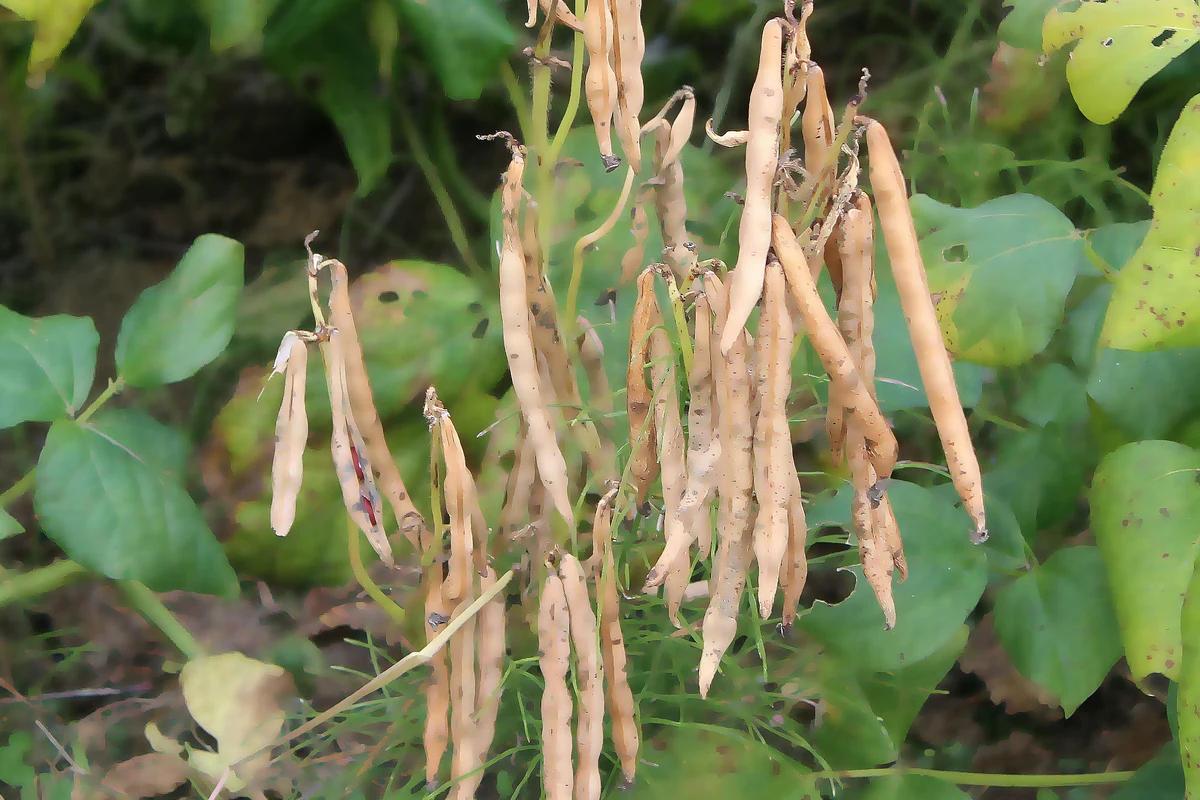
About This Plant
Adzuki bean (Vigna angularis) is a warm-season annual legume grown mainly for dry red seeds and sometimes sprouts. It needs warm soil, full sun, well-drained media, modest fertility, rhizobial inoculation where not previously grown, and careful harvest timing because dry pods can shatter.
How to Grow Adzuki Bean
Learn how to grow Adzuki Bean from seed to harvest in 118 days. Intermediate difficulty. Complete nutrient guide, pH/EC requirements, and growing conditions for hydroponics, soil & greenhouse.
Sources cited: 15.
Nutrient Requirements by Growth Stage
Adzuki-specific evidence supports soil-test-based fertilizer rates, not fixed hydroponic NPK ppm by stage. Multi-site field modeling found high-yield fertilizer intervals of 57.23-68.43 kg/ha N, 36.04-47.32 kg/ha P2O5, and 50.29-61.27 kg/ha K2O, with a maximum-yield model at 62.98-47.04-59.95 kg/ha N-P2O5-K2O…
Sign in to view nutrient requirements
A free account unlocks NPK targets for all four growth stages, micronutrient levels, a per-stage nutrient calculator, and the full nutrition guide. Signing up takes one click. Truleaf is a free, non-profit project, and every new account helps it grow. No spam, ever.
Growing Environments
Adzuki fits outdoor beds, greenhouses, and containers when given full sun, warm conditions, and well-drained media. It is frost-sensitive, a weak early weed competitor, and performs best in loamy, uncompacted soil with consistent moisture but no waterlogging…
Temperature
Adzuki bean is a warm-season annual. Field guides target soil near 15C for reliable emergence, while PROTA reports germination above 6-10C and a laboratory optimum near 30-34C. Vegetative growth is best kept around 18-23C, with broader tolerance from about 10-32C but frost sensitivity at both seedling and pod stages in containers.
Humidity
No source defines a crop-specific relative-humidity optimum for adzuki bean. Controlled studies commonly grew plants around 50-82% RH, so a practical indoor target is 50-70% with enough air exchange to keep leaves dry and reduce white mold, bacterial stem rot, and root disease pressure…
Light
Adzuki bean needs full sun and is sensitive to day length. OSU describes 12-14 h days as suitable, and flowering studies confirm photoperiod affects flowering regulation in Vigna angularis…
Airflow
No adzuki paper gives a canopy airflow speed in m/s. Use gentle continuous movement and fresh-air exchange to avoid stagnant humid canopies, especially during flowering and pod fill when white mold and bacterial stem rot risk increases…
Sign in to view environmental requirements
A free account unlocks exact temperature, humidity, light and airflow targets, including germination and growth ranges, DLI, photoperiod and PPFD, plus the full environment guide. Signing up takes one click. Truleaf is a free, non-profit project, and every new account helps it grow. No spam, ever.
Hydroponic System Compatibility
Drip-irrigated containers or media beds are the most defensible controlled systems because they preserve drainage and root aeration while supporting a full dry-bean crop. DWC, NFT, ebb-flow, and aeroponics are compatible in principle for Vigna seedling or experimental culture if oxygen is high, but adzuki-specific…
Growing Media
Use a well-drained, fertile, loamy medium with good seed-soil contact. OSU emphasizes avoiding compaction, crusting, and poor drainage because these increase stand failure and root disease…
Container Specs
Adzuki can be container-grown, but it is a dry-seed legume rather than a compact leafy crop. Use at least a 30 cm deep container with drainage, and preferably about 19 L for one or two plants so roots can explore and the canopy does not lodge or dry out too quickly…
Training & Support
Standard cultivated adzuki is usually erect or bushy and does not require trellising. PROTA notes plants are generally erect herbs up to about 90 cm, and extension guidance focuses on row spacing, weed control, and harvest timing rather than support structures…
Sign in to view system compatibility
A free account unlocks why each of the six systems fits or fails, plus growing media, container sizes, training methods, companion plants, and the full systems guide. Signing up takes one click. Truleaf is a free, non-profit project, and every new account helps it grow. No spam, ever.
Propagation
Routine adzuki propagation is by seed. Direct sow after frost risk when soil is warm; extension sources report about 7 days to emergence in warm mid-May or June sowings, 10-14 days in cooler late-May conditions, and up to about 20 days when soils are cool…
Harvesting
Adzuki is normally harvested once as a dry seed crop, not as a regrowing vegetable. OSU and the Alternative Field Crops Manual describe maturity near 110-120 days, with pods yellow to brown, seeds hard, and leaves senescing or shedding…
Planting Calendar
In temperate outdoor production, sow in late spring to early summer after frost and soil warming. OSU gives late April through June for the Columbia Basin, while Upper Midwest trials used mid-May through early June windows…
Common Issues
The original single root-rot issue was incomplete. Root rot and basal stem rot from Rhizoctonia are documented in adzuki, and OSU also flags root rot risk from poor drainage and short bean rotations…
Get the full science-backed guide
By signing up, you help keep Truleaf free and support the growth of our nonprofit project. Your account unlocks full details for every plant issue—including symptoms, causes, step-by-step solutions, and prevention—plus the month-by-month planting calendar, the complete guide, and all research sources. It only takes one click. No spam, ever.