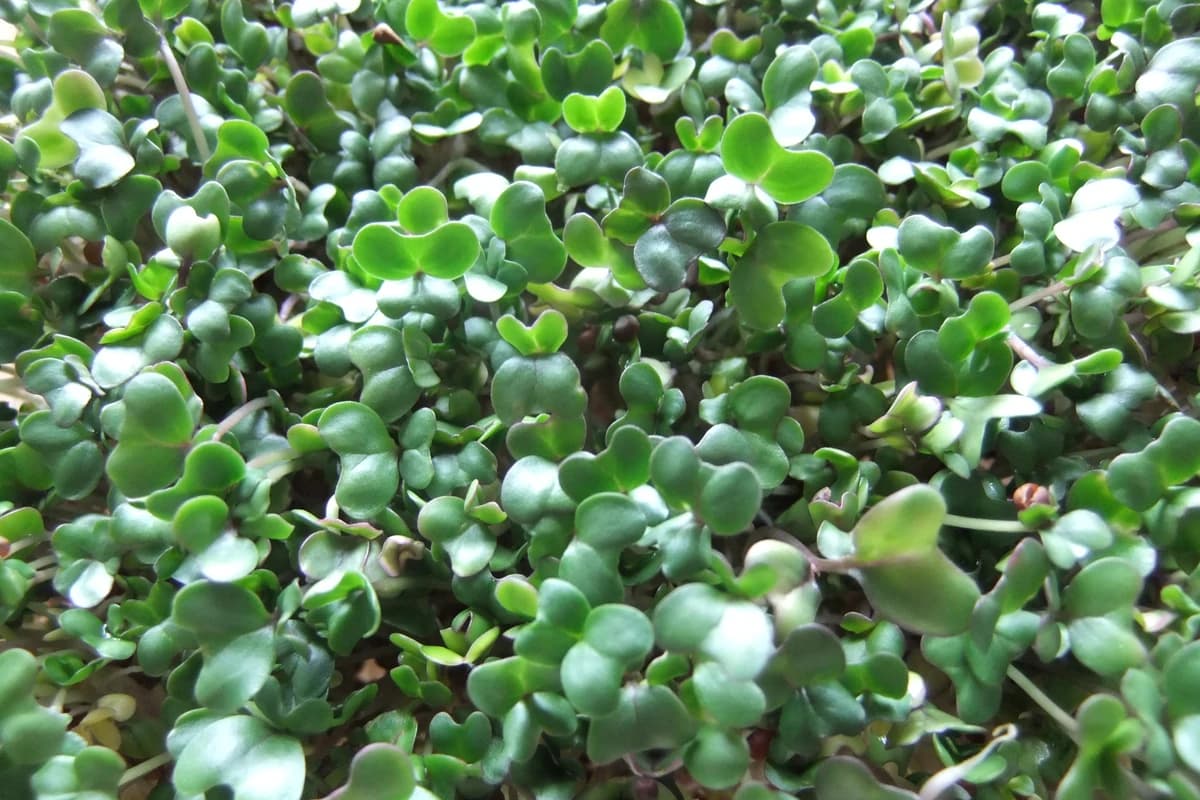
About This Plant
Broccoli sprouts are 3- to 5-day Brassica oleracea var. italica seedlings grown for crisp shoots and concentrated glucosinolate chemistry, especially glucoraphanin and sulforaphane potential. They are best treated as a raw sprout crop rather than a mature broccoli or microgreen crop: use certified seed, clean jars or draining trays, frequent rinsing, strong drainage, and strict sanitation because sprouting conditions also favor foodborne pathogens.
How to Grow Broccoli Sprouts
Learn how to grow Broccoli Sprouts from seed to harvest in 5 days. Beginner difficulty. Complete nutrient guide, pH/EC requirements, and growing conditions for soil & container.
Backed by 8 peer-reviewed citations.
Nutrient Requirements by Growth Stage
Broccoli sprouts are a seed-reserve crop, not a mature hydroponic crop. Peer-reviewed sprout studies commonly used deionized water and paper-lined trays, while commercial guidance focuses on soaking, rinsing, drainage, and sanitation rather than fertilizer…
Sign in to view nutrient requirements
A free account unlocks NPK targets for all four growth stages, micronutrient levels, a per-stage nutrient calculator, and the full nutrition guide. Signing up takes one click. Truleaf is a free, non-profit project, and every new account helps it grow. No spam, ever.
Growing Environments
The best environments are indoor kitchens, grow rooms, or protected greenhouse sanitation zones using clean containers and potable water. Outdoor production is not recommended for raw sprouts because soil splash, insects, animals, and uncontrolled water increase contamination risk…
Temperature
Broccoli sprouts should be grown warm, but not hot. UC ANR sprout production guidance places best-quality sprouting at 21-26C, with 26-30C producing faster but more elongated sprouts. A controlled broccoli sprout study used 25C with repeated irrigation and harvested across 3-12 days, so the current 20-25C germination range and a 24C practical target are supported. Monitor the second day closely because dense germinating seed generates heat.
Humidity
Sprouts need a moist seed surface but not stagnant wet air. FDA guidance emphasizes that sprout temperature, water activity, pH, and available nutrients are also favorable to pathogens when contamination is present…
Light
Light is optional for sprout production. UC ANR states that light is not necessary for germination and that greening may be a defect in many sprout types…
Airflow
Airflow and drainage are core controls. UC ANR recommends thorough rinsing every 4-6 hours early in sprouting to flush accumulated carbon dioxide and metabolic wastes and to provide oxygen flow, then complete drainage after each rinse…
Sign in to view environmental requirements
A free account unlocks exact temperature, humidity, light and airflow targets, including germination and growth ranges, DLI, photoperiod and PPFD, plus the full environment guide. Signing up takes one click. Truleaf is a free, non-profit project, and every new account helps it grow. No spam, ever.
Hydroponic System Compatibility
Broccoli sprouts fit jar, drum, or shallow tray sprouting, not mature-plant hydroponic systems. UC ANR describes rustproof, easy-to-sanitize containers with drainage and aeration, including pails and perforated trays, plus frequent rinse-and-drain cycles…
Growing Media
Classic broccoli sprouts can be grown without solid media in rinsing jars or perforated trays. Controlled studies also used moistened paper towels and filter paper, while commercial guidance allows containers that drain and aerate…
Container Specs
Use containers that are rustproof, easy to sanitize, ventilated, and able to drain completely. UC ANR notes that sprout containers may be pails or perforated trays, with size chosen to match seed volume because seed expands substantially during sprouting…
Training & Support
No training support is used for broccoli sprouts. The crop is harvested as newly germinated seedlings before stems, leaves, flowers, or mature broccoli architecture develop…
Sign in to view system compatibility
A free account unlocks why each of the six systems fits or fails, plus growing media, container sizes, training methods, companion plants, and the full systems guide. Signing up takes one click. Truleaf is a free, non-profit project, and every new account helps it grow. No spam, ever.
Propagation
Propagation is by seed only. Use untreated seed specifically sold for sprouting, not pesticide-treated garden seed…
Harvesting
Harvest as a whole sprout batch after about 4-5 days from the start of sprouting. Broccoli sprout research supports 3- to 5-day harvest windows for functional-food quality: one study selected five-day-old broccoli sprout extract after comparing germination times, while sulforaphane-related work reports high activity…
Planting Calendar
Broccoli sprouts are an indoor, year-round crop. Because they are harvested 4-5 days after soaking, the production calendar is batch-based rather than seasonal…
Common Issues
The major problems are seedborne pathogens, mold, seed rot, heat buildup, poor drainage, and unwanted elongation. FDA reports that sprouts have distinct food-safety risk because production conditions also favor pathogens, and outbreak investigations often identify seed as the likely contamination source…
Get the full science-backed guide
By signing up, you help keep Truleaf free and support the growth of our nonprofit project. Your account unlocks full details for every plant issue—including symptoms, causes, step-by-step solutions, and prevention—plus the month-by-month planting calendar, the complete guide, and all research sources. It only takes one click. No spam, ever.