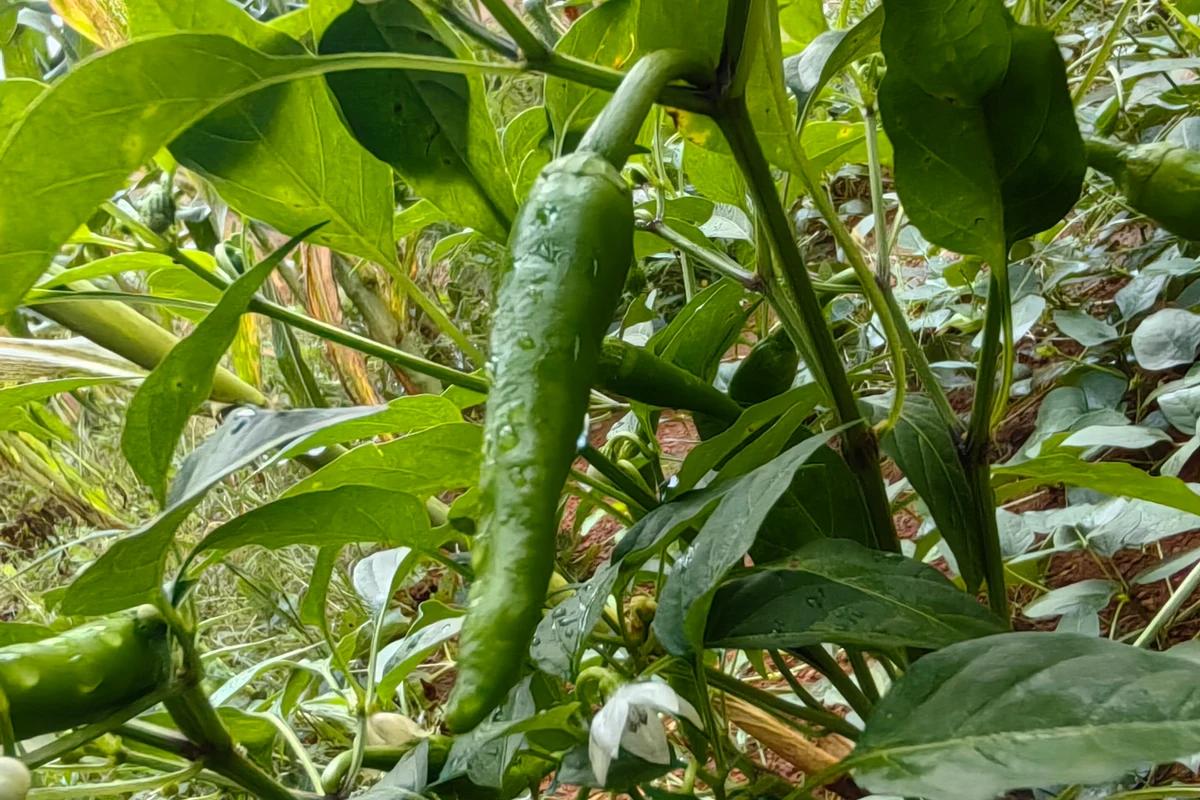
About This Plant
Chili pepper is a warm-season Capsicum crop grown for pungent fruits rich in capsaicinoids. Productive plants need warm roots, high light, steady moisture, balanced nitrogen and potassium, and protection from flower-drop, calcium-transport disorders, and fruit-feeding pests.
How to Grow Chili Pepper
Learn how to grow Chili Pepper from seed to harvest in 120 days. Intermediate difficulty. Planting, care, feeding and the right growing conditions.
Sources cited: 17.
Nutrient Requirements by Growth Stage
Use elemental ppm for hydroponic NPK targets. Seedlings and young transplants fit N 160-180, P 30-34, K 200-235 ppm with EC 1.5-2.5…
Sign in to view nutrient requirements
A free account unlocks NPK targets for all four growth stages, micronutrient levels, a per-stage nutrient calculator, and the full nutrition guide. Signing up takes one click. Truleaf is a free, non-profit project, and every new account helps it grow. No spam, ever.
Growing Environments
Chili pepper can grow outdoors, indoors, in greenhouses, and in containers when heat and light are adequate. Outdoor crops need full sun, warm soil, and frost-free conditions…
Temperature
Chili peppers need warm media and stable air temperatures. Seed germination is fastest when media is near 25-32C; UC ANR notes germination slows below 25C and is slow below 20C, while extension seed-starting guides recommend 27-32C until emergence. For growth, hold plants near 21-29C by day with cooler nights around 18-20C. Heat above about 32C during bloom can reduce pollination and fruit set, especially if the root zone is dry or humidity is low.
Humidity
Maintain moderate greenhouse humidity, roughly 50-75% RH with a practical target near 65%. This range supports transpiration without letting the canopy stay wet for long periods…
Light
Chili pepper is a high-light fruiting crop. Outdoors, grow in full sun…
Airflow
Use continuous gentle airflow rather than strong direct wind. A target of about 0.3-1.0 m/s keeps the leaf boundary layer moving, dries foliage, and improves pollen release without causing excessive transpiration…
Sign in to view environmental requirements
A free account unlocks exact temperature, humidity, light and airflow targets, including germination and growth ranges, DLI, photoperiod and PPFD, plus the full environment guide. Signing up takes one click. Truleaf is a free, non-profit project, and every new account helps it grow. No spam, ever.
Hydroponic System Compatibility
Drip-fertigated substrate culture is the most reliable hydroponic style for chili pepper because it supports large root systems, adjustable EC, and long fruiting cycles. Coco, rockwool, peat-perlite, and perlite substrates all fit this approach…
Growing Media
Choose media that stay aerated while holding consistent moisture. Outdoors, use warm, fertile, well-drained soil and avoid waterlogging…
Container Specs
Use at least a 12 L container for compact chili peppers and 19 L or larger for vigorous C. chinense or long-season plants…
Training & Support
Chili peppers are not vines, but support is useful because brittle branches can break under wind or heavy fruit loads. Install stakes, cages, or string support early, before roots and branches are disturbed…
Sign in to view system compatibility
A free account unlocks why each of the six systems fits or fails, plus growing media, container sizes, training methods, companion plants, and the full systems guide. Signing up takes one click. Truleaf is a free, non-profit project, and every new account helps it grow. No spam, ever.
Propagation
Seed propagation is standard for chili pepper. Start seed 6-10 weeks before transplanting; 8 weeks is a practical default, with longer lead time for slower C…
Harvesting
Harvest chili peppers when fruit has reached mature size. Many cultivars are usable green, while full cultivar color is preferred for ripe flavor, drying, pigment, or seed maturity…
Planting Calendar
For temperate production, sow indoors in February-April, then transplant in May-June after frost risk has passed and nights are reliably warm. Direct sowing is only appropriate where the warm season is long and soil is warm; transplants mature about a month earlier and are safer for most regions…
Common Issues
The highest-priority chili pepper problems are blossom-end rot, flower drop, bacterial spot, Phytophthora blight, virus diseases, aphids, thrips, pepper weevil, sunscald, and nutrient burn. Blossom-end rot is driven by uneven water and calcium transport, especially under high nitrogen or root stress…
Get the full science-backed guide
By signing up, you help keep Truleaf free and support the growth of our nonprofit project. Your account unlocks full details for every plant issue—including symptoms, causes, step-by-step solutions, and prevention—plus the month-by-month planting calendar, the complete guide, and all research sources. It only takes one click. No spam, ever.