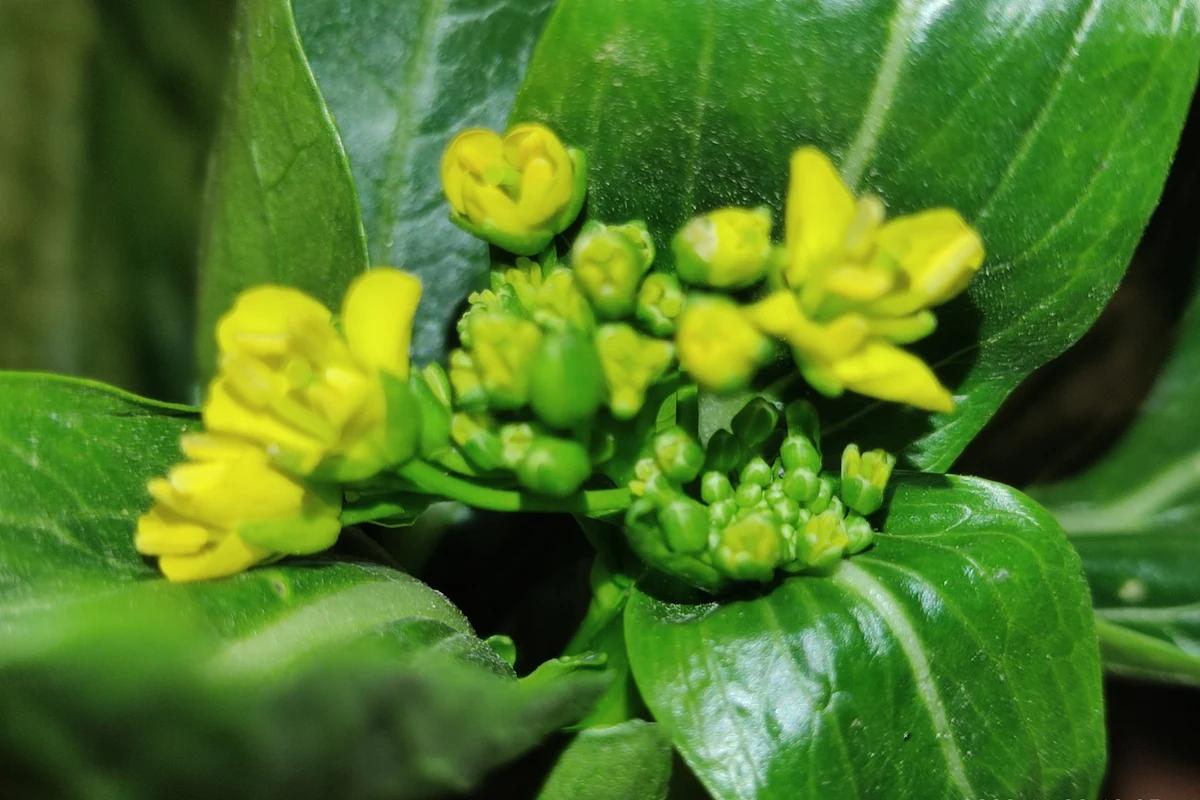
About This Plant
Choy sum is a fast-growing Brassica rapa leafy green grown for tender flowering stems, leaves, and closed flower buds. It suits cool-season outdoor beds and controlled hydroponic production, reaching market harvest about 30-50 days after sowing. The crop performs best with steady moisture, strong drainage, moderate EC, and harvest before yellow flowers open.
How to Grow Choy Sum
Learn how to grow Choy Sum from seed to harvest in 40 days. Beginner-friendly. Planting, care, feeding and the right growing conditions.
Sources cited: 17.
Nutrient Requirements by Growth Stage
Use lower nitrogen than the previous generic leafy-green baseline. Hydroponic flowering Chinese cabbage performed best at 90 mg/L N with 50 mg/L phosphate-P and 200 mg/L K in the successful nutrient solution, while floating hydroponic choy sum adapted at EC 1-2 mS/cm…
Sign in to view nutrient requirements
A free account unlocks NPK targets for all four growth stages, micronutrient levels, a per-stage nutrient calculator, and the full nutrition guide. Signing up takes one click. Truleaf is a free, non-profit project, and every new account helps it grow. No spam, ever.
Growing Environments
Choy sum is suitable indoors, outdoors, in greenhouses, and in containers. Indoor plant-factory research verifies LED and peat-based substrate production, while greenhouse trials verify floating hydroponics, NFT, drip-irrigated pots, and rain-shelter bags…
Temperature
Manage choy sum as a cool-season Asian brassica. UF/IFAS identifies 15-25C as the range that preserves strong, sweet stalk quality, while controlled choy sum trials grew plants successfully near 22-28C in indoor, greenhouse, and hydroponic systems. Use 22C as the practical target. Germination is best treated as warm-cool, about 20-25C, and growth above 28C should trigger shade, ventilation, and faster harvest before stems toughen.
Humidity
Keep relative humidity moderate, centered near 55-65%. Floating hydroponic and greenhouse choy sum studies operated mostly around 41-69% RH, and controlled indoor work used about 55-65% RH…
Light
For indoor production, target 200-400 umol/m2/s PPFD with a 12 h photoperiod unless heat is tightly controlled. A choy sum LED seedling study tested 50-500 umol/m2/s and found the strongest seedling architecture and biomass around 400 umol/m2/s, but practical whole-crop settings can be lower to avoid heat and…
Airflow
No complete choy sum source found a numeric airflow velocity target, so use qualitative control. Indoor and greenhouse systems should provide steady air exchange plus gentle horizontal circulation to reduce hot spots, stagnant humidity, and leaf wetness…
Sign in to view environmental requirements
A free account unlocks exact temperature, humidity, light and airflow targets, including germination and growth ranges, DLI, photoperiod and PPFD, plus the full environment guide. Signing up takes one click. Truleaf is a free, non-profit project, and every new account helps it grow. No spam, ever.
Hydroponic System Compatibility
The best-supported hydroponic systems are floating raft or DWC-style culture and NFT. Floating hydroponics produced marketable choy sum at EC 1-2 mS/cm, and NFT work with caisim/choy sum showed channel configuration affected root length, plant height, and fresh weight…
Growing Media
Use fertile, well-drained soil or clean soilless media. UF/IFAS describes choy sum as adaptable to many soils but preferring fertile, well-drained soil around pH 6-7, while studies used sandy loam pots, clay soil in polyethylene bags, peat-based potting mixes, and rockwool in NFT…
Container Specs
Use drained containers at least 15 cm deep, with 20 cm depth preferred for full-cycle plants. UF/IFAS describes a shallow root system reaching about 13 cm depth and radius, and research used 20 cm deep pots, 2.5 L plastic pots, and 5 kg polyethylene bags…
Training & Support
No training support is required. Choy sum is a short, upright herbaceous annual usually 20-41 cm tall and harvested young for leaves, stems, and closed buds…
Sign in to view system compatibility
A free account unlocks why each of the six systems fits or fails, plus growing media, container sizes, training methods, companion plants, and the full systems guide. Signing up takes one click. Truleaf is a free, non-profit project, and every new account helps it grow. No spam, ever.
Propagation
Propagate choy sum from seed. Government species guidance reports no seed dormancy and typical germination in 3-5 days, while UF/IFAS recommends shallow direct seeding at about 0.6 cm…
Harvesting
Harvest for tender flowering stems before yellow flowers open. UF/IFAS gives a 30-50 day window after sowing, with leaves, flower buds, and stems harvested together when buds are fully developed but still closed…
Planting Calendar
Schedule choy sum as a fast cool-season succession crop. In temperate Northern Hemisphere planning, sow indoors in February-March or July-August, transplant in March-April or August-September, and direct sow during cool spring and late-summer/fall windows…
Common Issues
Use a brassica-specific issue set: downy mildew, flea beetles, caterpillars including diamondback moth, aphids, waterlogging or bacterial soft rot, calcium-related tipburn, and delayed harvest or open flowering. Remove unsupported home-remedy treatments from the prior record, including potassium bicarbonate for downy…
Get the full science-backed guide
By signing up, you help keep Truleaf free and support the growth of our nonprofit project. Your account unlocks full details for every plant issue—including symptoms, causes, step-by-step solutions, and prevention—plus the month-by-month planting calendar, the complete guide, and all research sources. It only takes one click. No spam, ever.