About This Plant
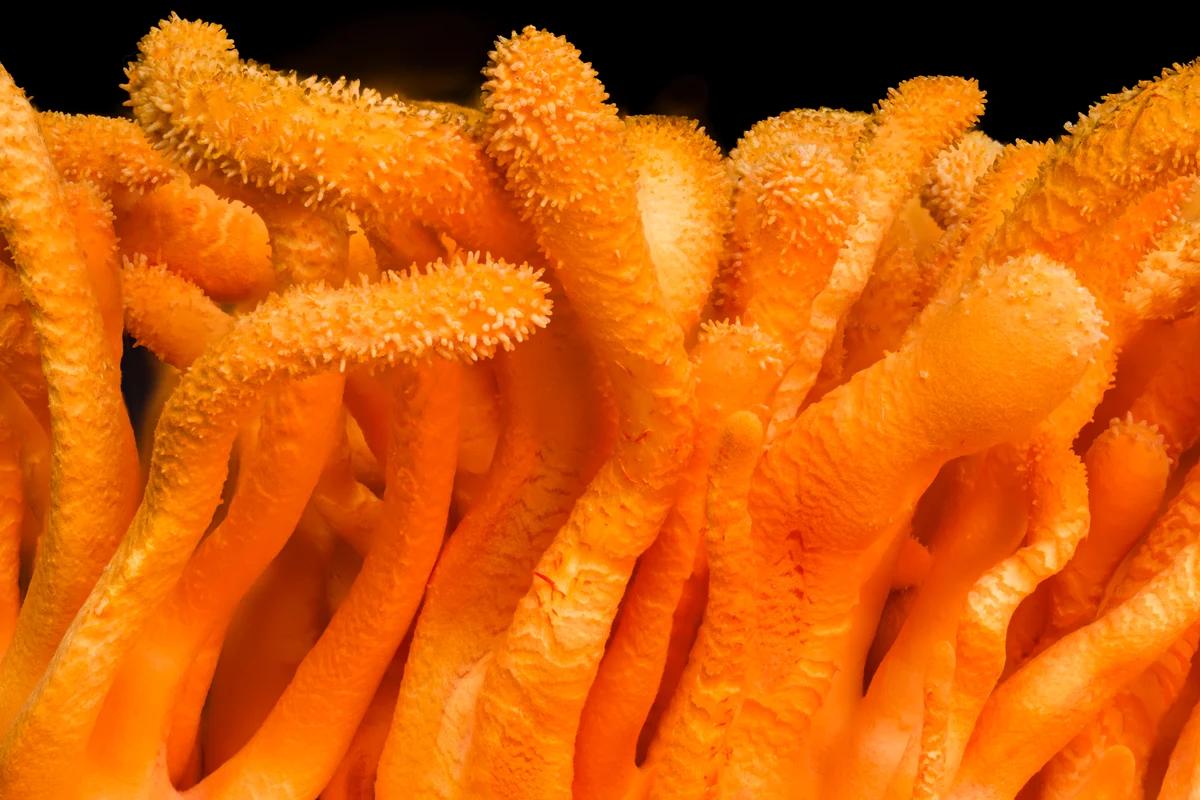
Cordyceps militaris, often sold simply as cordyceps, is a cultivated medicinal mushroom that produces bright orange fruiting bodies rich in cordycepin. It is grown indoors on sterilized grain or insect-analog substrates rather than soil or hydroponic systems, with success depending on clean culture work, controlled light, mild temperature, high humidity, and filtered gas exchange.
How to Grow Cordyceps
Learn how to grow Cordyceps from seed to harvest in 56 days. Intermediate difficulty. Planting, care, feeding and the right growing conditions.
Sources cited: 9.
Nutrient Requirements by Growth Stage
Manage Cordyceps militaris as a sterile fungal substrate crop, not a hydroponic plant. Published work supports sterilized grain or insect-analog substrates, carbohydrate sources, organic or ammonium nitrogen, phosphate salts such as KH2PO4, magnesium salts, trace elements, controlled moisture, oxygen, pH, and…
Sign in to view nutrient requirements
A free account unlocks NPK targets for all four growth stages, micronutrient levels, a per-stage nutrient calculator, and the full nutrition guide. Signing up takes one click. Truleaf is a free, non-profit project, and every new account helps it grow. No spam, ever.
Growing Environments
Indoor controlled culture is the correct environment. Outdoor beds and conventional greenhouse benches expose the nutrient-rich substrate to competitor molds and insects, while indoor jars, polypropylene containers, or bags allow sterilization, sealed incubation, filtered gas exchange, and controlled light and…
Temperature
Keep Cordyceps militaris in mild controlled conditions rather than outdoor garden temperatures. Evidence supports colonization around 20-25C and fruiting commonly near 18-22C, with 20-22C a practical target for consistent stroma development. Avoid sustained heat above 25C unless following a specific metabolite experiment, because warm, nutrient-rich containers can lose quality and face higher contamination pressure.
Humidity
Maintain high humidity during fruiting without wetting the substrate surface. The cultivation review reports 80-95% RH for fruit body development, and Hoang et al…
Light
Cordyceps militaris needs light as a fruiting and pigmentation cue, not as photosynthetic energy. Use a moderate 12 hour light and 12 hour dark cycle during fruiting; controlled studies and cultivation reviews support light-regulated changes in primordia, orange coloration, cordycepin, carotenoids, and antioxidant…
Airflow
Use filtered gas exchange rather than open-air plant ventilation. Cordyceps substrates are nutrient-rich and contamination-prone, so jars, bottles, or bags should remain closed after sterilization and inoculation while breathing through filter patches, micropore filters, or sterile membranes…
Sign in to view environmental requirements
A free account unlocks exact temperature, humidity, light and airflow targets, including germination and growth ranges, DLI, photoperiod and PPFD, plus the full environment guide. Signing up takes one click. Truleaf is a free, non-profit project, and every new account helps it grow. No spam, ever.
Hydroponic System Compatibility
Standard hydroponic systems are incompatible with Cordyceps militaris. DWC, NFT, ebb-and-flow, drip, Kratky, and aeroponics assume rooted plants taking up dissolved nutrients, but C…
Growing Media
Use sterilized grain or defined fungal media. Published systems include rice, brown rice, wheat, oat, barley, silkworm or tussah pupae, mixed grain-insect substrates, and liquid or static media for mycelium and metabolites…
Container Specs
Choose containers for sterilization, shallow substrate depth, and filtered gas exchange. Autoclavable glass jars, polypropylene bottles, shallow trays, and filter-patch bags are appropriate because they hold hydrated grain substrate, survive sterilization, and stay closed after inoculation…
Training & Support
Training support is not applicable to Cordyceps militaris. There are no stems, vines, roots, trellises, or pruning decisions…
Sign in to view system compatibility
A free account unlocks why each of the six systems fits or fails, plus growing media, container sizes, training methods, companion plants, and the full systems guide. Signing up takes one click. Truleaf is a free, non-profit project, and every new account helps it grow. No spam, ever.
Propagation
Propagation is culture work. Start with a clean, vigorous culture from spores, tissue isolation, agar, or liquid culture, then inoculate sterilized grain or defined medium under aseptic conditions…
Harvesting
Harvest after stromata are fully elongated, firm, and bright orange, before collapse, contamination, or excessive drying. Controlled studies often evaluate fruiting bodies after about 40 days on rice medium or about 6 weeks under fruiting conditions after colonization…
Planting Calendar
Cordyceps is calendar-independent indoors. A practical cycle is roughly 6-10 weeks: prepare and sterilize substrate, inoculate with clean culture, colonize in the dark for about 10-14 days, then fruit for about 4-6 weeks under light, high humidity, and filtered gas exchange…
Common Issues
The main production risks are contamination and strain degeneration. Calcarisporium cordycipiticola causes white mildew disease and is described as a destructive, host-specific mycoparasite of C…
Get the full science-backed guide
By signing up, you help keep Truleaf free and support the growth of our nonprofit project. Your account unlocks full details for every plant issue—including symptoms, causes, step-by-step solutions, and prevention—plus the month-by-month planting calendar, the complete guide, and all research sources. It only takes one click. No spam, ever.