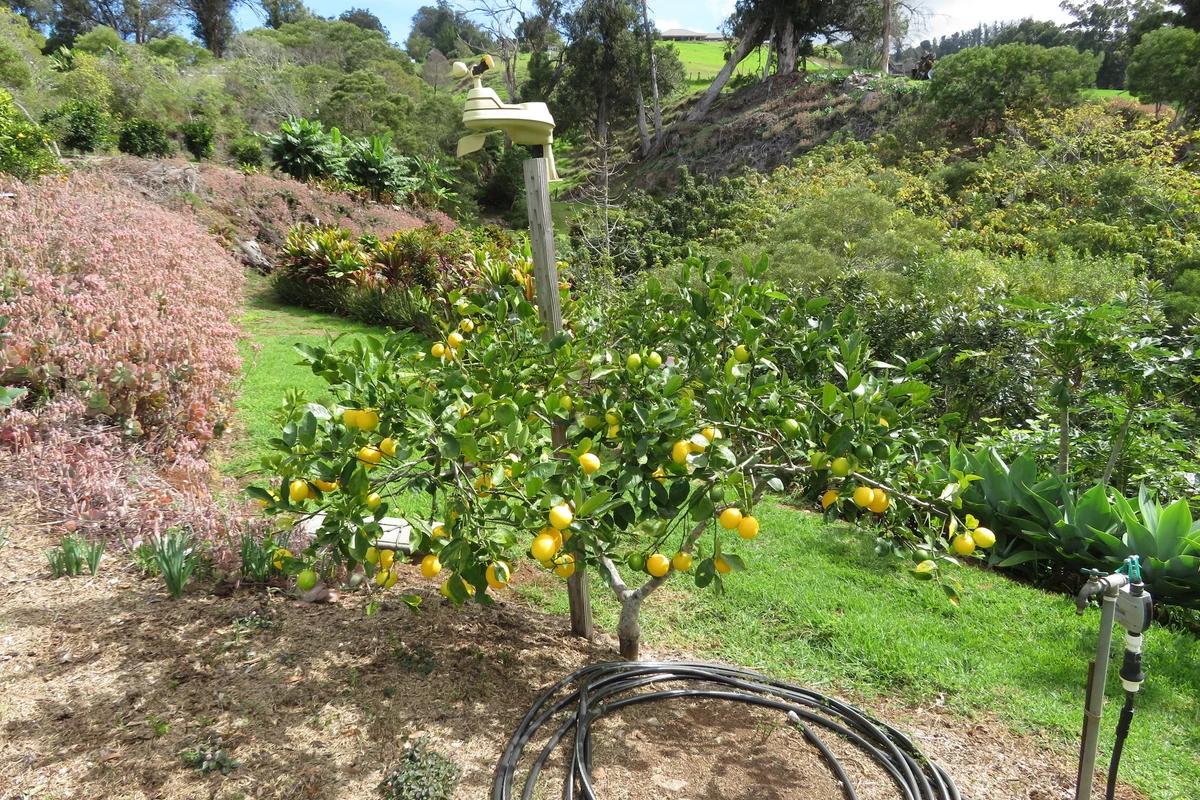
About This Plant
Dwarf citrus covers compact lemons, limes, kumquats, calamondins, mandarins, and grafted citrus trees managed in containers. The best candidates are naturally small cultivars or scions on dwarfing rootstocks such as Flying Dragon. Productive plants need strong light, warm but not stagnant air, acidic free-draining media, careful irrigation, and active-season nutrition.
How to Grow Dwarf Citrus
Learn how to grow Dwarf Citrus from seed to harvest in 365 days. Intermediate difficulty. Planting, care, feeding and the right growing conditions.
Sources cited: 34.
Nutrient Requirements by Growth Stage
Use citrus-specific acidic nutrition and monitor pH and EC. A hydroponic tangor study used pH about 6.0 and a complete solution near N 109, P 20.8, K 89.2, Ca 72.3, Mg 17.8, S 23.6 ppm with Fe 1.08, B 0.26, Mn 0.23, Zn 0.25, Cu 0.025, and Mo 0.006 ppm, confirming the micronutrient baseline and correcting vegetative P…
Sign in to view nutrient requirements
A free account unlocks NPK targets for all four growth stages, micronutrient levels, a per-stage nutrient calculator, and the full nutrition guide. Signing up takes one click. Truleaf is a free, non-profit project, and every new account helps it grow. No spam, ever.
Growing Environments
Dwarf citrus is suitable indoors, outdoors during frost-free periods, in greenhouses, and in containers, but fruiting reliability differs sharply. Indoors, it can be a durable foliage plant, yet fruiting requires high light, warm stable temperatures, humidity, hand pollination when insects are absent, and enough root…
Temperature
Keep dwarf citrus warm, but avoid treating one temperature as universal across all Citrus spp. Active growth is best around 20-28C, with 22-25C a practical indoor target. Citrus seed emergence is faster near 30C, so the prior 18-27C germination range was too cool for an optimum, although 24-25C remains safe. Protect container plants from frost and avoid sustained hot root zones above about 31-32C in enclosed screenhouse conditions.
Humidity
Target moderate humidity rather than constantly wet air. University dwarf-citrus guidance recommends about 50% relative humidity indoors, and the 50-60% range keeps winter leaf stress lower without creating stagnant disease pressure…
Light
Dwarf citrus needs stronger light than most houseplants. A 14-hour photoperiod is supported for active container citrus nursery growth, and 500 PPFD for 14 hours gives about 25 mol/m2/day DLI…
Airflow
Provide steady gentle airflow and fresh-air exchange in enclosed citrus spaces. Air movement helps mix the leaf boundary layer, reduce condensation, and prevent pockets of high humidity around dense container foliage…
Sign in to view environmental requirements
A free account unlocks exact temperature, humidity, light and airflow targets, including germination and growth ranges, DLI, photoperiod and PPFD, plus the full environment guide. Signing up takes one click. Truleaf is a free, non-profit project, and every new account helps it grow. No spam, ever.
Hydroponic System Compatibility
Use a large substrate container with drip fertigation as the conservative production system, or ebb-flow/subirrigation for nursery liners and rootstocks. Recirculating drip and automated ebb-flow have direct citrus nursery evidence; they fit citrus better than narrow channels because woody trees need root volume,…
Growing Media
Use a fast-draining, slightly acidic container medium. Clemson and Mississippi State container guides recommend avoiding dense garden soil and using bark, peat, coir, sand, perlite, or commercial citrus/cactus-style mixes with excellent drainage…
Container Specs
Container size should increase with rootball size rather than jumping immediately to an oversized pot. Mississippi State notes that many purchased 2-3 gallon citrus trees need a larger container within a year, and long-term plants may eventually need about a 15-gallon container…
Training & Support
Dwarf citrus needs light structural pruning and support, not heavy annual fruit-tree pruning. Remove suckers from below the graft union because they are rootstock growth, prune dead, crossing, upright, or damaged shoots, and shape only enough to fit the container space…
Sign in to view system compatibility
A free account unlocks why each of the six systems fits or fails, plus growing media, container sizes, training methods, companion plants, and the full systems guide. Signing up takes one click. Truleaf is a free, non-profit project, and every new account helps it grow. No spam, ever.
Propagation
For predictable dwarf citrus, start with a certified grafted tree, ideally a compact scion on a dwarfing rootstock such as Flying Dragon. Seed germinates readily and is useful for rootstock work or experiments, but seedlings may not be true-to-type and can remain juvenile for years…
Harvesting
Harvest by flavor and cultivar maturity, not rind color alone. Citrus is non-climacteric, so fruit does not become sweeter after picking; immature fruit may soften, dry, or decay but will not ripen like peaches or bananas…
Planting Calendar
Use a container-movement calendar rather than a fixed annual vegetable calendar. In cold-winter regions, move dwarf citrus outdoors after frost danger, acclimate it gradually to stronger sun, and bring it indoors before first frost…
Common Issues
The original issue list was directionally right but needed citrus-specific symptoms and prevention. Root rot is usually tied to waterlogged media, deep planting, low oxygen, or Phytophthora-like pressure; brown mushy roots, yellowing, and stalled growth require drainage and sanitation fixes before more fertilizer…
Get the full science-backed guide
By signing up, you help keep Truleaf free and support the growth of our nonprofit project. Your account unlocks full details for every plant issue—including symptoms, causes, step-by-step solutions, and prevention—plus the month-by-month planting calendar, the complete guide, and all research sources. It only takes one click. No spam, ever.