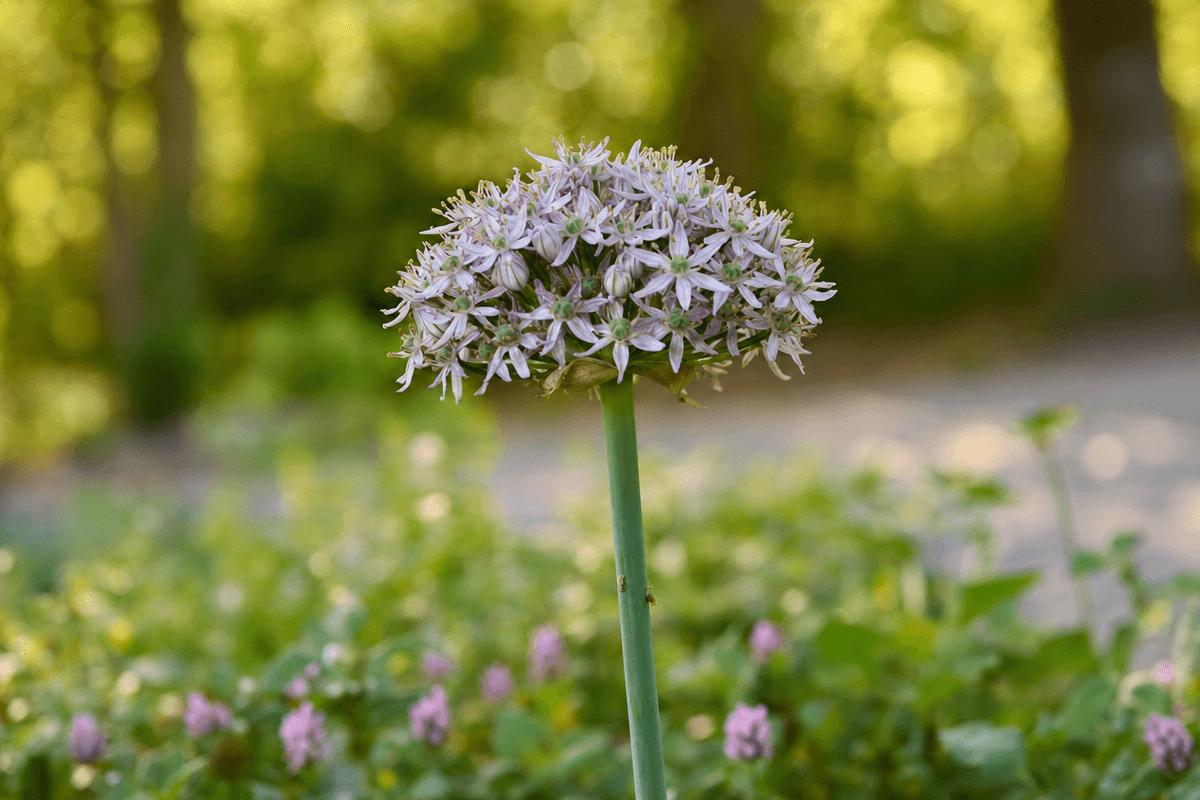
About This Plant
Elephant garlic is a large mild allium grown for oversized cloves and needs vernalization, sulfur support, and dry finishing conditions for strong bulb quality.
How to Grow Elephant Garlic
Learn how to grow Elephant Garlic from seed to harvest in 195 days. Beginner difficulty. Complete nutrient guide, pH/EC requirements, and growing conditions for soil & container.
Backed by 40 peer-reviewed citations.
Nutrient Requirements by Growth Stage
Elephant garlic follows a K-dominant nutrition strategy typical of bulbing Allium crops. During the seedling phase (first 30 days post-emergence), maintain moderate N (50-80 ppm) and K (80-120 ppm) with adequate P (20-40 ppm) to establish root architecture…
Sign in to view nutrient requirements
A free account unlocks NPK targets for all four growth stages, micronutrient levels, a per-stage nutrient calculator, and the full nutrition guide. Signing up takes one click. Truleaf is a free, non-profit project, and every new account helps it grow. No spam, ever.
Growing Environments
Elephant garlic is fundamentally an outdoor crop, thriving in full sun across USDA zones 3-9, hardy to -20C with mulch. It performs equally well in containers, which the RHS specifically recommends for gardens with heavy clay or waterlogged winter soil…
Temperature
Elephant garlic (Allium ampeloprasum var. ampeloprasum) thrives in cool to moderate temperatures across its growth cycle. Germination is optimal at 10-20C, with 15C as the sweet spot for consistent clove sprouting; pre-treatment at 8-10C for 14 days significantly improves emergence rate. Vegetative growth proceeds best between 13-24C, with 18C as the optimal setpoint. Vernalization — sustained cold exposure at 1-7C (optimally 4C) for a minimum of 6-8 weeks — is the critical physiological trigger for meristem transition from vegetative to reproductive mode. Without vernalization, elephant garlic remains vegetative and produces only undivided rounds. Critically, extended vernalization (>12 weeks at 4C) paradoxically reduces yield, producing only 2-3 cloves and 8g bulbs versus 6-7 cloves and 30g bulbs from optimal 4-6 week vernalization. Once vernalized, bulb development is maximized under long days (14+ hours) combined with daytime temperatures of 20-25C. Temperatures exceeding 29C after vernalization can reverse the cold-induced bulbing signal.
Humidity
Maintain relative humidity at 40-70% during active growth, with 55% as the practical target for controlled environments. One controlled garlic trial maintained 70% RH throughout the growth cycle with successful results, confirming the upper end of the range is acceptable…
Light
Elephant garlic is a long-day plant that requires 14+ hours of photoperiod to trigger bulbing after vernalization is complete. At 14 hours, both bulbing and bolting were maximized across all tested garlic cultivars…
Airflow
Maintain air circulation of 0.3-0.8 m/s around elephant garlic canopies. Minimum 0.3 m/s ensures adequate photosynthetic gas exchange and calcium transport to developing leaves…
Sign in to view environmental requirements
A free account unlocks exact temperature, humidity, light and airflow targets, including germination and growth ranges, DLI, photoperiod and PPFD, plus the full environment guide. Signing up takes one click. Truleaf is a free, non-profit project, and every new account helps it grow. No spam, ever.
Hydroponic System Compatibility
Elephant garlic adapts to select hydroponic systems, though its 6-8 month growth cycle, large bulb mass (up to 500g), and requirement to keep the developing bulb dry while roots remain moist impose meaningful constraints. Ebb-and-flow is the most compatible active system: timed flood cycles (4-6x/day) in deep inert…
Growing Media
For hydroponic and soilless elephant garlic production, growing media must balance drainage (to keep the developing bulb dry), moisture retention (to sustain root activity), and sufficient depth to support a bulb reaching 500g or more. Perlite is the most universally recommended medium, providing excellent aeration…
Container Specs
Elephant garlic grows successfully in containers with proper setup. Select a pot with minimum depth of 30 cm and diameter of 30 cm for a single clove; a 40 cm wide pot accommodates up to 3 cloves in a triangular arrangement…
Training & Support
Elephant garlic requires no staking or physical support under normal conditions. Its solid stem is self-supporting at full height (60-150 cm)…
Sign in to view system compatibility
A free account unlocks why each of the six systems fits or fails, plus growing media, container sizes, training methods, companion plants, and the full systems guide. Signing up takes one click. Truleaf is a free, non-profit project, and every new account helps it grow. No spam, ever.
Propagation
Elephant garlic is propagated almost exclusively by vegetative means. The standard method is clove separation: break a healthy bulb into its 3-6 large cloves just before planting and set each pointed-end up at 10-15 cm depth…
Harvesting
Elephant garlic planted in autumn is ready to lift between May and July — approximately 180-210 days from planting. The reliable harvest signal is leaf die-back: harvest when the lower one-third to one-half of the leaves have yellowed but 5-6 upper leaves remain green…
Planting Calendar
Elephant garlic is a fall-planted bulb crop in virtually all temperate climates. In cold to cool regions (USDA zones 3-6, all UK zones), plant cloves September through November, ideally 4-6 weeks before the first hard frost…
Common Issues
Elephant garlic shares all major pest and disease vulnerabilities of its Allium relatives, but its large bulbs and long growth cycle create additional exposure. Allium White Rot (Stromatinia cepivora) is the most devastating soilborne disease — sclerotia persist in soil for 20-40 years, rendering infested fields…
Get the full science-backed guide
By signing up, you help keep Truleaf free and support the growth of our nonprofit project. Your account unlocks full details for every plant issue—including symptoms, causes, step-by-step solutions, and prevention—plus the month-by-month planting calendar, the complete guide, and all research sources. It only takes one click. No spam, ever.
Related Plants
Carrot
Vegetables · Intermediate
Beet
Vegetables · Beginner
Tomato
Vegetables · Beginner
Broccoli
Vegetables · Intermediate
Cabbage
Vegetables · Beginner
Kale
Leafy Greens · Beginner
Cauliflower
Vegetables · Intermediate
Spinach
Leafy Greens · Beginner
Strawberry
Fruits · Beginner
Raspberry
Fruits · Intermediate
Chamomile
Flowers · Beginner
Calendula
Flowers · Beginner
Nasturtium
Flowers · Beginner