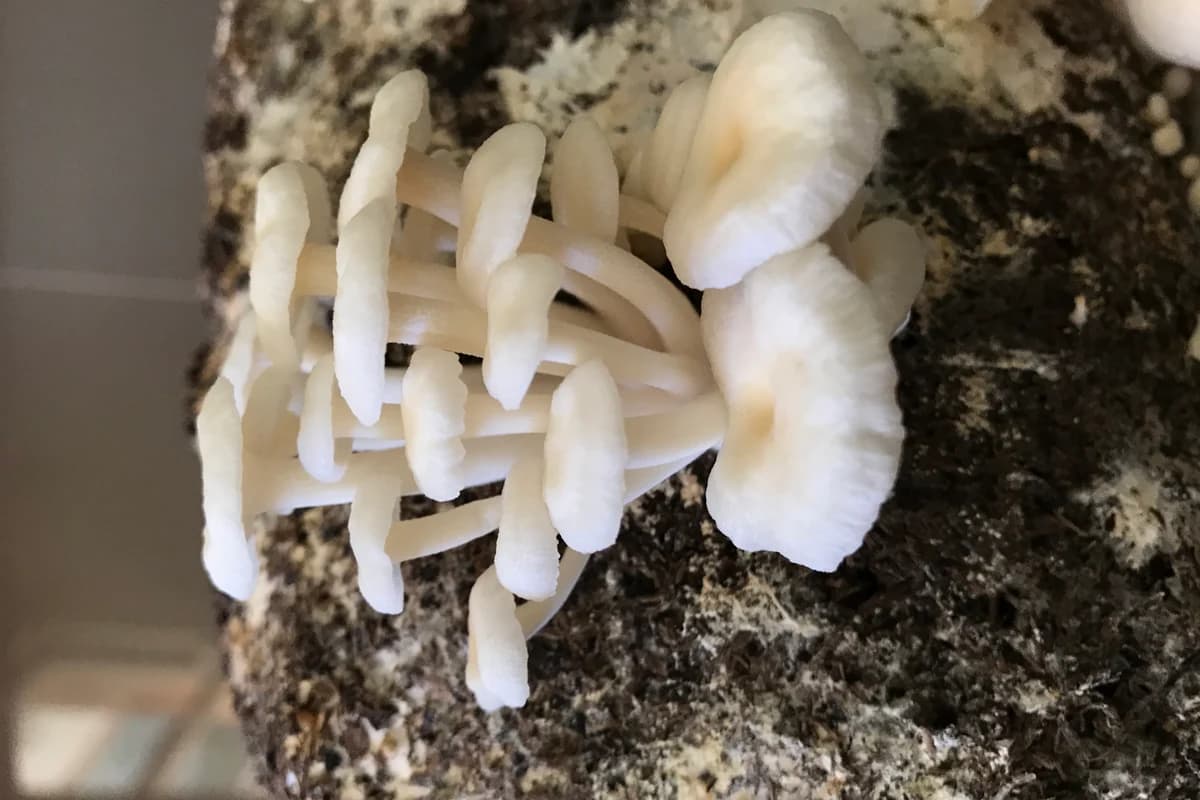
About This Plant
Enoki is a cool-fruiting culinary mushroom grown as dense clusters on sterilized sawdust, corncob, or other lignocellulosic substrates. It is managed through spawn run, cold induction, humidity, low light, and CO2 control rather than plant-style hydroponic nutrition.
How to Grow Enoki
Learn how to grow Enoki from seed to harvest in 50 days. Intermediate difficulty. Complete nutrient guide, pH/EC requirements, and growing conditions for soil & container.
Sources cited: 15.
Nutrient Requirements by Growth Stage
Do not assign plant-style NPK ppm to enoki. Flammulina nutrition is solid-substrate nutrition: lignocellulosic carbon from sawdust, corncob, straw, ramie stalk, soybean straw, or cottonseed hulls, balanced with nitrogen-rich supplements such as rice bran, wheat bran, brewer's grains, or soy pulp…
Sign in to view nutrient requirements
A free account unlocks NPK targets for all four growth stages, micronutrient levels, a per-stage nutrient calculator, and the full nutrition guide. Signing up takes one click. Truleaf is a free, non-profit project, and every new account helps it grow. No spam, ever.
Growing Environments
The validated environment is indoor container production. Academic and extension protocols use bottles, jars, bags, or controlled chambers with regulated temperature, humidity, light, CO2, and sterile substrate handling…
Temperature
Treat the temperature fields as mushroom lifecycle stages rather than seedling stages. Spawn run is warm, commonly around 18-25C in bottle or substrate studies, while primordia induction and fruiting are cool: sources report induction near 10-16C and commercial elongation or maturation around 3-12C. The current 7-25C value mixed these phases, so the payload separates warm colonization from cool fruiting.
Humidity
High humidity is confirmed, but stage context matters. Spawn run can occur at lower room humidity because bottles or bags retain substrate moisture, while primordia formation is usually kept near 90-95% RH and fruiting commonly sits around 75-90% RH depending on the system…
Light
Use low light as a developmental signal, not as photosynthetic energy. Enoki studies report lux-level lighting: 300 lx during fruiting induction in a CO2 experiment, 500 lx LED treatments for color response, and low-light or dark spawn run conditions…
Airflow
Fresh air exchange should prevent stagnant CO2 while avoiding substrate or pin drying. Enoki grows in bottles or bags with protected spawn run, then needs a fruiting-room balance of air movement, humidity, and CO2 management…
Sign in to view environmental requirements
A free account unlocks exact temperature, humidity, light and airflow targets, including germination and growth ranges, DLI, photoperiod and PPFD, plus the full environment guide. Signing up takes one click. Truleaf is a free, non-profit project, and every new account helps it grow. No spam, ever.
Hydroponic System Compatibility
DWC, NFT, ebb-flow, drip hydroponics, Kratky, and aeroponics should remain false. These systems serve rooted plants taking up dissolved fertilizer, while enoki is a saprotrophic fungus that colonizes sterilized sawdust, corncob, cottonseed hull, straw, or other organic substrate…
Growing Media
Use sterilized lignocellulosic mushroom substrate. Strong formulas include sawdust with rice bran around 4:1, 80% sawdust plus 20% rice bran, corncob and bran mixes, ramie stalk plus cottonseed hull and wheat bran, and soybean-straw formulas adjusted with calcium carbonate or shell powder…
Container Specs
Container culture is strongly supported. Penn State describes 800-1300 ml heat-resistant bottles, and multiple research protocols use bottles or bags filled with sterilized substrate…
Training & Support
Plant training is not applicable. Enoki has no vine, stem canopy, or branches requiring trellis, stakes, pruning, topping, or netting…
Sign in to view system compatibility
A free account unlocks why each of the six systems fits or fails, plus growing media, container sizes, training methods, companion plants, and the full systems guide. Signing up takes one click. Truleaf is a free, non-profit project, and every new account helps it grow. No spam, ever.
Propagation
Treat enoki propagation as sterile fungal culture work. Production starts with verified pure culture, liquid culture, grain spawn, or sawdust spawn and then inoculates sterilized substrate…
Harvesting
Harvest enoki as whole clusters, not individual stems. Penn State production guidance describes collar removal when stems reach about 13-14 cm, pulling the bunch from the substrate, trimming the base, and packing clusters carefully…
Planting Calendar
Use an indoor production calendar rather than outdoor sowing dates. Enoki can be scheduled year-round in controlled rooms: prepare culture and substrate, inoculate bottles or bags, run spawn for about 20-35 days, open or scrape the surface, induce primordia near 10-16C with high humidity, then fruit or elongate cool…
Common Issues
The major risks are contamination, moisture imbalance, cold-induction failure, CO2 mismatch, pests, and postharvest food safety. Green mold can overtake substrate and should trigger block removal and sanitation…
Get the full science-backed guide
By signing up, you help keep Truleaf free and support the growth of our nonprofit project. Your account unlocks full details for every plant issue—including symptoms, causes, step-by-step solutions, and prevention—plus the month-by-month planting calendar, the complete guide, and all research sources. It only takes one click. No spam, ever.