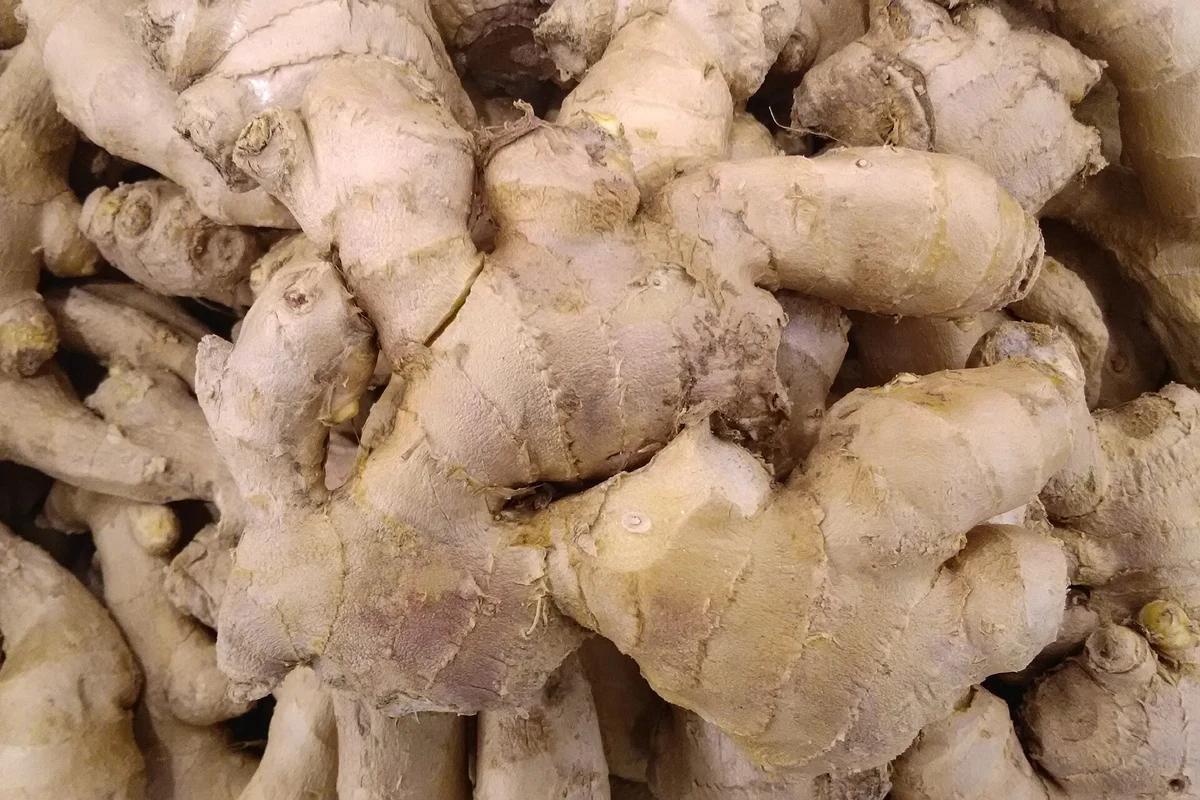
About This Plant
Ginger is a tropical Zingiberaceae crop grown for aromatic rhizomes rather than seed or fruit. It performs best in warm, humid, partially shaded conditions with loose, well-drained media, clean rhizome pieces, and a long 8-10 month season for mature harvest. Baby ginger can be harvested earlier at 4-6 months, while mature rhizomes cure and store best after foliage yellows and the crop enters dormancy.
How to Grow Ginger
Learn how to grow Ginger from seed to harvest in 270 days. Intermediate difficulty. Planting, care, feeding and the right growing conditions.
Sources cited: 16.
Nutrient Requirements by Growth Stage
Ginger has increasing nutrient demand as rhizomes expand, but the previous 300+ ppm N and 400 ppm K bulking targets were too aggressive for general soilless production. Controlled soilless work found 200 mg/L N gave the best growth and rhizome yield, with P and K held at 150 and 200 mg/L…
Sign in to view nutrient requirements
A free account unlocks NPK targets for all four growth stages, micronutrient levels, a per-stage nutrient calculator, and the full nutrition guide. Signing up takes one click. Truleaf is a free, non-profit project, and every new account helps it grow. No spam, ever.
Growing Environments
Ginger fits containers, greenhouses, high tunnels, and warm outdoor beds. Outdoors it is straightforward only in frost-free or long warm seasons; elsewhere, containers are safer because they can be started indoors and moved before cold nights…
Temperature
Ginger sprouts and grows best in warm media. Keep rhizome pieces around 22-30C for sprouting, with active growth centered near 25-28C; the previous 27C optimum is a good controlled-environment target. Growth slows below about 20C and cold nights below 10C should trigger moving containers under protection. In greenhouse work, warm root zones improved growth, but strong light plus temperatures above about 35C can stress plants, so combine heat with shade and humidity management rather than full-sun heat.
Humidity
Ginger is native to humid, partly shaded tropical habitats and performs best with consistently moist air and media. Keep relative humidity near 70-90%, with 80% as the practical target for indoor and greenhouse production…
Light
Treat ginger as a bright-shade crop. Extension guidance supports full sun only in cool northern climates; in warmer locations, partial shade or filtered light protects foliage and rhizome quality…
Airflow
Ginger needs gentle air exchange, not a windy canopy. Good airflow dries leaf surfaces, reduces leaf spot pressure, and keeps high humidity from becoming stagnant…
Sign in to view environmental requirements
A free account unlocks exact temperature, humidity, light and airflow targets, including germination and growth ranges, DLI, photoperiod and PPFD, plus the full environment guide. Signing up takes one click. Truleaf is a free, non-profit project, and every new account helps it grow. No spam, ever.
Hydroponic System Compatibility
The safest production systems are containers, raised beds, drip-fertigated substrate, and deep media-bed flood and drain. Bare NFT and DWC are poor fits because ginger rhizomes expand horizontally, need support, and are vulnerable to stagnant wet conditions…
Growing Media
Use loose, organic-rich, well-drained media that hold moisture without staying saturated. Extension sources recommend rich loamy soil or compost-amended potting media, while controlled systems support coco coir, peat-perlite, and similar aerated substrates…
Container Specs
Choose width before depth. A 19 L pot is a practical minimum for one rhizome piece, while 35-45 cm wide or roughly 38 L containers give better room for branching rhizomes and hilling…
Training & Support
Ginger does not need structural training. Do not trellis, cage, or stake it under normal conditions; instead, manage the rhizome zone by hilling or mounding…
Sign in to view system compatibility
A free account unlocks why each of the six systems fits or fails, plus growing media, container sizes, training methods, companion plants, and the full systems guide. Signing up takes one click. Truleaf is a free, non-profit project, and every new account helps it grow. No spam, ever.
Propagation
Propagate culinary ginger from rhizome pieces, not seed. Use firm, disease-free pieces with visible buds; 28-57 g seed pieces are supported by greenhouse and yield studies, and larger pieces generally establish better than very small cuts…
Harvesting
Harvest depends on the product. Baby ginger can be lifted after about 4-6 months while rhizomes are tender, thin-skinned, and easily bruised…
Planting Calendar
In temperate climates, start ginger indoors in February or March, cure and pre-sprout rhizome pieces for several weeks, then move containers or transplants outdoors only after frost risk passes and nights stay above about 10C. Direct outdoor planting is best reserved for warm climates or late spring soil that is…
Common Issues
The current issue list was too sparse. Soft or rhizome rot is the primary risk and is strongly linked to Pythium species, infected planting material, warm saturated media, and poor drainage…
Get the full science-backed guide
By signing up, you help keep Truleaf free and support the growth of our nonprofit project. Your account unlocks full details for every plant issue—including symptoms, causes, step-by-step solutions, and prevention—plus the month-by-month planting calendar, the complete guide, and all research sources. It only takes one click. No spam, ever.