About This Plant
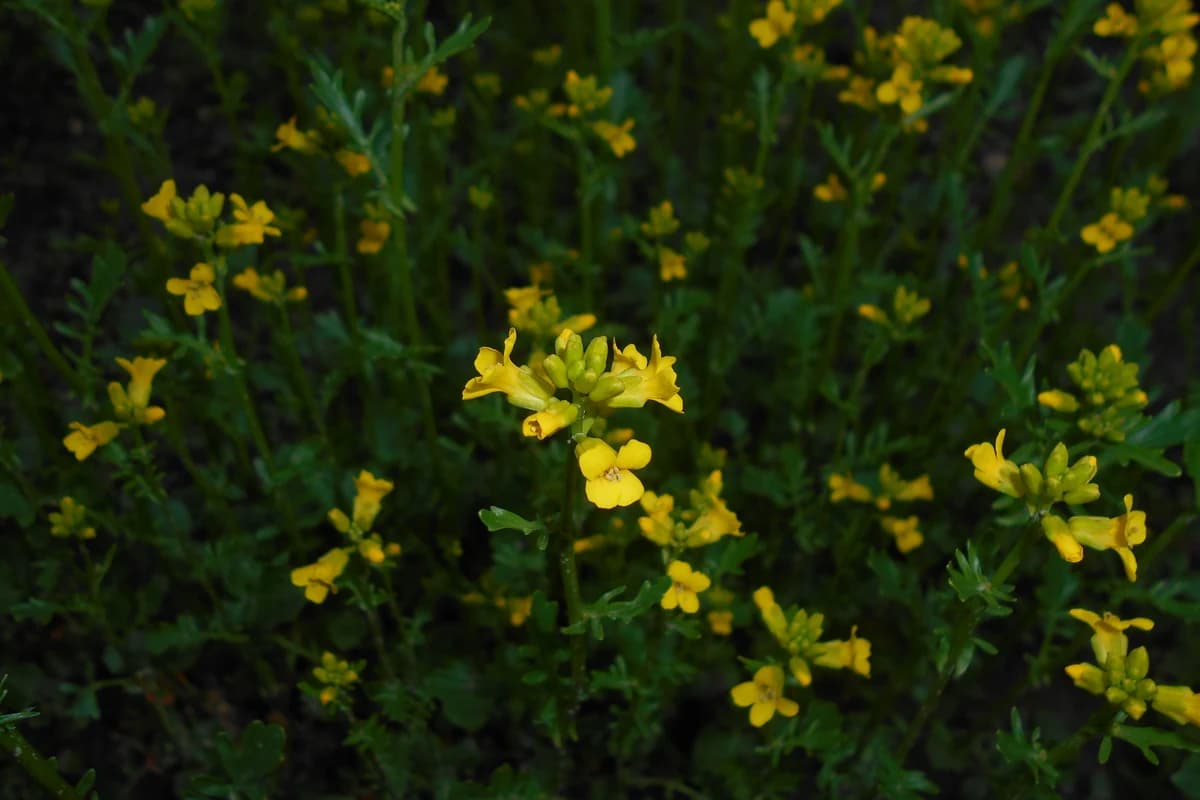
Land Cress (Barbarea verna), also called Upland or American Cress, is a hardy, cool-season Brassicaceae salad green grown for its peppery, watercress-like leaves. It is fast and forgiving: seed germinates in about a week, plants reach a first cut-and-come-again harvest by roughly 50 days, and the crown regrows for several successive cuttings. A vegetative leafy crop, it is picked well before bolting - flowering follows only cold vernalization after overwintering. It grows best at 15-22C under a 16-hour photoperiod and a daily light integral near 12, suits NFT, DWC, Kratky and ebb-and-flow systems, and feeds like a leafy brassica (moderate nitrogen, EC 1.2-1.8). A notable trait: mature plants act as a natural dead-end trap crop for diamondback moth, attracting egg-laying but killing the young larvae.
How to Grow Land Cress
Learn how to grow Land Cress from seed to harvest in 50 days. Beginner difficulty. Complete nutrient guide, pH/EC requirements, and growing conditions for hydroponics, soil & greenhouse.
Sources cited: 27.
Nutrient Requirements by Growth Stage
Land cress feeds like a leafy brassica and is a light-to-moderate feeder - excess nitrogen drives lush but harsh, bitter foliage and nitrate accumulation, so pace the nitrogen rather than overfeed. No B…
Sign in to view nutrient requirements
A free account unlocks NPK targets for all four growth stages, micronutrient levels, a per-stage nutrient calculator, and the full nutrition guide. Signing up takes one click. Truleaf is a free, non-profit project, and every new account helps it grow. No spam, ever.
Growing Environments
Land cress adapts to indoor, greenhouse, outdoor, and container culture. It is well suited to cool controlled-environment production, where temperature can be held at 15-22C and a 16-hour photoperiod delivered, and B…
Temperature
Land cress is a cool-season, vernalization-responsive Brassicaceae that grows best at 15-22C for leaf quality and slowest bolting. Germinate at 20-25C soil or plug temperature for rapid, reliable emergence within about a week; cooler starts down to ~15C still work but more slowly. During production it tolerates up to about 25C, but leaves turn smaller, thinner, and more bitter as temperature climbs, and sustained warmth above the cool-season optimum - together with long days - pushes plants toward bolting. Target roughly 20C day temperature to keep the crop in vigorous vegetative growth without triggering the reproductive transition.
Humidity
Hold relative humidity around 55-65% (acceptable range 50-70%). Higher, stagnant humidity above ~70% both suppresses the transpiration that carries calcium to inner leaves (causing tip burn) and favors downy mildew and white rust, so pair humidity control with active air movement across the canopy…
Light
Target a daily light integral of about 12 mol/m2/day - enough to drive strong leaf yield in a fast leafy green while staying near the point of diminishing returns for supplemental-light energy cost. Leaf lettuce, kale, and spinach yield rises across DLI 8-14, and hydroponic lettuce shows no significant yield gain…
Airflow
Keep steady horizontal air movement across the canopy (roughly 0.3-1.0 m/s). Active airflow drives the transpiration that carries calcium to inner leaves (preventing tip burn) and keeps leaf surfaces dry to suppress the crop's two main foliar diseases, downy mildew and white rust…
Sign in to view environmental requirements
A free account unlocks exact temperature, humidity, light and airflow targets, including germination and growth ranges, DLI, photoperiod and PPFD, plus the full environment guide. Signing up takes one click. Truleaf is a free, non-profit project, and every new account helps it grow. No spam, ever.
Hydroponic System Compatibility
Land cress is an ideal candidate for recirculating hydroponics. NFT is the recommended system: its shallow roots and fast leaf turnover suit thin-film channels, closely related watercress reaches its highest yield (+46.8% vs soil) and best root development under NFT, and B…
Growing Media
For hydroponic land cress, start seed in phenolic-foam or rockwool plugs, then transplant to the production system after about two weeks - B. verna was successfully started on phenolic foam for hydroponic production…
Container Specs
Land cress is a shallow-to-moderate rooted leafy green - measured root length ran 15-25 cm in nursery trials - so it grows well in containers at least 15 cm deep with good drainage. Raise seedlings in ~290 mL cells and grow on in plastic or fabric pots, window boxes, or shallow troughs…
Training & Support
Land cress needs no trellis, stake, or training - it is a low, spreading rosette plant with 15-20 cm (6-8 in) leafstems that covers the ground on its own. The only relevant practice is spacing and thinning for airflow, which helps keep foliage dry and suppress downy mildew and white rust.
Sign in to view system compatibility
A free account unlocks why each of the six systems fits or fails, plus growing media, container sizes, training methods, companion plants, and the full systems guide. Signing up takes one click. Truleaf is a free, non-profit project, and every new account helps it grow. No spam, ever.
Propagation
Grow land cress from seed only - there is no cutting or vegetative propagation. Two routes work well…
Harvesting
Land cress is one of the most forgiving salad greens to harvest: it supports true cut-and-come-again production and forms no bulb or head. Plants are ready for first mature-leaf harvest about 35-50 days from sowing, and tender baby leaves earlier; a hydroponic B…
Planting Calendar
Land cress is grown in the coolest months as an extremely hardy crop that tolerates mild freezes. In warm or subtropical zones (e.g…
Common Issues
Land cress is a hardy, generally robust cool-season brassica but shares the pest and disease profile of the mustard family. The main physiological problems are tip burn from impaired calcium transport under low humidity or high EC, and bolting - the plant runs to seed quickly in heat and long days, making leaves…
Get the full science-backed guide
By signing up, you help keep Truleaf free and support the growth of our nonprofit project. Your account unlocks full details for every plant issue—including symptoms, causes, step-by-step solutions, and prevention—plus the month-by-month planting calendar, the complete guide, and all research sources. It only takes one click. No spam, ever.