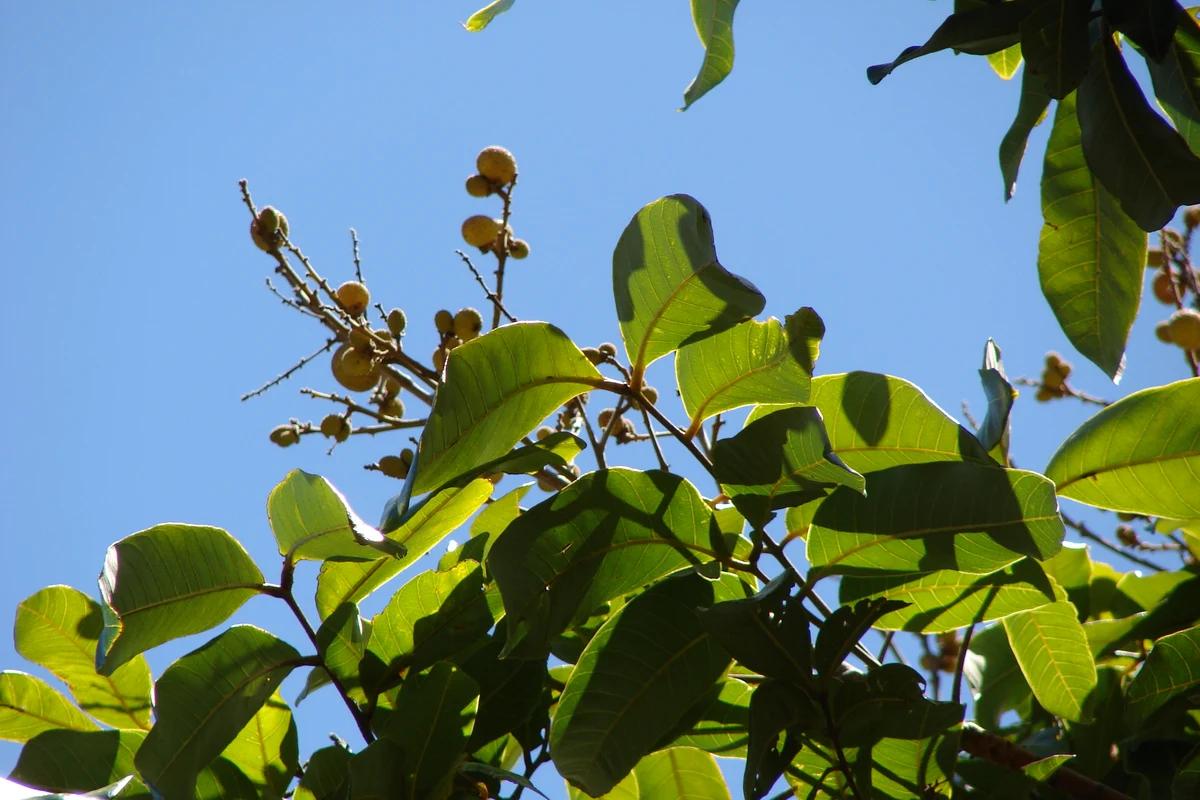
About This Plant
Longan is an evergreen subtropical fruit tree grown primarily in well-drained soil orchards. Productive trees need full sun, a seasonal cool-dry period for flower induction, reliable moisture from bloom through fruit development, and postharvest canopy and nutrient management. Air-layering is the preferred route for true-to-type cultivars. Fruit are harvested ripe in clusters about 140-190 days after flowering and require rapid cooling because they do not sweeten after removal.
How to Grow Longan
Learn how to grow Longan from seed to harvest in 2555 days. Intermediate difficulty. Planting, care, feeding and the right growing conditions.
Sources cited: 36.
Nutrient Requirements by Growth Stage
Manage longan nutrition by tree age, phenology, soil supply, vigor, and crop load. Verified field evidence shifts from N-heavy postharvest shoot renewal toward moderate preflower N and greater K emphasis during fruit growth and the final preharvest month; excessive N can suppress flowering or reduce fruit size…
Sign in to view nutrient requirements
A free account unlocks NPK targets for all four growth stages, micronutrient levels, a per-stage nutrient calculator, and the full nutrition guide. Signing up takes one click. Truleaf is a free, non-profit project, and every new account helps it grow. No spam, ever.
Growing Environments
Outdoor soil-grown orchards in subtropical climates, or tropical climates with a distinct cool-dry flowering period, are the verified fruiting environment. Choose a full-sun, nonflooding site…
Temperature
Longan needs seasonal temperature changes rather than one broad year-round target. A cool, relatively dry two-to-three-month period with mean temperatures around 15-22 C supports floral induction; 20-25 C is reported as favorable for flowering and fruit set in Thailand. Warm spring conditions and 27-35 C summer conditions with adequate soil moisture support fruit development. Nights above 25 C after fruit set can be harmful, temperatures above 40 C can damage fruit, and freezing injury depends strongly on tree age. One seedling study used 25 C as its control and 42 C as heat stress, not as production optima or universal thresholds.
Humidity
No retained complete source establishes a numeric relative-humidity target for longan orchards. Keep newly rooted air layers warm and humid under partial shade while they acclimatize, but manage mature trees through drainage, canopy drying, and disease observation rather than a fixed RH setpoint…
Light
Use full sun for field production and preserve light penetration with adequate orchard spacing and selective pruning. Shading reduces normal growth and fruiting, while an open canopy supports reproductive wood and fruit development…
Airflow
Express airflow management through canopy structure and wind protection. Selective pruning should prevent a dense canopy and improve air circulation and light penetration…
Sign in to view environmental requirements
A free account unlocks exact temperature, humidity, light and airflow targets, including germination and growth ranges, DLI, photoperiod and PPFD, plus the full environment guide. Signing up takes one click. Truleaf is a free, non-profit project, and every new account helps it grow. No spam, ever.
Hydroponic System Compatibility
The evidence supports soil orchards, mounded field planting where flooding is a risk, high-density orchards managed by pruning, and orchard drip irrigation. Drip should remain enabled only for soil-orchard irrigation; the former inert-media and soilless claim is unsupported…
Growing Media
For mature field trees, use fertile, well-drained soil matched to local water supply. Sandy loam, sand, red loam, calcareous rocky soil, and well-managed fine-textured soils are documented, while wet lowlands and persistently saturated heavy clay are poor choices…
Container Specs
The retained sources describe three-gallon nursery stock, temporary pots or bags for rooted layers and grafts, small acclimatization pots for micropropagated plants, and pots used for controlled seedling research. They do not establish minimum width, depth, volume, or material for a mature fruiting longan…
Training & Support
Build an open, manageable framework during the first three to four years. Retain a limited number of well-spaced scaffold branches, remove narrow crotches and water shoots, and tip vigorous shoots during active spring and summer growth…
Sign in to view system compatibility
A free account unlocks why each of the six systems fits or fails, plus growing media, container sizes, training methods, companion plants, and the full systems guide. Signing up takes one click. Truleaf is a free, non-profit project, and every new account helps it grow. No spam, ever.
Propagation
Use air-layering during the wet season to preserve a named cultivar. Wrap a girdled mature-leaved branch with moist, aerated peat, sphagnum moss, or a suitable soil mix, then detach after a substantial creamy-brown root mass develops…
Harvesting
On established trees, fruit generally need about 140-190 days from flowering to harvest. Harvest ripe because longan is non-climacteric and does not become sweeter after removal…
Planting Calendar
For a Northern Hemisphere subtropical default, make air layers from April through August or during the local wet season, and plant hardened nursery trees as reliable rains begin. South Florida bloom commonly runs from February or March into April or early May, and the main harvest falls in June-August…
Common Issues
Major risks vary by region. Monitor for witches' broom and eriophyid mites, fruit and shoot borers, oriental fruit fly, scales, mealybugs, anthracnose, Phytophthora fruit rot, Ceratocystis blight, red alga, and waterlogging decline…
Get the full science-backed guide
By signing up, you help keep Truleaf free and support the growth of our nonprofit project. Your account unlocks full details for every plant issue—including symptoms, causes, step-by-step solutions, and prevention—plus the month-by-month planting calendar, the complete guide, and all research sources. It only takes one click. No spam, ever.