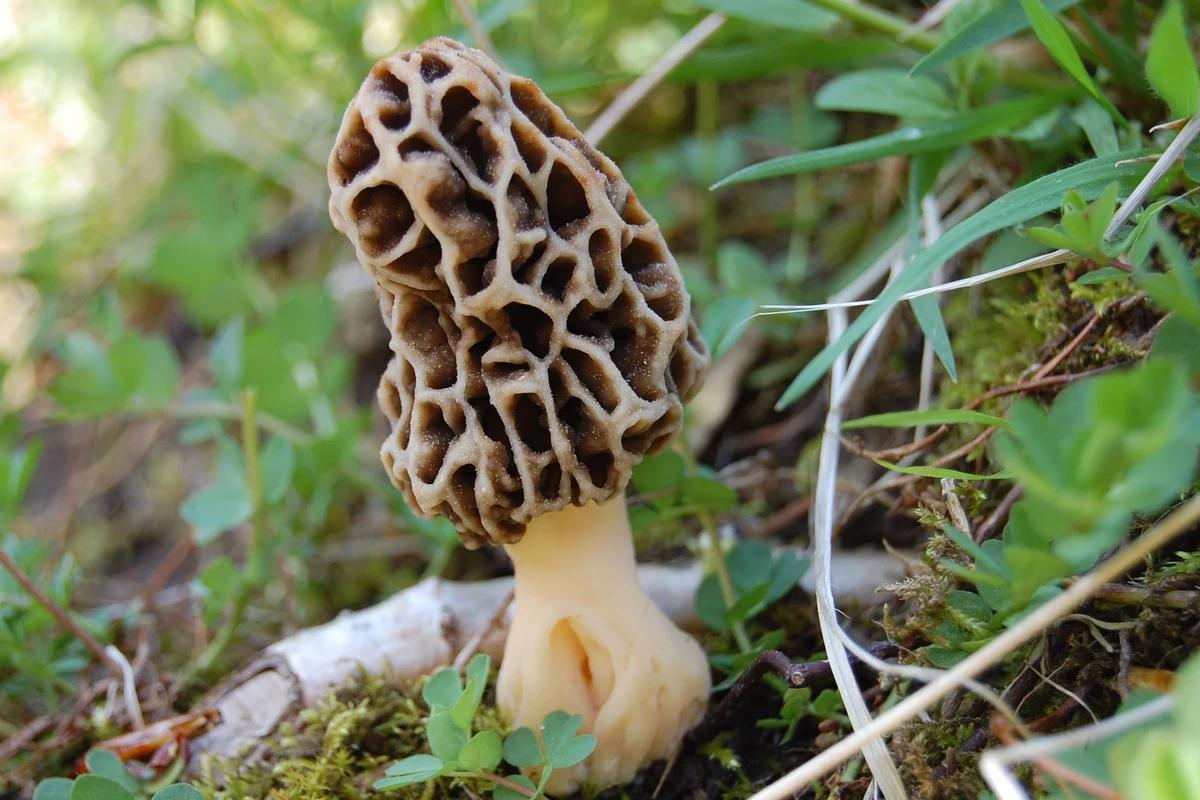
About This Plant
Morel is a prized edible ascomycete fungus (Morchella spp.), not a hydroponic plant. Cultivation is a soil-based, multi-stage process: grain spawn is sown into a prepared soil bed, mycelium colonizes it and forms lipid-rich sclerotia, and powdery mitospores ('fungal frost') appear within about a week. Sterilized exogenous nutrient bags (ENBs, mainly wheat grain) are then laid on the bed - the decisive breakthrough that supplies the carbon needed for fruiting. After an overwinter cold period and spring warming, primordia develop into honeycomb-capped fruiting bodies. Reliably cultivated species are M. importuna, M. sextelata, and M. eximia. Morels cannot be grown in hydroponic solution and are rated advanced due to unstable yields and white-mold disease pressure.
How to Grow Morel
Learn how to grow Morel from seed to harvest in 180 days. Advanced difficulty. Planting, care, feeding and the right growing conditions.
Sources cited: 28.
Nutrient Requirements by Growth Stage
Morels are cultivated fungi, not hydroponic plants, so they are not fed a mineral N-P-K solution and all solution ppm targets are set to zero. Nutrition is delivered as solid substrate in two stages: grain spawn establishes the soil mycelial network, then exogenous nutrient bags (ENBs) - mainly wheat grain with…
Sign in to view nutrient requirements
A free account unlocks NPK targets for all four growth stages, micronutrient levels, a per-stage nutrient calculator, and the full nutrition guide. Signing up takes one click. Truleaf is a free, non-profit project, and every new account helps it grow. No spam, ever.
Growing Environments
Morels are grown outdoors in soil field beds and, increasingly, in shaded greenhouses that buffer temperature and humidity. Indoor tray cultivation on pasteurized substrate is possible - demonstrated for Morchella rufobrunnea - but remains less stable than field or greenhouse production…
Temperature
Morel has two distinct thermal regimes, so treat the warm phase as spawn run rather than seed germination. Mycelial colonization of the soil bed runs best at about 18-22C, with an optimum near 21C. Fruiting is cool-driven: beds are sown in autumn when ambient temperature falls below ~20C, the crop overwinters near 0-10C, and primordia then develop as spring warms, with air held below ~22C and the substrate interior around 6-13C. In the highest-yielding measured greenhouse, air stayed below 22C and substrate sat at 6-13C throughout colonization and fruiting. This cold-then-warm sequence, not a constant temperature, is what triggers fruiting. The stored growth band is therefore set to the cool fruiting regime, with the warmer colonization band recorded as the spawn-run phase.
Humidity
Keep humidity high during primordium formation and fruiting, about 85-95% RH with an optimum near 90%, while distinguishing air humidity from substrate moisture. The critical companion parameter is soil/substrate moisture held near 20% (w/w) by sensor control throughout the cycle, measured directly in high-yield…
Light
Grow under diffuse, shaded light, never full sun or total darkness. Only the buried mycelial and sclerotial phase tolerates darkness; primordium induction and normal honeycomb-cap coloration need low scattered light…
Airflow
Ventilation for fresh-air exchange, not strong air movement, is the goal. Gentle circulation (roughly 0.1-0.3 m/s) prevents stagnant, humid pockets and helps caps dry after watering, but direct drafts dry the soil bed and reduce quality…
Sign in to view environmental requirements
A free account unlocks exact temperature, humidity, light and airflow targets, including germination and growth ranges, DLI, photoperiod and PPFD, plus the full environment guide. Signing up takes one click. Truleaf is a free, non-profit project, and every new account helps it grow. No spam, ever.
Hydroponic System Compatibility
DWC, NFT, ebb-and-flow, drip hydroponics, Kratky and aeroponics are all unsuitable for morel. It is an obligate soil and solid-substrate saprotroph that must form sclerotia in soil and be fed by aboveground exogenous nutrient bags; no ascomata form without added exogenous nutrition…
Growing Media
Cultivate in soil beds - field or amended loam / sandy-loam soil at pH about 7-8 - under a shade shed or greenhouse; morels cannot be grown hydroponically. A validated research substrate is quartz particles plus 2% (w/w) compost at about 5 cm depth…
Container Specs
Field cultivation uses open, well-drained soil beds rather than pots, so container specs apply mainly to raised beds and indoor trays. Where trays or beds are used, they should be deep enough for a colonizable soil layer plus surface nutrient bags and must drain freely, since waterlogging reduces aeration and promotes…
Training & Support
Training support is not applicable to a fungus. Morels have no vines, stems, canes or canopy to stake, cage, prune, top or trellis…
Sign in to view system compatibility
A free account unlocks why each of the six systems fits or fails, plus growing media, container sizes, training methods, companion plants, and the full systems guide. Signing up takes one click. Truleaf is a free, non-profit project, and every new account helps it grow. No spam, ever.
Propagation
Morels are cultivated fungi, so propagation means establishing mycelium, not sowing seed. Commercial production uses grain spawn (mycelium grown on wheat-based grain) sown into prepared soil; the historical indoor Ower method instead produced mature sclerotia and used them as 'seed'…
Harvesting
Treat morel harvest as a short, once-per-season spring event rather than a cut-and-come-again crop. Harvest each ascocarp when the honeycomb cap is fully expanded and the ridges are well formed but the flesh is still firm, before softening, discoloration or the onset of white mold, which can appear from the very first…
Planting Calendar
Field cultivation runs on an autumn-to-spring cycle. Sow (ditch, sow, ridge) in autumn when ambient temperature falls below about 20C - roughly October to December in the Northern Hemisphere depending on region…
Common Issues
Morel's dominant health risk is white-mold disease, the leading production constraint worldwide, with reported losses up to 80% and about 25% of national cultivation area damaged annually. It appears as white cottony patches on the stipe base or cap that spread to soften and rot the whole ascocarp, caused by a…
Get the full science-backed guide
By signing up, you help keep Truleaf free and support the growth of our nonprofit project. Your account unlocks full details for every plant issue—including symptoms, causes, step-by-step solutions, and prevention—plus the month-by-month planting calendar, the complete guide, and all research sources. It only takes one click. No spam, ever.