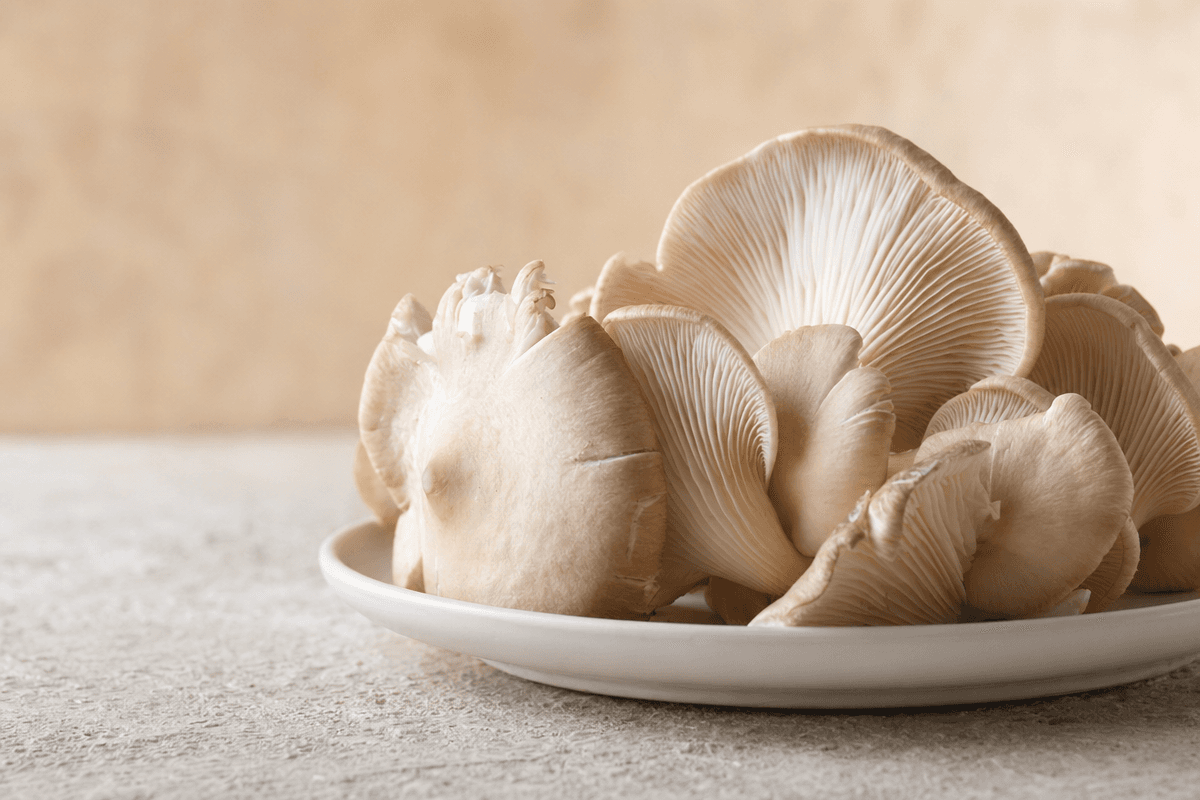
About This Plant
Oyster mushroom is a saprophytic culinary fungus cultivated on hydrated organic substrates rather than hydroponic solution, with airflow and CO2 control being critical to fruit quality.
How to Grow Oyster Mushroom
Learn how to grow Oyster Mushroom from seed to harvest in 35 days. Beginner-friendly. Planting, care, feeding and the right growing conditions.
Sources cited: 24.
Nutrient Requirements by Growth Stage
Pleurotus ostreatus is a white-rot saprotrophic fungus that derives all nutrition from enzymatic decomposition of lignocellulosic organic substrates — it does NOT absorb dissolved nutrients from hydroponic solution like vascular plants. Its mycelium secretes ligninolytic enzymes (laccases, peroxidases) and…
Sign in to view nutrient requirements
A free account unlocks NPK targets for all four growth stages, micronutrient levels, a per-stage nutrient calculator, and the full nutrition guide. Signing up takes one click. Truleaf is a free, non-profit project, and every new account helps it grow. No spam, ever.
Growing Environments
P. ostreatus is exceptionally versatile in cultivation environment…
Temperature
Oyster mushroom cultivation requires careful temperature management across two distinct physiological phases. During the spawn run (mycelial colonization), maintain substrate temperature at 20-28C with an optimum of 24C. Substrate cores can self-heat to 26-28C from metabolic activity and must be monitored to prevent overheating above 30C, which promotes Trichoderma contamination. Once colonization is complete (typically 14-21 days), a cold shock of 5-10C triggers primordia (pin) initiation. The fruiting phase requires significantly cooler conditions: 10-22C, with temperate strains performing best at 15-18C. At 16C, fruiting body development produces optimal cap-to-stipe ratio and yield. Tropical/Florida strains tolerate fruiting temperatures up to 28C. The previous database value of optimal 25C conflated the incubation temperature with the overall optimum — 25C is correct for spawn run but inhibits fruiting in most temperate strains.
Humidity
Humidity management in oyster mushroom cultivation is phase-dependent. During spawn run, maintain 75-90% relative humidity — sufficient to prevent substrate desiccation without encouraging contamination…
Light
Unlike plants, oyster mushrooms do not photosynthesize — they are heterotrophic fungi that derive all energy from substrate decomposition. However, light serves as a critical morphogenic signal for fruiting body development…
Airflow
CO2 management is the single most critical environmental factor distinguishing successful from unsuccessful oyster mushroom cultivation. P…
Sign in to view environmental requirements
A free account unlocks exact temperature, humidity, light and airflow targets, including germination and growth ranges, DLI, photoperiod and PPFD, plus the full environment guide. Signing up takes one click. Truleaf is a free, non-profit project, and every new account helps it grow. No spam, ever.
Hydroponic System Compatibility
All conventional hydroponic systems (DWC, NFT, ebb-and-flow, drip, Kratky, aeroponics) are fundamentally inapplicable to oyster mushroom cultivation. P…
Growing Media
P. ostreatus colonizes an exceptionally wide range of lignocellulosic substrates…
Container Specs
The standard container for commercial and home oyster mushroom cultivation is the polypropylene (PP) grow bag. Standard bags measure 25-30 cm wide x 50-60 cm long, holding 1-5 kg of substrate per bag…
Training & Support
Training and support methods are not applicable to oyster mushroom cultivation. Unlike vascular plants that may require staking, trellising, or pruning, mushroom fruiting bodies emerge directly from the substrate surface through bag perforations or openings and are self-supporting during their brief 5-10 day…
Sign in to view system compatibility
A free account unlocks why each of the six systems fits or fails, plus growing media, container sizes, training methods, companion plants, and the full systems guide. Signing up takes one click. Truleaf is a free, non-profit project, and every new account helps it grow. No spam, ever.
Propagation
P. ostreatus propagation starts with a pure mycelium mother culture isolated via tissue culture…
Harvesting
Oyster mushrooms reliably produce multiple harvests (flushes) from a single substrate block — the mycelium survives harvest and regrows. Harvest when cap edges transition from convex (curled under) to flat at the margins, before spore release becomes visible as white powder…
Planting Calendar
Indoor cultivation of P. ostreatus is possible year-round because environmental conditions are fully controlled…
Common Issues
Oyster mushroom diseases are dominated by competing fungi, contaminating bacteria, and fungivorous insects rather than traditional plant pathogens. The most economically damaging disease is Green Mold caused by Trichoderma species — primarily T…
Get the full science-backed guide
By signing up, you help keep Truleaf free and support the growth of our nonprofit project. Your account unlocks full details for every plant issue—including symptoms, causes, step-by-step solutions, and prevention—plus the month-by-month planting calendar, the complete guide, and all research sources. It only takes one click. No spam, ever.