How to Grow Broccoli: A Seed-to-Harvest Guide
Learn how to grow broccoli from seed to harvest with guidance on season, spacing, soil, watering, pests, containers, harvesting, and side shoots.
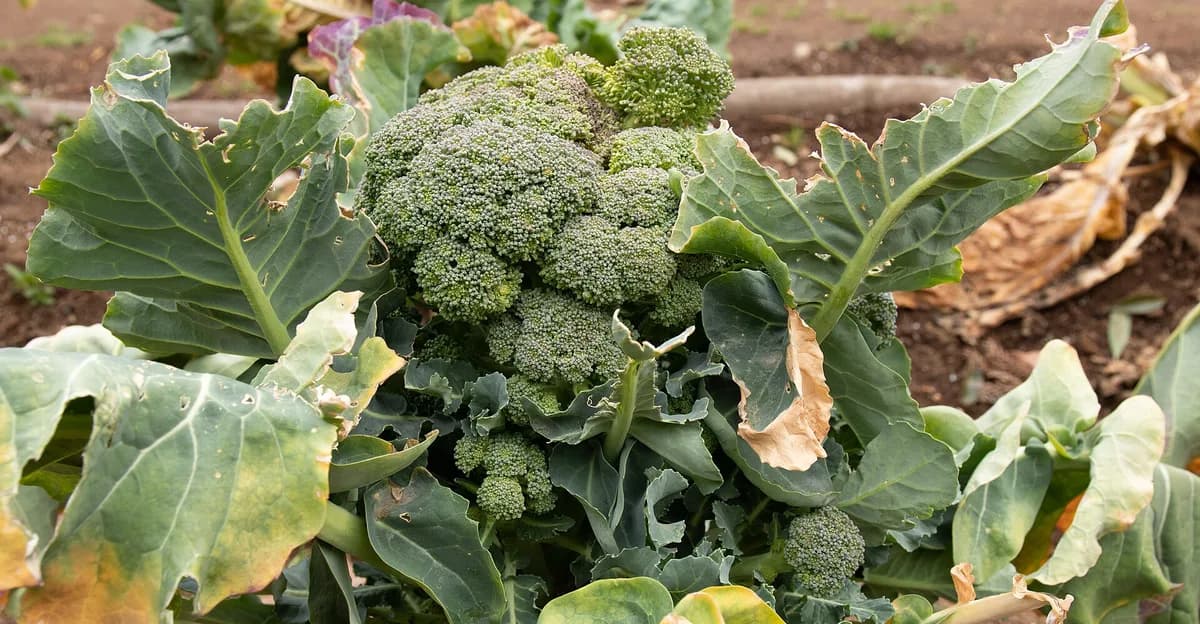
Key point: Grow heading broccoli during the coolest part of your workable garden season. Start seed early enough for plants to establish, then time head formation for the cooler part of the season. Give each plant room to make the head size you want, and keep the soil evenly moist without saturating it. Harvest when the green flower buds are tight, before yellow flowers open.
Broccoli can be direct sown or transplanted. The better route depends on how long your cool season lasts. Temperature response also differs among cultivars, so no planting month or heat cutoff works everywhere.
This guide covers heading broccoli, Brassica oleracea var. italica, grown to produce an immature flower head. If you want the small seedlings eaten whole, use our separate guide to growing broccoli sprouts.
For a compact crop summary, open the broccoli plant profile.
Broccoli at a glance
| Growing decision | Practical starting point |
|---|---|
| Season | Aim for a cool growing window and keep the crop's heading stage away from your usual period of hard heat. |
| Seed | Start indoors several weeks before transplanting, or direct sow where the cool season is long enough. |
| Soil | Use fertile, well-drained soil that holds moisture. University of Minnesota Extension gives 6.0 to 7.0 as a practical soil pH range. |
| Spacing | About 30 to 46 cm (12 to 18 in) between plants is a common starting range. Follow the cultivar packet or local guidance when it differs. |
| Water | Keep the root zone evenly moist while allowing air to remain in the soil. |
| Fertility | Use a soil test and product label. Do not convert commercial nitrogen trials into a home-garden dose. |
| Harvest | Cut while the buds are compact and closed. Leave the plant if your cultivar makes side shoots. |
Choose the cool part of your season
Broccoli is a cool-season crop, but cultivar choice changes how much warmth it can handle during head formation. In a controlled study, a heat-tolerant broccoli line formed heads at 15, 22, and 27°C (59, 72, and 81°F). A heat-sensitive line formed heads only at 15°C (59°F) under the same test conditions.
Those chamber temperatures do not set universal garden limits. The study tested two inbred lines under controlled conditions. Its practical lesson is that a seed packet marked heat tolerant may behave differently from a cultivar bred for a cool spring or fall.
Plan backward from local weather:
- Find the period when your garden usually moves from mild weather into hard heat, or from mild weather into sustained frost.
- Check the cultivar's stated days to maturity and whether that count begins at sowing or transplanting. Treat it as an estimate, since weather and plant stress can change the pace.
- Place the expected head-forming period in the cooler part of the available window.
- In climates with a short spring, use transplants to gain time. Where autumn cools gradually, a late-season crop may have a longer heading window.
Use frost dates and expected heat rather than a hemisphere-specific month. A September sowing may begin a fall crop in one region and a spring crop in another. For spring timing, the frost date calculator can turn a USDA zone estimate or a manually entered last-frost date into broccoli seed-starting and transplant dates.
Choose a season and cultivar together
Broccoli seed is often sold by season, maturity, or heat tolerance. Read those descriptions as a linked plan. A fast cultivar cannot correct a planting date that puts head formation into severe heat, and a suitable season cannot make every cultivar respond in the same way.
| Your growing window | What to look for | Starting method | Main risk to watch |
|---|---|---|---|
| Cool spring followed quickly by heat | Early maturity and documented warm-weather tolerance | Start indoors and transplant vigorous seedlings before the window closes | Heat arrives while the plant is beginning to form its head |
| Long, mild spring | A cultivar recommended locally for spring | Transplant or direct sow, depending on the remaining season | Crowded or stressed seedlings lose time before transplanting |
| Mild fall with later frost | A cultivar recommended locally for fall production | Direct sow or transplant early enough to establish before sustained frost | Sowing too late for the cultivar to mature in the available window |
| Warm climate with a cool season | A cultivar sold for the local cool season, with heat tolerance if warm spells are common | Use local extension or supplier dates, then adjust from your own records | Copying a calendar from a different climate |
Record the cultivar, sowing date, transplant date, first visible head, and harvest date. Note any hot spell during head formation. After one or two crops, those records will tell you more about your site than a generic month-by-month calendar.
Start broccoli from seed
You can start broccoli indoors or sow it directly in the bed. Indoor sowing gives the plants a head start when the cool outdoor window is short. Direct sowing avoids transplant stress where outdoor conditions stay suitable long enough.
For indoor starts, monitor the seedlings and move vigorous young plants before they become crowded, stressed, or root-bound.
For direct sowing, prepare the final bed first. Thin extra seedlings rather than leaving a cluster to compete at each planting point. Keep the strongest well-placed plant, then use the final spacing on the seed packet or in local guidance.
Transplant without losing the growing window
Transplant vigorous seedlings while their roots still have space and the outdoor growing window remains cool.
Do not use one seedling age as a universal deadline. Extension sources describe indoor starts and transplant stages in slightly different ways because climate and production practices differ. Plant condition matters: choose stock with active growth, intact roots, and no sign that it has stalled in a crowded container.
If a late cold event or sudden hot spell follows transplanting, compare the forecast with local crop guidance and monitor soil moisture. Physical exclusion can also reduce early insect access.
Give each plant room to form a head
Spacing changes what the crop produces. Wider spacing tends to support larger individual heads. Denser planting can reduce individual head size and may increase the number of plants, changing total yield per area.
A Japanese field study illustrates the tradeoff. Researchers compared 40 and 80 cm (16 and 31 in) within-row spacing in a defined double-row production system. Wider spacing enlarged many individual heads, but it halved plant density and generally reduced yield per area. The results also varied among cultivars.
Those experimental distances are not a home-garden prescription. Extension recommendations span roughly 30 to 61 cm (12 to 24 in), depending on cultivar and growing goal. About 30 to 46 cm (12 to 18 in) is a practical starting range for many heading types, with the seed packet and local advice taking priority.
If your priority is a larger main head, use the wider end of the recommended range. If you prefer more smaller heads from a limited bed, a closer spacing within the cultivar's guidance may suit that goal.
Prepare fertile soil without guessing a fertilizer dose
Broccoli grows best in fertile soil that drains excess water but retains useful moisture. University of Minnesota Extension gives 6.0 to 7.0 as a practical soil pH range. A soil test can show whether your bed needs a pH correction or added nutrients before planting.
Choose soil amendments and fertilizer from the test result and product label rather than applying a universal recipe. Nitrogen affects broccoli growth and yield, but the cited field evidence comes from a semi-arid, drip-fertigated commercial system. Its rates do not convert safely into one dose for every raised bed or container.
Keep moisture even and drainage open
Broccoli needs steady access to water. Use soil moisture, recent rain, temperature, and drainage to decide when to water again.
Avoid turning a weekly water estimate into a fixed rule. Soil texture, mulch, wind, plant size, and rainfall all change how quickly a bed dries. Garden guidance supports even moisture, while controlled and field research shows that both water supply and root-zone aeration affect performance.
More water is not always better. Gutezeit's soil-moisture experiments found that the heaviest heads did not occur in the wettest treatment, and the paper discusses poor aeration as a risk in overly wet soil. Keep moisture available without leaving the root zone saturated.
Check below the soil surface and correct pooling water before adding more.
Inspect plants before damage spreads
Inspect the upper and lower leaf surfaces regularly. University extension sources consistently list caterpillars, flea beetles, and aphids among common broccoli pests. Finding a pest early gives you more time to identify it and choose an appropriate response.
Physical exclusion with a suitable insect barrier can reduce pest access before insects reach the crop.
If damage is already present, identify the pest before choosing a treatment. Product registration and label directions differ by location, crop, and pest. This guide does not provide pesticide products or rates because the reviewed sources support recognition and prevention, not one treatment program.
Heat and plant stress can also produce small or poorly developed heads. Do not assume every distorted head comes from insects. Compare the timing of the problem with the cultivar, recent weather, transplant condition, spacing, soil moisture, and fertility.
Diagnose a disappointing broccoli head
Use this check before changing several inputs at once. It will not identify every disease or disorder, but it can separate common planning and care problems that the reviewed evidence supports.
| What you see | Check first | Low-risk next step | Evidence boundary |
|---|---|---|---|
| No head as weather becomes hot | Cultivar description, sowing date, transplant date, and temperatures during expected head formation | Move the next planting into a cooler window or trial a cultivar with documented heat tolerance | Temperature response varies by genotype; no study temperature is a universal outdoor cutoff. |
| Head is smaller than expected | Plant spacing, cultivar, growing time, water consistency, and fertility plan | Compare the result with the packet's spacing and maturity guidance before tightening or widening the next planting | Wider spacing often increases individual head size, but cultivar and system change the result. |
| Plant stalled after transplanting | Root condition, crowding before transplant, recent weather, and soil moisture | Keep moisture even, protect from unusual weather, and avoid adding fertilizer until root-zone problems are checked | Extension sources support vigorous, timely transplants but do not give one age for every region. |
| Lower soil stays wet and growth is weak | Drainage, compaction, recent rain, and irrigation frequency | Pause extra irrigation and restore drainage or aeration where possible | The heaviest heads did not come from the wettest treatment in one soil-moisture study. |
| Buds loosen or yellow flowers appear | Harvest frequency and recent warm weather | Cut the usable head now and check any remaining plants more often | Broccoli should be harvested while buds are compact and before flowers open. |
| Leaves have holes or visible colonies | Undersides of leaves, growing tips, and the identity of the insect | Remove or exclude the confirmed pest with a locally appropriate method | Caterpillars, flea beetles, and aphids are common, but treatment choice requires local label guidance. |
Record the observation, weather, and response. If you cannot identify the problem, use a local extension or diagnostic service.
Harvest before the flowers open
The best harvest signal is the head, not a calendar date. Cut the main head when it is firm and the individual green buds remain tight. Once buds loosen and yellow flowers begin to open, the head has moved past the usual harvest stage.
Cut the main head, then leave the plant in place if the cultivar is known to produce side shoots. Several university guides document continued harvest from side shoots after the main head is removed.
Side-shoot performance varies. A sprouting cultivar may produce repeated shoots, while a large-heading type may give fewer or smaller ones. Water, nutrition, temperature, and plant health also affect the later crop. Treat side shoots as a possible extension of harvest, not a guaranteed number of extra heads.
Check developing heads often as harvest nears so you can cut them while the buds remain tight.
Can broccoli grow in a container?
Yes, container growing is supported as extension guidance, although the reviewed evidence includes no peer-reviewed experiment that establishes one ideal pot volume. Oregon State recommends at least a 19 L (5 gal) container and a small, compact cultivar as practical starting points.
Use a container that drains, and follow the cultivar's spacing guidance rather than crowding several plants into it. Check moisture instead of copying an in-ground watering schedule. Follow a container fertilizer label and avoid transferring field nitrogen rates into the pot.
Frequently asked questions
How long does broccoli take to grow?
The cultivar's maturity estimate is the best starting point, but temperature, transplant condition, and other stresses can shift the harvest. Check whether the packet counts from sowing or transplanting, then track head development rather than harvesting by date alone.
Can I direct sow broccoli?
Yes. Direct sow where the outdoor cool season is long enough for the cultivar to establish and form a head. Use indoor starts when you need to gain time before heat or sustained frost closes the growing window.
How far apart should broccoli plants be?
About 30 to 46 cm (12 to 18 in) is a common home-garden starting range, but published extension guidance reaches about 61 cm (24 in) for some situations. Follow the cultivar packet and local advice. More room tends to increase individual head size, while closer planting changes the balance between head size and yield per area.
Why is my broccoli not forming a head?
Start by checking cultivar, season, and temperature during the expected heading period. Then review whether the seedling was stressed, the plant is crowded, the root zone has stayed too wet or dry, or the fertility plan fits the soil. These factors can overlap, so one symptom does not prove one cause.
Will broccoli grow back after cutting the main head?
Some cultivars produce side shoots after the main head is cut. Leave a healthy plant in place and watch the leaf joints for new shoots. The number, size, and duration of those harvests vary by cultivar and growing conditions.