Cultivez Cordyceps militaris en 8 sem. — sans labo
Guide étape par étape pour cultiver Cordyceps militaris chez soi. Couvre la préparation du substrat, l’incubation, les conditions de fructification et le moment de la récolte — aucun laboratoire stérile requis.
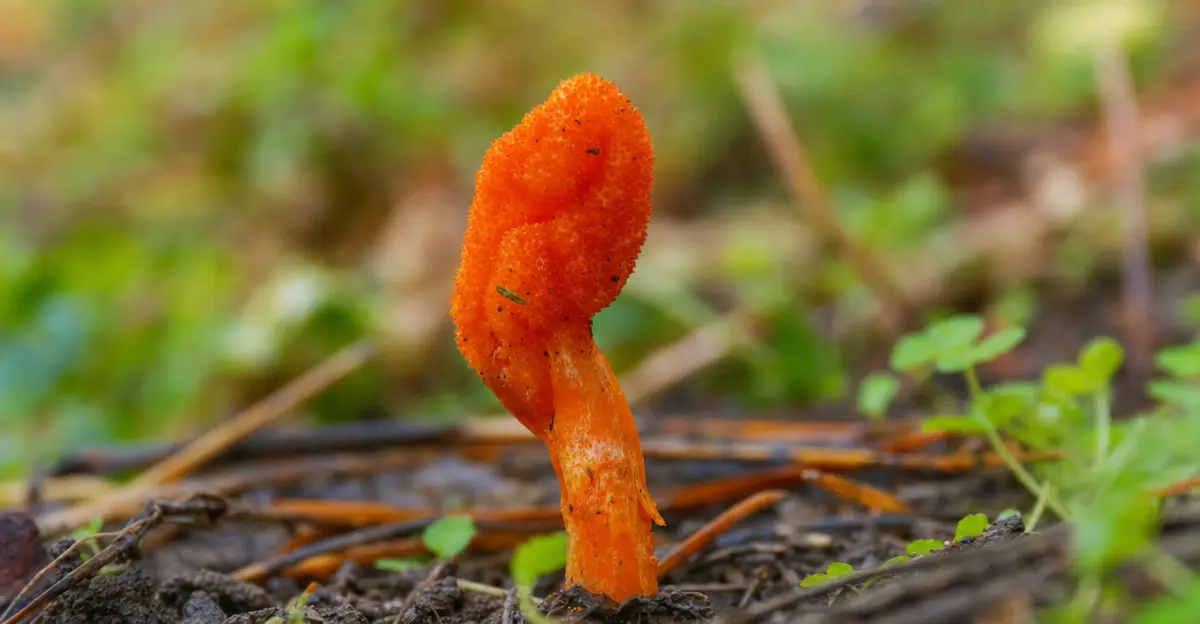
Point cle : Cordyceps militaris est l'un des champignons medicinaux les plus accessibles que vous pouvez cultiver chez vous, produisant de vibrants corps fructiferes oranges riches en cordycepine et autres composes bioactifs. Contrairement a la plupart des champignons culinaires, il n'a pas besoin de buches ni de substrat volumineux — juste des grains sterilises dans des bocaux en verre, une seringue de culture liquide et un controle environnemental soigneux. Attendez votre premiere recolte en 6-10 semaines.
Pourquoi cultiver Cordyceps militaris
Le Cordyceps a une longue histoire dans la medecine traditionnelle chinoise — certaines sources affirment une utilisation remontant a des milliers d'annees, bien que la reference documentee la plus ancienne que les chercheurs modernes puissent confirmer soit le Ben Cao Bei Yao de Wang Ang, date de 1694 (dynastie Qing). Les praticiens l'utilisaient comme tonique pour ameliorer l'energie, la force et la vitalite. Le nom du genre provient de deux mots latins : cord (massue) et ceps (tete), decrivant les corps fructiferes en forme de massue qui emergent d'insectes parasites dans la nature.
Les estimations de la diversite des especes dans le genre Cordyceps varient largement — d'environ 400 au sens taxonomique strict a plus de 750 en comptant le groupe plus large avant la reclassification de 2007, qui a transfere de nombreuses especes dans Ophiocordyceps et d'autres genres. Deux especes dominent la conversation : Cordyceps sinensis (maintenant reclassifie sous Ophiocordyceps sinensis) et Cordyceps militaris. Le O. sinensis sauvage — le celebre « champignon chenille » — parasite les larves de papillon fantome sur le Plateau Tibetain et atteint des prix allant jusqu'a 20 000 USD par kilogramme en raison de la surrecolte et de l'extreme rarete. Il ne peut pas etre cultive de maniere fiable sur des substrats artificiels.
Cordyceps militaris, en revanche, pousse facilement sur des substrats a base de grains dans des environnements interieurs controles. Plus important pour les cultivateurs, la recherche montre que C. militaris produit des concentrations de cordycepine significativement plus elevees que C. sinensis — le C. sinensis sauvage contient de tres faibles niveaux de cordycepine, et le C. sinensis cultive en produit peu ou pas. Cela fait de C. militaris le choix superieur pour quiconque s'interesse aux composes bioactifs qui ont fonde la reputation seculaire du Cordyceps.
Une revue exhaustive dans Foods a identifie les principaux composes bioactifs dans les corps fructiferes de C. militaris : cordycepine (3'-desoxyadeno sine), adenosine, polysaccharides (galactomannane), ergothioneine, GABA, D-mannitol (acide cordycepique), carotenoides et ergosterol — ainsi que tous les acides amines essentiels, les vitamines A, B2, B3, C et E, et des mineraux incluant le potassium, le magnesium, le calcium, le fer, le zinc et le selenium. Certaines analyses ont egalement detecte les vitamines B1, B12 et K dans les corps fructiferes, bien que les resultats varient selon la souche et les conditions de culture.
Ce que montre la recherche clinique
Un essai clinique randomise controle de 2024 publie dans Scientific Reports a teste une boisson a base de C. militaris (contenant 2,85 mg de cordycepine quotidienne) contre placebo chez 40 adultes en bonne sante pendant 8 semaines. Les resultats :
- L'activite des cellules natural killer (NK) a augmente significativement — de 34 % chez les hommes a 4 semaines, et significativement chez les femmes a 8 semaines par rapport au placebo
- Les marqueurs inflammatoires ont baisse — IL-1beta a diminue chez les hommes, IL-6 a diminue chez les femmes
- Aucun effet indesirable sur la fonction hepatique, la fonction renale ou les parametres sanguins
Ces resultats sont en accord avec des recherches plus larges documentant des effets anti-inflammatoires, antioxydants, immunomodulateurs et neuroprotecteurs, bien que la plupart des preuves proviennent de modeles animaux et que davantage d'essais chez l'humain soient necessaires.
Ce dont vous avez besoin pour commencer
Cultiver C. militaris requiert plus de technique sterile que la culture de champignons classique, mais moins d'espace physique. Voici l'equipement essentiel :
Culture de depart :
- Seringue de culture liquide (LC) de C. militaris — achetez aupres d'un fournisseur fiable. La culture liquide est preferee aux morceaux de gelose pour les debutants car elle se repartit plus uniformement dans le substrat.
Contenants :
- Bocaux a large ouverture de 500 mL ou 250 mL (Ball ou Kerr) avec couvercles modifies — percez un petit trou et couvrez avec un port d'injection auto-scellant et une ventilation en ruban micropore
- Alternativement, sacs de spawn en polypropylene avec patchs filtrants
Ingredients du substrat :
- Riz brun (grain entier, pas instantane) — le substrat standard pour debutants
- Ingredients pour bouillon nutritif (voir recettes ci-dessous)
Sterilisation :
- Autocuiseur capable d'atteindre 15 PSI / 121 C — non negociable pour la sterilisation des grains. Un stérilisateur a pression de cuisine (ex. : Presto de 23 quarts) fonctionne bien.
Espace de travail sterile :
- Boite a air calme (SAB) au minimum — une grande boite transparente avec deux trous pour les bras decoupes sur un cote, nettoyee avec de l'alcool isopropylique a 70 %
- Hotte a flux laminaire si vous prevoyez de monter en echelle (optionnel pour les debutants)
Environnement de fructification :
- Une etagere ou chambre fermee ou vous pouvez controler la temperature (18-22 C) et fournir 12 heures de lumiere par jour
- Bande LED ou lampe de bureau (spectre bleu ou bleu-rouge prefere)
- Optionnel : petit humidificateur ou tente d'humidite si votre environnement est sec
Preparation du substrat
Le substrat fournit a la fois la structure physique et la nutrition pour que C. militaris colonise et fructifie. Contrairement aux pleurotes ou shiitake qui poussent sur des materiaux riches en cellulose, le Cordyceps a besoin d'une base de grains enrichie en nutriments.
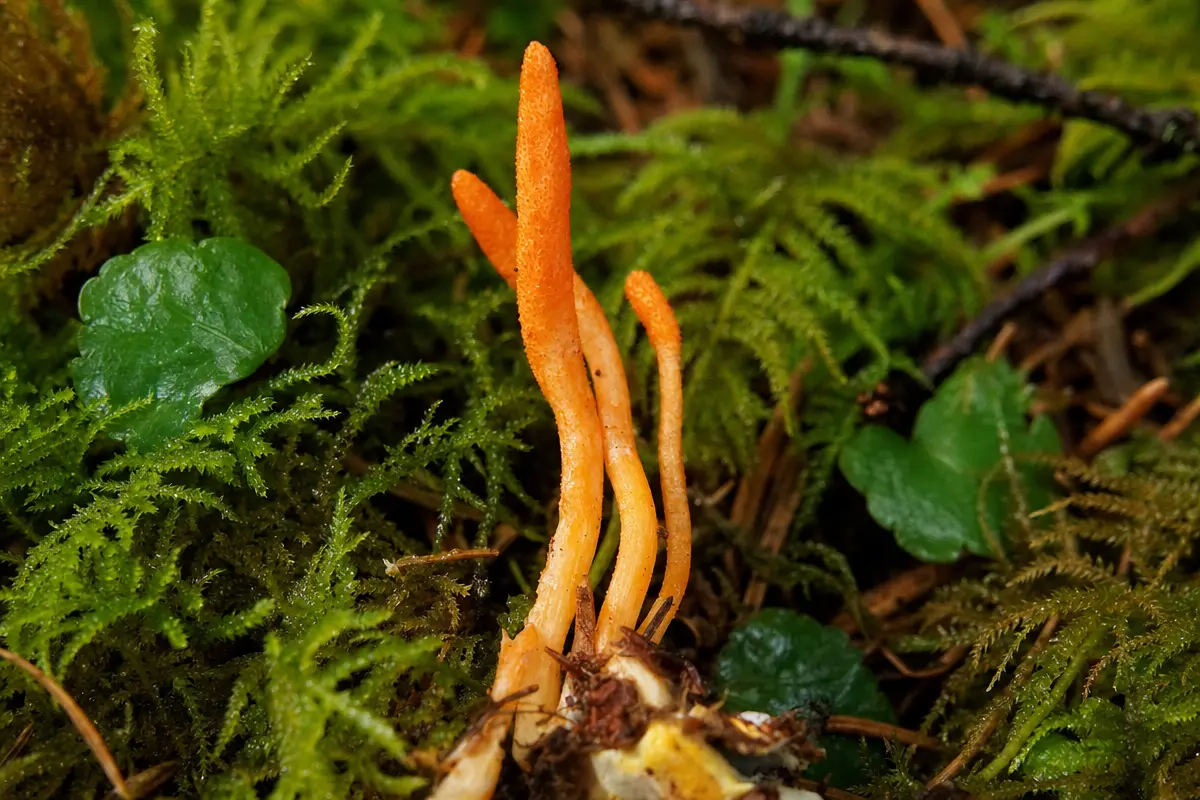
Substrat basique de riz brun
C'est la recette la plus simple et ideale pour votre premiere culture :
- Mesurez 28-35 g de riz brun par bocal de 500 mL
- Preparez le bouillon nutritif : Mixez 3 oeufs entiers (coquilles incluses) avec 500 mL d'eau. Ajoutez 1 cuillere a soupe d'extrait de malt et 1 cuillere a soupe de levure nutritionnelle. Mixez jusqu'a obtenir un melange lisse.
- Combinez 60-70 mL de bouillon nutritif par bocal avec le riz
- Couvrez les bocaux lachement avec les couvercles modifies (port d'injection + ventilation micropore) et enveloppez les couvercles dans du papier d'aluminium
Le bouillon a base d'oeufs est une formulation largement utilisee dans la communaute de culture a domicile car les oeufs fournissent une source de nutrition riche en proteines, analogue aux insectes, que C. militaris metabolise facilement.
Bouillon nutritif alternatif (a base de pomme de terre)
- 100 mL de bouillon de pomme de terre (faites bouillir 200 g de pomme de terre coupee en des dans 1 L d'eau pendant 20 min, filtrez)
- 15 g de dextrose (ou 2 cuilleres a soupe de sirop de mais)
- 5 g de levure nutritionnelle
- Completez a 500 mL avec de l'eau
Utilisez 60-70 mL par bocal avec 28-35 g de riz brun, meme procedure qu'au-dessus.
Le ratio carbone-azote compte
La recherche montre que le ratio carbone-azote (C:N) du substrat affecte directement la croissance mycelienne et la production de cordycepine. Une revue de 2025 dans Foods a trouve qu'un ratio C:N de 12:1 maximisait la croissance mycelienne, tandis qu'un ratio de 8:1 produisait une augmentation de 3,5 fois du contenu en cordycepine. Pour les debutants, la recette a base d'oeufs se situe naturellement dans une plage productive — l'optimisation des ratios est plus pertinente une fois que vous etes a l'aise avec le processus de base.
Formules de bouillon nutritif de grade laboratoire
Pour les cultivateurs qui souhaitent un controle precis, la recherche publiee utilise des milieux definis :
| Composant | Quantite par 1 L |
|---|---|
| Amidon de pomme de terre ou amidon de tapioca | 20 g |
| Dextrose | 15 g |
| Peptone de soja ou extrait de levure | 5 g |
| MgSO4 (sulfate de magnesium) | 0,5 g |
| KH2PO4 (phosphate de potassium) | 1 g |
Ajustez le pH a 6,5-7,0 avec du NaOH dilue ou de l'acide citrique avant l'autoclavage. La recherche indique que des conditions legerement acides (pH 4,5-5,0) favorisent la biosynthese de l'adenosine, tandis qu'un pH neutre (6,5-7,0) est meilleur pour la croissance generale et la production de cordycepine.
Sterilisation
La contamination est la principale cause d'echec dans la culture de Cordyceps. Le substrat riche en nutriments est un environnement ideal pour les bacteries et les moisissures, une sterilisation complete est donc essentielle.
- Placez les bocaux dans l'autocuiseur sur une grille (les bocaux ne doivent pas reposer directement sur le fond)
- Cuisez sous pression a 15 PSI (121 C) pendant 60 minutes — certains cultivateurs preferent 90 minutes pour une marge supplementaire
- Laissez la pression se liberer naturellement — ne forcez pas la ventilation, car un refroidissement rapide peut fissurer les bocaux ou aspirer de l'air non filtre
- Refroidissez completement avant l'inoculation — cela prend generalement 8-12 heures. Le substrat doit etre a temperature ambiante ; inoculer un substrat chaud tuera la culture
Important : N'ouvrez pas les bocaux et ne retirez pas le papier d'aluminium avant d'etre dans votre espace de travail sterile, pret a inoculer.
Inoculation
C'est ici que la technique sterile compte le plus. Travaillez a l'interieur d'une boite a air calme (SAB) ou devant une hotte a flux laminaire.
- Desinfectez tout — pulverisez l'interieur de la SAB, les couvercles des bocaux et la seringue de LC avec de l'alcool isopropylique a 70 %. Laissez agir l'alcool pendant 2 minutes.
- Agitez vigoureusement la seringue de culture liquide pour briser les amas myceliens et les repartir uniformement
- Injectez 1-2 mL de LC par bocal de 500 mL a travers le port d'injection auto-scellant. Faites pivoter legerement le bocal pendant l'injection pour repartir la culture sur la surface
- Fermez et faites pivoter doucement — l'objectif est une repartition uniforme de la culture liquide dans tout le riz
- Etiquetez chaque bocal avec la date et le nom de la souche
Ratio culture-substrat : Le mycelium de C. militaris ne se propage pas agressivement dans le substrat comme le mycelium de pleurote. Utiliser trop peu de culture liquide par bocal est une erreur courante chez les debutants — 1-2 mL par bocal de 500 mL fournit une couverture adequate.
Phase de colonisation
Une fois inocules, vos bocaux entrent dans la phase de colonisation ou le mycelium s'etablit dans tout le substrat.
Conditions :
| Parametre | Cible |
|---|---|
| Temperature | 18-22 C (65-72 F) |
| Lumiere | Obscurite complete |
| Duree | 14-28 jours |
| Humidite | Ambiante (aucun controle special necessaire — les bocaux sont scelles) |
Placez les bocaux dans un placard sombre ou une boite. La temperature optimale de croissance mycelienne est d'environ 20 C, bien que la plupart des isolats tolerent bien 18-22 C. La recherche confirme que la croissance ralentit significativement au-dessus de 25 C, est inhibee a 27,5 C et cesse completement a 30 C.
Ce qu'il faut observer :
- Jours 3-6 : Vous devriez voir les premiers signes de croissance mycelienne blanche se propageant depuis les points d'inoculation
- Jours 7-14 : Le mycelium blanc devrait etre en train de coloniser visiblement les grains de riz
- Jours 14-28 : Colonisation complete — toute la surface du substrat apparait couverte de mycelium blanc
Quand s'inquieter :
- Taches vertes, noires ou roses apparaissant avant que le mycelium blanc ne s'etablisse — c'est une contamination (probablement Trichoderma, Aspergillus ou des bacteries). Jetez le bocal immediatement et ne l'ouvrez pas a l'interieur.
- Aucune croissance visible apres 10-14 jours — la culture est peut-etre faible, morte ou le substrat etait trop chaud lors de l'inoculation. Attendez jusqu'a 21 jours avant de jeter.
- Odeur aigre ou fetide — contamination bacterienne. Jetez.
Conditions de fructification
Une fois les bocaux completement colonises, il est temps de declencher la formation des corps fructiferes. C'est ici que le Cordyceps diverge le plus de la culture de champignons classique — la lumiere est essentielle, pas optionnelle.
Lumiere
C. militaris necessite de la lumiere pour initier et developper les corps fructiferes. Le photorecepteur de lumiere bleue CmWC-1 medie la transition du mycelium vegetatif au developpement des corps fructiferes.
Configuration d'eclairage recommandee :
| Parametre | Cible |
|---|---|
| Photoperiode | 12 heures lumiere / 12 heures obscurite |
| Intensite | 500-1 000 lux a la surface du bocal |
| Spectre | Bleu (450-460 nm) ou combinaison bleu-rouge |
| Duree | Pendant toute la phase de fructification (3-6 semaines) |
Une simple lampe de bureau LED ou bande LED positionnee a 30-50 cm des bocaux fonctionne bien. Une etude de 2013 dans le Journal of Food Biochemistry a trouve que la lumiere rose combinee (1/3 bleu a 450-460 nm + 2/3 rouge a 620-630 nm) produisait le contenu en matiere seche et la bioefficacite les plus eleves (40 % et 6,77 %, respectivement) — presque le double de la lumiere bleue seule. Une etude de 2024 a confirme que les longueurs d'onde bleues elevaient significativement la cordycepine, le contenu phenolique total et l'activite antioxydante par rapport a d'autres LEDs a longueur d'onde unique.
Pour les debutants, une LED blanc froid ou lumiere du jour standard fonctionne bien — la cle est de fournir n'importe quel cycle lumiere-obscurite consistant. Vous pourrez optimiser le spectre plus tard.
Optimisation avancee de la lumiere pour une cordycepine maximale
La recherche a cartographie comment des longueurs d'onde specifiques affectent a la fois le rendement et les profils de composes bioactifs :
| Condition lumineuse | Matiere seche (g) | Cordycepine (mg/g) | Carotenoides |
|---|---|---|---|
| Rose (1/3 bleu + 2/3 rouge) | 40,06 | Plus elevee | Plus eleves |
| Bleu (450-460 nm) | 24,44 | Elevee | Eleves |
| Lumiere du jour | 22,69 | Moderee | Moderes |
| Rouge (620-630 nm) | 22,06 | Plus faible | Plus faibles |
Le LED vert (526-531 nm) a egalement montre des rendements en cordycepine de 2,89 mg/g dans certaines etudes, tandis qu'une combinaison rouge-bleu au ratio 3R:3B a produit des niveaux de cordycepine allant jusqu'a 30 mg/g dans des conditions optimisees. Si maximiser la cordycepine est votre objectif, investissez dans une bande LED programmable avec des canaux bleu et rouge ajustables.
Temperature
Abaissez legerement la temperature par rapport a la colonisation pour une fructification optimale :
| Parametre | Cible |
|---|---|
| Temperature | 16-20 C (60-68 F) |
| Differentiel jour/nuit | Baisse de 2-4 C la nuit aide a declencher les primordia |
La recherche identifie 16-23 C comme la plage productive pour la formation des corps fructiferes. Des temperatures au-dessus de 25 C pendant la fructification peuvent provoquer des massues allongees et fines avec un faible contenu en cordycepine.
Humidite
| Parametre | Cible |
|---|---|
| Humidite relative | 70-95 % |
Si vous cultivez dans des bocaux scelles, l'humidite du substrat fournit une humidite adequate pour les corps fructiferes en developpement. Si vous avez transfere dans un conteneur ouvert ou un monotub, maintenez 80-90 % d'humidite en utilisant un humidificateur a brume fine ou en placant les bocaux dans une tente d'humidite (une boite plastique transparente avec des trous de ventilation).
Renouvellement d'air
C. militaris a besoin d'un certain echange gazeux mais est moins exigeant que les pleurotes. Si vous utilisez des bocaux avec ventilation en ruban micropore, l'echange passif est generalement suffisant. Dans les configurations monotub, ventilez brievement (30 secondes) deux fois par jour pour prevenir l'accumulation de CO2, qui peut provoquer des corps fructiferes allonges et greles.
Chronologie de croissance et a quoi s'attendre
Voici a quoi ressemble le developpement typique de l'inoculation a la recolte :
| Semaine | Etape | Ce que vous verrez |
|---|---|---|
| 0 | Inoculation | Grains de riz avec culture liquide repartie |
| 1-2 | Colonisation precoce | Taches blanches de mycelium apparaissant a la surface des grains |
| 2-4 | Colonisation complete | Toute la surface couverte de mycelium blanc |
| 4-5 | Formation de primordia | Petites bosses oranges (pins) apparaissant sur la surface mycelienne |
| 5-7 | Elongation des corps fructiferes | Massues oranges poussant vers le haut, 2-8 cm de haut |
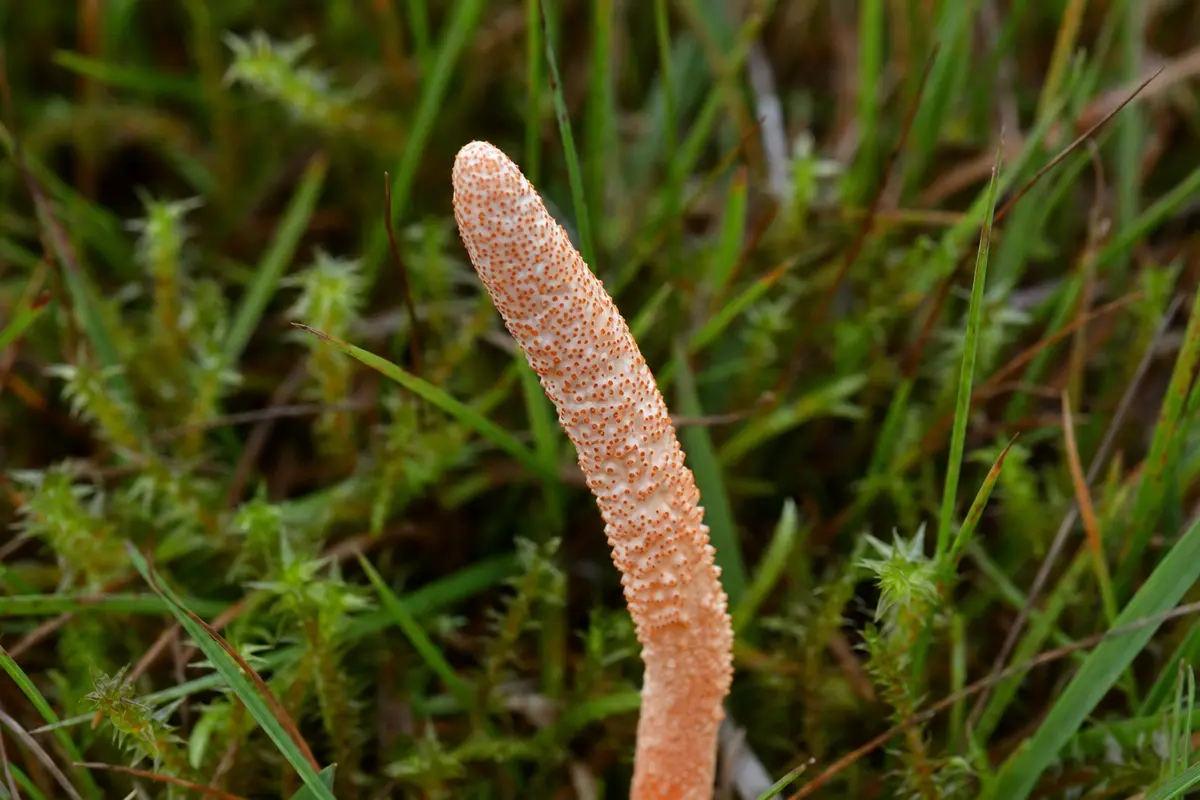
| 7-10 | Maturation | Les massues atteignent leur taille maximale, les pointes gonflent et developpent une texture rugueuse (peritheces) |
Le cycle complet de l'inoculation a la recolte prend generalement 6-10 semaines, selon la vigueur de la souche, la temperature et la nutrition du substrat.
Recolte
Le moment de la recolte affecte a la fois le rendement et le contenu en composes bioactifs.
Quand recolter :
- Les corps fructiferes ont atteint leur taille maximale (generalement 3-8 cm)
- Les pointes montrent une texture rugueuse ou granuleuse — ce sont les peritheces (structures productrices de spores), indiquant la maturite
- La couleur orange vif caracteristique est uniforme sur toute la longueur
Comment recolter :
- Tirez ou coupez delicatement les corps fructiferes a leur base ou ils rencontrent la surface du substrat
- Travaillez par lots — recoltez toutes les massues matures d'un bocal en une fois
- Un seul bocal de 500 mL produit generalement 2-5 g de Cordyceps seches, selon la souche et les conditions de culture
Apres la recolte : Certains cultivateurs rapportent une petite deuxieme levee du substrat epuise, mais les rendements sont significativement inferieurs. La plupart traitent le Cordyceps comme une culture a recolte unique et demarrent de nouveaux bocaux.
Sechage et stockage
Les corps fructiferes frais de C. militaris contiennent plus de 80 % d'humidite et sont tres perissables — utilisez-les ou sechez-les dans les 1-2 jours suivant la recolte.
Methode au deshydrateur (recommandee) :
- Etalez les corps fructiferes en une seule couche sur les plateaux du deshydrateur
- Sechez a 35-43 C (95-110 F) pendant 8-12 heures jusqu'a ce qu'ils soient completement secs et craquants
- Des temperatures plus basses preservent mieux la cordycepine et les autres composes sensibles a la chaleur
Sechage a l'air (methode de secours) :
- Placez sur une grille dans un endroit bien ventile a faible humidite
- Peut prendre 2-5 jours selon les conditions
- Risque de contamination plus eleve — le deshydrateur est fortement prefere
Stockage :
- Conservez les corps fructiferes completement seches dans des bocaux en verre hermetiques ou des sacs scelles sous vide
- Gardez dans un endroit frais, sombre et sec
- Duree de conservation : 12-24 mois lorsqu'ils sont correctement seches et scelles
- Pour une preservation maximale, conservez au congelateur apres scellage sous vide
Problemes courants et solutions
| Probleme | Cause probable | Solution |
|---|---|---|
| Pas de colonisation apres 14 jours | Culture morte ou faible ; substrat trop chaud lors de l'inoculation | Attendez jusqu'au jour 21. S'il n'y a pas de croissance, jetez et verifiez que le substrat a atteint la temperature ambiante avant d'inoculer |
| Moisissure verte (Trichoderma) | Sterilisation inadequate ou contamination pendant l'inoculation | Jetez le bocal — ne l'ouvrez pas a l'interieur. Revisez votre technique sterile et prolongez le temps de cuisson sous pression |
| Contamination bacterienne (odeur aigre, substrat visqueux) | Sterilisation insuffisante ou port d'injection humide | Jetez le bocal. Assurez 60+ minutes a 15 PSI. Sterilisez l'aiguille a la flamme avant d'injecter |
| Colonisation mais pas de corps fructiferes | Lumiere insuffisante, temperature incorrecte ou degenerescence de la souche | Verifiez le cycle de 12h de lumiere a 500+ lux. Confirmez que la temperature est entre 16-22 C. Essayez une culture fraiche d'une autre source |
| Massues fines et allongees avec mauvaise couleur | CO2 excessif, temperature trop elevee ou intensite lumineuse insuffisante | Augmentez le renouvellement d'air, reduisez la temperature a 18-20 C, rapprochez la lumiere ou augmentez l'intensite |
| Corps fructiferes avortent en cours de developpement | Fluctuation de temperature, chute d'humidite ou contamination | Stabilisez l'environnement. Verifiez la contamination cachee sur la surface du substrat |
Protocole avance de depannage
La degenerescence de souche est un defi bien documente dans la culture de C. militaris. Une etude de 2024 dans Scientific Reports a trouve que les souches commencent a degenerer des la troisieme generation de sous-culture, presentant une croissance lente du mycelium, une densite reduite et une perte de la capacite de fructification. Les souches degenerees montrent une deregulation des genes de la voie de signalisation MAPK et des niveaux eleves de glycerol intracellulaire.
Implications pratiques :
- Achetez de la culture liquide fraiche plutot que de sous-cultiver indefiniment a partir d'une source unique
- Si vous maintenez vos propres cultures, transferez sur de la gelose fraiche ou un milieu liquide pas plus de 2-3 fois avant de revenir a un stock maitre conserve a 4 C dans du glycerol a 20 %
- Surveillez les rendements decroissants, les corps fructiferes de couleur plus claire ou les taux de contamination accrus au fil des cultures successives — tous des signes de degenerescence de souche
Environnements sujets a la contamination : Si vous perdez plus de 20 % de vos bocaux a cause de la contamination, envisagez ces ameliorations :
- Construisez une boite a air calme (SAB) appropriee avec des gants a longueur de bras
- Ajoutez un filtre HEPA a votre zone d'inoculation
- Sterilisez deux fois : cuisez sous pression pendant 60 min, refroidissez pendant la nuit, puis cuisez a nouveau pendant 30 min (« tyndallisation »)
- Remplacez les ports d'injection par des couvercles en silicone auto-scellants que vous pouvez steriliser a la flamme autour
Cordyceps militaris vs. autres champignons pour debutants
Si vous etes nouveau en mycologie, voici comment C. militaris se compare a d'autres especes populaires :
| Facteur | Cordyceps militaris | Pleurotes | Shiitake |
|---|---|---|---|
| Difficulte | Intermediaire | Debutant | Intermediaire |
| Technique sterile requise | Elevee — sterilisation sous pression obligatoire | Faible — la pasteurisation suffit | Moderee |
| Substrat | Grains enrichis (riz + bouillon nutritif) | Paille, marc de cafe, bois dur | Buches de bois dur ou blocs de sciure |
| Temps jusqu'a la recolte | 6-10 semaines | 2-4 semaines | 6-12 mois (buches) / 8-12 semaines (blocs) |
| Besoin en lumiere | Essentiel pour la fructification | Utile mais pas critique | Utile mais pas critique |
| Rendement par culture | 2-5 g seches par bocal de 500 mL | 200-500 g frais par bloc de 2,5 kg | 100-300 g frais par buche |
| Valeur marchande (seche) | Elevee (50-150 USD/oz) | Faible (2-5 USD/lb frais) | Moderee (5-10 USD/lb frais) |
La conclusion : le Cordyceps demande plus de precision que les pleurotes, mais vous recompense avec un produit medicinal de grande valeur impossible a trouver frais en magasin.
Montee en echelle : des bocaux aux monotubs
Une fois que vous avez reussi quelques cultures en bocaux, vous pouvez passer a des conteneurs plus grands pour des rendements plus eleves.
Configuration monotub :
- Utilisez un conteneur en plastique transparent de 6-12 litres
- Percez des trous de 6 mm sur les cotes (4-6 trous), couverts de ruban micropore pour l'echange gazeux
- Preparez le substrat en gros — meme recette riz + bouillon nutritif, proportionnellement mise a l'echelle
- Sterilisez dans des sacs autoclavables ou divisez entre plusieurs bocaux et combinez apres la sterilisation
- Inoculez au meme taux : environ 1-2 mL de LC par 35 g d'equivalent riz
La methode des sacs est une autre approche populaire de mise a l'echelle : sterilisez le substrat de grains dans des sacs en polypropylene autoclavables avec des patchs filtrants. Apres l'inoculation, placez les sacs a plat pour maximiser la surface disponible pour le developpement des corps fructiferes.
Quelle que soit la methode, les parametres environnementaux restent les memes — obscurite pendant la colonisation a 18-22 C, puis cycle lumiere 12/12 a 16-20 C avec 70-95 % d'humidite pour la fructification.
Utiliser votre recolte
Les corps fructiferes seches de C. militaris peuvent etre utilises de plusieurs facons :
- The/decoction : Infusez 1-3 g de Cordyceps seches dans de l'eau chaude (pas bouillante — 70-80 C) pendant 15-20 minutes. La cordycepine est soluble dans l'eau, ce qui en fait une methode d'extraction efficace.
- Poudre : Broyez les corps fructiferes seches dans un moulin a cafe et ajoutez aux smoothies, soupes ou capsules. La dose typique en supplement est de 1-3 g par jour.
- Teinture a double extraction : Combinez une extraction a l'eau chaude avec une extraction alcoolique pour capturer a la fois les composes hydrosolubles (cordycepine, polysaccharides) et les composes liposolubles (ergosterol, carotenoides).
- Culinaire : Ajoutez des massues sechees entieres aux soupes, bouillons et sautes — une preparation traditionnelle dans la cuisine est-asiatique.
Points cles a retenir
- Cordyceps militaris est l'espece cultivable — il pousse sur substrat de grains a la maison, contrairement au C. sinensis sauvage qui est incultivable et coute des milliers par kilogramme
- Le cycle complet de culture prend 6-10 semaines : 2-4 semaines de colonisation dans l'obscurite a 18-22 C, puis 3-6 semaines de fructification sous cycles lumineux de 12 heures a 16-20 C
- La technique sterile est critique — cuisez le substrat sous pression a 15 PSI pendant 60+ minutes et inoculez dans une boite a air calme ou sous hotte a flux laminaire
- La lumiere declenche la fructification via le recepteur de lumiere bleue CmWC-1 — 500-1 000 lux pendant 12 heures par jour, avec des LEDs bleus ou bleu-rouge produisant les meilleurs resultats
- Chaque bocal de 500 mL produit 2-5 g seches, riches en cordycepine, adenosine, polysaccharides et autres composes bioactifs soutenus par la recherche clinique
- Commencez avec la methode des bocaux mason, maitrisez votre technique sterile, puis passez aux monotubs ou aux sacs