Bosuien kweken op hydrocultuur: van zaad tot oogst
Leer hoe u bosuien op hydrocultuur kweekt van zaad tot oogst, met op onderzoek gebaseerde richtlijnen voor systemen, pH, nutriënten, temperatuur en licht.
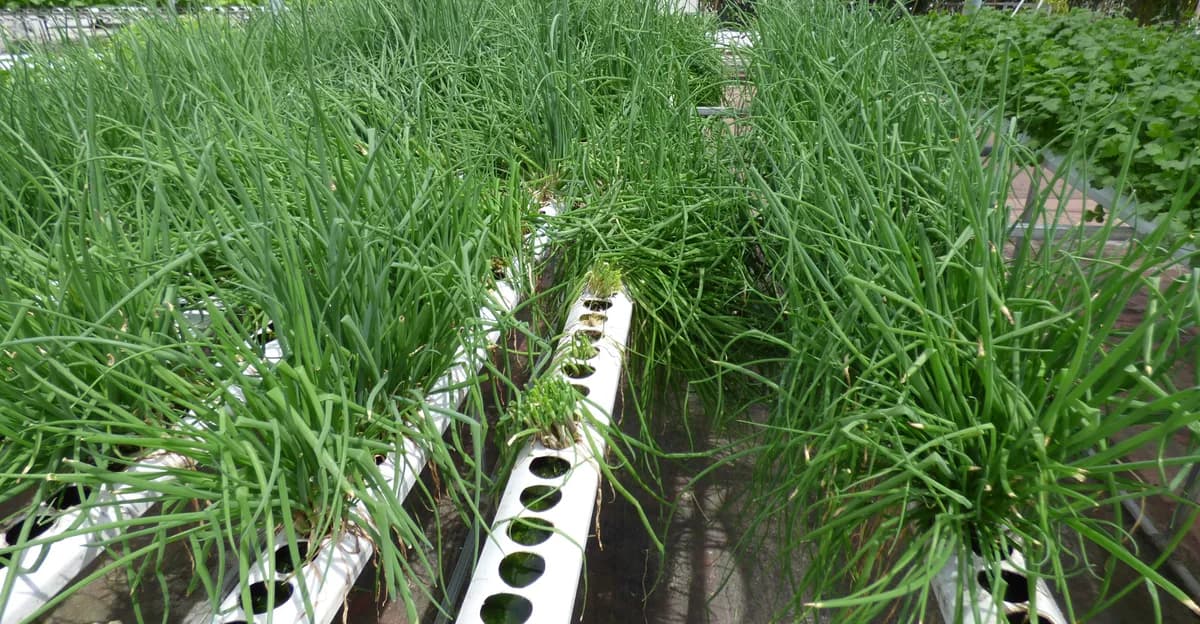
Kernpunt: Start bosuien op hydrocultuur vanuit zaad in een recirculerend kanaal of een systeem met een beluchte voedingsoplossing. Houd de oplossing licht zuur op een pH van 5,5 tot 6,0, begin met een matige voedingssterkte voor bladgewassen en houd het water rond de wortels in beweging of belucht. Beoordeel de oogst op basis van de bruikbare bladgrootte en -conditie in plaats van een beloofd aantal dagen.
Dat advies is beperkter dan veel online gidsen. Directe studies ondersteunen de voedingsfilmtechniek (NFT), teelt in beluchte oplossing en kanalen met een gecirculeerde, ondiepe oplossing voor Allium fistulosum. Ze wijzen niet één beste thuissysteem, één universele elektrische geleidbaarheid (EC), een vast belichtingsschema of eindeloze hergroei uit supermarktwortels aan.
Voor een beknopte soortbeschrijving opent u het plantprofiel van bosui en lente-ui. Als u een ronde bewaarbol als doel heeft, gebruik dan onze aparte gids voor het kweken van boluien.
Bosuien in één oogopslag
| Zorgpunt | Op bewijs gebaseerd startpunt |
|---|---|
| Gewas | Vanuit zaad gestarte Allium fistulosum, ook wel Welse ui, stengelui, lente-ui of bosui genoemd |
| Systeem | NFT, een reservoir met beluchte voedingsoplossing of een kanaal met gecirculeerde, ondiepe oplossing |
| pH van de oplossing | 5,5 tot 6,0, de overlap tussen twee directe hydrocultuurstudies |
| Voedingssterkte | Volg een compleet product voor bladgewassen op een matige startsterkte; ga er niet van uit dat meer concentraat meer groei betekent |
| Wortelvoorziening | Houd de voedingsoplossing in beweging of belucht en controleer de conditie ervan regelmatig |
| Luchttemperatuur | Een gematigd daggemiddelde van 13-25 °C is een brede teeltrichtlijn, geen hydrocultuuroptimum |
| Binnenverlichting | Een wit breedspectrumlicht is een redelijke startkeuze, maar het bewijs stelt geen universele intensiteit of daglengte vast |
| Oogst | Snijd wanneer de bladeren de grootte, conditie en kwaliteit hebben die u wilt; de teeltduur varieert per cultivar en systeem |
Controleer of u het gewas uit deze gids kweekt
Deze gids behandelt Allium fistulosum. Kew accepteert het als een afzonderlijke soort en universitaire naslagwerken beschrijven het onder verschillende gangbare namen: Welse ui, stengelui, lente-ui en bosui. De plant ontwikkelt meestal een lange witte schijnstengel in plaats van de ronde bewaarbol die met de bolui wordt geassocieerd.
Het label "bosui" kan ook verwijzen naar een jonge Allium cepa die wordt geoogst voordat een volledige bol zich ontwikkelt. Die plant is nog steeds eetbaar als bosui, maar de latere groei en het teeltdoel verschillen. Controleer op het zaadzakje of het om A. fistulosum gaat als u het gewas uit deze gids wilt. Ga er niet van uit dat een ongelabelde bos uit de supermarkt tot deze soort behoort.
Kies een op bewijs gebaseerd hydrocultuursysteem
Bosuien voltooiden hun vegetatieve groei in drie direct bestudeerde opstellingen:
- Santos en collega's teelden
Tokio Kuroin NFT-kanalen die door afzonderlijke reservoirs werden gevoed. - Araujo en collega's teelden
Todo Anoin beluchte containers van 16 L met voedingsoplossing. - Souza en collega's teelden
Todo Ano Evergreen-Nebukain pvc-kanalen met een gecirculeerde, ondiepe film voedingsoplossing.
Deze resultaten bieden een beginner twee praktische richtingen: een recirculerend kanaal of een op een reservoir gebaseerde, beluchte opstelling. Kies de opstelling die u kunt inspecteren, schoonmaken en consistent draaiende kunt houden. De studies laten zien dat beide benaderingen kunnen werken; ze bewijzen niet dat de ene meer opbrengt bij een thuisteelt.
Behandel niet elke op water gebaseerde methode als onderling uitwisselbaar. Het meegewogen onderzoek testte geen passieve Kratky-containers en stelde geen Kratky-opstelling voor deze soort vast. Het vergeleek NFT ook niet met diepwatercultuur (DWC) als benoemde thuissystemen. Als u een ongeteste opstelling gebruikt, behandel die dan als uw eigen proef en niet als een op onderzoek gebaseerde kortere weg.
Stel het systeem in bedrijf vóór het verplanten
Voordat zaailingen het systeem in gaan, controleert u of u de wortelvoorziening stabiel kunt houden en elk relevant onderdeel kunt inspecteren. De directe studies gebruikten verschillende apparatuur, maar elk gaf het gewas een beheerde voedingsoplossing en een manier om die te controleren of te vernieuwen.
| Controle | Klaar wanneer | Pauzeer wanneer | Grens van het bewijs |
|---|---|---|---|
| Oplossingstraject | De beoogde stroming bereikt elk kanaal of elke plantpositie en de retourstroom bereikt het reservoir zonder een duidelijk lek. | Eén positie blijft droog, een retourstroom stuwt op of de beschikbare oplossing verandert te snel om te verklaren. | NFT- en ondiepkanaalproeven circuleerden de oplossing, maar testten geen enkele thuispompgrootte of debiet. |
| Wortelvoorziening | De geplande circulatie of beluchting werkt zoals ontworpen. | De beluchting stopt, de circulatie wordt zonder plan onregelmatig of u kunt niet bevestigen dat de wortels oplossing zullen ontvangen. | Bewegende of beluchte oplossing was gemeenschappelijk voor de directe studies. Geen enkele studie vergeleek streefwaarden voor opgeloste zuurstof. |
| Toegang tot het reservoir | U kunt het oplossingsniveau inspecteren, nutriënten mengen, de pH meten en het reservoir verwijderen om het schoon te maken of te vernieuwen. | Het reservoir is niet bereikbaar zonder het gewas te verstoren of het systeem te demonteren. | De studies controleerden, vulden bij, vervingen of beheerden afzonderlijke reservoirs als onderdeel van hun methoden. |
| Meetreferentie | U heeft de waterbron, het voedingsproduct, de menginstructie en de pH na het mengen genoteerd. | De startmix is onbekend of is gekopieerd van een niet-gerelateerde EC-waarde. | De artikelen gebruikten verschillende recepten en systemen, dus hun EC-metingen vormen geen enkele overdraagbare streefwaarde. |
| Gewasidentiteit | De zaailingen hebben een bekende cultivar of ten minste een zaadzakje dat Allium fistulosum vermeldt. | Planten uit een ongelabelde bos worden behandeld als gelijkwaardig aan een uit zaad geteeld gewas. | De hydrocultuurproeven gebruikten benoemde cultivars, terwijl gangbare namen meer dan één uiensoort kunnen omvatten. |
Traceer het stromingstraject één keer terwijl het systeem in zijn normale bedrijfsstand staat. Markeer het werkende oplossingsniveau op een zichtbare plek en noteer daarna de pH nadat de voeding is gemengd. Deze waarnemingen vormen de referentie voor het eerste gewas.
Houd de eerste aanplant klein genoeg om elke positie te kunnen inspecteren. Als één deel van het kanaal droogvalt of één groep verzwakt, maakt een kleiner gewas het gemakkelijker om een lokaal aanvoerprobleem te onderscheiden van een probleem met het hele reservoir.
Begin vanuit zaad
Een zaadzakje met het label Allium fistulosum geeft u een duidelijke soortidentiteit. De directe hydrocultuurstudies startten deze soort in een opkweekfase en verplaatsten gevestigde jonge planten daarna naar hun definitieve kanalen of systemen met beluchte oplossing. De exacte overplaatsdata en plantleeftijden verschilden, dus er is geen enkele verplantdag die voor elke cultivar en opstelling geldt.
Zaai het zaad met de vermeerderingsmethode die bij uw hydrocultuursysteem of substraat wordt geleverd. Verplaats de zaailingen naar het definitieve systeem nadat ze zijn aangeslagen en noteer die datum. Houd alle planten in een klein eerste gewas op hetzelfde schema, zodat verschillen gemakkelijker te zien zijn.
Supermarktwortels zijn een ander experiment. Het dossier vond geen kwalificerende studie die gewortelde keukenresten testte als een volledige hydrocultuur-teeltmethode. Een afgesneden basis kan wat zichtbare bladgroei opleveren, maar dit artikel kan daarmee geen volledig gewas, oogstschema of herhaalde sneden beloven.
Meng de voedingsoplossing zonder een universele EC na te jagen
Stel de pH in nadat u de voedingsoplossing heeft gemengd. Twee onafhankelijke bosuienstudies hielden de pH in overlappende, licht zure bereiken aan: 5,5 tot 6,5 in de NFT-studie en 5,5 tot 6,0 in de studie met beluchte oplossing. Een werkbereik van pH 5,5 tot 6,0 blijft binnen beide studieomstandigheden.
Gebruik een complete hydrocultuurvoeding bedoeld voor bladgewassen en volg het etiket ervan. Begin met een matige sterkte in plaats van extra concentraat toe te voegen voor snellere groei. In het benoemde recept van Santos en collega's presteerden de planten in delen van het behandelbereik van 50% tot 100% beter dan bij 125%. Araujo en collega's ontdekten ook dat een tekort aan stikstof en fosfor de groei beperkte, terwijl overmatige stikstof te weelderige, slappe bladeren produceerde en overmatige kalium het calcium- en magnesiumgehalte in het weefsel verlaagde.
Let op: Die behandelingen definiëren geen universele streefwaarde in delen per miljoen of EC. De artikelen gebruikten verschillende recepten, cultivars en systemen. Het NFT-artikel rapporteert een EC-waarde die moeilijk te rijmen is met zijn concentratiebehandelingen, terwijl het zoutgehalte-experiment de EC verhoogde met natriumchloride in plaats van met extra meststof. Het overnemen van een van beide waarden in een voedingsregel zou het bewijs verkeerd interpreteren.
Controleer de pH en de conditie van de oplossing volgens een routine die u kunt volhouden. De directe studies circuleerden, beluchtten, controleerden, vulden bij of vervingen de oplossing als onderdeel van hun methoden. Ze isoleerden opgeloste zuurstof niet en testten geen enkele controlefrequentie, dus deze gids wijst geen zuurstofdrempel of universeel verversingsschema toe.
Houd de wortelvoorziening actief
Alle drie de succesvolle systemen voorzagen de wortels van bewegende of beluchte voedingsoplossing. Santos gebruikte recirculerende NFT, Araujo beluchtte zijn onderzoekscontainers continu en Souza circuleerde een ondiepe oplossing op geplande intervallen door kanalen.
Bevestig voordat u meer voeding toevoegt dat de wortelzone nog steeds oplossing ontvangt zoals bedoeld. Controleer of de circulatie of beluchting draait, of de beschikbare oplossing niet buiten het werkende niveau van het systeem is gezakt en of de pH binnen bereik blijft. Die controles blijven dichter bij het bewijs dan elke zwakke plant als "hongerig" diagnosticeren.
De proeven vergeleken geen concentraties opgeloste zuurstof. Het bewegen of beluchten van de oplossing was een gedeelde omstandigheid, geen getest bewijs dat één zuurstofwaarde de beste groei veroorzaakt.
Gebruik een protocol voor het bijstellen van de voeding
Wanneer de groei verandert, werkt u het systeem elke keer in dezelfde volgorde door. Zo voorkomt u dat een circulatiestoring, pH-verschuiving of zoutprobleem wordt aangezien voor een voedingstekort.
- Controleer eerst de aanvoer. Bevestig dat het beoogde oplossingstraject of de beluchting de aangetaste planten nog bereikt. Als slechts één positie zwak is, vergelijk die dan met een gezonde positie voordat u het hele reservoir verandert.
- Meet de pH nadat u de aanvoer heeft bevestigd. Breng de oplossing terug binnen het werkbereik van pH 5,5 tot 6,0 als die er buiten is geraakt. Noteer de meting vóór en na de correctie.
- Reconstrueer de laatste mix. Controleer het productetiket, het watervolume, de mengvolgorde en eventuele bijvullingen of vervangingen. Een onzeker recept is een reden om een bekende oplossing opnieuw te maken, niet om nog een dosis te schatten.
- Scheid de meststofsterkte van ongewenste zouten. Een stijgende geleidbaarheidsmeting kan meststofionen, mineralen uit het bronwater of zouten zoals natriumchloride weerspiegelen. Het experiment van Souza verhoogde het zoutgehalte met natriumchloride, dus de behandelingen met een hoge EC kunnen de meststofbehoefte niet diagnosticeren.
- Verander één beheersbare factor. Herstel de stroming, corrigeer de pH of vervang een onzekere oplossing voordat u meer concentraat toevoegt. Noteer daarna de reactie van de plant, zodat de volgende beslissing bewijs uit uw eigen systeem gebruikt.
Gebruik het patroon over het hele gewas om de oorzaak te versmallen:
| Patroon | Nuttigere eerste vergelijking | Waarom |
|---|---|---|
| Eén kanaalpositie verzwakt | Vergelijk de stroming en worteltoegang met een gezonde positie | Een lokaal aanvoerprobleem kan bestaan, zelfs wanneer de meting van het reservoir er normaal uitziet. |
| De meeste planten veranderen na een nieuwe mix | Vergelijk het recept, de pH en de waterbron met de vorige batch | De directe studies beheersten de samenstelling en pH van de oplossing; een verandering van het hele gewas tegelijk wijst terug naar een gedeelde omstandigheid. |
| De groei is bleek of traag bij een geverifieerde milde mix | Bekijk de productinstructie en het gewasdossier voordat u de sterkte verhoogt | Een tekort aan stikstof en fosfor beperkte de groei in één experiment, maar het uiterlijk alleen identificeerde het ontbrekende element niet. |
| De bladeren worden erg weelderig en slap | Controleer of de mix de geplande concentratie overschreed | Overmatige stikstof produceerde slappe scheutgroei bij de behandelingen van Araujo. |
| Vergeling en groeiremming volgen op verslechterend bronwater of zoutophoping | Bekijk de waterkwaliteit en overweeg de oplossing te vervangen | Zoutgehalte door natriumchloride verminderde de groei en veroorzaakte zichtbare schade in de proef van Souza. |
Verander de pH, voedingssterkte en circulatie niet tegelijkertijd, tenzij de planten met een acute systeemstoring worden geconfronteerd. Afzonderlijke veranderingen maken het resultaat gemakkelijker te interpreteren.
Gebruik gematigde temperaturen en eerlijke belichtingsrichtlijnen
Een overzichtsstudie van de Welse-uienteelt beschrijft 13-25 °C als een geschikt daggemiddeld bereik voor groei. Een apart gecontroleerd experiment teelde planten met succes bij 25 °C overdag en 18 °C 's nachts. Gebruik deze cijfers als brede context voor een gematigde teeltruimte, niet als bewijs van een hydrocultuuroptimum.
Het bewijs voor belichting is beperkter. Gao en collega's vergeleken spectra van light-emitting diodes (LED) terwijl ze de lichtintensiteit en daglengte constant hielden. Wit licht met een volledig spectrum leverde in dat experiment het grootste bladoppervlak en versgewicht op, terwijl blauw de sterkste eenkleurige behandeling was. De planten groeiden in een vast substraat dat met voedingsoplossing werd bewaterd, niet in een hydrocultuurkanaal.
Voor een gewas binnenshuis is een witte groeilamp met een breed spectrum de best te verdedigen startkeuze uit die studie. Die levert geen universele lichtintensiteit, ophanghoogte of fotoperiode. De geteste intensiteit en de dag van 12 uur waren bedrijfsomstandigheden, geen concurrerende behandelingen, dus ze kunnen niet als optima worden gepresenteerd.
Oogst op basis van de plant, niet de kalender
De gepubliceerde teeltduur varieert te veel voor een eerlijke belofte van "oogsten in X dagen". Santos mat een NFT-gewas op 48 dagen na het zaaien. Araujo volgde planten tot 60 dagen na het verplanten, terwijl Souza oogstte op 90 dagen na het zaaien. De studies gebruikten verschillende cultivars, systemen en onderzoeksvragen.
Oogst wanneer de bladeren rechtop staan, schoon en groot genoeg zijn voor de manier waarop u ze wilt gebruiken. Noteer de zaai- en oogstdata voor uw eigen cultivar en opstelling. Dat eerste gewas wordt een betere planningsreferentie dan een getal dat aan een ander systeem is ontleend.
Herhaald snijden vraagt om dezelfde terughoudendheid. Eén proefschrift testte wekelijkse en tweewekelijkse sneden in een recirculerende opstelling en rapporteerde een lager cumulatief scheutgewicht dan één enkele oogst. Het proefschrift werd niet volledig gelezen, was geen peer-reviewed tijdschriftartikel en had geen onafhankelijke kwalificerende studie naar herhaald snijden in het dossier.
U kunt hergroei op een paar planten testen, maar bouw uw oogstplan niet op rond een aangenomen aantal sneden. Houd het hoofdgewas op een plan met één enkele oogst totdat uw eigen gegevens aantonen dat herhaald snijden een acceptabel herstel en een bruikbare opbrengst oplevert.
Bouw een teeltkalender op basis van plantgebeurtenissen
Gebruik plantgebeurtenissen als het hoofdschema en noteer de verstreken tijd als een waarneming. De gepubliceerde eindpunten liepen uiteen van 48 dagen na het zaaien tot 90 dagen na het zaaien, terwijl een ander experiment planten 60 dagen na het verplanten volgde. Die cijfers beschrijven verschillende studies, geen gedeeld oogstvenster.
| Teeltgebeurtenis | Wat te noteren | Beslissing vóór u verdergaat |
|---|---|---|
| Zaad wordt gezaaid | Soort en cultivar, zaaidatum, zaadbron en vermeerderingsmethode | Houd de batchidentiteit gekoppeld aan het gewas. |
| Zaailing is aangeslagen | Bladconditie, wortelontwikkeling die u kunt inspecteren en eventuele ongelijkmatige planten | Verplaats wanneer de zaailing voor uw systeem is aangeslagen in plaats van de verplantdag van één studie te kopiëren. |
| Zaailing gaat het definitieve systeem in | Overplaatsdatum, systeemtype, waterbron, voedingsproduct, start-pH en werkend oplossingsniveau | Bevestig dat de circulatie of beluchting elke plantpositie bereikt. |
| Actieve blad- en uitstoelingsgroei begint | pH-metingen, meng- of verversingsmomenten, bladstand, kleur en verschillen tussen posities | Behoud de referentie zolang de groei stevig en gelijkmatig is. Onderzoek de aanvoer en het mengen voordat u de concentratie verhoogt. |
| Bladeren naderen bruikbare grootte | Bladconditie, beoogd gebruik en het aantal gereedstaande planten | Kies een oogstdatum op basis van bruikbare kwaliteit en noteer die als de maatstaf voor deze cultivar en opstelling. |
| Een hergroeiproef begint | Snijdatum, gesneden planten, ongesneden vergelijkingsplanten, herstel en bruikbaar gewicht van elke groep | Ga alleen door als het hergroeide gewas aan uw kwaliteits- en opbrengsteisen voldoet. Het meegewogen proefschrift ondersteunt geen gegarandeerd aantal sneden. |
Houd voor het eerste gewas ten minste één eenvoudige vergelijking aan. U kunt een paar vergelijkbare planten ongesneden laten terwijl u de hergroei op de rest test, of een zwakke kanaalpositie vergelijken met een gezonde voordat u het reservoir verandert. Verander in die vergelijking slechts één geplande variabele.
Bereken bij de oogst uw eigen intervallen van zaai tot oogst en van verplaatsing tot oogst. Voeg de cultivar, het seizoen, het systeem en elke grote onderbreking toe aan het dossier. Een later gewas kan dan een maatstaf uit dezelfde opstelling gebruiken in plaats van een deadline die aan een andere cultivar of een ander experiment is ontleend.
Onderzoek de omstandigheden voordat u meer concentraat toevoegt
| Wat u ziet | Controleer eerst | Grens van het bewijs |
|---|---|---|
| Bleke of zwakke groei | Bevestig het mengen van de voeding en de pH voordat u de sterkte verhoogt | Een tekort aan stikstof en fosfor verminderde de groei in één experiment met beluchte oplossing, maar de bladkleur alleen kan het ontbrekende nutriënt niet identificeren |
| Zeer weelderige, slappe bladeren | Bekijk of er meer stikstof is gemengd dan de productinstructie aangeeft | Overmatige stikstof produceerde slappe scheutgroei in het experiment van Araujo; die studie definieerde geen universele thuisdosis |
| Groeiremming en vergeling naarmate de zouten in de oplossing stijgen | Bekijk het bronwater, het mengen en het verversen van de oplossing | Een experiment met brak water bracht een toenemend natriumchloride-zoutgehalte in verband met minder droge stof, vergeling, groeiremming en verlies van uitstoeling; het was geen proef naar meststofsterkte |
| Meerdere planten verzwakken tegelijk | Controleer de pH, de beschikbare oplossing, de circulatie of beluchting en recente mengwijzigingen | Succesvolle directe studies beheersten deze omstandigheden, maar ze creëerden geen symptoom-voor-symptoom diagnosesleutel |
Verander waar mogelijk één beheersbare factor tegelijk en noteer daarna wat er is veranderd. Concentraat toevoegen voordat u het systeem controleert, kan een overmatig of zoutgerelateerd probleem verergeren.
Veelgestelde vragen
Kunnen bosuien op hydrocultuur groeien?
Ja. Peer-reviewed studies teelden Allium fistulosum in NFT, beluchte voedingsoplossing en kanalen met een gecirculeerde, ondiepe oplossing. Die proeven tonen de haalbaarheid aan, maar wijzen niet één beste thuissysteem aan.
Welke pH moeten bosuien op hydrocultuur hebben?
Gebruik pH 5,5 tot 6,0 als een op onderzoek gebaseerd werkbereik. Het is de overlap tussen twee directe hydrocultuurstudies, geen bewezen universeel optimum.
Welke EC moet ik gebruiken voor bosuien op hydrocultuur?
Het meegewogen bewijs ondersteunt geen enkele universele EC-streefwaarde. De directe studies gebruikten verschillende voedingsrecepten en experimentele omstandigheden, en één zoutgehaltestudie verhoogde de EC met natriumchloride in plaats van met meststof.
Kan ik bosuien kweken met de Kratky-methode?
Het dossier vond geen kwalificerend direct bewijs voor passieve Kratky-teelt van A. fistulosum. Dat bewijst niet dat het niet kan werken. Het betekent dat deze gids het niet als een op bewijs gebaseerde methode kan presenteren.
Hoe lang doen bosuien op hydrocultuur erover om te groeien?
De teeltduur liep sterk uiteen tussen de directe studies omdat de cultivar, het systeem en het onderzoeksontwerp verschilden. Gebruik de bladgrootte en -conditie om te bepalen wanneer u oogst en houd daarna uw eigen dossier van zaai tot oogst bij.
Groeien bosuien op hydrocultuur eeuwig terug?
Geen kwalificerend bewijs ondersteunt onbeperkte hergroei of een gegarandeerd aantal sneden. Een beperkt proefschriftresultaat waarschuwt ook dat frequent snijden in het geteste systeem minder cumulatief scheutgewicht kan opleveren dan één enkele oogst.
Uw eerste gewas zou een klein aantal vragen moeten beantwoorden: of het gekozen systeem betrouwbaar blijft, of de pH binnen 5,5 tot 6,0 blijft, of matige voeding stevige, rechtopstaande bladeren oplevert en wanneer uw cultivar een bruikbare oogst bereikt. Noteer die waarnemingen voordat u het recept verandert of de opstelling uitbreidt.