Hydroponic Reservoir Smell, Slime, or Algae: What to Check
Check hydroponic reservoir odor, clear or white slime, and green algae by inspecting source water, roots, plant health, light leaks, flow, and equipment.
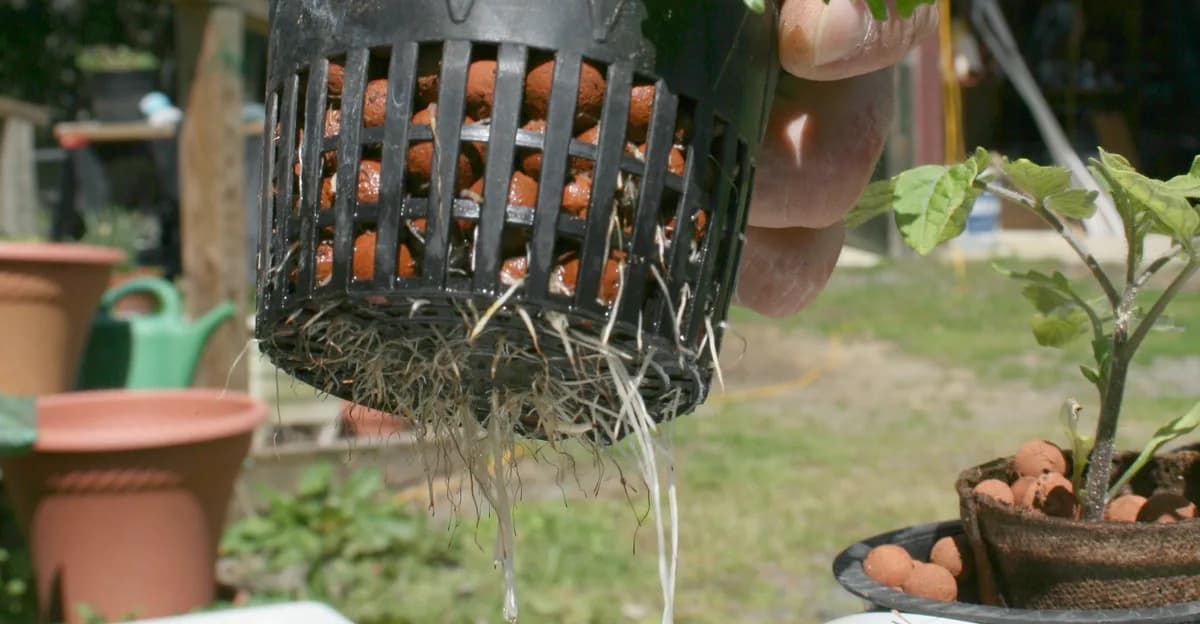
Key point: Green growth usually sends you down the algae branch. Clear or white slime needs more investigation. A rotten-egg or sour smell is a reason to inspect the water, roots, and equipment, but smell alone cannot identify root rot, Pythium, sulfur bacteria, or any other organism.
Pause before adding peroxide, bleach, or another treatment. First work out where the symptom began and whether the roots and plant are declining. That order gives you better evidence and avoids turning a vague symptom into a chemical experiment.
Start with the visible clue
Use color and location to choose your first check. Do not use either one as a final diagnosis.
| What you find | First interpretation | What it does not prove | Next check |
|---|---|---|---|
| Green growth on a lit surface, raft edge, channel, or root area | Algae is the leading branch | Root rot or a specific algal species | Find and block the light path |
| Clear or white slippery film on roots, tank walls, pumps, or tubing | An attached microbial film or root mucilage may be present | Helpful bacteria, Pythium, or a harmless system | Check source water, root texture, and plant condition |
| Rotten-egg or sour odor | Source water, plumbing, poor aeration, or decomposition may need investigation | A specific gas, bacterium, or pathogen in the reservoir | Smell plain source water, then inspect roots and equipment |
| Brown or tan roots that remain firm | Color alone gives weak evidence | Root rot | Look for spreading discoloration, softness, sloughing, and plant decline |
| Soft, dark, decaying roots with stunting or wilt | The symptom cluster raises concern for root disease and root-zone stress | The exact pathogen | Move to the root-rot diagnosis and rescue workflow |
Hydroponic roots and wet system surfaces support mixed microbial communities. Research has found microbial material around healthy hydroponic roots, disease-suppressive communities in one aquaponic comparison, and bacteria isolated from commercial equipment whose biofilms retained an introduced pathogen on laboratory PVC coupons. These findings point in different directions because “slime” describes an appearance, not a biological identity.
Run this reservoir inspection before you dose anything
1. Record where the symptom sits
Look at the lid, solution surface, tank wall, waterline, tubing, pump housing, channels, growing medium, and roots. Note whether the material is green, clear, white, tan, or dark, and whether it wipes away or appears to come from damaged root tissue.
Location matters. Green growth directly under a lid gap points toward light exposure. Film inside a pipe or pump may affect flow. Material that follows a soft, breaking root has a different meaning from a thin coating on firm roots.
Take a photo before cleaning. It gives you a baseline if the symptom returns after you correct the physical cause.
2. Compare source water with the mixed reservoir
Smell a fresh sample of the same water before adding nutrients or sending it through the hydroponic system. If the odor is already present, the problem may begin in the well, tap, storage tank, heater, or plumbing rather than inside the reservoir.
Hydrogen sulfide and sulfur-associated bacteria are documented causes of rotten-egg odors in some source-water and plumbing settings. Those records do not prove that the same chemistry developed inside your hydroponic reservoir. Compare first, then use the water-quality guide if the smell or recurring deposits begin with the source water.
If plain source water smells normal and the mixed reservoir changed later, keep inspecting. The timing narrows the problem to something introduced or developed in the system, but it still does not name the organism.
3. Inspect root texture before root color
Lift or view the root mass with as little disturbance as possible. Healthy-looking color varies with crops, nutrients, and staining, so brown roots alone are weak evidence. Firm roots deserve a different response from roots that feel soft, decay, fragment, shed their outer tissue, or lose fine branches.
Then look at the plant. Stalled growth, stunting, or wilt alongside spreading root decay makes the root-rot branch more likely. The canopy can stay green during early root deterioration, so a normal-looking top does not cancel what you see below.
If roots are soft and breaking down and the plant is declining, use the hydroponic root-rot rescue guide. That guide explains treatment options for Deep Water Culture (DWC) and recirculating systems.
4. Check light, debris, flow, and aeration
Inspect every opening where light can reach wet, nutrient-containing surfaces. Check loose lids, unused net-pot holes, translucent tubing, uncovered channels, and gaps around plant holders. Green growth near one of those openings strengthens the algae diagnosis. Blocking the light path is the most transferable first prevention step.
Remove fallen leaves, dead roots, and other loose plant debris you can reach without spreading damaged tissue through the system. Organic material and mature mixed-species biofilms can make later sanitation less effective.
For systems that use a water pump, air pump, or air stone, confirm that each part is operating and that water is reaching and returning from the intended places. Look for blocked lines and quiet pockets where circulation has stopped. Passive Kratky systems work differently and should keep their designed air gap rather than inherit an active-system aeration rule. For a passive container with green growth, use the Kratky troubleshooting guide.
Build a Reservoir Triage Record
A useful troubleshooting record separates observations from conclusions. Write down what you can see, smell, and feel before naming a cause. This is especially helpful when the reservoir has more than one symptom, such as green growth near the lid and clear film inside a return line.
Use the same fields for each inspection point:
| Inspection point | Record | What the comparison can tell you |
|---|---|---|
| Fresh source water | Odor, visible deposits, and whether the sample changed after passing through storage or plumbing | A symptom already present here belongs on the source-water branch, not the reservoir-treatment branch |
| Reservoir surface and waterline | Color, location, nearby light gaps, and loose debris | Green growth beside a light path strengthens the algae branch; clear film still needs other evidence |
| Pump, tubing, and return points | Film location, blocked flow, stopped equipment, and areas the cleaning tools cannot reach | A symptom concentrated on equipment points to a maintenance location and a possible route for recurrence |
| Roots | Firmness, spreading discoloration, sloughing, broken fine roots, and whether the material follows damaged tissue | Soft decay plus plant decline supports the root-rot handoff more strongly than color alone |
| Plant canopy | Stable growth, stunting, or wilt | Canopy condition helps distinguish a surface observation from a root-and-plant decline pattern |
Add a photograph and note the action taken. On the next inspection, compare the same locations instead of relying on memory. The aim is to learn which condition returns with the symptom.
Keep the branch boundaries clear:
- If the odor or deposit begins in source water, investigate the well, storage, or plumbing and arrange suitable water testing where needed.
- If green growth tracks a light opening while roots remain firm, correct the light path and remove reachable growth.
- If film repeatedly concentrates in a pump, line, or channel, inspect that equipment for debris, attached material, and restricted flow.
- If soft root decay spreads while the plant stalls or wilts, move to the root-rot workflow rather than treating the film as an isolated reservoir problem.
Do not turn the record into an organism label. Healthy roots can carry microbial communities, disease-suppressive communities have been observed in a specific aquaponic comparison, and laboratory biofilms can retain an introduced pathogen. Appearance alone cannot tell you which situation you have.
What each branch means for your next move
Green algae with firm roots
Treat light exposure as the first physical problem. Cover the route without sealing off access that the system needs for inspection or operation. Clear blocked lines and remove accessible algae mechanically where the system can be handled safely.
Green algae can clog equipment and create management problems, but it does not prove that the roots have Pythium or another disease. Check root texture and plant vigor separately.
Clear or white slime with firm roots and a stable plant
Do not label the film “beneficial bacteria,” and do not call it root rot from color alone. Note where it appears, remove loose debris, check equipment, and watch whether it spreads as root texture or plant growth changes. Hydroponic studies show that microbial communities around roots can coexist with healthy plants, while other attached films can shelter organisms after they enter a system.
Appearance cannot answer the food-safety question either. A clear film and a green canopy do not show which microbes are present. If contamination or food safety is a concern, visual inspection is not a substitute for appropriate testing or professional guidance.
Odor with soft roots or plant decline
An odor that developed in the system alongside soft, dark, decaying roots raises concern for poor root-zone conditions and decomposition. It still does not identify the cause. Follow the root-rot workflow and correct any clear equipment failure rather than choosing a chemical from the smell.
If only one plant has extensive decay, avoid splashing its water or root debris onto healthy plants and avoid moving the same uncleaned tools between them. Hydroponic root pathogens can move through recirculating water and contaminated material.
Odor or deposits that begin in source water
Move the investigation upstream. Compare the water sources used by the system, consider storage and plumbing, and arrange suitable water testing if the source remains unclear. The water-quality guide covers source-water inputs in more detail. Do not try to fix a well or plumbing problem by dosing the planted reservoir.
Why there is no universal peroxide or bleach recipe here
Hydrogen peroxide has produced inconsistent results across hydroponic experiments. In one ebb-and-flow study, the tested products did not provide dependable algae control by the main measurements, and higher amounts reduced lettuce growth. In a separate post-harvest commercial Nutrient Film Technique (NFT) study, hydrogen peroxide performed worse against mature farm biofilms than the tested chlorine treatment. The crops, products, water chemistry, doses, timing, and systems differed.
That evidence does not support copying either experiment into a planted home reservoir. Bleach and other sanitizers also vary by formulation, permitted use, surface, organic load, contact time, local law, and rinse requirements. A symptom alone cannot choose a safe product or dose.
Chemical treatment can also hide the physical cause. If light still reaches the solution, debris remains in the system, or a pump has stopped, the reservoir can return to the same condition after dosing.
Clean the system between crops
The strongest cross-system sanitation advice applies when the crop is out and you can reach the equipment:
- Drain the old nutrient solution according to local requirements.
- Remove roots, leaves, growing-medium fragments, and other organic debris.
- Scrub or otherwise remove attached film from the reservoir, lid, tubing, pumps, channels, and reusable plant holders.
- Apply only a sanitizer legally labeled for the intended use and compatible with the equipment.
- Follow its label for handling, contact time, rinsing, or flushing.
- Check that residue is cleared as directed before mixing fresh nutrient solution and restarting.
Physical cleaning comes first because organic material and established biofilms can reduce sanitizer performance. Rinsing or flushing matters too. The Singapore NFT study found that a treatment could reduce microbes yet leave an unwanted byproduct when the system was not rinsed.
Aim for a clean, manageable system rather than a permanently sterile planted root zone. Hydroponic roots develop microbial communities again, and removing every microbe would remove potentially neutral or helpful organisms along with harmful ones.
Use a Crop-Turnover Release Check
Between-crop cleaning is easier to verify when the system is divided into zones. A release check records what was removed, which label directions governed the sanitizer step, and whether the physical cause was corrected before the next crop starts.
| Zone | Cleaning evidence | Restart check |
|---|---|---|
| Reservoir and lid | Loose roots and leaves removed; reachable film physically cleaned | Lid fits as intended and unwanted light paths are covered |
| Channels and plant holders | Root fragments and growing-medium debris removed from reachable surfaces | Water can follow the system's intended path without visible obstructions |
| Pumps, tubing, and fittings | Accessible film and debris removed; blocked parts cleared | Installed equipment operates and water reaches and returns from the intended places |
| Sanitized surfaces | Product, intended use, and label-directed handling recorded | Required contact, rinse, or flush steps are complete before fresh nutrient solution is mixed |
| Source-water entry | Fresh water checked separately from the cleaned system | Persistent source-water odor or deposits are assigned to upstream investigation |
Record any zone you could not reach. Hidden or inaccessible surfaces should remain part of the recurrence investigation rather than being treated as clean by assumption. Mature mixed-species films and organic material can reduce sanitation performance, so a chemical step does not replace access and physical removal.
Before restarting, compare the result with the symptom map you made earlier. If green growth started at a lid gap, the release check should show that the light path was corrected. If film concentrated in a blocked return, the return should operate normally. If the original odor was already in source water, a clean reservoir does not close the upstream water question.
Keep the treatment record specific without turning it into a reusable dose recipe. Write down the exact product and formulation, where it was legally used, the crop-out status, the label followed, the surfaces treated, and how the required rinse or flush was completed. Product strength, equipment material, organic load, contact instructions, and permitted use can differ, so the next cleaning decision must be checked against its own label and setting.
Use the finished checklist as the next crop's baseline. If the same symptom returns, compare its first location with the recorded light, debris, flow, equipment, and source-water checks. That comparison gives you a narrower next inspection without claiming that the system is sterile or that a visible film identifies a pathogen.
Prevent the same symptom from returning
Keep light out of the reservoir and other wet nutrient surfaces. Remove dead plant material before it accumulates. Inspect pumps, returns, lines, and aeration parts used by your system. Clean reachable film instead of letting it mature across cycles. Between crops, dismantle enough of the system to reach hidden surfaces and follow a labeled sanitation process.
Use a plant diary to keep a short record of the symptom, location, source-water comparison, root texture, plant condition, equipment check, and action taken. If the film or odor returns, that record will show whether it follows a light leak, one water source, a piece of equipment, or a crop decline.
The useful diagnosis comes from the pattern. Green growth sends you toward light control. Soft, decaying roots plus plant decline send you toward root-rot care. Odor or deposits already present in source water send you upstream. Clear or white slime on its own calls for inspection and monitoring, not a guessed organism or chemical dose.