Solução de problemas do método Kratky: verifique primeiro a linha d'água
Faça a triagem de algas Kratky, provável podridão da raiz e crescimento paralisado, verificando a linha d'água, a textura da raiz, vazamentos de luz e sintomas da planta na ordem certa.
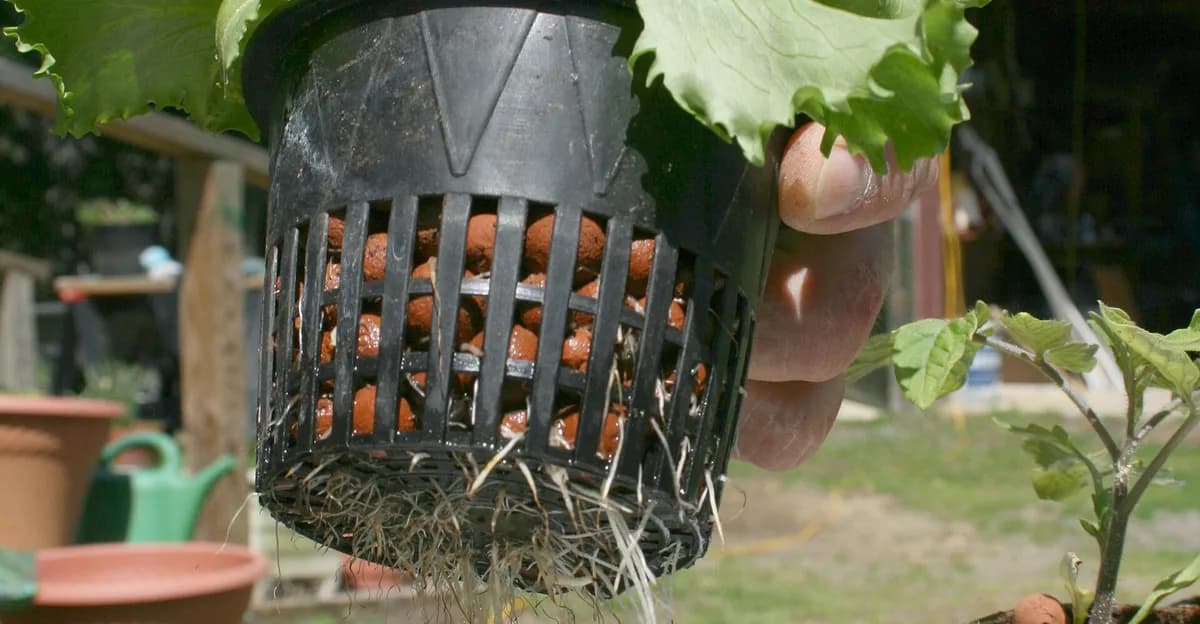
Ponto principal: Verifique a linha d'água e a textura da raiz antes de alterar qualquer coisa. O crescimento verde no recipiente geralmente indica um leve vazamento. Raízes moles e descamadas combinadas com atrofiamento ou murcha apontam para doenças radiculares. Raízes firmes com crescimento lento no topo exigem uma verificação mais ampla de luz, temperatura, mistura de nutrientes, qualidade da água e ajuste do recipiente.
Vários problemas do Kratky parecem semelhantes vistos acima. Uma planta de alface pode parar enquanto suas raízes estão doentes, enquanto seu espaço de ar está inundado ou enquanto seu sistema radicular permanece firme, mas outra condição de crescimento está errada. Tratar cada planta lenta como podridão de raiz é uma perda de tempo e pode tornar o problema real mais difícil de encontrar.
Classifique o sintoma visível antes de agir
| O que você encontra | Primeira interpretação mais útil | Primeiro movimento |
|---|---|---|
| Película verde no recipiente, tampa, meio de cultivo ou superfície da solução | A luz está atingindo superfícies úmidas e ricas em nutrientes | Encontre e bloqueie o caminho da luz e inspecione as raízes |
| Raízes bronzeadas ou marrons que permanecem firmes | A cor por si só é inconclusiva | Verifique se há novas pontas de raízes pálidas, lesões, tecidos moles e sintomas de brotos |
| Raízes marrons com tecidos moles, descamação do córtex, lesões, nanismo, amarelecimento ou murcha | Doença radicular é mais provável | Isole a planta afetada e decida se ela está sã o suficiente para ser monitorada ou muito deteriorada para ser mantida. |
| Raízes firmes e uma planta estagnada | A causa pode ser linha de água, luz, temperatura, solução nutritiva, fonte de água ou ajuste da cultura ao recipiente | Verifique uma variável de cada vez e registre o que muda |
| Uma muda jovem com meio de crescimento seco e sem raízes em solução | A conexão inicial de umidade pode ter falhado | Restaure o contato ou a absorção no pote de rede sem inundar um entreferro maduro estabelecido |
Esta tabela é uma ferramenta de triagem e não um diagnóstico laboratorial. A sequência combina a mecânica da linha d'água de Kratky, evidências de doenças revisadas por pares e orientação de extensão universitária; ele não foi testado como um protocolo completo de solução de problemas. A doença radicular hidropônica pode começar antes que a copa pareça gravemente afetada e a aparência não consiga identificar uma espécie de patógeno.
Verifique primeiro a linha d'água do Kratky
O entreferro faz parte do método Kratky. No transplante, a parte inferior do vaso ou meio de cultivo entra em contato com a solução nutritiva. À medida que a planta utiliza água, a solução cai. As raízes no espaço úmido acima se ramificam e fornecem aeração, enquanto as raízes inferiores permanecem na solução para absorção de água e nutrientes.
Essa sequência cria duas verificações diferentes.
Para uma muda nova, confirme se o meio de cultivo ainda consegue absorver umidade e se pelo menos algumas raízes estão alcançando a solução. Um cubo seco sem contato com a raiz pode parar uma planta antes que o espaço de ar se desenvolva.
Para uma planta estabelecida, marque a linha d'água atual antes de tocar no reservatório. Não restaure a linha de preenchimento alto original. O método publicado por Kratky alerta que elevar a solução sobre raízes adaptadas ao ar pode submergi-las e prejudicar a planta.
Não existe uma profundidade de entreferro única e correta para cada jarro, caixa, cultura ou estágio de crescimento. A lacuna se desenvolve a partir da geometria inicial e do uso de água pela planta. Se o reservatório ficar quase seco muito antes da colheita, o recipiente pode ser demasiado pequeno para aquela cultura ou ambiente. A correção pertence à próxima configuração, não a um reabastecimento cego que cubra raízes aéreas maduras.
Se este for seu primeiro cultivo de Kratky, revise como funciona o sistema passivo e os erros de configuração mais comuns antes de reconstruí-lo.
Construa uma linha de base do reservatório antes de alterar a linha d’água
Um reservatório baixo não indica quanta solução adicionar. Num recipiente Kratky estabelecido, a queda da linha de água já moldou o sistema radicular. Registre essa geometria antes de decidir se você tem um entreferro normal, uma falha na conexão de umidade ou um contêiner que não consegue sustentar a cultura até a colheita.
Capture uma linha de base enquanto a planta e o contêiner ainda estão intactos:
| Evidência | O que gravar | O que isso ajuda você a separar |
|---|---|---|
| Estágio de planta | Muda ou planta estabelecida, além de se as raízes atingiram a solução | Falha no contato inicial com umidade de um entreferro maduro |
| Linha d’água | Marca inicial, marca atual e onde fica a densa massa de raiz | Rebaixamento normal de um entreferro que foi inundado ou de um reservatório quase seco |
| Zonas raiz | Tecido firme ou mole, pontas novas e pálidas, lesões e qualquer descamação | Um problema de configuração de um padrão de doença que precisa de isolamento |
| Recipiente | Caminhos de luz visíveis, áreas de tampa soltas, meio úmido exposto e quaisquer superfícies propensas ao calor | Pressão de algas e estresse na zona radicular devido a sintomas não relacionados às plantas |
| Dossel | Novo crescimento de folhas, atrofiamento, amarelecimento e murcha | Danos antigos estáveis devido a um problema que ainda está progredindo |
| Solução | Leituras atuais de pH e condutividade elétrica, notas sobre a água da fonte e como o nutriente foi misturado | Um problema de solução medido a partir de uma suposição baseada na aparência |
Tire fotos do mesmo ângulo e marque a linha d'água na parte externa do recipiente. A marca é mais importante do que um nível de preenchimento lembrado. O método publicado por Kratky depende da expansão da zona de ar à medida que a solução cai e alerta contra o aumento da solução sobre as raízes que se desenvolveram naquela zona.
Leia a linha de base como um registro do sistema:
- Uma planta jovem com meio seco e sem contato com a raiz necessita que sua conexão de umidade seja restaurada.
- Uma planta estabelecida com raízes firmes na zona de ar não deve retornar à linha de preenchimento original.
- Um recipiente que fica quase seco enquanto a cultura ainda tem um crescimento substancial pela frente está lhe dando evidências de dimensionamento para o próximo cultivo.
- O mesmo sintoma em vários contêineres faz com que valha a pena verificar uma entrada ou ambiente compartilhado. Compare o lote de nutrientes, a fonte de água, a luz e o aquecimento da solução antes de tratar cada planta como um caso de doença separado.
Não transforme um cultivo problemático em uma fórmula de recarga universal. A cultura, o recipiente, o ambiente e o estágio de crescimento afetam o uso da solução. Mantenha as marcas inicial e final com o registro da cultura e compare-as com a próximo cultivo em condições semelhantes.
Algas verdes significam que você deve procurar luz
As algas precisam de luz, água e nutrientes. Num recipiente Kratky, a pista prática é geralmente uma lacuna na barreira de luz: uma parede transparente, uma abertura de rede descoberta, uma tampa solta ou meio de cultivo úmido exposto. O artigo de Kratky sobre alface escureceu ou cobriu os recipientes para desencorajar as algas, e as orientações de extensão universitária recomendam materiais opacos e limpeza entre colheitas.
Trabalhe de fora para dentro:
- Cubra o recipiente para que a luz não alcance a solução nutritiva.
- Feche as lacunas ao redor da tampa e da panela sem esmagar a haste ou vedar todo o ar.
- Meio de cultivo úmido exposto à sombra.
- Levante o vaso de rede e verifique se as raízes estão firmes ou moles.
- Limpe o recipiente vazio, a tampa e o vaso antes do próximo cultivo.
O crescimento verde não prova que a planta tenha podridão radicular de Pythium. Se as raízes permanecerem firmes e a planta estiver crescendo, corrija o vazamento de luz e monitore. Se as raízes forem moles, descamadas ou emparelhadas com uma copa em declínio, passe para a verificação de doenças abaixo.
Pule doses químicas improvisadas enquanto ainda está diagnosticando o problema. A orientação geral sobre hidroponia doméstica favorece a exclusão de luz para algas e alerta que o tratamento químico geralmente não é a primeira resposta doméstica. Um produto, dose ou cronograma testado em outra cultura ou sistema não se torna uma receita Kratky segura.
Raízes marrons exigem verificar a textura e os sintomas da planta
As raízes hidropônicas saudáveis costumam ser pálidas, mas a cor por si só é um diagnóstico fraco. Em um experimento controlado com oxigênio na alface, os pesquisadores mantiveram as raízes totalmente submersas. As raízes tornaram-se marrom-escuras sob um tratamento com oxigênio, embora nenhum patógeno estivesse sendo testado. Esse estudo também encontrou menor crescimento e transpiração das raízes sob a condição supersaturada. Portanto, raízes marrons indicam que é preciso investigar, mas não identificam a causa.
Estudos de Pythium revisados por pares usam um padrão de sintomas mais completo. Na alface hidropônica, a doença confirmada incluiu redução do crescimento dos brotos, lesões marrons, tecido radicular externo mole ou descamado, necrose, amarelecimento e murcha. Os pesquisadores confirmam o patógeno por meio de isolamento ou trabalho molecular, em vez de apenas pela cor da raiz.
Use três perguntas:
- As raízes estão firmes? Raízes firmes e bronzeadas merecem observação. Raízes moles que perdem sua camada externa sob manuseio suave são mais preocupantes.
- Há crescimento novo? As pontas das raízes novas e pálidas e o crescimento constante das folhas pesam contra um colapso rápido.
- A parte aérea está mudando? O nanismo pode aparecer antes de amarelecimento ou murcha severo. Uma cobertura verde não exclui doenças precoces.
Se uma planta apresentar apodrecimento mole extenso e a parte superior estiver desmoronando, manuseá-la ao lado de plantas saudáveis pode mover água contaminada ou restos de raízes em respingos ou ferramentas, deixando pouco tecido radicular saudável para apoiar a recuperação. Remova-a da área de cultivo, evite usar as mesmas ferramentas em plantas saudáveis e limpe o recipiente antes de replantar. Para uma decisão de resgate detalhada, use o guia de podridão de raiz hidropônica. Suas etapas de aeração são escritas para cultura em águas profundas e sistemas de recirculação, portanto, tenha em mente a diferença de entreferro de Kratky.
Se as raízes estiverem firmes, resolva problemas de crescimento paralisado
O crescimento estagnado é um sintoma, não um diagnóstico. Uma implementação de Kratky em pequena escala revisada por pares relatou crescimento inconsistente ou lento e listou a absorção de nutrientes, doenças e condições ambientais como possibilidades não resolvidas. Pesquisas com alface hidropônica e raízes totalmente submersas também mostram que a disponibilidade de oxigênio afeta a respiração e o crescimento das raízes. Isso estabelece uma direção fisiológica, não uma meta de oxigênio dissolvido para um recipiente Kratky.
Verifique-os em ordem:
- Contato das raízes ou espaço de ar: Para uma muda, verifique o contato com a umidade. Para uma planta estabelecida, preserve o entreferro.
- Luz: Confirme se as folhas recebem luz suficiente para a cultura e se uma mudança recente, mudança de sombra ou acessório sujo não a reduziu.
- Temperatura da solução: Observe se o recipiente aquece durante o dia. Zonas radiculares quentes podem aumentar o estresse das plantas e aumentar a gravidade de algumas doenças do Pythium, mas a temperatura por si só não diagnostica a infecção.
- Preparo da solução nutritiva: Confirme se você usou um nutriente hidropônico completo e misturou-o de acordo com o rótulo. Não adicione micronutrientes extras como cura de doenças. Um estudo controlado sobre alface descobriu que o cobre reduziu doenças apenas em concentrações que também reduziram o crescimento, enquanto o silício não proporcionou controle útil.
- pH e condutividade elétrica: Meça antes de ajustar. Uma leitura surpreendente é uma evidência a ser investigada, e não uma permissão para adicionar diversas correções de uma só vez. Veja por que o pH hidropônico muda para um fluxo de trabalho de pH separado.
- Água de origem: Água de fonte dura ou salina pode deixar menos espaço para nutrientes e pode se tornar mais concentrada à medida que a cultura usa água.
- Adequação entre cultura e recipiente: Uma cultura de ciclo longo ou com sede pode superar um simples recipiente de enchimento único. Registre o tamanho atual da planta e a solução restante para que você possa dimensionar o próximo reservatório a partir de evidências.
Altere uma variável e observe as folhas e pontas das raízes mais recentes. Os danos existentes poderão não ser revertidos, pelo que o novo crescimento é o sinal mais claro. Um simples registro de crescimento também evita que você confunda várias alterações simultâneas com uma correção bem-sucedida.
Execute um teste de recuperação controlada
Use um teste controlado quando as raízes permanecerem firmes e a planta estiver estável o suficiente para ser observada. O objetivo é testar uma causa plausível sem combinar correção da linha d'água, correção de nutrientes, mudança de luz e tratamento químico. O crescimento lento pode ter várias causas e as condições da zona radicular podem afetar o crescimento sem identificar um patógeno.
Defina a linha de base
Antes de fazer uma alteração, salve o registro do reservatório acima e adicione:
- uma foto aproximada das pontas das raízes mais recentes;
- uma foto das folhas mais novas;
- as leituras atuais de pH e condutividade elétrica, se você as medir;
- mudanças recentes na luz, nas condições ambientais, na mistura de nutrientes ou na água da fonte;
- a única intervenção que você planeja testar.
Use sempre o mesmo ângulo de foto e ordem de observação. Procure a direção da mudança no novo tecido em vez de esperar que lesões antigas ou folhas danificadas desapareçam.
Combine uma alteração com uma observação
| Observação | Primeiro movimento controlado | O que não combinar com isso |
|---|---|---|
| A luz atinge a solução ou meio úmido | Bloqueie o caminho óptico e mantenha a inspeção da raiz separada | Um tratamento improvisado com algas |
| Uma muda está seca antes que as raízes alcancem a solução | Restaure o contato com a umidade no pote de rede | Inundando as raízes da zona aérea de uma planta madura |
| Um entreferro estabelecido foi inundado | Corrija a linha d'água sem danificar o sistema radicular | Adições extras de nutrientes ou micronutrientes |
| As raízes estão firmes, mas o crescimento estagnou | Verifique um fator medido ou uma mudança ambiental recente | Vários ajustes simultâneos |
| As raízes são moles ou descamadas e a copa está diminuindo | Interrompa o teste, isole a planta e use a decisão de reiniciar | Devolução de ferramentas ou soluções para contêineres íntegros |
A última linha é uma regra de parada. O declínio relacionado ao Pythium pode incluir nanismo, lesões, raízes moles ou descamadas, amarelecimento e murcha, e água ou ferramentas contaminadas podem transferir o problema entre as plantas. Uma planta em declínio com extensa decomposição é uma decisão de saneamento, não um assunto de teste útil.
Julgue a resposta
Verifique em um horário consistente e anote o que mudou. Pontas de raízes novas e pálidas, crescimento contínuo das folhas e ausência de propagação de lesões apoiam o monitoramento contínuo. A expansão dos tecidos moles, novas lesões ou piora do dossel significam que a classificação original precisa ser alterada.
Se a planta melhorar, mantenha a correção bem-sucedida e evite adicionar uma segunda alteração até que a resposta seja clara. Se não melhorar, retorne à linha de base e teste o próximo fator plausível. Isso deixa você com um registro de diagnóstico reutilizável, mesmo quando a planta eventualmente precisar de uma reinicialização limpa.
Altere agora, monitore ou reinicie
Corrija agora quando a luz atinge o reservatório, uma muda jovem perdeu contato com a umidade ou um espaço de ar maduro foi inundado. Estas são falhas de configuração visíveis com correções diretas.
Monitore quando as raízes estão firmes, novas pontas aparecem e a planta não apresenta lesões espalhadas ou murcha. Registre a linha d'água, a aparência da raiz, o crescimento da copa e uma variável medida antes de fazer outra alteração.
Reinicie quando as raízes estão muito moles ou descamadas, a copa está em colapso ou o recipiente não pode ser limpo sem destruir o sistema radicular restante. Uma reinicialização limpa fornece uma linha de água conhecida e remove o tecido deteriorado da próxima colheita.
Limpe o recipiente, a tampa, o vaso de rede e as ferramentas reutilizáveis entre as colheitas. Siga o rótulo do desinfetante e mantenha os equipamentos de cultivo de alimentos separados das ferramentas de limpeza doméstica.
Perguntas frequentes
Devo reabastecer um reservatório de Kratky quando a planta parar?
Não reabasteça até o nível original após a formação de um espaço de ar. Verifique as raízes, marque a linha atual e encontre primeiro a causa da estagnação. Levantar a solução sobre raízes adaptadas ao ar pode prejudicar a planta.
Algas significam que minha planta está com podridão de raízes?
Não. As algas verdes primeiro apontam para a luz atingindo uma superfície úmida e rica em nutrientes. A podridão da raiz é mais provável quando a descoloração da raiz aparece com tecidos moles, lesões, descamação, nanismo, amarelecimento ou murcha.
As raízes marrons do Kratky estão sempre mortas?
Não. A cor deveria desencadear uma inspeção mais detalhada, não um veredicto. Verifique a textura, novas pontas de raízes, lesões e sintomas da copa. Os pesquisadores usam testes de patógenos para identificar Pythium; eles não diagnosticam uma espécie apenas pela cor marrom.
Devo adicionar nutrientes extras para tratar a podridão das raízes?
Não. Micronutrientes extras não são um tratamento geral contra o apodrecimento das raízes e podem prejudicar a cultura. Mantenha as correções de nutrientes vinculadas ao pH medido ou à condutividade elétrica e ao rótulo do produto e, em seguida, trate do saneamento e do projeto do sistema separadamente.