Laitue hydroponique : ajouter du calcium peut ne pas aider
Les feuilles internes brunes peuvent signaler une brûlure des pointes. Voyez le rôle de l’air dans l’apport de calcium et les premiers contrôles.
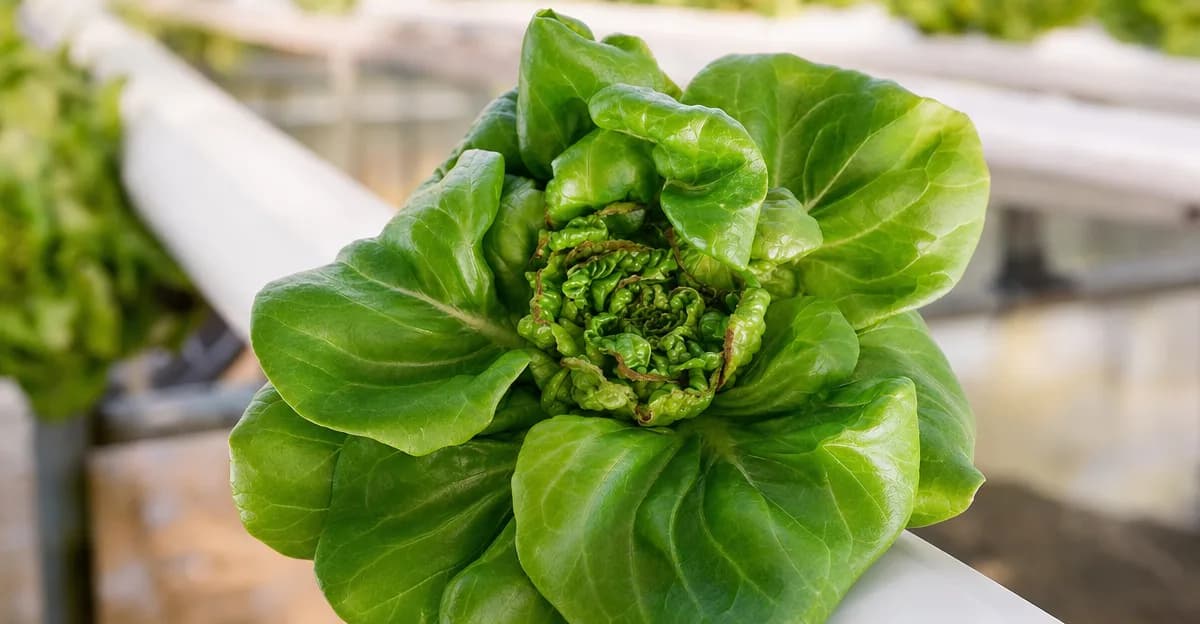
Point clé : Les bords bruns ou nécrosés des feuilles les plus jeunes au centre d’une laitue sont le signe classique de la brûlure des pointes. Celle-ci apparaît lorsque trop peu de calcium atteint les tissus internes à croissance rapide. La solution nutritive peut contenir suffisamment de calcium alors que les feuilles enfermées en reçoivent encore trop peu.
Commencez par vérifier que vous utilisez une formule nutritive hydroponique complète. Dirigez ensuite un léger mouvement d’air vers le centre de la laitue. Si de nouveaux dommages persistent, recherchez des conditions chaudes ou une lumière excessive qui pourraient pousser la croissance plus rapidement que l'apport de calcium ne peut suivre.
Vérifiez d’abord si les dommages correspondent à une brûlure des pointes
La brûlure classique des pointes de la laitue touche les jeunes feuilles en expansion près du centre de la pomme. Recherchez des taches brunes, des bords bruns ou des tissus secs et morts le long des marges de ces feuilles internes.
Les dommages concentrés sur les feuilles externes plus âgées ne correspondent pas au schéma classique de brûlure des feuilles internes. Cette différence compte, car plusieurs problèmes peuvent faire brunir une feuille de laitue. Élargissez le diagnostic au lieu de supposer que chaque bord brun exige la même correction.
Vous pouvez utiliser cette vérification rapide des symptômes :
| Ce que vous observez | Cela correspond-il à la brûlure classique des pointes ? | Étape suivante |
|---|---|---|
| Marges brunes ou mortes des jeunes feuilles à l'intérieur de la pomme | Oui | Vérifiez la formule nutritive, puis dirigez un léger flux d'air vers le centre |
| Dommages principalement sur les feuilles extérieures matures | Non | Revérifiez le diagnostic avant de changer de nutriments |
| Les vieux dommages internes restent bruns une fois les conditions améliorées | Attendu | Jugez de la solution selon si les feuilles les plus récentes évitent les dommages |
Pourquoi la laitue subit une brûlure des pointes malgré le calcium présent dans le réservoir
Les plantes transportent le calcium vers les feuilles principalement à travers le xylème, le tissu qui transporte l'eau vers le haut depuis les racines. Les feuilles qui perdent de l'eau dans l'air ambiant en aspirent plus et le calcium se déplace avec ce flux.
Les jeunes feuilles à l'intérieur d'une laitue pommée sont en partie enfermées. Elles perdent moins d’eau que les feuilles extérieures exposées et peuvent rester dans une poche d’air calme et humide. Moins de mouvement d'eau vers ces feuilles signifie que moins de calcium arrive là où de nouvelles cellules se forment.
La brûlure des pointes est donc surtout un problème local d’acheminement du calcium. Une analyse de la zone racinaire indique ce qui est disponible dans la solution nutritive, mais pas la quantité de calcium qui a atteint le centre de la pomme.
Le taux de croissance ajoute une autre partie au problème. Une lumière vive et des conditions chaudes peuvent accélérer la croissance de la laitue. La demande de nouveaux tissus peut alors augmenter plus rapidement que l'apport de calcium, en particulier lorsque les feuilles intérieures ont peu de mouvement d'air.
Comment corriger la brûlure des pointes de la laitue hydroponique
1. Vérifiez que la formule nutritive est complète
Vérifiez l'étiquette ou la recette et confirmez que votre formule hydroponique fournit du calcium. Si vous avez changé de produit, mélangé seulement une partie d'une formule en plusieurs parties ou fait une erreur de mélange, corrigez d'abord ce problème.
Si la recette est complète, n’ajoutez pas de calcium en premier recours. Les recherches et les recommandations techniques montrent que la brûlure des pointes peut se développer même lorsque la zone racinaire contient du calcium. Un apport supplémentaire peut augmenter la conductivité électrique sans améliorer l’acheminement vers les feuilles internes.
2. Dirigez un léger flux d'air vers le centre de la pomme
Dirigez un léger flux d'air vers les jeunes feuilles intérieures. Le but est de briser la poche immobile à l’intérieur de la pomme et de favoriser le mouvement de l’eau à travers ces feuilles. Les conseils universitaires pour la culture hydroponique domestique suggèrent d'augmenter doucement le flux d'air jusqu'à ce que les feuilles frémissent légèrement.
Un ventilateur qui fait circuler l'air dans la pièce peut ne pas atteindre le centre d'une laitue pommée fermée. Vérifiez la plante elle-même. Si les feuilles extérieures bougent alors que les feuilles intérieures restent immobiles, ajustez l'angle ou la position du ventilateur afin que l'air puisse atteindre le centre de la pomme.
Il n'y a pas de réglage universel de la vitesse du ventilateur dans les preuves utilisées pour ce guide. Le type de ventilateur, la distance, la direction, l'espacement des plantes, le cultivar, la température et l'humidité modifient tous la quantité d'air atteignant les feuilles cibles.
3. Vérifiez le microclimat diurne à l'intérieur du couvert
L'air stagnant et humide autour des feuilles intérieures pendant la croissance active peut restreindre le débit d'eau qui transporte le calcium. Améliorez l'échange d'air autour de la culture et évitez de créer une poche fermée et humide au centre de chaque tête.
Ne considérez pas l’humidité comme un chiffre unique qu’il faudrait toujours réduire. Les recherches examinées pour ce guide indiquent que l’humidité diurne et nocturne peut affecter différemment le mouvement du calcium. Des conditions presque saturées la nuit ont parfois réduit la brûlure des pointes par l’effet de la pression racinaire, tandis que l’air humide et stagnant pendant la journée peut limiter la transpiration des feuilles.
Pour une installation destinée aux débutants, diriger l'air vers le centre de la pomme est le premier réglage le plus clair. Les données disponibles ne permettent pas de fixer une seule cible d'humidité relative pour tous les systèmes hydroponiques, toutes les pièces et toutes les heures de la journée.
4. Réduisez la pression de croissance excessive si de nouveaux dommages persistent.
Si le flux d'air et une formule nutritive complète n'arrêtent pas les nouveaux dommages, examinez les conditions qui favorisent une croissance rapide. L'air chaud ou la lumière intense peuvent augmenter la croissance et la demande en calcium. Modérer une chaleur ou une lumière excessive peut réduire le risque de brûlure des pointes, bien qu'une croissance plus lente puisse également signifier une durée de culture plus longue ou un rendement inférieur.
Faites de petits changements et observez les feuilles les plus récentes. Les études ont utilisé différents cultivars, lumières, températures et systèmes, de sorte que leurs réglages exacts ne devraient pas devenir des limites universelles pour une culture domestique.
5. Tenez compte du choix du cultivar et du moment de la récolte
Les cultivars de laitue diffèrent par leur sensibilité à la brûlure des pointes. Un cultivar qui reste indemne dans un environnement peut encore subir des dommages dans d’autres conditions de culture. Le choix du cultivar modifie donc le risque sans garantir de résultat.
Si la brûlure des pointes réapparaît tard dans le cycle, un cultivar moins sensible ou une récolte plus précoce peut aider. Récolter plus tôt réduit le temps disponible pour l’apparition de dommages sur les feuilles internes, mais modifie aussi la taille de la pomme et le rendement.
Vous pouvez trouver des informations spécifiques à la culture dans le profil de plante de laitue pommée.
Audit du flux d'air dans le couvert pour plusieurs plants
Un ventilateur en marche ne prouve pas que l’air atteint le centre de chaque laitue. Les plants peuvent se bloquer mutuellement, et une pomme partiellement fermée peut abriter ses feuilles les plus jeunes même lorsque le couvert extérieur bouge. Le test utile porte sur les feuilles cibles, non sur l’air ressenti au bord de l’étagère.
Cartographiez les points faibles
Vérifiez les têtes à l'avant, au milieu et à l'arrière de la zone de culture. Incluez les plantes près des murs, des coins, des supports d'étagères et d'autres obstacles probables. Observez les plus jeunes feuilles intérieures de chaque plante pendant que le ventilateur fonctionne.
| Observations | Ce que cela suggère | Prochain ajustement |
|---|---|---|
| Les feuilles extérieures bougent, mais les feuilles intérieures restent immobiles | L'air passe autour de la tête au lieu d'y entrer | Modifiez l'angle ou la position du ventilateur pour que l'air doux atteigne le centre |
| Les plantes les plus proches du ventilateur bougent, mais pas les plantes abritées | Le flux d'air est inégal à travers la culture | Supprimez les obstructions ou modifiez l'emplacement du ventilateur, puis vérifiez à nouveau chaque zone |
| Les feuilles internes bougent doucement dans toute la culture, mais une nouvelle brûlure des pointes persiste | La circulation de l’air n’est peut-être pas le seul facteur limitant | Vérifiez la formule nutritive, puis la chaleur, la lumière, le cultivar et la date de récolte |
| Un seul cultivar continue de développer des dégâts | La susceptibilité peut contribuer à ce schéma | Comparez les cultivars sous la même configuration avant de changer toute la pièce |
Modifiez une partie du modèle de flux d'air à la fois. Enregistrez la position du ventilateur, l'emplacement de la plante, le cultivar et si des dommages apparaissent sur les feuilles nouvellement développées. Il est ainsi plus facile de distinguer un mauvais chemin de circulation d’air d’un problème plus large de pression de croissance. N'utilisez pas de vieux tissus bruns comme score car les marges mortes ne se rétabliront pas.
Ce qui ne corrige pas la brûlure des pointes de façon fiable
Ajouter aveuglément plus de calcium
Plus de calcium dans le réservoir ne garantit pas plus de calcium dans les feuilles intérieures. Lorsque vous utilisez déjà une formule complète, corrigez les conditions d'administration avant de modifier la concentration en calcium.
L'ajustement du pH seul
Le pH reste important pour la disponibilité générale des nutriments, mais son ajustement seul corrigera peu probablement la brûlure des pointes s’il se trouve déjà dans une plage adaptée à la laitue. Une expérience en technique du film nutritif n’a relevé aucune différence d’incidence entre les conditions de pH testées.
Ce guide ne transforme pas ces conditions d'étude en un objectif de pH universel. Continuez à suivre la plage recommandée pour votre formule et votre système nutritif pendant que vous corrigez la circulation d'air et les conditions de croissance.
Envisager une pulvérisation foliaire de calcium
Les données sur le calcium foliaire sont mitigées et dépendent de la configuration. Il a réduit la brûlure des pointes dans une expérience sur une laitue Green Butter ouverte, où la pulvérisation pouvait atteindre les feuilles cibles. Les recommandations de l’Université de Californie avertissent que les pulvérisations peuvent échouer sur la laitue pommée, car le calcium risque de ne pas atteindre à temps les tissus internes enfermés.
La voie d'application, la forme de la tête, le traitement répété, l'étiquetage des cultures et les compromis possibles en matière de croissance sont tous importants. Ce guide ne recommande pas de produit ni de dose foliaire.
Un protocole contrôlé en cas de brûlure des pointes récurrente
Une brûlure des pointes récurrente est plus facile à étudier si vous divisez le problème en trois questions : le calcium est-il disponible, peut-il atteindre les feuilles internes et la croissance crée-t-elle une demande supérieure à ce que la plante peut satisfaire ? Chaque question appelle une vérification différente.
| Question | Preuve à inspecter | Actions |
|---|---|---|
| Le calcium est-il disponible dans la zone racinaire ? | La formule est incomplète, une partie a été omise ou une erreur de mélange s'est produite | Corrigez la recette et revenez au guide du produit ou du système. Ne devinez pas une dose supplémentaire. |
| Le calcium peut-il atteindre les jeunes feuilles intérieures ? | La formule est complète, mais le centre de la tête reste dans l'air immobile | Dirigez un léger flux d'air vers le centre et confirmez que les feuilles cibles bougent légèrement. |
| La croissance dépasse-t-elle l'apport de calcium ? | De nouveaux dommages persistent après les vérifications de la formule et du débit d'air, surtout par temps chaud ou sous une lumière intense | Modérez la chaleur ou la lumière excessive, ou testez une récolte plus précoce ou un cultivar moins sensible. Gardez à l'esprit les compromis entre la durée de culture et le rendement. |
Commencez par un relevé de référence. Photographiez le centre de la pomme, notez les feuilles déjà endommagées, le cultivar, la formule nutritive, la direction du ventilateur et les conditions récentes. Appliquez le changement pertinent présentant le risque le plus faible, puis jugez le résultat uniquement sur les feuilles qui se développent par la suite.
Évitez de modifier la concentration de calcium, le débit d'air, la lumière et la température en même temps. Si les nouvelles feuilles s’améliorent, vous ne saurez pas quel changement a aidé. Si elles ne s’améliorent pas, vous ne saurez pas quel changement doit être révisé. Une séquence contrôlée réduit également le risque qu'un ajout inutile de calcium augmente la conductivité électrique alors que le véritable problème reste à l'intérieur du couvert.
Si les dégâts concernent principalement les feuilles externes les plus anciennes, arrêtez ce protocole et reprenez le diagnostic. Ce schéma ne correspond pas à la brûlure classique des feuilles internes et ne justifie pas à lui seul un autre ajustement du calcium.
Les feuilles de laitue endommagées peuvent-elles récupérer ?
Les tissus bruns et morts ne redeviendront pas verts. Observez les feuilles les plus récentes pour juger si vos modifications ont fonctionné. Si les nouvelles pousses restent intactes, vous avez probablement corrigé les conditions qui causaient la brûlure des pointes, même si les anciennes marques demeurent.
Un ordre pratique des opérations
- Vérifiez que les marges brunes se trouvent sur les feuilles intérieures les plus jeunes.
- Confirmez que vous avez mélangé une formule nutritive hydroponique complète.
- Dirigez un léger flux d'air vers le centre jusqu'à ce que les feuilles frémissent légèrement.
- Surveillez les feuilles les plus récentes pour détecter des dommages continus.
- Si les dommages persistent, modérez la chaleur ou la lumière excessive et acceptez le compromis possible en matière de durée de récolte ou de rendement.
- En cas de problèmes répétés, essayez un cultivar moins sensible ou récoltez plus tôt.
Foire aux questions
La brûlure des pointes de la laitue est-elle une carence en calcium ?
La brûlure des pointes est un trouble physiologique lié au calcium dans les jeunes tissus internes. Elle ne prouve pas que l’ensemble du réservoir ou de la plante manque de calcium. Le tissu local peut en recevoir trop peu même lorsque la solution nutritive contient du calcium.
Dois-je ajouter du Cal-Mag contre la brûlure des pointes de la laitue ?
N'ajoutez pas aveuglément de calcium supplémentaire lorsque vous utilisez déjà une formule hydroponique complète. Améliorez d’abord le flux d’air doux dans la tête et vérifiez les conditions favorisant une croissance rapide. Une plus grande quantité de calcium dans la zone racinaire peut augmenter la conductivité électrique sans résoudre l'apport aux jeunes feuilles.
Une humidité élevée provoque-t-elle la brûlure des pointes ?
L'air humide et stagnant autour des feuilles intérieures pendant la croissance active peut augmenter le risque en limitant le mouvement de l'eau vers ces feuilles. L'humidité diurne et nocturne peut avoir des effets différents, c'est pourquoi une instruction générale visant à réduire l'humidité à tout moment n'est pas étayée par les preuves examinées ici.
De quelle quantité de flux d'air la laitue a-t-elle besoin ?
Utilisez un léger mouvement d'air qui atteint le centre de la laitue et fait frémir les feuilles. Les recherches ne permettent pas de fixer une vitesse de ventilateur unique pour tous les cultivars, toutes les positions du ventilateur, tous les espacements et toutes les pièces.