Winged Bean Not Flowering? Blame the Daylength, Not You
Your winged bean grew a huge vine but never flowered? The plant is healthy — the daylength is wrong. Winged bean is a short-day plant that won't bloom under long temperate summer days. Learn the real cause and the three-part fix, starting with day-neutral cultivars.
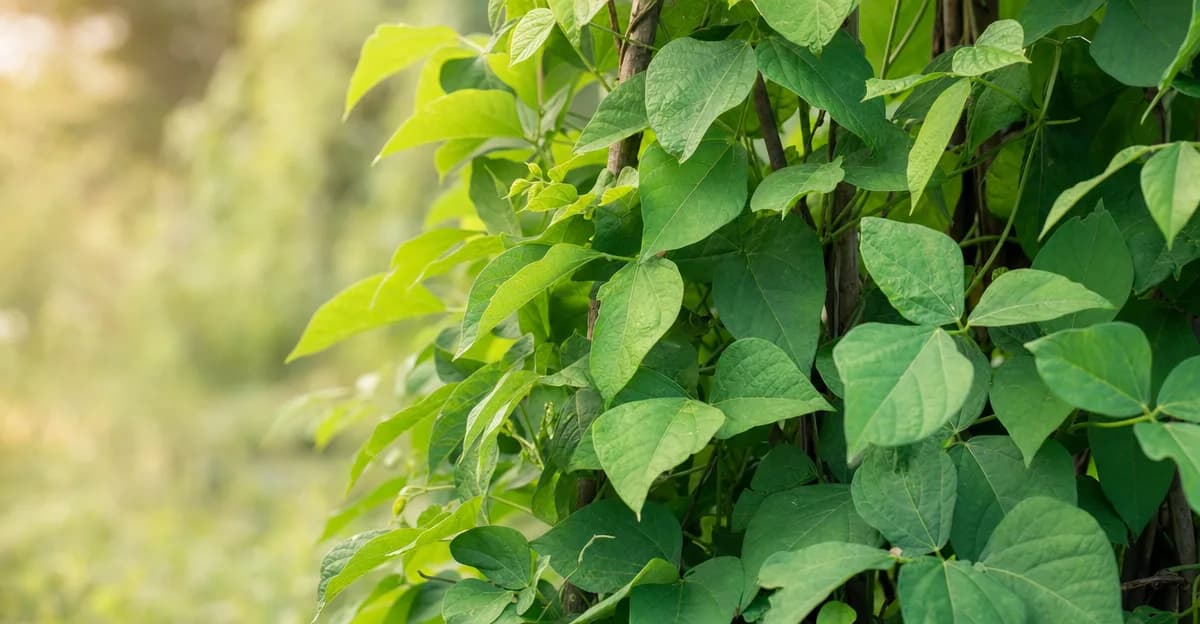
Key takeaway: A winged bean that throws a lush 3-to-5-metre vine but never a single flower almost never has a nutrient, water, or pest problem. It has a daylength problem. Winged bean (Psophocarpus tetragonolobus) is a short-day plant: it will not switch from growing to flowering until the days get short enough — shorter than the long days of a temperate summer. The plant is healthy; the signal it's waiting for just hasn't arrived. The single most reliable fix is to grow a day-neutral cultivar that flowers regardless of daylength.
Why is my winged bean not flowering?
Because it's a short-day plant, and your summer days are too long. Winged bean measures the length of the night to decide when to flower. Until nights grow long enough — that is, until days drop below a critical length — it stays locked in vegetative growth, pouring everything into vine and leaf.
This is not a quirk of one grower's plant. In the defining experiment, Herath and Ormrod (1979) grew winged bean under two daylengths: plants under an 11-hour photoperiod flowered, and plants under a 14-hour photoperiod did not. Decades later, a three-year screen of 81 winged bean accessions found the same thing at scale — 76 of the 81 (about 94%) failed to flower under long days, and the authors describe a "strict short-day requirement for both floral induction and tuberization." Older reference works describe the same short-day habit and the way it historically confined winged bean cultivation to the latitudes and seasons that deliver short days.
So a giant, healthy, flowerless vine in July is exactly what the biology predicts. Nothing is broken.
How short do the days have to be?
Short enough that a temperate summer won't get there until fall — if at all. The peer-reviewed bracket is clear on direction: winged bean flowered at 11 hours and not at 14 hours in the classic trial, so the critical daylength sits somewhere between 11 and 14 hours. As a practical grower's rule of thumb, that threshold is usually put at around 12 hours — consistent with the experimental bracket, though not a single precise number you should treat as gospel.
Here's why that matters for anyone outside the tropics. In a temperate summer, days run 14 to 16 hours — well above the threshold — and they don't fall back below roughly 12 hours until after the autumn equinox. By then, at latitudes above about 25°, you're often only weeks from the first frost, leaving too little frost-free time for flowers to become mature pods. A genome-wide study put the consequence plainly: short-day sensitivity restricts "flowering and seed set to specific latitudes and sowing periods … reducing suitability for subtropical and temperate regions."
That's the whole trap: the vine has the entire warm season to grow, but the flowering signal doesn't arrive until the season is nearly over.
Run the numbers for your own latitude: a short-day planning method
The general rule — flowering needs days under roughly 12 hours, within the experimentally confirmed 11-to-14-hour bracket — only becomes useful once you translate it to your location. Here is how to check whether your season can ever deliver the signal in time:
-
Find your autumn-equinox crossing. Everywhere on Earth, daylength passes through about 12 hours at the equinox (around September 22 in the Northern Hemisphere, March 20 in the Southern). Before that date your days are longer than 12 hours; after it, shorter. Because the critical daylength sits somewhere in the 11-to-14-hour bracket rather than at exactly 12 hours, treat the equinox as the practical earliest a strictly short-day line is likely to begin floral induction — not a hard gate. A stricter line may wait until well after the equinox; a line near the top of the bracket could start a little before it.
-
Count the frost-free weeks that remain. Look up your average first-frost date and measure the gap from the equinox. That gap is your entire short-day flowering-and-podding runway. At latitudes above about 25°, it is often only a few weeks — and flowers still need warm weeks after that to fill into pods.
-
Check the temperature floor. Pods set reliably only while mean temperatures stay above about 20 °C — the warmth floor reported for
'Urizun'in one Okinawan trial. Once your post-equinox nights cool past that floor, the plant may make short-day flowers that never finish as pods.
The uncomfortable conclusion for temperate growers: the short-day window and the frost-free window barely overlap, which is exactly why the genome-wide screen describes short-day sensitivity as restricting winged bean "to specific latitudes and sowing periods." If your equinox-to-frost runway is under about six weeks, treat a photoperiod-sensitive line as unlikely to pod outdoors — and go straight to a day-neutral cultivar.
Could heat be blocking it too?
Yes — temperature and daylength work together, and a hot summer can suppress flowering even when the days are short enough. In the Herath and Ormrod trial, plants flowered at an 11-hour photoperiod under a moderate 25/20 °C day/night regime, but failed to flower at the very same 11-hour daylength under a hotter 30/25 °C regime. Short days are necessary, but not sufficient if it's too hot.
The larger germplasm screen reaches the same conclusion from the other direction: short-day suppression is "especially pronounced when temperatures are suboptimal," and excessive heat can impair pollen and ovule function, causing flowers to abort and pods to fail even after floral initiation begins. There is also a lower bound — in one Okinawan trial, the cultivar 'Urizun' set pods reliably whenever the mean temperature stayed above about 20 °C.
Put together: winged bean wants short days and a temperature window that is warm but not scorching. If your plant sits through a run of 30 °C-plus days, that heat alone can hold flowering back regardless of daylength.
The fix: three ways to get your winged bean to flower
The honest tension here is that most gardeners can't easily buy short-day-adapted seed, and you can't shorten the summer. So the fixes run from most reliable to fallback.
1. Grow a day-neutral cultivar (the real unlock)
This is the single highest-leverage change, and for most temperate growers it's the only one that reliably works. Plant breeders have selected day-neutral (photoperiod-insensitive) lines that flower regardless of daylength, opening winged bean up to temperate-zone gardens.
The best-documented example is 'Urizun' (an Okinawan selection from the Malaysian line M13-1). In a multi-season Okinawan trial it was the line least affected by sowing date, reached the earliest maturity, and gave the highest seed yield across January, March, and May sowings — beginning to flower roughly 65 days after a May sowing under about 14-hour days, about half the time traditional tropical varieties need. The genome-wide screen independently confirmed that a small fraction of accessions — about 6% — are photoperiod-insensitive, and identified one genotype (IIAB-PIS1) that completed reproductive development and set seed even under long days. (That last figure is a breeding-program result, not a yield you should expect at home — but it proves day-neutral winged bean is real and heritable.)
For gardeners, the practical version is simpler: seed catalogs sell 'Urizun' and 'Hunan' as day-length-neutral / early varieties suited to a wide range of temperate areas. If you're growing well outside the tropics, track down a day-neutral line before you try anything else.
The day-neutral shortlist: what to look for, and what to ask a seed seller
"Day-neutral" is a trait, not a brand, so a packet's label is only as trustworthy as the lineage behind it. The lines with the strongest documentation:
'Urizun'— an Okinawan selection derived from the Malaysian line M13-1. In multi-season Okinawan trials it was the variety least affected by sowing date, reached maturity earliest, and gave the highest seed yield across January, March, and May sowings, beginning to flower roughly 65 days after a May sowing under about 14-hour days. It is the best-evidenced early / day-neutral-leaning line a home grower can actually buy.'Hunan'— sold alongside'Urizun'in seed catalogs as day-length-neutral / early. This is catalog-sourced rather than trial-documented, so treat it as promising but less proven.- IIAB-PIS1 — a research genotype the genome-wide screen identified as truly photoperiod-insensitive, completing reproductive development and setting seed even under long days. It is a breeding-program reference, not a commercial variety — proof the trait is real and heritable, not something to add to your cart.
Practical sourcing questions to ask before you pay for seed:
- Is the line described as day-neutral / photoperiod-insensitive, or merely "early"? Only about 6% of screened accessions were photoperiod-insensitive — early does not equal day-neutral.
- What is the parent line or region of selection? An Okinawan or
M13-1-derived pedigree is a good sign. - Has it flowered outside the tropics for the seller? A first-hand temperate flowering report beats a catalog adjective.
If you cannot confirm any of that, buy 'Urizun' — it is the one line with published, multi-season evidence behind the claim.
2. Time the sowing to land in short days
If you're already committed to a photoperiod-sensitive variety, the next lever is timing — arrange for the plant to be mature and ready right as the days naturally shorten. In subtropical climates that means aligning the crop with the short-day window: UF/IFAS Extension recommends fall planting in North and Central Florida, and winter planting in South Florida, precisely so the flowering window falls when days are short.
In a true temperate summer this is harder, because your frost-free window and the short-day window barely overlap. Start plants as early as you safely can, give the vine a long, warm run, and aim for the plant to hit its stride as days drop past the equinox. Timing alone rarely rescues a strictly short-day line at high latitude — which is why cultivar choice (fix #1) matters more — but it maximizes whatever short-day runway you do have.
3. Force short days with evening blackout cloth (the fallback)
If you're stuck with a photoperiod-sensitive plant and can't wait for fall, you can simulate short days. Commercial growers do exactly this with chrysanthemums and poinsettias: cover the plants each evening with blackout cloth (or move containers into full darkness) to cut the effective daylength below the critical threshold and trigger flowering earlier.
For winged bean, that means draping black shade cloth over the plant for the last couple of hours of daylight each day — roughly 2 to 3 hours of extra darkness every evening, applied consistently — so the plant "sees" a short day even in midsummer. Treat this as a practitioner technique borrowed from established short-day physiology, not a winged-bean-specific proven protocol: the underlying photoperiod response is well documented, but the blackout schedule itself is grower guidance you should test on a few plants first. It's fiddly and easy to break — miss a few evenings and you interrupt the signal — which is why it ranks below simply choosing a day-neutral cultivar.
Step-by-step: running an evening blackout schedule
Because this borrows short-day physiology rather than following a published winged-bean protocol, run it as a careful experiment on a few plants. The mechanics that decide whether it works:
- Target the effective daylength, not the clock. Aim to cap the plant's perceived day at roughly 11 to 12 hours — the low end of the confirmed flowering bracket and near the ~12-hour rule of thumb. In midsummer that usually means adding 2 to 3 hours of full darkness each evening.
- Make the darkness real. Chrysanthemum and poinsettia growers use opaque blackout cloth precisely because even dim light or a nearby streetlight can interrupt the dark period. Cover completely and check for light leaks.
- Be relentlessly consistent. The dark period must be uninterrupted and repeated every evening. A single break in the long night can reset the signal — the technique's biggest failure mode, and the reason it ranks below cultivar choice.
- Start early enough to finish. Begin while you still have warm weeks ahead: floral induction is only the start, and flowers then need mean temperatures above about 20 °C to fill into pods. Count back from your first-frost date and start the blackout with weeks to spare.
- Stop once buds are committed. When the plant is in visible bud you can relax the schedule — induction is the photoperiod-sensitive step, while pod fill is driven mainly by warmth.
Treat reliable success as unproven for winged bean specifically: the underlying photoperiod response is well documented, but the schedule itself is grower guidance.
Quick reference: why it won't flower, and what to do
| What you see | Likely cause | The fix |
|---|---|---|
| Huge vine, zero flowers, temperate summer | Long days keep it vegetative (short-day plant) | Grow a day-neutral cultivar ('Urizun', 'Hunan') |
| No flowers even as days shorten in fall | Frost arrives before pods mature | Sow earlier; align flowering with the short-day window |
| Buds/flowers drop in peak heat | Temperature too high (>30 °C) suppresses set | Provide afternoon shade; wait for cooler weather |
| Photoperiod-sensitive seed, midsummer | Days above the ~12 h threshold | Evening blackout cloth, 2–3 h/day (fallback) |
The reassuring part: a flowerless winged bean is usually a healthy winged bean receiving the wrong seasonal signal. You don't need to fix the plant — you need to change the variety, the timing, or the daylength it experiences.
Related Guides
- How to Grow Winged Bean: One Plant, Four Edible Harvests — the full grow guide, from seed scarification and trellising to feeding a nitrogen fixer and harvest
- Winged bean plant profile — care data, environment ranges, and growing conditions at a glance