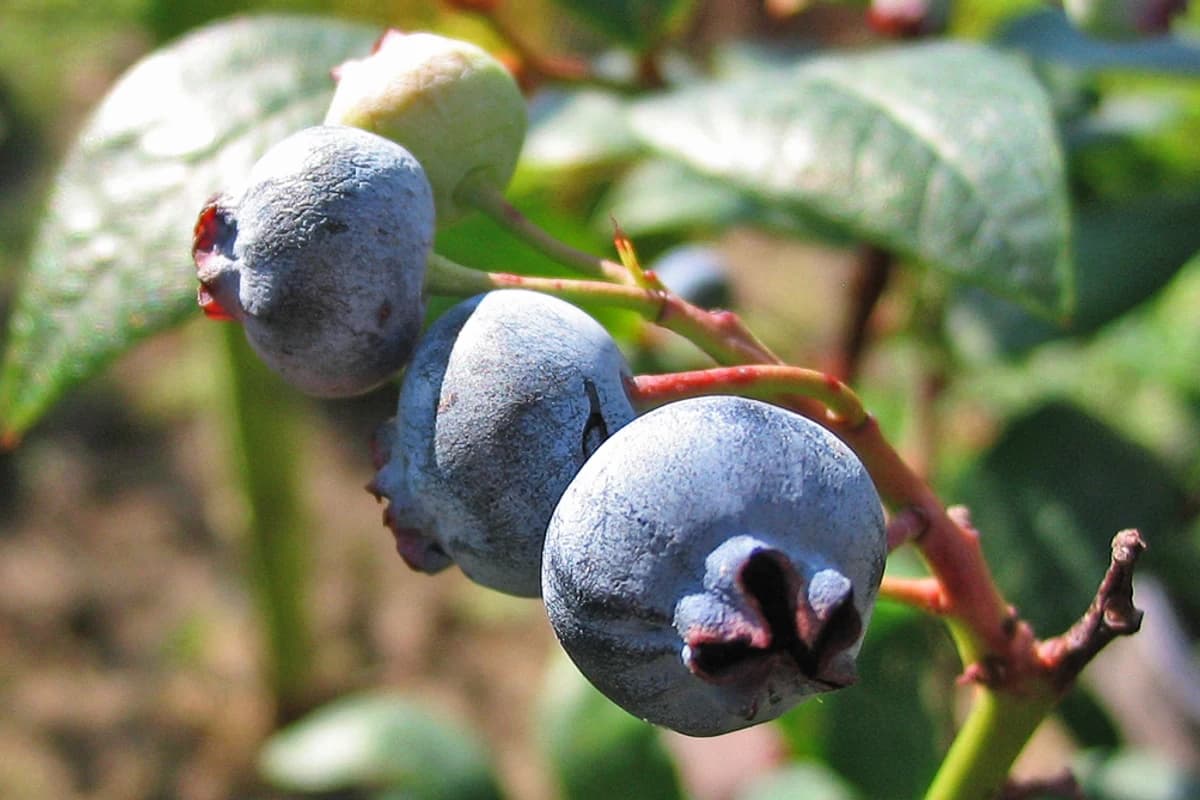
À Propos de cette Plante
La myrtille highbush est un arbrisseau fruitier vivace et ligneux cultivé pour ses baies riches en antioxydants. Elle se développe mieux dans un sol acide, organique et bien drainé ou des substrats de tourbe/coco fertirrigués au goutte-à-goutte, la taille et l'adaptation du cultivar aux heures de froid assurant des récoltes fiables.
Comment cultiver Myrtille
Apprenez à cultiver Myrtille de la graine à la récolte en 1095 jours. Difficulté Advanced. Guide complet des nutriments, exigences pH/EC et conditions de culture pour sol et conteneur.
Appuyé par 10 citations évaluées par des pairs.
Besoins en Nutriments par Stade de Croissance
La nutrition de la myrtille à gros fruits doit être gérée de manière conservatrice autour d'une chimie rhizosphérique acide plutôt que par une alimentation agressive pour culture fruitière. L'OSU recommande un pH 4.5-5.5 pour les myrtilles à gros fruits et un azote à base d'ammonium ou d'urée plutôt que du nitrate de…
Connectez-vous pour voir besoins en nutriments
Un compte gratuit débloque les objectifs NPK des quatre stades de croissance, les niveaux d'oligo-éléments, un calculateur de nutriments par stade et le guide de nutrition complet. L'inscription ne prend qu'un clic. Truleaf est un projet gratuit et à but non lucratif, et chaque nouveau compte nous aide à grandir. Jamais de spam.
Environnements de Culture
Les champs extérieurs, les planches surélevées, les tunnels hauts, les serres et les grands conteneurs peuvent tous fonctionner lorsque la zone racinaire reste acide, organique, humide et bien drainée. La culture en intérieur n'est pas appropriée pour les myrtilles standard à gros fruits car la plante est ligneuse,…
Température
La myrtille Highbush pousse comme une plante vivace tempérée, donc la production dépend à la fois des températures modérées de la saison de croissance et de la dormance hivernale. La plage de croissance actuelle de 15-24°C est une cible raisonnable pour l'environnement contrôlé, mais l'adéquation des heures de froid du cultivar est tout aussi importante : les types de myrtille Highbush du nord ont besoin d'un refroidissement hivernal substantiel, tandis que les cultivars de myrtille Highbush du sud ont besoin de moins et peuvent fleurir assez tôt pour faire face au risque de gel printanier. Maintenez une croissance active fraîche à douce, évitez les racines sèches stressées par la chaleur, et protégez les fleurs ouvertes ou les jeunes fruits des événements de gel.
Humidité
Une cible d'humidité relative fixe est moins utile pour la myrtille Highbush que de garder les fleurs, les fruits et les surfaces de la canopée assez sèches pour limiter la maladie. Les recommandations relatives aux maladies de l'extension lient le Botrytis aux périodes de floraison humides et pluvieuses et…
Lumière
Les myrtilles Highbush doivent être cultivées en plein soleil à l'extérieur ou sous une lumière de serre brillante car les fleurs et les fruits se forment sur du bois d'un an et le rendement dépend du renouvellement vigoureux des pousses. L'OSU note que l'élagage pauvre et la croissance faible réduisent le rendement…
Circulation d'Air
Le mouvement de l'air importe principalement parce que les canopées denses et humides encouragent la maladie des fleurs, des cannes et des fruits. Les conseils de Penn State concernant la gestion du Botrytis recommandent l'élagage et le contrôle des mauvaises herbes pour améliorer le mouvement de l'air et un…
Connectez-vous pour voir besoins environnementaux
Un compte gratuit débloque les valeurs exactes de température, d'humidité, de lumière et de ventilation, y compris les plages de germination et de croissance, DLI, photopériode et PPFD, ainsi que le guide d'environnement complet. L'inscription ne prend qu'un clic. Truleaf est un projet gratuit et à but non lucratif, et chaque nouveau compte nous aide à grandir. Jamais de spam.
Compatibilité des Systèmes Hydroponiques
Le système contrôlé supporté est l'irrigation goutte à goutte ou la fertigation goutte à goutte dans un sol acide, des planches surélevées ou un substrat à base de tourbe/fibre de coco. Bryla et Machado ont découvert que la fertigation goutte à goutte pouvait appliquer l'azote uniformément et en toute sécurité par…
Substrats
Les meilleurs substrats sont acides, organiques et très bien drainés. L'OSU recommande de corriger le pH du sol avant la plantation et avertit que le mauvais drainage peut asphyxier les racines et augmenter le risque de pourriture des racines…
Conteneurs
Les myrtilles en conteneur nécessitent plus de volume racinaire et de drainage que les cultures hydroponiques à court cycle. L'OSU recommande des conteneurs ou des planches surélevées construites où le pH du sol naturel remonte ou le drainage est limité, et souligne que les racines sont superficielles mais sensibles à…
Palissage et Support
Le myrtille haute ne nécessite généralement pas de treillage, mais elle a besoin d'une taille annuelle. NC State recommande de supprimer les cannes faibles, malades, endommagées et anciennes, de contrôler les tiges vigoureuses hautes et d'éclaircir les tiges fructifères pour réduire la charge de boutons floraux dans…
Connectez-vous pour voir compatibilité du système
Un compte gratuit débloque les raisons pour lesquelles chacun des six systèmes convient ou non, ainsi que les substrats, les tailles de pot, les méthodes de palissage, les plantes compagnes et le guide des systèmes complet. L'inscription ne prend qu'un clic. Truleaf est un projet gratuit et à but non lucratif, et chaque nouveau compte nous aide à grandir. Jamais de spam.
Propagation
Les myrtilles à gros fruits cultivées doivent être commencées à partir de matériel de pépinière végétatif, non pas de semences, car l'identité du cultivar, les besoins en refroidissement, la saison de maturation et la qualité des fruits doivent rester uniformes. Utilisez des plants en conteneur certifiés pour…
Récolte
La myrtille à gros fruits est récoltée de manière répétée, pas une seule fois. L'OSU signale des fruits mûrs sur une période de deux à cinq semaines selon le cultivar, la météo et la région, et les baies ne sont pas à leur meilleure qualité gustative immédiatement lorsqu'elles virent au bleu; les laisser quelques…
Calendrier de Plantation
Utilisez un calendrier de fruit vivace plutôt qu'un calendrier annuel de semis à récolte. Plantez du stock dormant ou de pépinière en conteneur en fin d'hiver à début du printemps, ou en automne dans les régions aux hivers doux, tout en évitant les sites où un pH élevé ou un mauvais drainage ne peut pas être corrigé…
Problèmes Courants
Les problèmes de production les plus importants sont la chimie de la zone racinaire, la gestion de l'eau, l'humidité du couvert et l'équilibre des cultures pérennes. Un pH élevé provoque un blocage des nutriments et une chlorose même lorsque les nutriments sont présents…
Accédez au guide complet fondé sur la science
En vous inscrivant, vous nous aidez à maintenir Truleaf gratuit et soutenez la croissance de notre projet à but non lucratif. Votre compte débloque tous les détails de chaque problème végétal—symptômes, causes, solutions étape par étape et prévention—ainsi que le calendrier de plantation mois par mois, le guide complet et toutes les sources de recherche. Un seul clic suffit. Jamais de spam.