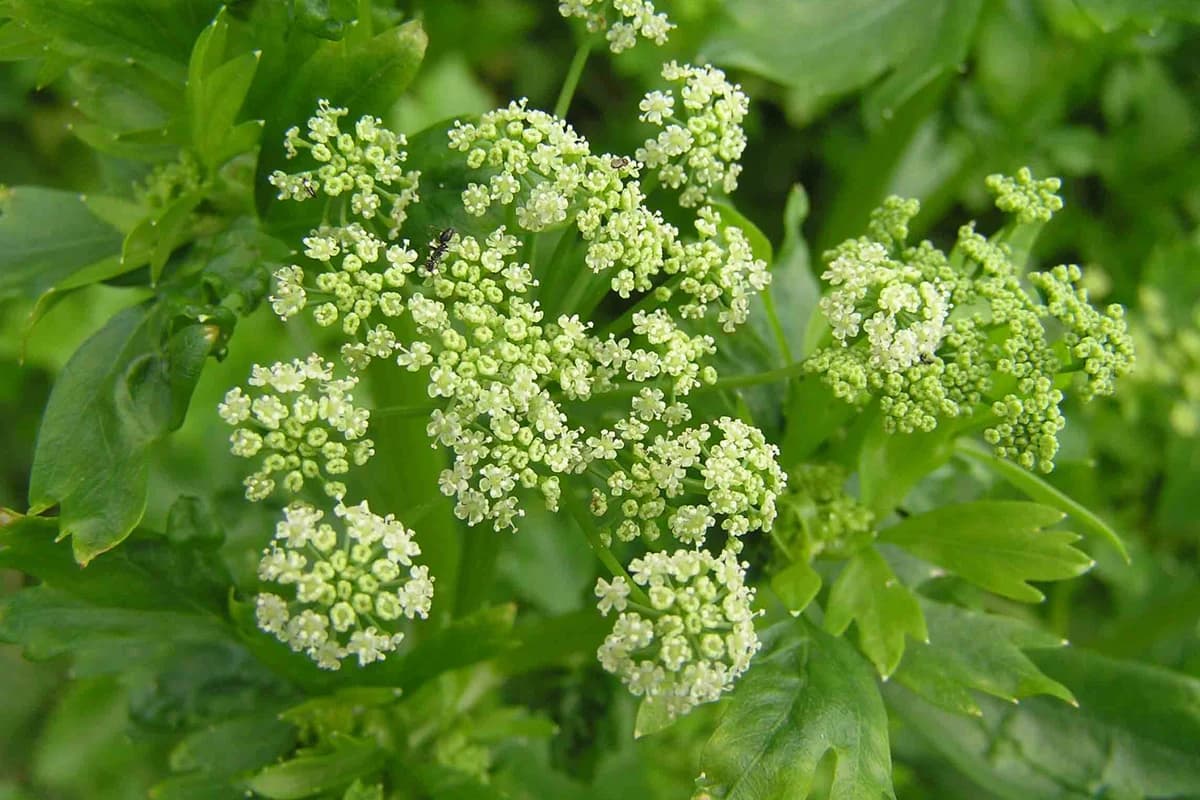
About This Plant
Chinese celery is a compact leaf celery grown for aromatic leaves and slender hollow petioles rather than thick blanched stalks. It suits repeated leaf harvest, close spacing, and hydroponic baby-leaf production when moisture, nutrition, and airflow stay steady.
How to Grow Chinese Celery
Learn how to grow Chinese Celery from seed to harvest in 90 days. Beginner difficulty. Complete nutrient guide, pH/EC requirements, and growing conditions for hydroponics, soil & greenhouse.
Sources cited: 13.
Nutrient Requirements by Growth Stage
For hydroponic leaf-celery production, the strongest direct study used half strength around 142-31-215 ppm N-P-K for efficiency and full strength around 284-62-430 ppm for maximum baby-leaf yield. Use lower seedling values, then move toward full vegetative strength after establishment…
Sign in to view nutrient requirements
A free account unlocks NPK targets for all four growth stages, micronutrient levels, a per-stage nutrient calculator, and the full nutrition guide. Signing up takes one click. Truleaf is a free, non-profit project, and every new account helps it grow. No spam, ever.
Growing Environments
Chinese celery fits indoor, outdoor, greenhouse, and container production when moisture is reliable. Outdoors, use fertile moist soil and avoid drought stress…
Temperature
Chinese celery is best managed as a cool, moist leaf crop. Use 15-25C for germination and 16-24C for active growth, with 18-22C as the practical protected-culture target. The crop is more heat tolerant than thick stalk celery, but 28C should be treated as a stress ceiling rather than an optimum. Avoid prolonged 5-10C exposure after seedlings have several true leaves because cold shock can trigger bolting.
Humidity
Keep root-zone moisture steady and use 60-70% relative humidity as the practical indoor target. Chinese celery tolerates moist air, but sustained high humidity and wet leaves increase bacterial leaf spot, leaf blights, and anthracnose pressure…
Light
Provide moderate leafy-green light: about 15-18 mol m-2 d-1 DLI from 280-400 umol m-2 s-1 PPFD over a 12-15 hour photoperiod. The prior 325 PPFD and 15 hour setting calculates near 17.6 DLI, so the corrected DLI is 18…
Airflow
Use gentle continuous circulation around 0.3-0.8 m s-1 to dry leaves and crowns without wilting the crop. Airflow is mainly a disease-control tool for Chinese celery: dense wet foliage, overhead irrigation, and slow drying favor bacterial leaf spot, late blight, and anthracnose…
Sign in to view environmental requirements
A free account unlocks exact temperature, humidity, light and airflow targets, including germination and growth ranges, DLI, photoperiod and PPFD, plus the full environment guide. Signing up takes one click. Truleaf is a free, non-profit project, and every new account helps it grow. No spam, ever.
Hydroponic System Compatibility
Ebb-and-flow is directly supported for leaf-celery baby-leaf production, while DWC and NFT are supported by Chinese celery or celery hydroponic studies. Drip is suitable for beds, containers, and media culture because it keeps roots moist and foliage drier…
Growing Media
Use fertile, moisture-retentive, well-drained media. Soil or rich potting mix is preferred for containers and outdoor beds…
Container Specs
Use at least a 25 cm deep and wide container per plant, with larger tubs preferred for repeated cutting because Chinese celery is shallow rooted but water sensitive. Close leaf-celery spacing around 10-20 cm is acceptable for bunch or leaf harvest, but each container still needs drainage and enough media volume to…
Training & Support
Chinese celery needs no trellis or structural support. The main management is repeated cutting of outer leaves or baby-leaf mowing, which keeps plants vegetative and productive…
Sign in to view system compatibility
A free account unlocks why each of the six systems fits or fails, plus growing media, container sizes, training methods, companion plants, and the full systems guide. Signing up takes one click. Truleaf is a free, non-profit project, and every new account helps it grow. No spam, ever.
Propagation
Propagate Chinese celery from seed. Sow shallowly because celery seed benefits from light, keep the surface evenly moist, and allow 14-21 days for conservative planning…
Harvesting
Harvest Chinese celery as a cut-and-come-again leaf crop. Pull or cut full plants at market size, or repeatedly harvest outer leaves and slender petioles while leaving the crown active…
Planting Calendar
In temperate gardens, start seed indoors in late winter or late summer, transplant after frost risk or after the worst heat has passed, and harvest 6-10 weeks after transplanting. Direct sowing is feasible after frost for leaf celery if the bed stays moist…
Common Issues
The original record only listed bolting, but Chinese celery should also be managed for leafminers, aphids, foliar blights, anthracnose, virus vectors, and calcium-related blackheart. Leafminers are especially important because the edible product is foliage…
Get the full science-backed guide
By signing up, you help keep Truleaf free and support the growth of our nonprofit project. Your account unlocks full details for every plant issue—including symptoms, causes, step-by-step solutions, and prevention—plus the month-by-month planting calendar, the complete guide, and all research sources. It only takes one click. No spam, ever.